
In today’s digital-first economy, the ability to accept credit card payments online is no longer a luxury but a fundamental necessity for any business aiming to generate online income and ensure robust business finance. Whether you’re an aspiring entrepreneur, a growing e-commerce store, a freelancer offering services, or a brick-and-mortar business expanding its reach, enabling online transactions is critical for capturing sales, enhancing customer convenience, and streamlining your financial operations. This guide will navigate you through the essential financial tools and strategies required to successfully accept credit card payments online, focusing on maximizing your online income and securing your business’s financial future.

The Foundation: Understanding Online Payment Ecosystems
Before diving into specific solutions, it’s crucial to grasp the underlying financial mechanisms that facilitate online credit card payments. Understanding these components will empower you to make informed decisions about the best financial tools for your unique business needs.
Payment Gateways vs. Merchant Accounts
At the core of online payment processing are two interconnected concepts: payment gateways and merchant accounts.
- Merchant Account: This is a specialized bank account that temporarily holds funds from credit and debit card sales before they are transferred to your regular business bank account. It’s essentially an agreement between your business and an acquiring bank (or a payment service provider acting as an acquiring bank) that enables you to accept card payments. For many small and medium businesses, direct merchant accounts can be complex to set up.
- Payment Gateway: This is the secure financial technology that authorizes credit card payments for online businesses. It acts as a digital bridge, encrypting sensitive payment details and securely transmitting them from the customer’s browser to the acquiring bank and back. Think of it as the virtual point-of-sale (POS) terminal for your online store. Leading payment gateways often bundle merchant account services, simplifying the process for businesses. This “all-in-one” approach has become increasingly popular as a financial tool for online income.
Key Players in the Online Payment Chain
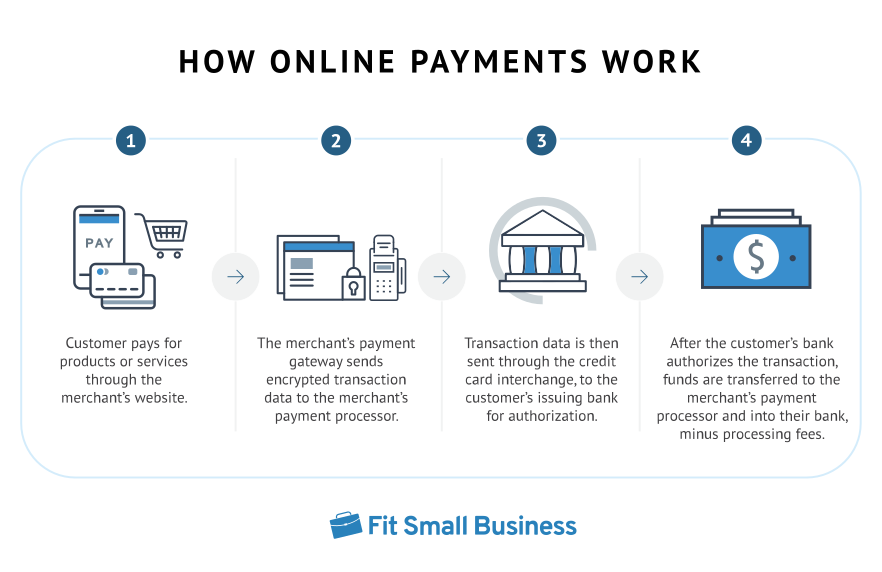
For every online credit card transaction, several entities work in concert to ensure the secure and swift flow of money:
- Cardholder: Your customer, initiating the payment.
- Merchant (Your Business): Accepting the payment.
- Payment Gateway: Encrypts and transmits transaction data securely.
- Payment Processor: A company that handles the actual transaction, sending information between the gateway, the acquiring bank, and the issuing bank. They often manage fraud prevention and data security protocols as crucial financial security measures.
- Acquiring Bank: The financial institution that holds your merchant account and receives payment requests from the processor.
- Card Networks: Global networks like Visa, Mastercard, American Express, and Discover that set rules and facilitate communication between acquiring and issuing banks.
- Issuing Bank: The financial institution that issued the credit card to your customer.
Understanding this chain helps demystify the process and highlights the importance of choosing reputable financial partners who can manage these complex interactions efficiently.
Choosing the Right Financial Tools for Your Business Model
The market offers a diverse range of financial tools for accepting online payments, each catering to different business sizes, models, and technical proficiencies. Selecting the right one is paramount for optimizing your online income and streamlining business finance.
E-commerce Platforms with Integrated Payment Solutions
For businesses primarily operating online, an e-commerce platform with an integrated payment solution often provides the most seamless and cost-effective approach. These platforms bundle website creation, inventory management, and payment processing into a single financial tool.
- Shopify Payments: Shopify’s proprietary payment gateway is deeply integrated into its platform, offering competitive transaction fees and eliminating additional gateway fees. This simplifies financial reconciliation and is ideal for businesses focused on direct-to-consumer online sales.
- WooCommerce (WordPress) + Payment Plugins: For WordPress users, WooCommerce allows you to turn your website into an e-commerce store. You’ll then integrate third-party payment plugins like Stripe, PayPal, Square, or others. This offers flexibility but requires careful selection of financial tools for compatibility and security.
- Other Platforms (BigCommerce, Wix, Squarespace): Many website builders offer their own integrated payment solutions or facilitate easy integration with major payment gateways, providing a holistic financial management system for online stores.
Standalone Payment Gateways for Custom Websites
If you have a custom-built website or require more control over your payment process, standalone payment gateways offer robust solutions that can be integrated via APIs.
- Stripe: Renowned for its developer-friendly APIs and comprehensive feature set, Stripe is a powerful financial tool for businesses of all sizes. It supports a vast array of payment methods, offers robust fraud detection, and handles international transactions seamlessly. It’s excellent for businesses with growth ambitions, subscription models, or those needing highly customized payment flows.
- PayPal (PayPal Checkout/Payments Pro): A globally recognized brand, PayPal offers various solutions from simple checkout buttons to more integrated payment processing. Its familiarity provides trust for customers, potentially boosting conversion rates and online income. PayPal Business accounts also offer financial reporting and invoicing tools.
- Square Online: While famous for its POS systems, Square also offers online payment solutions, allowing businesses to unify their in-person and online financial transactions under one provider. This is particularly beneficial for businesses with both physical and digital sales channels.
Mobile Payment Solutions and Virtual Terminals
For service-based businesses, consultants, or those who occasionally need to process payments without a full e-commerce site, mobile payment solutions and virtual terminals are invaluable financial tools.
- Mobile Apps (e.g., Square, PayPal Here): These apps turn your smartphone or tablet into a mobile POS system, allowing you to manually input card details or use card readers for in-person payments. This flexibility is crucial for on-the-go professionals seeking to capture immediate payments.
- Virtual Terminals: Offered by many payment processors, a virtual terminal allows you to accept credit card payments manually through a web browser on any computer. You input the customer’s card details securely, making it ideal for phone orders or businesses that don’t require an integrated online store.
Essential Considerations for Optimizing Online Income and Business Finance
Choosing the right payment solution goes beyond mere functionality. It involves a strategic assessment of financial implications, security protocols, and operational efficiency that directly impact your profitability and customer satisfaction.
Transaction Fees and Pricing Models
Understanding the costs associated with accepting online payments is critical for managing your business finance and maximizing online income. Most providers charge a percentage per transaction, often with a small fixed fee.
- Percentage + Fixed Fee: (e.g., 2.9% + $0.30) This is the most common model.
- Monthly Fees: Some providers may charge a monthly fee, especially for advanced features or dedicated merchant accounts.
- Setup Fees: Less common now, but some legacy providers might still charge for initial setup.
- Chargeback Fees: If a customer disputes a transaction and it’s reversed, you may incur a chargeback fee in addition to losing the sale amount. Implementing robust fraud prevention can mitigate this financial risk.
Always compare pricing structures across providers, considering your average transaction value and monthly sales volume to identify the most cost-effective financial tool for your business.
Security and Compliance (PCI DSS)
Protecting sensitive financial data is non-negotiable. Adhering to the Payment Card Industry Data Security Standard (PCI DSS) is mandatory for any business that stores, processes, or transmits credit card information.
- PCI DSS Compliance: Ensure your chosen payment gateway or e-commerce platform handles the bulk of this compliance burden. When you use a third-party gateway, your scope of responsibility is significantly reduced, but you still need to ensure your website environment is secure.
- SSL Certificates: An SSL (Secure Sockets Layer) certificate encrypts data exchanged between your customer’s browser and your website, indicated by “https://” in the URL. This is a basic but fundamental layer of digital security for any online business.
- Fraud Prevention Tools: Many payment gateways offer advanced fraud detection features, such as AVS (Address Verification Service), CVV verification, and machine learning algorithms. Leveraging these financial security tools can significantly reduce chargebacks and protect your online income.
Global Reach and Currency Conversion
If your business aims for international online income, consider a payment solution that supports multiple currencies and processes payments from various countries.
- Multi-currency Support: Allows customers to view prices and pay in their local currency, improving user experience and potentially boosting international sales.
- Exchange Rates and Fees: Be aware of the currency conversion rates and any associated fees charged by your payment processor. These can impact your net income from international sales.
- Local Payment Methods: Some regions prefer specific local payment methods over credit cards. A comprehensive payment solution might offer these, expanding your potential customer base and online income.
User Experience and Conversion Rates
A smooth and trustworthy checkout process directly correlates with higher conversion rates and, consequently, greater online income.
- Streamlined Checkout: Minimize steps and unnecessary fields in your checkout process. A complicated or lengthy process can lead to cart abandonment.
- Trust Signals: Display security badges (SSL, PCI DSS compliant), trusted payment logos, and clear refund policies to build customer confidence in your financial transaction process.
- Mobile Responsiveness: Ensure your checkout page is fully optimized for mobile devices, as a significant portion of online shopping occurs on smartphones and tablets.
Implementing Your Online Payment Solution: A Step-by-Step Financial Strategy
Once you’ve selected the appropriate financial tools, the next step is to integrate them into your business operations. This involves a clear financial strategy for setup, testing, and launch.
Setting Up Your Merchant Account/Payment Gateway
- Application Process: Most payment service providers offer straightforward online applications. You’ll typically need to provide business details, tax IDs, and bank account information for fund disbursement. Ensure all financial documentation is ready.
- Verification: Expect a verification period as the provider reviews your application and business model to ensure compliance and mitigate financial risk.
- Account Configuration: Once approved, you’ll configure your account settings, including fraud rules, currency preferences, and notification settings.
Integrating with Your Website/E-commerce Platform
- E-commerce Platform Integration: If using a platform like Shopify or WooCommerce, integrating a payment gateway is usually a matter of enabling it in your store’s settings and inputting API keys or login credentials provided by the payment gateway.
- Custom Website Integration: For custom sites, this typically involves using the payment gateway’s APIs (Application Programming Interfaces). This may require technical expertise, either from an in-house developer or by hiring a freelance professional. The goal is to securely transmit payment data and receive transaction responses, a critical financial security measure.
Testing and Launching
- Sandbox/Test Mode: All reputable payment gateways offer a “sandbox” or “test” environment. This allows you to simulate transactions without using real money, ensuring that your payment forms, integrations, and financial reporting work correctly.
- Live Transactions: After thorough testing, switch your payment gateway to “live” mode. Conduct a few small, real transactions yourself to verify the entire process, from customer payment to fund disbursement into your business bank account.
- Monitoring and Optimization: Continuously monitor your payment processing for any errors, optimize the checkout flow based on customer feedback, and review your financial reports to track performance and identify areas for improvement.
Conclusion
Taking credit card payments online is a cornerstone of modern business success, directly impacting your ability to generate online income and maintain sound business finance. By understanding the underlying payment ecosystems, strategically choosing the right financial tools for your business model, and carefully considering essential factors like fees, security, and user experience, you can build a robust and efficient payment system. Implementing your solution with a clear financial strategy and continuous monitoring will not only streamline your operations but also enhance customer trust, drive sales, and ultimately secure your business’s financial prosperity in the digital age. Embrace these financial technologies, and unlock the full potential of your online ventures.
aViewFromTheCave is a participant in the Amazon Services LLC Associates Program, an affiliate advertising program designed to provide a means for sites to earn advertising fees by advertising and linking to Amazon.com. Amazon, the Amazon logo, AmazonSupply, and the AmazonSupply logo are trademarks of Amazon.com, Inc. or its affiliates. As an Amazon Associate we earn affiliate commissions from qualifying purchases.