
The journey toward financial independence often begins with a single step into the world of investing. For many, the stock market appears as a complex, high-stakes arena reserved for mathematicians and Wall Street insiders. However, the reality is far more accessible. The stock market is essentially a marketplace for buying and selling ownership in companies, and it remains one of the most effective vehicles for building long-term wealth. Understanding how to navigate this landscape requires a blend of patience, education, and strategic planning.
To start investing successfully, one must move past the noise of daily market fluctuations and focus on the fundamental principles of finance. This guide outlines the essential steps to transition from a saver to an investor, ensuring you build a portfolio that aligns with your long-term objectives.
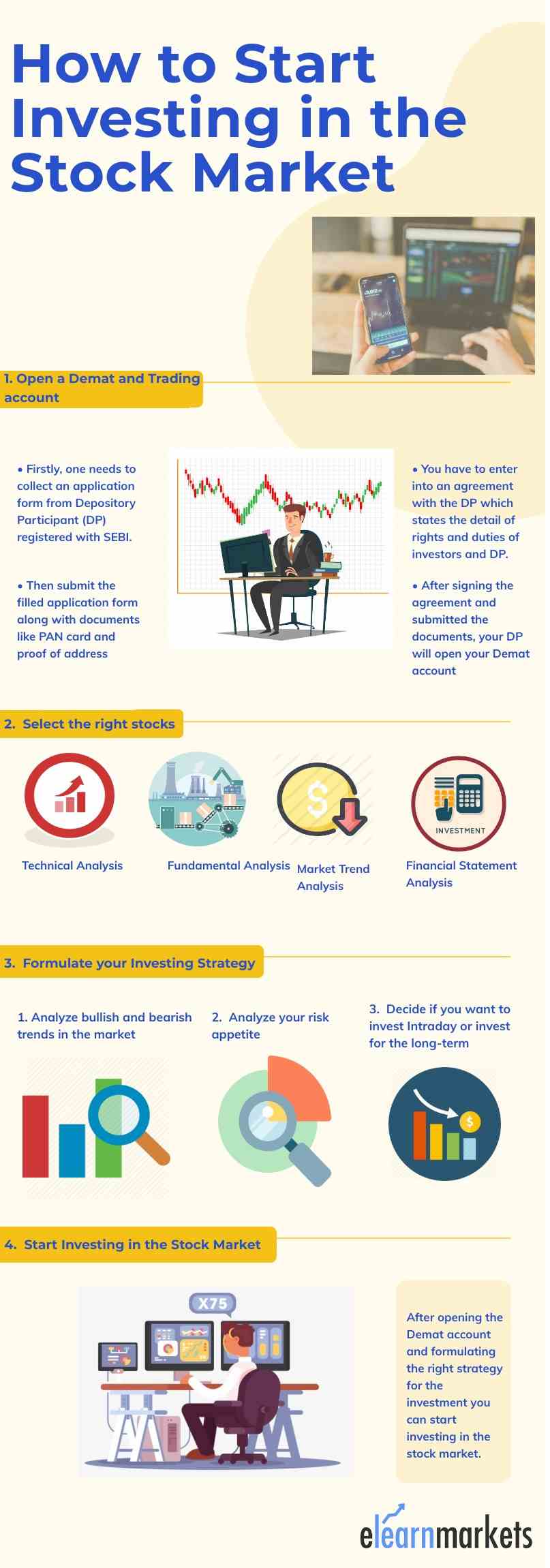
Laying the Financial Foundation
Before you purchase your first share of a company or an exchange-traded fund (ETF), you must ensure your personal finances are stable. Investing involves risk, and the last thing any investor wants is to be forced to liquidate their positions during a market downturn because they lack liquidity elsewhere.
Assessing Your Financial Health
The first step is a rigorous audit of your current financial status. Are you carrying high-interest consumer debt, such as credit card balances? If so, the interest rates on that debt—often ranging from 18% to 25%—will almost certainly outpace any returns you can reliably expect from the stock market. Mathematically, paying off a 20% interest debt is equivalent to a guaranteed 20% return on your investment. Clear these hurdles before allocating capital to the market.
Establishing an Emergency Fund
Volatility is a natural characteristic of the stock market. Prices go up, but they also go down. An emergency fund acts as a financial shock absorber, typically consisting of three to six months of living expenses held in a high-yield savings account. Having this cushion ensures that if your car breaks down or you face an unexpected medical bill, you won’t have to sell your stocks at an inopportune time to cover the cost.
Defining Your Investment Goals and Horizon
Why are you investing? Your strategy will differ significantly if you are saving for a house down payment in five years versus retirement in thirty years. Your “time horizon”—the length of time you plan to hold your investments—is the most critical factor in determining your risk tolerance. Generally, the longer your horizon, the more risk you can afford to take, as you have more time to recover from temporary market corrections.
Understanding Market Mechanics and Investment Vehicles
The stock market is a broad term that encompasses various exchanges like the New York Stock Exchange (NYSE) or the Nasdaq. To participate, you need to understand what you are actually buying.
Stocks, Bonds, and the Power of Ownership
When you buy a stock, you are purchasing a piece of a business. As a partial owner, you are entitled to a portion of the company’s profits, either through dividends (cash payments) or through the appreciation of the stock price as the company grows. Bonds, on the other hand, are debt instruments. When you buy a bond, you are essentially lending money to a corporation or government in exchange for regular interest payments and the return of your principal at a later date. Bonds are generally seen as lower risk than stocks but offer lower potential returns.
The Rise of ETFs and Index Funds
For most beginners, picking individual stocks like Apple or Amazon can be risky and time-consuming. This is where Exchange-Traded Funds (ETFs) and index funds come into play. These funds allow you to buy a “basket” of hundreds or even thousands of stocks in a single transaction. For example, an S&P 500 index fund allows you to own a small slice of the 500 largest publicly traded companies in the United States. This provides instant diversification, which is the practice of spreading your investments to reduce the impact of any single company’s failure.
The Role of Compound Interest
Einstein famously called compound interest the “eighth wonder of the world.” In the context of the stock market, compounding occurs when your investment earnings generate their own earnings. Over decades, this creates an exponential growth curve. Starting early, even with small amounts, is often more beneficial than starting later with larger sums, simply because your money has more time to compound.
Choosing Your Brokerage and Account Type
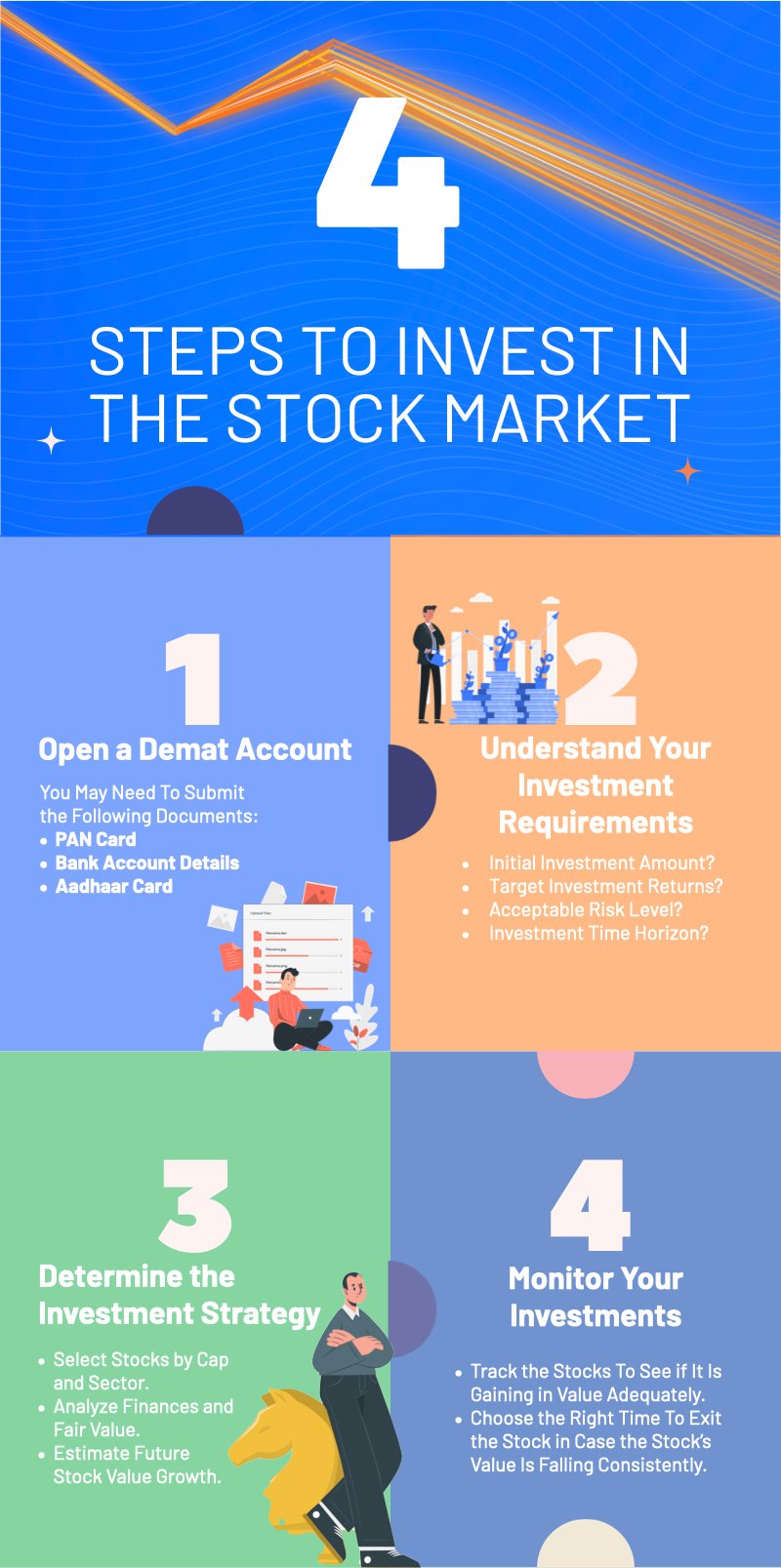
In the modern era, you don’t need a physical broker on a trading floor. You need an online brokerage account, which acts as your portal to the financial markets.
Selecting the Right Brokerage Platform
The industry has shifted toward zero-commission trading, meaning most major brokerages no longer charge a fee to buy or sell stocks or ETFs. When choosing a platform, consider the user interface, the quality of educational resources, and the availability of customer support. Platforms like Vanguard, Fidelity, and Charles Schwab are stalwarts for long-term investors, while newer fintech apps offer streamlined experiences for mobile-first users.
Tax-Advantaged vs. Taxable Accounts
Where you hold your investments matters as much as what you buy.
-
Retirement Accounts (401k, IRA, Roth IRA): These accounts offer significant tax benefits. In a traditional IRA or 401k, your contributions may be tax-deductible, and growth is tax-deferred. In a Roth IRA, you contribute after-tax dollars, but your withdrawals in retirement are completely tax-free.
-
Taxable Brokerage Accounts: These offer the most flexibility. You can withdraw your money at any time without penalty, but you will owe taxes on your capital gains and dividends each year.
Understanding Fee Structures
While commissions may be zero, you must be aware of “expense ratios” within funds. An expense ratio is the annual fee charged by an ETF or mutual fund to cover management costs. A fee of 0.03% is negligible, but a fee of 1.0% can eat away a massive portion of your wealth over thirty years. Always aim for low-cost, passively managed funds to maximize your net returns.
Developing Your First Investment Strategy
A strategy is what prevents you from making emotional decisions during market volatility. Without a plan, investors tend to buy when prices are high (driven by greed) and sell when prices are low (driven by fear).
Determining Your Risk Tolerance
Risk tolerance is your ability and willingness to lose money in exchange for potentially higher returns. If seeing your portfolio drop by 20% in a month would cause you to lose sleep or panic-sell, your portfolio is likely too aggressive. A balanced portfolio might include a mix of 70% stocks for growth and 30% bonds for stability, though these ratios should be adjusted based on your age and goals.
Dollar-Cost Averaging (DCA)
One of the most effective strategies for beginners is Dollar-Cost Averaging. This involves investing a fixed amount of money at regular intervals (e.g., $200 every month), regardless of the share price. When prices are high, your $200 buys fewer shares; when prices are low, your $200 buys more shares. Over time, this lowers your average cost per share and removes the stress of trying to “time the market.”
The Importance of Diversification
Diversification is the only “free lunch” in investing. By spreading your capital across different sectors (technology, healthcare, energy) and different geographies (U.S., International, Emerging Markets), you ensure that a downturn in one area doesn’t devastate your entire portfolio. Using broad-market ETFs is the simplest way to achieve this.
Executing Your First Trade and Monitoring Progress
Once your account is funded and your strategy is set, it is time to make your first purchase.
Market Orders vs. Limit Orders
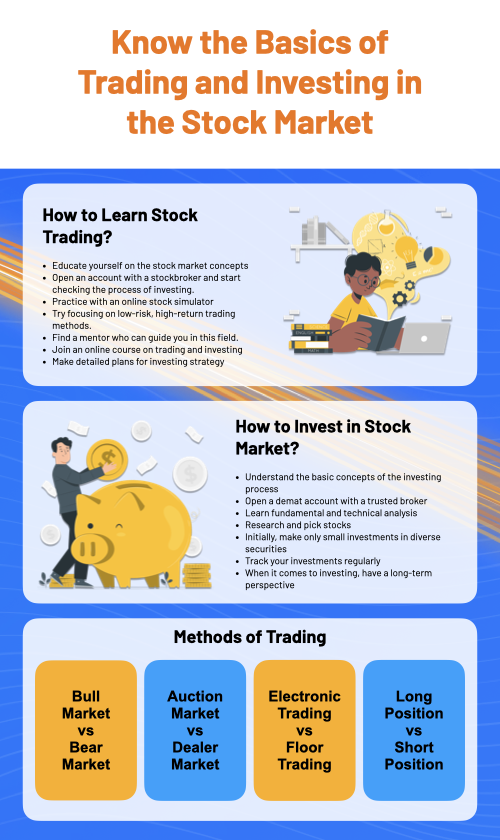
When you go to buy a stock or ETF, you will usually see two primary order types. A Market Order executes the trade immediately at the current best available price. A Limit Order allows you to set a maximum price you are willing to pay. For beginners buying highly liquid ETFs, a market order is usually sufficient, but limit orders provide more control over the execution price.
Avoiding the Pitfalls of Over-Trading
The stock market rewards activity in the short term for the brokerage, but it rewards patience for the investor. One of the most common mistakes beginners make is checking their portfolio daily and reacting to minor price movements. Investing should be relatively “boring.” If you find yourself constantly trading in and out of positions, you are likely speculating rather than investing.
Periodic Rebalancing and Review
While you shouldn’t obsess over daily movements, you should review your portfolio at least once or twice a year. Over time, some investments will grow faster than others, shifting your original asset allocation. For example, if your 70/30 stock-to-bond split becomes 80/20 because stocks performed well, you may need to sell some stocks and buy bonds to return to your desired risk level. This process is called rebalancing, and it forces you to sell high and buy low—the fundamental goal of any investor.
Starting in the stock market is a marathon, not a sprint. By focusing on low fees, broad diversification, and consistent contributions, you position yourself to capture the long-term growth of the global economy. The most important factor is not your initial capital or your ability to predict the next “hot” stock, but your discipline to stay invested through the market’s inevitable cycles.
aViewFromTheCave is a participant in the Amazon Services LLC Associates Program, an affiliate advertising program designed to provide a means for sites to earn advertising fees by advertising and linking to Amazon.com. Amazon, the Amazon logo, AmazonSupply, and the AmazonSupply logo are trademarks of Amazon.com, Inc. or its affiliates. As an Amazon Associate we earn affiliate commissions from qualifying purchases.