
Navigating the complexities of federal tax obligations can be a daunting task for many individuals and businesses. Once you’ve filed your tax return, the next critical step is to ensure that any owed taxes are paid correctly and on time to the Internal Revenue Service (IRS). Failing to do so can result in penalties, interest, and unnecessary stress. Fortunately, the IRS offers a variety of payment methods designed to accommodate different financial situations and preferences, from electronic transfers to traditional mail-in options, and even structured payment plans for those facing financial hardship.
This guide will walk you through the essential steps and options available for setting up your payments to the IRS, offering professional insights to help you manage your tax liabilities effectively. By understanding each method and its implications, you can choose the approach that best suits your needs, ensuring compliance and peace of mind.
Navigating Your Payment Obligations to the IRS
Before diving into the mechanics of setting up payments, it’s crucial to have a clear understanding of your tax bill and the general timeline for payments. This foundational knowledge empowers you to make informed decisions and avoid common pitfalls.
Understanding Your Tax Bill
Your tax bill is essentially the amount of tax you owe after accounting for all income, deductions, credits, and any taxes already withheld or paid through estimated payments. It’s vital to accurately calculate this figure, either through tax preparation software, a tax professional, or by manually following IRS instructions.
Once your return is filed, the IRS will confirm your tax liability. If you have an outstanding balance, it’s paramount to understand that interest and penalties can accrue from the original due date of the tax, even if you file an extension. An extension to file is not an extension to pay. Therefore, estimating your tax liability as accurately as possible and paying any anticipated balance by the original due date (typically April 15th for most individuals) is a critical first step.
Key Deadlines and What They Mean
The tax calendar is punctuated by several important deadlines that directly impact your payment obligations. For most individual taxpayers, the primary deadline for filing income tax returns and paying any taxes due is April 15th each year (or the next business day if April 15th falls on a weekend or holiday).
For those who apply for an extension to file, while your return due date may shift, the payment due date generally does not. You are still expected to pay any estimated tax by April 15th to avoid penalties and interest.
Furthermore, some taxpayers, particularly self-employed individuals, small business owners, and those with significant income not subject to withholding, are required to make estimated tax payments throughout the year. These are typically paid in four installments: April 15th, June 15th, September 15th, and January 15th of the following year. Missing these deadlines or underpaying can also lead to penalties. Staying abreast of these dates is fundamental to managing your cash flow and avoiding unexpected charges.
Direct and Electronic Payment Methods for Immediate Resolution
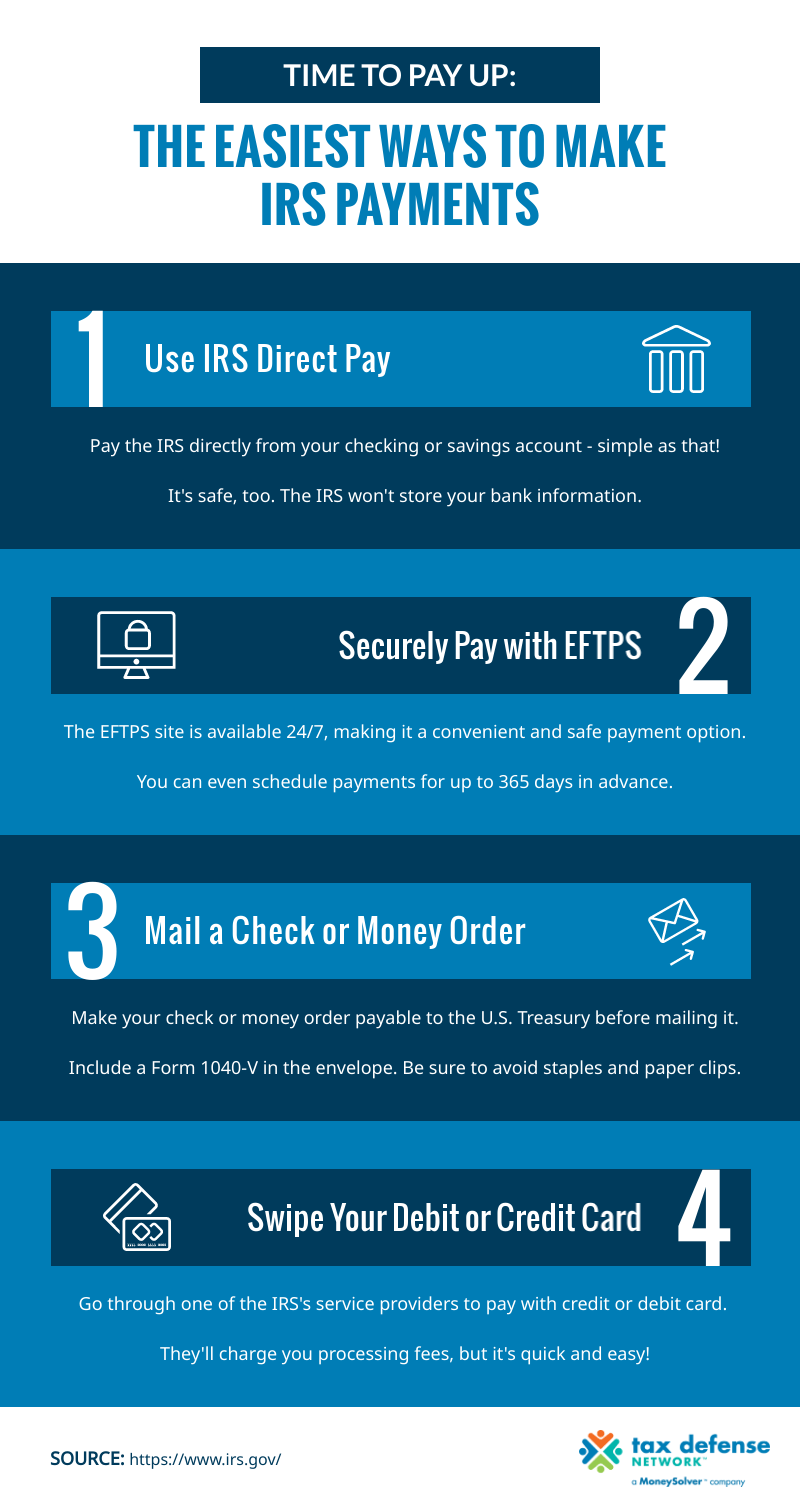
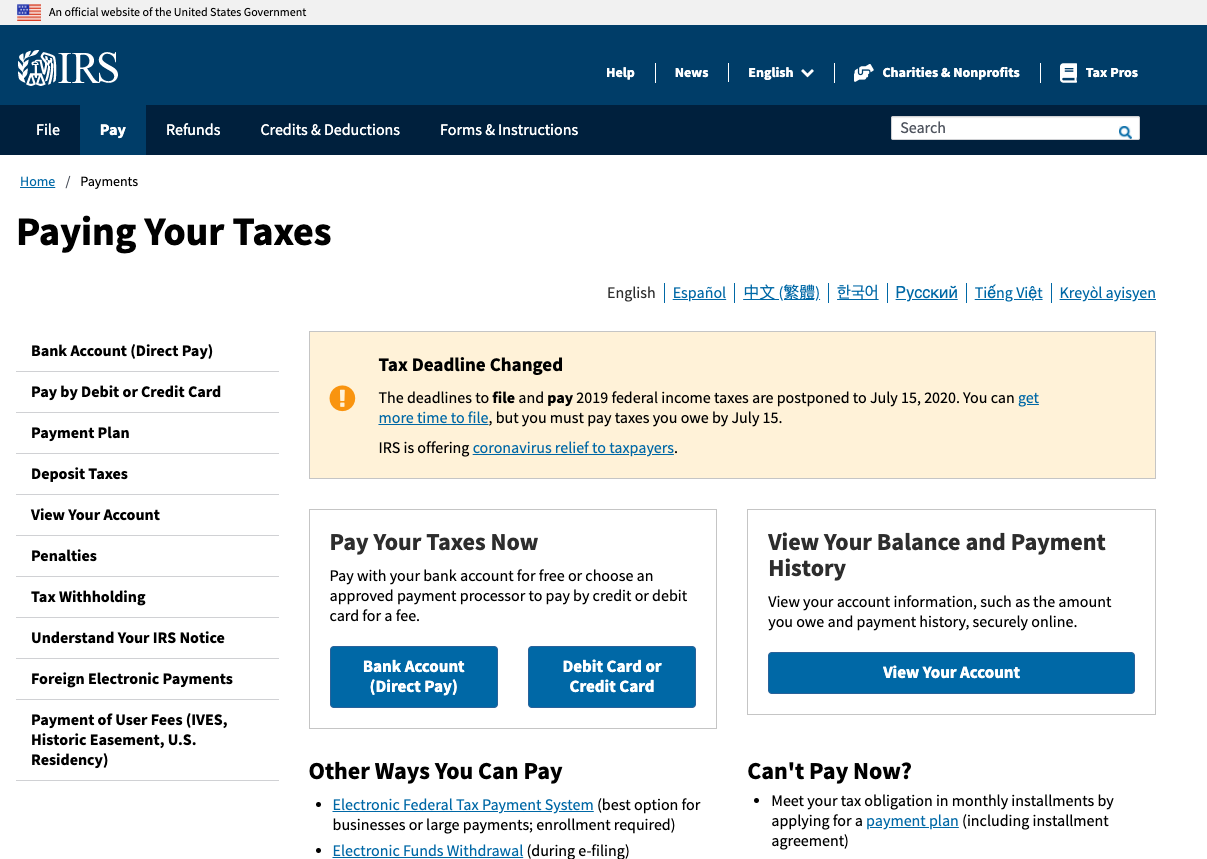
The IRS strongly encourages taxpayers to use electronic payment options due to their convenience, speed, and accuracy. These methods minimize processing delays and provide immediate confirmation of your payment, offering a tangible record for your peace of mind.
IRS Direct Pay: Simplicity at Your Fingertips
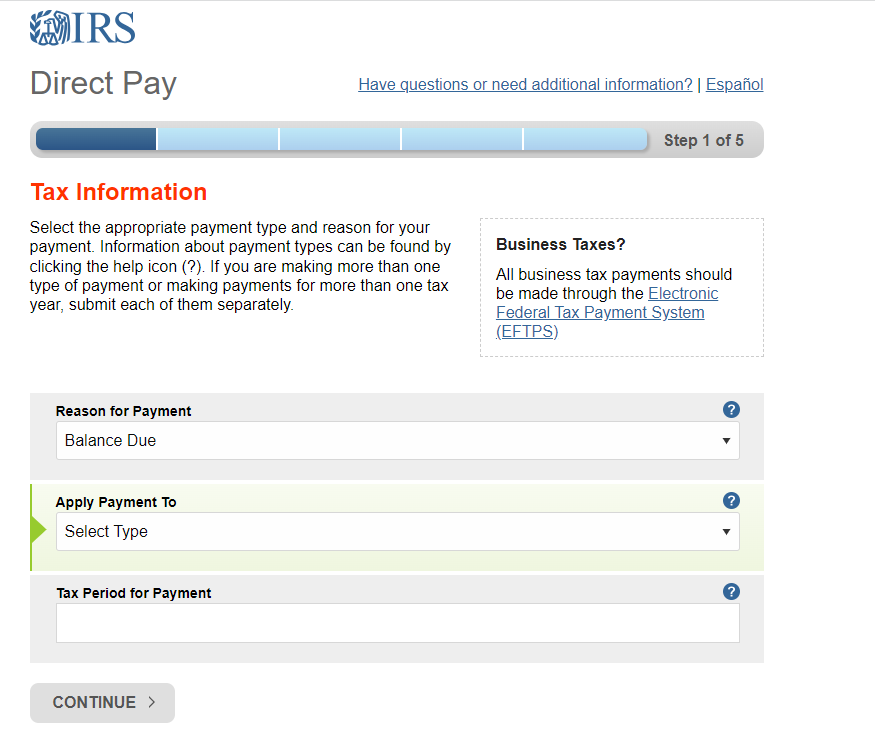
IRS Direct Pay is arguably the simplest and most cost-effective way to pay your federal taxes directly from your checking or savings account. This free service allows you to make payments for various tax types, including income tax, estimated tax, and even certain business taxes.
To use Direct Pay, you’ll need to provide your bank account number, routing number, and select the type of payment, tax year, and amount. You can schedule payments up to 365 days in advance, a useful feature for proactive financial planning. Crucially, you’ll receive an immediate confirmation number once your payment is submitted, which serves as your proof of payment. This method bypasses third-party fees and is accessible 24/7.
Paying with a Debit, Credit Card, or Digital Wallet
For those who prefer the flexibility of credit cards or digital wallets, the IRS partners with several third-party payment processors. While these methods offer convenience and the potential to earn rewards points on credit cards, it’s important to note that the processors charge a fee for their services, which varies depending on the processor and the type of card or digital wallet used. The IRS itself does not receive any portion of these fees.
Payments can be made via debit card, credit card (Visa, MasterCard, Discover, American Express), or digital wallets like PayPal. This option can be particularly appealing if you need to delay the outflow of cash from your bank account for a short period, or if the credit card rewards outweigh the processing fee. Always compare the fees charged by different processors before making your choice.
Harnessing the Power of EFTPS for Businesses and Individuals
The Electronic Federal Tax Payment System (EFTPS) is a free service provided by the U.S. Department of the Treasury that allows individual and business taxpayers to make federal tax payments electronically. While Direct Pay is excellent for one-off personal income tax payments, EFTPS is especially powerful for businesses and individuals who need to make a variety of federal tax payments regularly, such as estimated taxes, payroll taxes, or corporate income tax.
Enrollment in EFTPS is required and can take several days to process, as you’ll receive a PIN via postal mail. Once enrolled, you can schedule payments up to 365 days in advance and review your payment history for up to 15 months. EFTPS is highly secure and provides an email confirmation after each payment submission. It’s a robust tool for systematic tax management.
Traditional Payment via Mail: When Digital Isn’t an Option
Although electronic payments are preferred, the IRS still accepts payments sent via mail. This method typically involves sending a check or money order along with a payment voucher (such as Form 1040-V for individual income tax) to the appropriate IRS address.
While reliable, mailing payments comes with certain drawbacks: it’s slower, lacks immediate confirmation, and carries a higher risk of loss or delay compared to electronic methods. Always ensure your check or money order is made out to the “U.S. Treasury,” clearly states your name, address, daytime phone number, Social Security number (or Employer Identification Number for businesses), the tax year, and the type of form for which the payment is being made. Using certified mail with a return receipt can provide proof of mailing, but it still won’t give you real-time confirmation of receipt.
Strategies for Managing Unaffordable Tax Bills: IRS Payment Plans
Sometimes, despite best intentions, taxpayers find themselves unable to pay their full tax liability by the due date. The IRS understands that financial difficulties can arise, and it offers several options to help taxpayers manage their payments without incurring excessive penalties or facing severe collection actions.
The Installment Agreement: Spreading Out Your Payments
If you owe taxes but cannot pay the full amount immediately, an Installment Agreement allows you to make monthly payments for up to 72 months. This option is available for taxpayers who owe a combined total of $50,000 or less (for individuals, including tax, penalties, and interest) or $25,000 or less (for businesses, for tax, penalties, and interest) and have filed all required tax returns.
You can request an Installment Agreement online via the IRS website, by phone, or by mail using Form 9465, Installment Agreement Request. While an Installment Agreement helps manage cash flow, it’s important to know that interest and penalties continue to accrue, though the failure-to-pay penalty rate may be reduced. Setting up a direct debit from your bank account for these monthly payments is often the most convenient and reliable way to ensure consistency.
Exploring an Offer in Compromise (OIC): When You Can’t Afford to Pay
An Offer in Compromise (OIC) is an agreement between a taxpayer and the IRS that settles a tax liability for a lower amount than what is originally owed. An OIC may be an option if you can demonstrate that you cannot pay your full tax liability, or that paying it would create a financial hardship. The IRS considers your ability to pay, your income, expenses, and asset equity when evaluating an OIC.
This is a more complex option and is typically pursued when other payment solutions are not viable. The IRS will look at your “reasonable collection potential.” While an OIC can provide significant relief, it requires a detailed financial disclosure and a non-refundable application fee. It’s often advisable to seek professional help from a tax attorney or enrolled agent when pursuing an OIC, as the process is rigorous and requires careful preparation.
Short-Term Payment Plans: A Brief Respite
For those who need a little more time but anticipate being able to pay their full tax liability within 180 days, the IRS offers a short-term payment plan. This option can be requested by calling the IRS directly or applying online. While interest and penalties still apply, this plan can prevent the IRS from taking more aggressive collection actions while you gather the necessary funds. It’s a good option for a temporary cash flow crunch.
Addressing Specific Payment Scenarios and Avoiding Pitfalls
Understanding the various payment methods is only part of the equation. Being aware of specific scenarios and common mistakes can further streamline your tax payment process.
Estimated Tax Payments: Staying Ahead Throughout the Year
As mentioned, certain taxpayers must make estimated tax payments. This isn’t just a requirement; it’s a strategic way to manage your tax liability proactively. By paying your estimated taxes quarterly, you avoid a large lump-sum payment at the end of the year and potential underpayment penalties.
Tools like EFTPS are excellent for managing these regular payments. If your income fluctuates, you might need to adjust your estimated payments throughout the year to avoid overpaying or underpaying. Regularly reviewing your financial situation and adjusting your estimated tax payments accordingly is a smart financial practice.
Understanding Penalties and Interest
The IRS levies penalties for various reasons, including failure to file on time, failure to pay on time, and accuracy-related penalties. Interest is also charged on underpayments and unpaid balances, even if you have an extension or an installment agreement.
The best way to avoid penalties and interest is to file your return and pay your taxes on time. If you cannot pay the full amount, pay as much as you can by the due date and set up an installment agreement for the remaining balance. In certain circumstances, the IRS may waive penalties for reasonable cause, but interest generally cannot be waived. Understanding these charges motivates prompt and accurate payment.
Seeking Professional Assistance and Resources
The world of tax payments can be intricate, and navigating it alone isn’t always necessary. Tax professionals, such as Certified Public Accountants (CPAs), enrolled agents, or tax attorneys, can provide invaluable assistance. They can help you understand your obligations, choose the best payment method, prepare payment plans, and represent you if you face issues with the IRS.
The IRS website (IRS.gov) is also an extensive resource, offering detailed instructions, forms, and tools to help taxpayers understand and fulfill their payment responsibilities. Don’t hesitate to leverage these resources or seek expert advice when you feel overwhelmed or unsure about the best course of action.
Ensuring a Smooth Tax Payment Experience
Ultimately, setting up payments to the IRS doesn’t have to be a source of anxiety. With a clear understanding of your options and a proactive approach, you can manage your tax obligations efficiently and confidently.
Record Keeping and Confirmation
Regardless of the payment method you choose, meticulous record-keeping is paramount. For electronic payments, always save the confirmation number provided by the IRS or the third-party processor. For mailed payments, keep copies of your check or money order, the payment voucher, and proof of mailing (if applicable). These records serve as your defense should any discrepancies arise with the IRS. It’s a good practice to keep tax-related documents for at least three years, or longer if you have outstanding obligations.
Proactive Planning for Future Tax Seasons
The most effective way to manage your IRS payments is through proactive planning. This includes:
- Adjusting withholding: If you consistently owe taxes, consider adjusting your W-4 with your employer to have more tax withheld from your paychecks.
- Budgeting for estimated taxes: For those who pay estimated taxes, setting aside funds quarterly specifically for this purpose can prevent financial strain.
- Reviewing your financial situation: Annually review your income, deductions, and credits to anticipate your tax liability and make necessary adjustments to your payment strategy.
By adopting a forward-thinking approach, you can transform the often-dreaded task of paying taxes into a manageable and stress-free component of your overall financial health. The IRS provides the tools; it’s up to you to utilize them effectively.
aViewFromTheCave is a participant in the Amazon Services LLC Associates Program, an affiliate advertising program designed to provide a means for sites to earn advertising fees by advertising and linking to Amazon.com. Amazon, the Amazon logo, AmazonSupply, and the AmazonSupply logo are trademarks of Amazon.com, Inc. or its affiliates. As an Amazon Associate we earn affiliate commissions from qualifying purchases.