
Paying federal taxes is a fundamental civic duty for most Americans, a process that can often seem daunting given the array of options and rules. However, understanding the various methods provided by the Internal Revenue Service (IRS) is the first step towards a stress-free tax season. This guide aims to demystify the payment process, offering insights into each method, critical deadlines, and strategies for managing your tax obligations effectively. By exploring the official channels, understanding your responsibilities, and knowing what to do if you face financial hurdles, you can approach tax payments with confidence and clarity.
Navigating the Landscape of IRS Payment Options
The IRS has evolved its payment systems significantly over the years, offering a mix of traditional and modern electronic methods to accommodate different taxpayer preferences and situations. Choosing the right method can save you time, potential fees, and provide peace of mind.
Direct Pay: Your Bank Account at Your Fingertips
IRS Direct Pay is arguably one of the most straightforward and cost-effective ways to pay your federal taxes directly from your checking or savings account. This free web-based service allows you to make tax payments quickly and securely, covering everything from current year taxes to estimated taxes and even amended return payments.
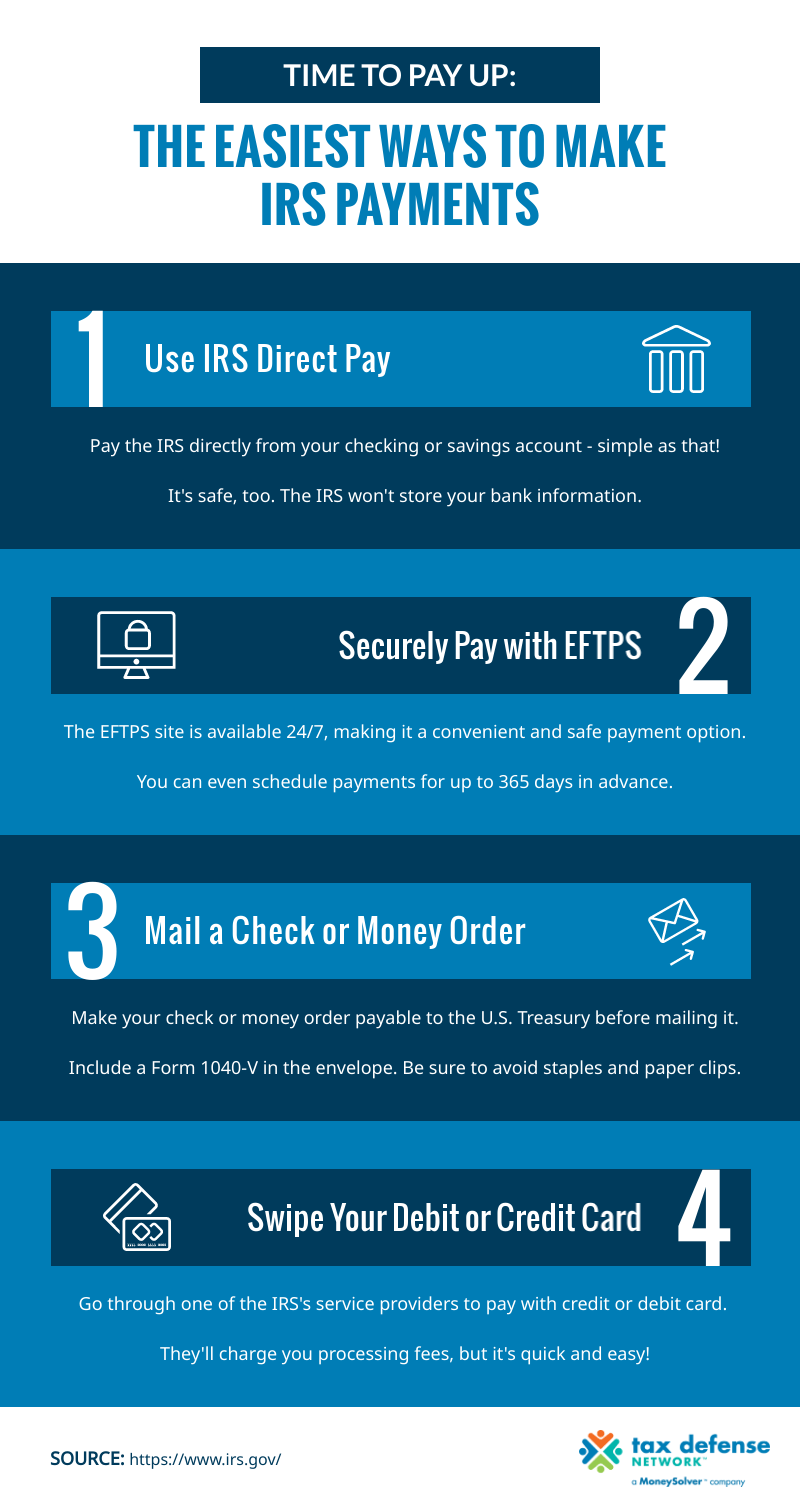
To use Direct Pay, you simply need to visit the IRS website, select the reason for your payment, enter your banking information, and provide basic identifying details from your previous tax return for verification. The system then processes the payment directly. A significant advantage is that you receive immediate confirmation that your payment has been scheduled, which is crucial for record-keeping. It’s a highly recommended method for its simplicity, security, and lack of processing fees. You can schedule payments up to 365 days in advance, providing ample flexibility for planning.
Credit, Debit, and Digital Wallets: The Convenience of Third-Party Processors
For those who prefer the convenience or rewards associated with card payments, the IRS allows you to pay your federal taxes using a credit card, debit card, or even digital wallet services like PayPal and Click to Pay. However, it’s important to note that the IRS does not directly process these payments. Instead, it relies on several authorized third-party payment processors.
When opting for this method, you will incur a processing fee, which varies depending on the processor and the type of card or service you use. Debit card fees are typically lower than credit card fees, and these fees are paid directly to the processor, not the IRS. While the fees might be a drawback for some, the ability to earn credit card rewards, defer payment until your statement due date, or simply use a preferred payment method makes it an attractive option for others. Ensure you choose an authorized processor from the IRS website to avoid scams and verify the associated fees before completing your transaction. This method is especially useful for those who want to pay quickly or manage cash flow.
EFTPS: The Gold Standard for Electronic Payments
The Electronic Federal Tax Payment System (EFTPS) is a robust and secure electronic payment system provided by the U.S. Department of Treasury. It is primarily designed for businesses but is also available for individual taxpayers who wish to make federal tax payments. EFTPS offers greater control and flexibility, allowing users to schedule payments up to 365 days in advance and receive an immediate confirmation number.
Enrolling in EFTPS is a one-time process that requires personal and banking information. After enrollment, which can take a few days to process as the IRS mails you a PIN, you can log in securely to make payments. This system is particularly beneficial for those who make estimated tax payments quarterly or manage multiple types of federal tax obligations, as it offers a comprehensive record of all transactions. It’s a highly reliable method, often favored by tax professionals for its secure and organized approach to tax payments.
Traditional Methods: Checks, Money Orders, and Cash
Despite the rise of electronic payment methods, traditional options remain available for those who prefer them or do not have access to digital banking.
- Checks and Money Orders: You can pay your federal taxes by mail using a check or money order made payable to the “U.S. Treasury.” It’s crucial to include your name, address, daytime phone number, Social Security number (SSN), the tax year, and the related tax form (e.g., “2023 Form 1040”) on the payment. Mail your payment with a Form 1040-V payment voucher (if filing Form 1040) to the appropriate IRS address, which varies depending on your location and the form being filed. Always ensure your payment is postmarked by the tax deadline.
- Cash Payments: For taxpayers who need to pay in cash, the IRS offers options through retail partners. Services like PayNearMe allow you to make a cash payment at participating retail stores (e.g., 7-Eleven, Family Dollar). You must first access a payment barcode through the IRS website or by calling the IRS directly. This barcode is then scanned at the retailer, and you pay in cash. This method is convenient for those without bank accounts but requires an extra step to obtain the barcode and find a participating location. Keep the receipt provided by the retailer as proof of payment.
Understanding Payment Deadlines and Avoiding Penalties
Paying your taxes is only half the battle; knowing when to pay is equally critical to avoid penalties and interest charges. The IRS enforces strict deadlines, and understanding them is vital for financial planning.
Key Dates to Remember: Income Tax and Estimated Taxes
The primary deadline for filing federal income tax returns and paying any taxes owed for most individuals is April 15th of each year (or the next business day if April 15th falls on a weekend or holiday). This deadline applies to your annual tax liability.
For individuals with income not subject to withholding (e.g., self-employment income, interest, dividends, rent), estimated taxes must be paid throughout the year in quarterly installments. The due dates for these payments are:
- April 15th for income earned January 1 to March 31.
- June 15th for income earned April 1 to May 31.
- September 15th for income earned June 1 to August 31.
- January 15th of the following year for income earned September 1 to December 31.
Missing these quarterly deadlines can result in underpayment penalties, even if you eventually pay your total tax liability by the April 15th annual deadline.
The Cost of Late Payments: Penalties and Interest
The IRS levies penalties for both failure to file on time and failure to pay on time.
- Failure to Pay Penalty: This penalty is 0.5% of the unpaid taxes for each month or part of a month that taxes remain unpaid, capped at 25% of your unpaid taxes.
- Failure to File Penalty: This penalty is generally 5% of the unpaid taxes for each month or part of a month that a tax return is late, capped at 25% of your unpaid taxes. If both penalties apply, the failure to file penalty is reduced by the failure to pay penalty for the months it applies.
- Interest: In addition to penalties, the IRS charges interest on underpayments and unpaid taxes. The interest rate is set quarterly and can fluctuate, compounding daily. This means that the longer your tax debt remains unpaid, the more you will owe.
These charges can quickly add up, making it financially prudent to pay your taxes on time or, if unable, to proactively communicate with the IRS to arrange a payment plan.
Extensions to File vs. Extensions to Pay
It’s a common misconception that an extension to file your tax return also grants an extension to pay your taxes. This is incorrect. An extension to file (typically until October 15th) gives you additional time to prepare and submit your tax return, but it does not extend the deadline for paying any taxes you owe. If you anticipate owing taxes, you should estimate your liability and pay it by the original April 15th deadline to avoid late payment penalties and interest, even if you plan to file an extension. You can request an extension to file using Form 4868, which can be done electronically or by mail.
When You Can’t Pay: Exploring IRS Payment Solutions
Life happens, and sometimes, despite best intentions, you may find yourself unable to pay your federal tax liability by the due date. The worst thing to do in this situation is to ignore the problem. The IRS offers several solutions for taxpayers facing financial hardship, but it requires proactive engagement.
Short-Term Payment Plan: A Brief Reprieve
If you need a little more time to pay your full tax liability, you might be eligible for a short-term payment plan, which allows you an additional period of up to 180 days to pay. While a short-term plan can prevent immediate collection actions, interest and penalties still accrue during this period. To apply, you can contact the IRS directly or indicate your request when filing your return. This option is suitable for those who expect to have the full amount within a few months.
Installment Agreement: Spreading Out Your Tax Debt
For taxpayers who need more than 180 days, an Installment Agreement allows you to make monthly payments for up to 72 months (6 years). This is a formal agreement with the IRS, and you must adhere to the agreed-upon payment schedule. To be eligible, you must generally be current with your tax filings and owe a combined total of under $50,000 in tax, penalties, and interest for individuals (or $25,000 for businesses).
You can apply for an Installment Agreement online via the IRS website (Online Payment Agreement tool), by phone, or by mail using Form 9465, Installment Agreement Request. While an Installment Agreement will reduce some penalties, interest will continue to accrue. It’s a structured way to manage tax debt without facing more severe collection actions.
Offer in Compromise (OIC): Settling for Less
An Offer in Compromise (OIC) allows certain taxpayers to resolve their tax liability with the IRS for a lower amount than what they originally owe. The IRS will typically accept an OIC if there’s doubt as to collectibility, meaning they believe you cannot pay the full amount due to your current financial situation. This is not an easy option to qualify for, as the IRS thoroughly evaluates your ability to pay, including your income, expenses, equity in assets, and future earning potential.
Applying for an OIC involves submitting a detailed financial statement (Form 656, Offer in Compromise) along with supporting documentation. The process can be complex and lengthy, and it’s often advisable to seek professional help. If an OIC is accepted, it provides a fresh start, but it requires strict adherence to the terms of the agreement.
Seeking Professional Guidance: Enrolled Agents and CPAs
Navigating complex tax situations, especially when you can’t pay, can be overwhelming. Enrolled Agents (EAs), Certified Public Accountants (CPAs), and tax attorneys are licensed professionals who specialize in tax law and can provide invaluable assistance. They can help you understand your options, prepare necessary forms, negotiate with the IRS on your behalf, and ensure you take the most advantageous path forward. Investing in professional advice can save you significant time, stress, and potential financial penalties in the long run.
Best Practices for a Stress-Free Tax Payment Experience
Regardless of the method you choose or your financial situation, adopting best practices can streamline your tax payment process and prevent future headaches.
Organize and Verify: The Foundation of Accuracy
Before making any payment, ensure your tax return information is accurate and complete. Double-check your Social Security number, the tax year, and the amount you intend to pay. If paying electronically from a bank account, verify the routing and account numbers. A simple typo can lead to a rejected payment, potentially incurring penalties and delays. Keep all your tax documents organized throughout the year so you can easily reference them when tax season arrives.
Document Everything: Your Proof of Payment
Always keep meticulous records of your payments.
- Electronic Payments: Save the confirmation numbers provided by IRS Direct Pay, EFTPS, or third-party processors. Print or save screenshots of the confirmation pages.
- Mail Payments: Make a copy of your check or money order before mailing it. Consider sending certified mail with a return receipt for added proof of delivery.
- Cash Payments: Keep the receipt provided by the retail partner for your cash payment.
These records serve as vital proof that you made your payment on time and for the correct amount, which can be invaluable if any discrepancies arise with the IRS.
Beware of Scams: Protecting Your Financial Information
The IRS will never initiate contact with taxpayers via email, text messages, or social media to request personal or financial information. They also typically do not demand immediate payment over the phone using specific payment methods like gift cards or wire transfers. Be extremely cautious of unsolicited communications claiming to be from the IRS. If you receive a suspicious message, do not click on links or provide any personal data. Instead, report it to the IRS and contact them directly using their official phone numbers or website if you have concerns about your tax account. Protecting your financial information is paramount.

Conclusion: Your Path to Financial Peace of Mind
Paying federal taxes is an integral part of responsible financial management. While the process may seem complex, the IRS offers a variety of convenient and secure methods to meet your obligations. By understanding these options—from direct bank transfers and credit card payments to traditional mail-in methods and cash payment partners—you can choose the approach that best suits your needs. Furthermore, being aware of critical deadlines, the implications of late payments, and the available relief programs for financial hardship empowers you to navigate tax season with confidence. Proactive planning, meticulous record-keeping, and vigilance against scams are your best allies in achieving a stress-free tax payment experience and maintaining financial peace of mind.
aViewFromTheCave is a participant in the Amazon Services LLC Associates Program, an affiliate advertising program designed to provide a means for sites to earn advertising fees by advertising and linking to Amazon.com. Amazon, the Amazon logo, AmazonSupply, and the AmazonSupply logo are trademarks of Amazon.com, Inc. or its affiliates. As an Amazon Associate we earn affiliate commissions from qualifying purchases.