
A business proposal is more than just a document; it is a financial roadmap designed to persuade stakeholders that a specific venture is a viable, profitable, and secure investment. Whether you are seeking venture capital, a bank loan, or a strategic partnership, the essence of your proposal lies in its ability to demonstrate fiscal responsibility and a clear path to return on investment (ROI). In the world of business finance, a proposal must bridge the gap between a conceptual idea and a tangible financial asset.
The Financial Foundation: Turning Ideas into Assets
Before drafting the first paragraph of your proposal, you must understand the underlying economics of your business model. A successful proposal is built on a bedrock of market research and financial feasibility. This stage is not about what you want to do, but about what the market is willing to pay for and how much it will cost to deliver that value.
Defining the Value Proposition through Revenue Models
At the heart of every financial proposal is the revenue model. Investors are less interested in the “how” of your operations and more interested in the “how much.” You must clearly articulate your monetization strategy. Are you looking at a subscription-based model with recurring revenue, a high-volume low-margin retail play, or a premium service model?
A strong proposal quantifies the value proposition. If your business solves a problem, how much capital does that solution save the client? If it creates an opportunity, what is the projected upside? By framing your proposal in terms of capital appreciation and revenue generation, you immediately speak the language of financiers and decision-makers.
Identifying the Market Opportunity and Financial Feasibility
A proposal without a documented market opportunity is merely a creative writing exercise. To make a proposal that stands the test of professional scrutiny, you must conduct a thorough Total Addressable Market (TAM) analysis. This involves identifying the total revenue opportunity available if your product or service achieved 100% market share, and then narrowing it down to the Serviceable Obtainable Market (SOM).
Financial feasibility also requires a competitive landscape analysis. How are your competitors priced? What are their profit margins? By benchmarking your projected financials against industry standards, you provide a reality check that builds trust with potential investors. They need to see that your financial goals are ambitious yet grounded in the current economic climate.
Critical Components of a Wealth-Generating Business Proposal
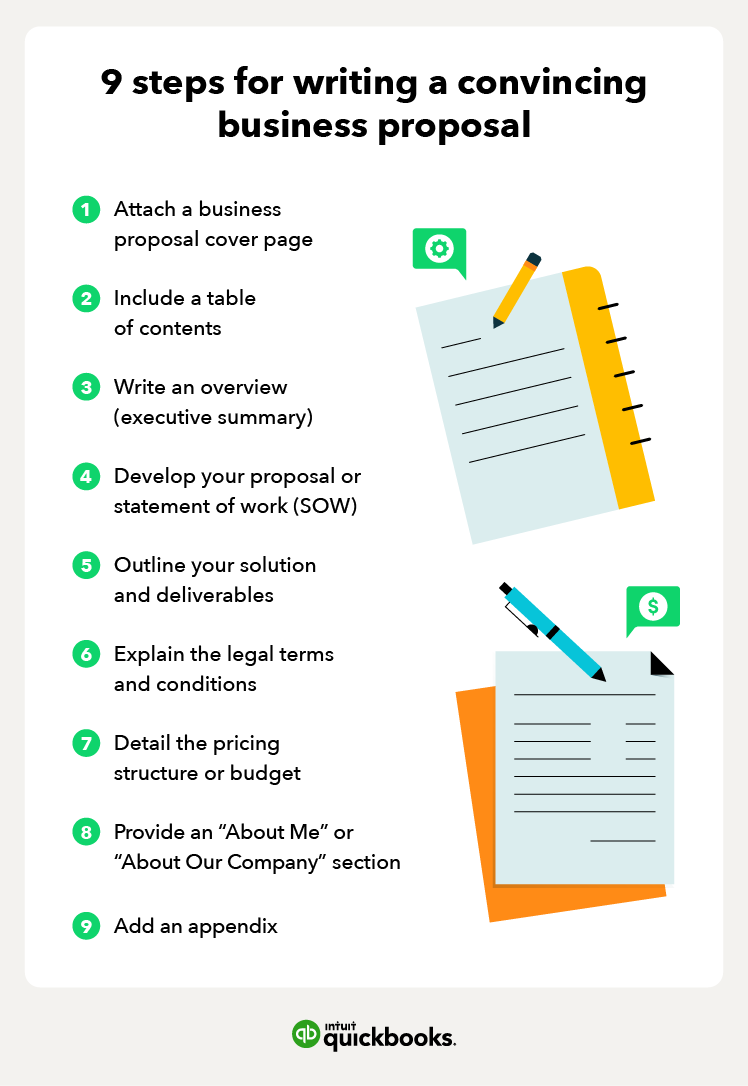
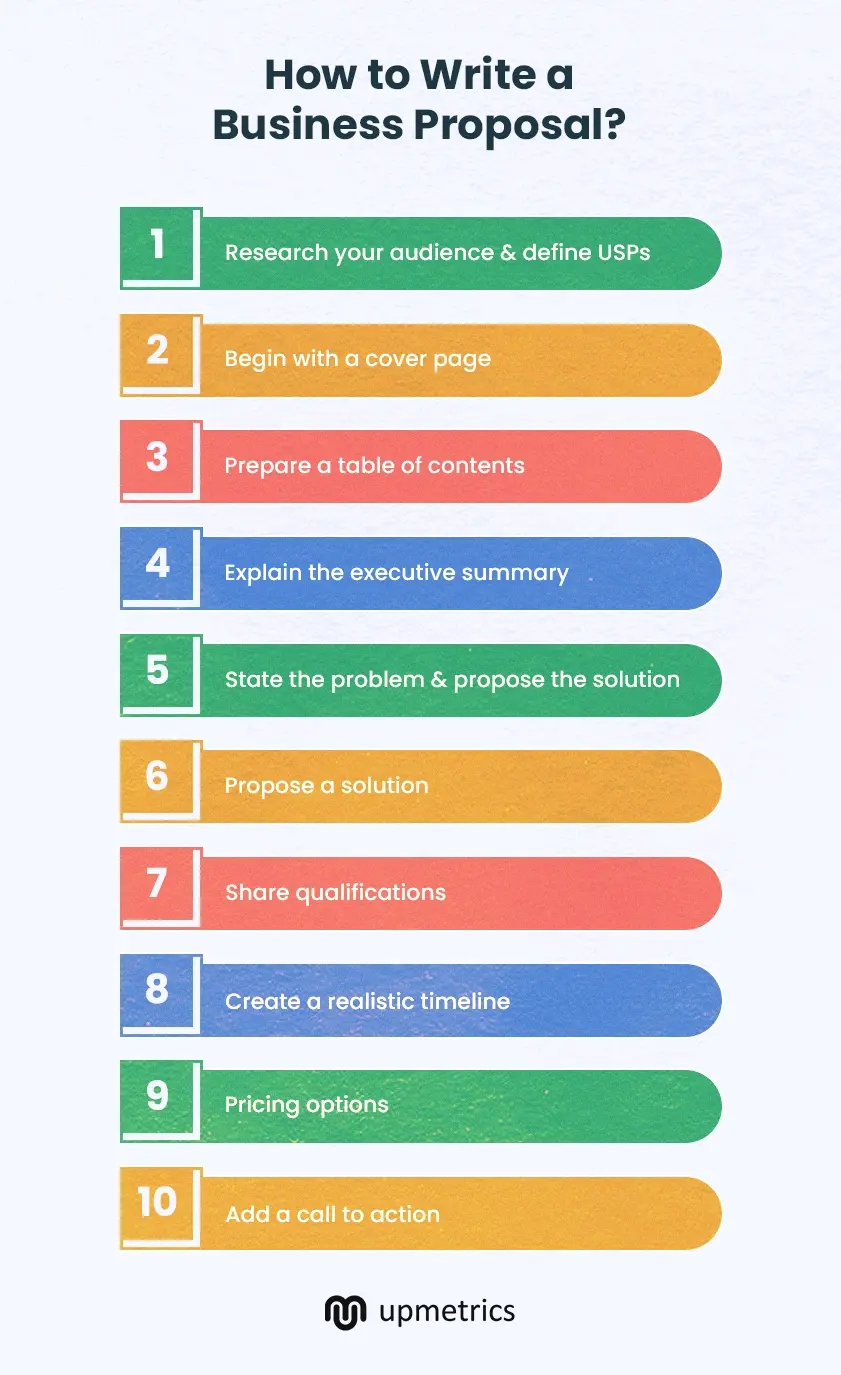
The structure of your proposal determines how effectively you communicate the financial potential of your project. Each section should lead the reader closer to the conclusion that funding your business is a sound financial decision.
The Executive Summary: Selling the Vision and the Numbers
The Executive Summary is arguably the most important part of the document. Most high-level investors will decide whether to read the rest of the proposal based on these first two pages. While it should briefly touch on the mission and the team, the bulk of the summary must focus on the “The Ask” and the “The Return.”
State clearly how much capital is required, how it will be deployed, and what the projected exit or ROI looks like over a three-to-five-year horizon. This is not the place for technical jargon; it is the place for high-level fiscal milestones. Use hard data—projected Compound Annual Growth Rate (CAGR), estimated market share percentages, and key financial ratios.
The Operational Plan as a Cost Management Strategy
In the context of business finance, the operational plan is essentially a blueprint for cost management. It outlines how you intend to turn capital into output efficiently. This section should detail your supply chain, manufacturing processes, or service delivery models with an eye toward “Lean” principles.

Investors look for scalability. Can your business double its revenue without doubling its costs? This is known as operating leverage. In your proposal, explain how your operational structure supports high margins as the business grows. Discussing your Choice of entity (LLC, C-Corp, etc.) also fits here, as it has significant implications for taxation and long-term wealth distribution.
Financial Forecasting and Risk Assessment
This is where the proposal shifts from narrative to cold, hard numbers. A proposal that lacks a rigorous financial section will fail to secure professional-grade funding. You are not just guessing the future; you are creating a data-driven model of what the future could look like.
Financial Projections: Cash Flow, Break-Even, and Profit Margins
Your financial projections should include three key documents: the Income Statement (Profit and Loss), the Balance Sheet, and the Cash Flow Statement. For a new venture or project, these should be projected monthly for the first year and quarterly for the following two to four years.
-
The Cash Flow Statement: This is the most critical for early-stage businesses. Investors want to know your “burn rate”—how fast you are spending capital before you become profitable. A proposal must clearly identify the “break-even point,” the moment when your revenue covers all operating expenses.
-
Profit Margins: Distinguish between Gross Margin and Net Margin. A business might have high revenue but low net margins due to high overhead. Your proposal should explain how you will optimize these margins over time through economies of scale.
-
Conservative vs. Aggressive Scenarios: Provide a “Base Case,” a “Best Case,” and a “Worst Case” scenario. This shows fiscal maturity and demonstrates that you have planned for market volatility.
Mitigating Financial Risk and Contingency Planning
Every investment carries risk, and pretending it doesn’t is a red flag for seasoned financiers. To make a compelling business proposal, you must proactively identify these risks and present a mitigation strategy. Risks can range from market shifts and regulatory changes to interest rate fluctuations and supply chain disruptions.
A detailed sensitivity analysis is a powerful tool here. Show how a 10% increase in the cost of raw materials or a 15% decrease in projected sales would affect your bottom line. By presenting a contingency plan—such as a line of credit or a diversified supplier base—you prove that you are a steward of capital who is prepared to protect the investment even in adverse conditions.
Securing Capital: Mastering the Ask and the ROI
The final section of your business proposal is the “Request for Funding.” This is where you finalize the terms of the deal and explain the long-term wealth implications for the stakeholders involved.
Equity vs. Debt Financing in Proposals
You must decide whether you are asking for debt (a loan that must be repaid with interest) or equity (selling a percentage of ownership in the company). Your choice significantly impacts the financial structure of the proposal.
-
Debt Financing: If you are seeking a loan, focus on your “Ability to Pay.” Highlight your Debt Service Coverage Ratio (DSCR) and the collateral available to secure the loan.
-
Equity Financing: If you are seeking investors, focus on “Valuation.” How much is your company worth today (Pre-money valuation), and how much will it be worth after the investment (Post-money valuation)? You must justify these numbers using standard valuation methods like Discounted Cash Flow (DCF) or Comparable Company Analysis (Comps).
Exit Strategies and Long-Term Fiscal Growth
Professional investors, particularly in the realm of private equity or venture capital, are looking for their “exit.” They want to know how they will get their money back, plus a significant profit. Your proposal should outline potential exit strategies: Is the goal an Initial Public Offering (IPO)? An acquisition by a larger corporation? A management buyout?
Even if you aren’t looking for an immediate exit, you should discuss the long-term fiscal health of the company. How will profits be reinvested to drive further growth? What is the dividend policy? By addressing the end-game, you demonstrate that you are focused on the ultimate goal of any business proposal: the creation and preservation of wealth.
In conclusion, making a business proposal is a rigorous exercise in financial planning. It requires a deep dive into revenue models, a granular understanding of costs, and a clear-eyed assessment of risk. By focusing on the numbers and the strategic deployment of capital, you transform a simple document into a powerful instrument for financial growth. A proposal that prioritizes ROI, scalability, and fiscal transparency will always stand out in the eyes of those who hold the keys to capital.
aViewFromTheCave is a participant in the Amazon Services LLC Associates Program, an affiliate advertising program designed to provide a means for sites to earn advertising fees by advertising and linking to Amazon.com. Amazon, the Amazon logo, AmazonSupply, and the AmazonSupply logo are trademarks of Amazon.com, Inc. or its affiliates. As an Amazon Associate we earn affiliate commissions from qualifying purchases.