
Embarking on the journey to understand the stock market can feel akin to learning a new language – complex, intimidating, and filled with unfamiliar jargon. Yet, in an era where financial literacy is more crucial than ever, demystifying the stock market is a vital step towards achieving financial independence and growth. Whether your goal is to grow your savings, fund a comfortable retirement, or simply understand the economic forces shaping our world, learning the stock market is an invaluable skill. This comprehensive guide will break down the learning process into manageable steps, offering a clear roadmap for anyone looking to navigate the exciting, yet challenging, world of investments.
Gone are the days when stock market participation was reserved for an elite few. Today, thanks to technological advancements and increased accessibility, almost anyone can learn and engage with the market. However, learning isn’t just about opening a brokerage account; it’s about building a robust foundation of knowledge, understanding risk, developing a sound strategy, and maintaining emotional discipline. This article will equip you with the insights and resources to begin your education confidently and effectively.
Laying the Foundation: Understanding Stock Market Basics
Before you can build a towering skyscraper of investment knowledge, you need to pour a solid concrete foundation. This involves grasping the fundamental concepts that underpin the entire stock market ecosystem. Without this baseline understanding, any subsequent learning will lack context and practical application.
What is the Stock Market?
At its core, the stock market is a collection of exchanges and markets where the buying and selling of publicly-held company shares takes place. It’s where investors can buy partial ownership in companies (stocks) in the hope that these companies will grow, increasing the value of their shares. Companies, in turn, use the money raised from selling stock to fund their operations, expand, or develop new products. There are two main types of markets: the primary market, where new stocks are issued (e.g., Initial Public Offerings – IPOs), and the secondary market, where existing shares are traded among investors. Understanding this basic exchange of ownership and capital is crucial.
Key Terminology You Need to Know
The stock market has its own lexicon, and familiarizing yourself with key terms is non-negotiable. Here are some essential terms to start with:
- Stock/Share: A unit of ownership in a company.
- Dividend: A portion of a company’s profits paid periodically to shareholders.
- Capital Gain: The profit made from selling an asset (like a stock) for more than its purchase price.
- Volatility: The degree of variation of a trading price series over time; a measure of risk.
- Bull Market: A market in which prices are rising or are expected to rise.
- Bear Market: A market in which prices are falling or are expected to fall.
- Index: A measure of the performance of a group of stocks (e.g., S&P 500, Dow Jones Industrial Average).
- Broker: An individual or firm that executes buy and sell orders on behalf of investors.
- Bid/Ask Price: The highest price a buyer is willing to pay (bid) and the lowest price a seller is willing to accept (ask).
Understanding these terms will not only help you comprehend financial news but also communicate effectively about your investment decisions.
The Different Types of Investments
While “stock market” often conjures images of individual company shares, the market offers a diverse range of investment vehicles. Diversifying your understanding beyond just individual stocks is vital for a robust learning experience:
- Stocks: As discussed, ownership shares in a company. Can offer high growth potential but also carry higher risk.
- Exchange-Traded Funds (ETFs): A basket of securities (like stocks, bonds, commodities) that trade on an exchange like a stock. ETFs offer diversification and are often a good starting point for new investors.
- Mutual Funds: Professionally managed portfolios of stocks, bonds, and other investments. They offer diversification and professional management but typically have higher fees than ETFs.
- Bonds: Debt securities issued by governments or corporations. When you buy a bond, you are lending money to the issuer, who promises to pay you back with interest over a set period. Bonds are generally considered less risky than stocks.
Each investment type has its own risk-reward profile, and understanding them helps in building a diversified portfolio aligned with your goals.
Building Your Knowledge Base: Educational Resources and Strategies
Once you have a grasp of the fundamentals, the next step is to actively immerse yourself in learning through various resources and practical strategies. The best approach combines theoretical knowledge with hands-on experience.
Books and Online Courses
For foundational knowledge, books offer structured, in-depth explanations. Classics like Benjamin Graham’s “The Intelligent Investor” or Burton Malkiel’s “A Random Walk Down Wall Street” provide timeless wisdom. More contemporary authors like Peter Lynch (“One Up On Wall Street”) or Joel Greenblatt (“The Little Book That Beats the Market”) offer practical, accessible strategies.
Online courses, provided by platforms like Coursera, Udemy, edX, or even specific financial education websites (e.g., Investopedia Academy), offer structured learning with videos, quizzes, and sometimes even certifications. These can be excellent for guided learning at your own pace. Look for courses taught by reputable finance professionals or academic institutions.
Reputable Financial News and Analysis
Staying informed is critical. Regularly reading financial news from trusted sources will help you understand market movements, economic trends, and company-specific developments.
- The Wall Street Journal & Bloomberg: Offer comprehensive global financial news and analysis.
- Financial Times: Another excellent source for international financial news.
- Investopedia: An invaluable resource for defining financial terms, explaining concepts, and providing tutorials.
- Seeking Alpha & Yahoo Finance: Provide news, analysis, and data on individual stocks and markets.
While blogs and social media can offer diverse perspectives, always verify information from multiple reliable sources to avoid misinformation and hype.
Practical Learning: Simulation and Paper Trading
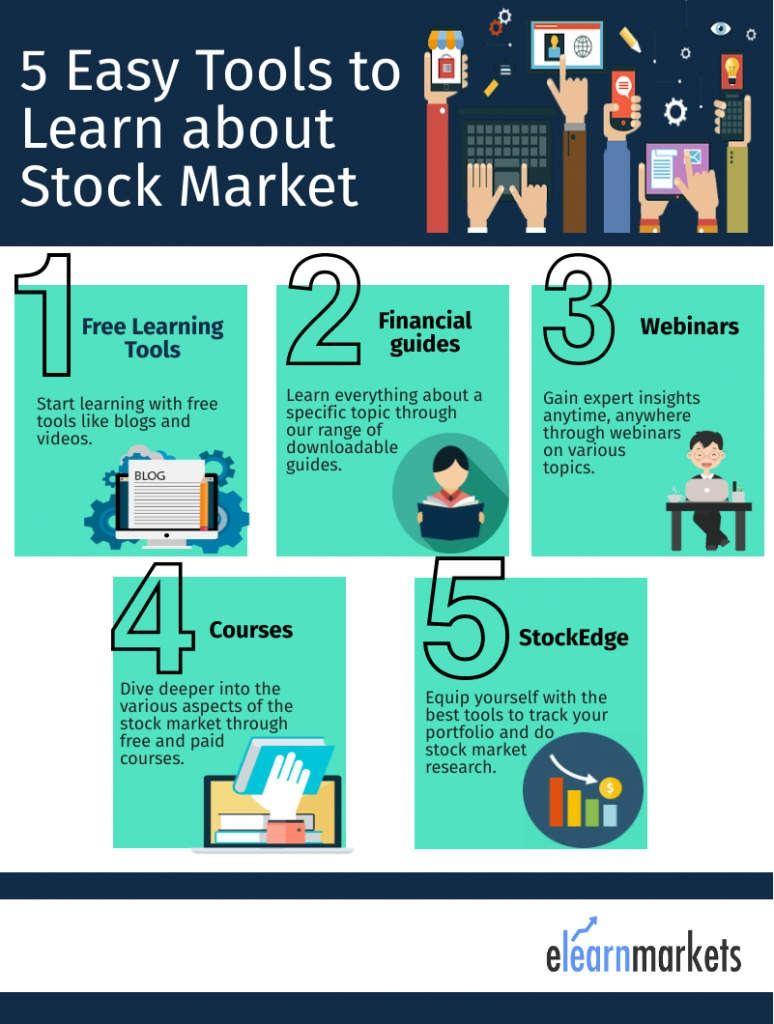
Reading and studying are essential, but nothing truly prepares you for the market like practical experience. However, jumping straight into live trading with real money is risky. This is where paper trading or stock market simulators come in.
Many brokerage firms and independent platforms offer virtual trading accounts where you can practice buying and selling stocks with hypothetical money. This allows you to:
- Test investment strategies without financial risk.
- Get comfortable with the trading platform’s interface.
- Understand how market orders, limit orders, and stop-loss orders work.
- Experience the emotional ups and downs of market movements without real consequences.
Paper trading is an indispensable step in your learning journey, bridging the gap between theory and real-world application.
Understanding Fundamental vs. Technical Analysis
As you delve deeper, you’ll encounter two primary schools of thought for analyzing stocks:
- Fundamental Analysis: Focuses on a company’s intrinsic value by examining its financial statements (income statement, balance sheet, cash flow), management team, industry trends, and economic factors. The goal is to identify undervalued companies that are likely to grow over the long term.
- Technical Analysis: Studies price charts and trading volumes to identify patterns and predict future price movements. Technical analysts believe that all relevant information is already reflected in the stock price and that historical price action can indicate future trends.
While some investors specialize in one, understanding both approaches provides a more comprehensive toolkit for evaluating investment opportunities.
Developing Your Investment Strategy and Mindset
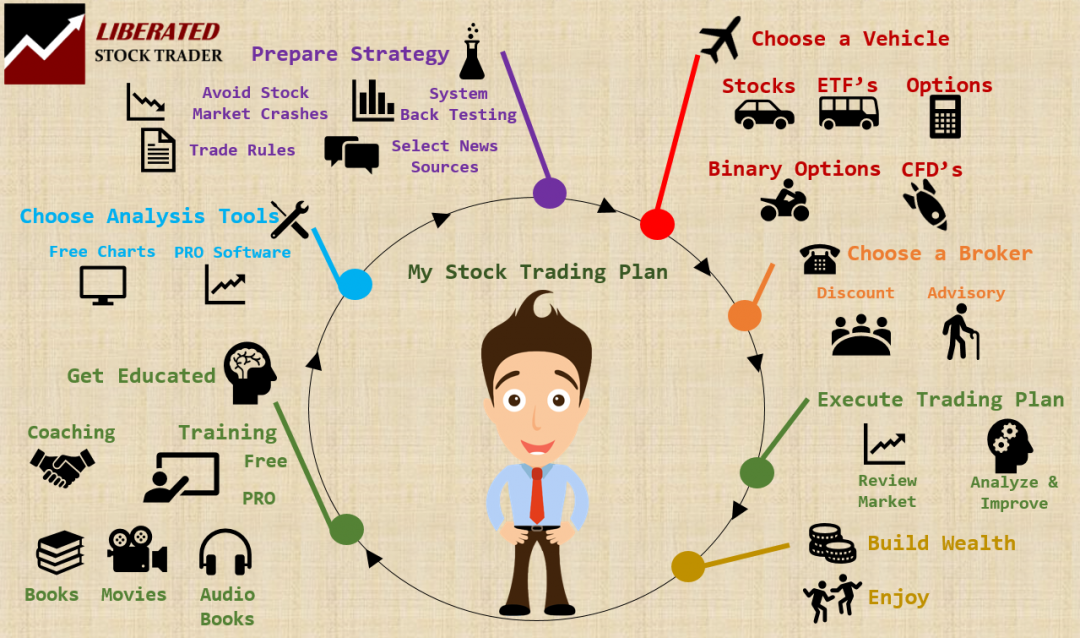
Learning the mechanics of the stock market is one thing; developing a personal investment strategy and cultivating the right mindset is another entirely. This stage is crucial for translating knowledge into effective action.
Defining Your Financial Goals and Risk Tolerance
Before making any investment, clearly define why you are investing and how much risk you are comfortable taking.
- Financial Goals: Are you saving for a down payment in three years, retirement in 30 years, or something else? Your timeline significantly influences your investment choices. Short-term goals typically require lower-risk investments, while long-term goals can accommodate higher risk for potentially greater returns.
- Risk Tolerance: How much fluctuation in your portfolio value can you stomach without losing sleep or making impulsive decisions? An honest assessment of your risk tolerance prevents panic selling during market downturns and helps you choose investments that align with your comfort level.
The Power of Diversification
“Don’t put all your eggs in one basket” is perhaps the oldest and most important investment adage. Diversification involves spreading your investments across various asset classes, industries, and geographies to reduce overall risk. If one investment performs poorly, others may perform well, mitigating the impact on your overall portfolio. This can be achieved through:
- Investing in different companies across various sectors (tech, healthcare, finance, consumer goods).
- Holding a mix of stocks, bonds, and potentially real estate or commodities.
- Investing in domestic and international markets.
ETFs and mutual funds are excellent tools for achieving instant diversification.
Long-Term Investing vs. Short-Term Trading
It’s important to differentiate between these two distinct approaches:
- Long-Term Investing: Focuses on holding quality assets for years, often decades, allowing compound interest to work its magic. This approach typically involves less frequent trading and is less susceptible to daily market volatility. It aligns well with fundamental analysis.
- Short-Term Trading (Day Trading/Swing Trading): Involves buying and selling assets rapidly (within hours, days, or weeks) to profit from small price movements. This is significantly riskier, more time-consuming, and requires extensive market knowledge, technical analysis skills, and emotional resilience. For most beginners, focusing on long-term investing is a more prudent and sustainable path.
Mastering Emotional Discipline
Perhaps the hardest aspect of learning the stock market is mastering your own emotions. Fear and greed are powerful forces that can lead investors astray, prompting impulsive decisions like buying at market peaks (fear of missing out – FOMO) or selling at market lows (panic selling).
- Develop a Plan and Stick to It: A well-defined investment strategy acts as a guardrail against emotional reactions.
- Avoid Daily Market Watching: Constant monitoring can amplify anxiety and lead to overtrading.
- Understand Market Cycles: Realize that downturns are a normal part of the market cycle and often present opportunities for long-term investors.
- Practice Patience: Wealth building through investing is a marathon, not a sprint.
Taking the Plunge: Opening an Investment Account
Once you feel confident in your knowledge and have a nascent strategy, it’s time to translate your learning into action by opening a real investment account.
Types of Brokerage Accounts
You’ll encounter several account types, each with specific rules and tax implications:
- Individual/Taxable Brokerage Account: The most straightforward, allowing you to invest after-tax money. Gains are taxed in the year they are realized.
- Retirement Accounts (IRA, Roth IRA, 401(k)): These offer significant tax advantages for long-term retirement savings. IRAs are opened individually, while 401(k)s are employer-sponsored. Understanding these is vital for long-term financial planning.
For the purpose of learning the stock market, an individual taxable brokerage account might be the easiest to start with as it offers maximum flexibility.
Choosing the Right Brokerage
Selecting a brokerage firm is a critical decision. Consider the following factors:
- Fees: Look for commission-free trading for stocks and ETFs. Be aware of other fees (account maintenance, transfer fees, margin interest).
- Research Tools & Resources: Does the platform offer robust research tools, analytical reports, and educational content that complements your learning?
- Platform Usability: Is the website and mobile app intuitive and easy to navigate?
- Customer Service: Is help readily available if you encounter issues?
- Investment Options: Does it offer access to the types of investments you’re interested in (stocks, ETFs, mutual funds, options, etc.)?
- Minimums: Some brokerages require a minimum deposit to open an account, though many now have no minimums.
Popular online brokerages like Fidelity, Charles Schwab, E*TRADE, Vanguard, and Interactive Brokers offer a wide range of services suitable for beginners to advanced investors.
Starting Small and Consistent Investing
You don’t need a large sum to start investing. Begin with an amount you’re comfortable losing, as initial mistakes are part of the learning process. Consider using dollar-cost averaging, where you invest a fixed amount of money at regular intervals (e.g., $100 every month) regardless of the stock price. This strategy helps reduce the impact of market volatility and eliminates the need to time the market. Over time, consistent contributions compound and build significant wealth.
Continuous Learning and Adaptation
Learning the stock market is not a one-time event but a continuous journey. The markets are dynamic, constantly evolving with new technologies, economic shifts, and global events.
Staying Informed with Market Trends
Regularly update your knowledge by following economic news, industry reports, and expert analysis. Understand how interest rate changes, inflation, geopolitical events, and technological advancements can impact different sectors and companies.
Reviewing and Adjusting Your Portfolio
Periodically (e.g., annually), review your investment portfolio to ensure it still aligns with your financial goals, risk tolerance, and current market conditions. This process, known as rebalancing, might involve selling some investments that have grown significantly and buying more of those that have lagged to restore your desired asset allocation.
The Importance of Professional Advice
While self-education is powerful, don’t hesitate to seek guidance from a qualified financial advisor, especially as your portfolio grows more complex or if you face significant life changes. A professional can help you refine your strategy, optimize for taxes, and provide objective advice when emotions run high.
Learning the stock market is a marathon, not a sprint. It requires patience, discipline, and a commitment to lifelong learning. By building a strong foundational knowledge, utilizing practical learning tools, developing a sound strategy, and maintaining emotional discipline, you can confidently navigate the complexities of the stock market and work towards achieving your financial aspirations. Start small, stay curious, and embrace the continuous journey of growth and discovery.
aViewFromTheCave is a participant in the Amazon Services LLC Associates Program, an affiliate advertising program designed to provide a means for sites to earn advertising fees by advertising and linking to Amazon.com. Amazon, the Amazon logo, AmazonSupply, and the AmazonSupply logo are trademarks of Amazon.com, Inc. or its affiliates. As an Amazon Associate we earn affiliate commissions from qualifying purchases.