
The prospect of owing money to the Internal Revenue Service (IRS) can be daunting, often accompanied by uncertainty and a tinge of anxiety. Many taxpayers find themselves in this position, either due to unexpected income, insufficient withholdings, or simply a misunderstanding of their tax obligations. However, the first step to managing any tax debt is understanding precisely how much you owe. Far from being an opaque process, the IRS provides several clear and accessible pathways for taxpayers to ascertain their outstanding balance. Proactively discovering your tax liability is not just about compliance; it’s about financial empowerment, avoiding penalties, and ensuring peace of mind. This comprehensive guide will illuminate the various methods available to taxpayers, helping you navigate the system with confidence and clarity.
The Critical Importance of Knowing Your Tax Liability
Understanding your tax debt is more than just a matter of curiosity; it’s a fundamental aspect of sound financial management and responsible citizenship. Ignorance, in this context, is anything but bliss. It can lead to escalating costs, increased stress, and a more complicated resolution process down the line.
Avoiding Penalties and Interest
One of the most compelling reasons to promptly identify your IRS debt is to mitigate or entirely avoid the accumulation of penalties and interest. The IRS imposes penalties for various infractions, including failure to file, failure to pay, and underpayment of estimated tax. These penalties can significantly inflate your original tax bill. Furthermore, interest accrues on underpayments, and it continues to do so until the balance is paid in full. The longer a debt remains outstanding and unknown, the more expensive it becomes. By taking swift action to determine what you owe, you put yourself in a position to address the debt promptly, potentially saving hundreds or even thousands of dollars in avoidable charges.
Empowering Your Financial Planning
Knowing your precise tax liability allows for informed financial planning. If you’re aware of an impending or existing debt, you can budget accordingly, make necessary adjustments to your spending, or explore payment options without the pressure of an imminent deadline or an unexpected bill. This foresight enables you to integrate your tax obligations into your broader financial strategy, whether it’s adjusting your paycheck withholdings for future years, setting aside funds, or considering an installment agreement. It transforms a potential financial shock into a manageable component of your overall financial picture.
Peace of Mind and Compliance
Beyond the monetary implications, there’s significant value in the peace of mind that comes with understanding your tax situation. Uncertainty surrounding tax debt can be a source of considerable stress and anxiety. By actively seeking out your balance, you take control of the situation, replacing conjecture with concrete information. This proactive approach not only fosters a sense of responsibility but also ensures you remain in good standing with the tax authorities, safeguarding your credit and your financial reputation. Compliance isn’t just about paying taxes; it’s about understanding and meeting your obligations fully.
Direct Avenues to Discover Your IRS Balance
The IRS offers several official and reliable methods for taxpayers to ascertain their current tax balance. These methods vary in convenience and the level of detail they provide, but all serve the crucial purpose of putting accurate information directly into your hands.
Leveraging Your IRS Online Account
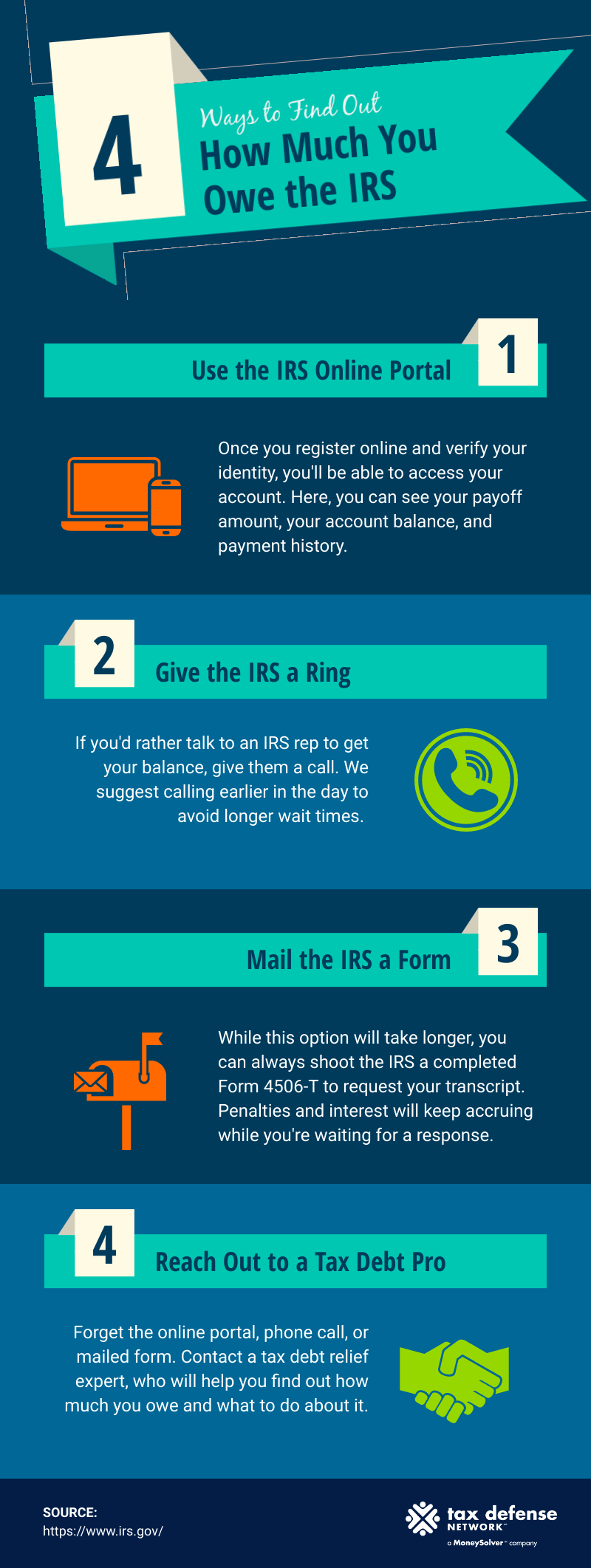
Perhaps the most convenient and immediate method for most taxpayers is through the IRS Online Account. This secure portal provides taxpayers with 24/7 access to their tax information. Once registered and verified, you can view your:
- Balance owed: See your current tax balance, including any interest and penalties.
- Payment history: Review payments made over the last 18 months.
- Payment plan details: If you have an existing installment agreement, you can view its details.
- Tax records: Access information from your most recently filed tax return.
Setting up an IRS Online Account requires a robust identity verification process to ensure security, which might involve providing personal details, financial account information, and responding to security questions. While this initial setup can take a few minutes, the long-term benefits of immediate access to your tax information are invaluable.
Decoding Your IRS Account Transcript
For a detailed breakdown of transactions on your account, an IRS Account Transcript is an excellent resource. This transcript shows most financial transactions on your account, such as payments made, penalties assessed, and adjustments. It summarizes a taxpayer’s account for a particular tax year and can help you understand how your balance was calculated.
- How to get it: You can request an Account Transcript online (via your IRS Online Account), by mail, or by fax. The “Get Transcript Online” service is generally the quickest, providing immediate access to your transcript.
- What it shows: It lists items like filed returns, amendments, payments received, refunds issued, and any penalties or interest applied. It’s a comprehensive financial ledger of your interactions with the IRS for a specific tax period.
Interpreting Official IRS Notices and Letters
The IRS primarily communicates with taxpayers through official notices and letters sent via postal mail. If you owe money, the IRS will almost certainly send you a series of letters notifying you of the outstanding balance, the amount due, and any penalties or interest applied.
- Common notices: Look out for notices such as CP14 (Balance Due), CP501, CP503, CP504 (collections notices), or eventually a Letter 11 (Notice of Intent to Levy).
- What they contain: These letters will clearly state the amount you owe, the tax year it pertains to, and often provide information on how to pay or dispute the amount. It’s crucial to read these letters carefully and respond promptly to avoid further complications.

The Role of Tax Software and Professionals
While not direct IRS channels, tax software and tax professionals play a significant role in helping you understand your tax liability.
- Tax Software: If you prepared your own taxes using software like TurboTax, H&R Block, or TaxAct, the software itself will calculate your federal tax liability for the year. This is your initial calculation of what you owe before any payments or withholdings are applied. Many software platforms also allow you to access past returns you filed through them, which can refresh your memory of your liabilities.
- Tax Professionals: A qualified tax preparer, enrolled agent, or certified public accountant (CPA) can access your IRS tax records with your permission (via a Power of Attorney, Form 2848). They can analyze your account, interpret complex notices, and explain precisely what you owe and why. This is especially valuable if your situation is complicated, or if you’re struggling to understand the IRS documentation yourself.
Understanding What Constitutes Your Total Owed Amount
When you receive notification of an amount owed to the IRS, it’s not always a straightforward number. The total can be a composite of several components, and understanding each element is key to fully grasping your financial obligation.
Distinguishing Between Tax Liability and Payments Made
At its core, what you “owe” is the difference between your total tax liability for a given year and the total payments you’ve already made towards that liability.
- Tax Liability: This is the total amount of tax you are legally obligated to pay based on your income, deductions, credits, and filing status for a specific tax year. This figure is determined when you complete your tax return.
- Payments Made: Throughout the year, you might make payments through various means, such as:
- Wage Withholding: Amounts withheld from your paychecks by your employer.
- Estimated Tax Payments: Quarterly payments made by self-employed individuals or those with significant income not subject to withholding.
- Prior Year Refund Applied: Electing to apply a portion or all of your previous year’s refund to the current year’s estimated taxes.
- Payments with Extension: Any payment made when filing an extension (Form 4868).
If your total tax liability exceeds your total payments made, you have a balance due. If payments exceed liability, you’re due a refund.
Unpacking Penalties and Interest
Beyond the base tax amount, your total owed figure can swell due to penalties and interest.
- Penalties: The IRS assesses penalties for a range of reasons, the most common being:
- Failure to File: If you don’t file your tax return by the due date (including extensions).
- Failure to Pay: If you don’t pay the taxes you owe by the due date.
- Accuracy-Related Penalties: If you understate your tax liability due to negligence, disregard of rules, or substantial understatement of income.
- Underpayment of Estimated Tax: If you don’t pay enough tax throughout the year through withholding or estimated payments.
Penalties are typically a percentage of the unpaid tax, and they can compound.
- Interest: Interest is charged on any underpayment from the original due date of the tax until it is paid in full. This includes not only the unpaid tax but also any penalties. The IRS interest rate is determined quarterly and is compounded daily, meaning it grows on itself. It’s important to note that interest is statutory and cannot generally be abated, unlike some penalties which can sometimes be appealed.
The Nuance of Estimated Taxes and Underpayment
For many taxpayers, especially freelancers, small business owners, or those with significant investment income, estimated taxes are a critical component of their annual tax planning. If you expect to owe at least $1,000 in tax for the year and do not have sufficient withholding, you generally need to make estimated tax payments.
- Underpayment: Failing to pay enough through estimated taxes or withholding can result in an underpayment penalty. The IRS Form 2210, Underpayment of Estimated Tax by Individuals, Estates, and Trusts, is used to calculate this penalty. Even if you ultimately pay all your taxes by the tax deadline, you might still face this penalty if your payments weren’t spread out evenly throughout the year. Understanding this specific penalty helps in future tax planning to adjust withholdings or estimated payments accordingly.
Proactive Steps When You Discover You Owe
Finding out you owe the IRS can be unsettling, but it’s crucial to remember that you have options. The IRS offers various payment methods and relief programs designed to help taxpayers meet their obligations. Taking proactive steps can prevent further penalties and provide a structured path toward resolution.
Exploring IRS Payment Options
Once you know how much you owe, the next step is to make a payment. The IRS provides several convenient ways to do this:
- IRS Direct Pay: This free service allows you to pay directly from your checking or savings account. It’s simple, secure, and available 24/7.
- Debit/Credit Card: You can pay your taxes using a debit or credit card through an authorized third-party processor. While convenient, these processors typically charge a small fee.
- Electronic Funds Withdrawal (EFW): If you’re filing your federal tax return electronically, you can authorize an EFW from your bank account. The payment will be debited on the date you specify.
- Electronic Federal Tax Payment System (EFTPS): This free service is primarily for businesses and individuals who make estimated tax payments, offering a secure way to schedule payments up to 365 days in advance.
- Check or Money Order: You can still pay by mail using a check or money order made payable to the U.S. Treasury. Be sure to include your name, address, daytime phone number, Social Security number, the tax year, and the related tax form or notice number on the check or money order.
- Cash: The IRS now partners with ACI Payments, Inc. to offer a cash payment option at retail partners nationwide.
Navigating Payment Plans and Relief Programs
If you can’t pay the full amount you owe by the due date, don’t panic. The IRS offers several options:
- Short-Term Payment Plan: You may be granted up to 180 days to pay your tax liability in full, although interest and penalties still apply. This is an informal agreement where the IRS expects full payment within the specified short period.
- Installment Agreement: If you need more time, you can request an installment agreement. This allows you to make monthly payments for up to 72 months. While interest and penalties continue to accrue, the penalty for failure to pay is often reduced. You can apply for an installment agreement online, by phone, or by mail.
- Offer in Compromise (OIC): An OIC allows certain taxpayers to resolve their tax liability with the IRS for a lower amount than what they originally owe. This option is generally available only when taxpayers are experiencing significant financial difficulty and cannot pay their full tax liability. The IRS will consider your ability to pay, income, expenses, and asset equity when evaluating an OIC.
- Currently Not Collectible (CNC): In severe cases of financial hardship, the IRS may determine that you are “currently not collectible.” This means the IRS will temporarily delay collection efforts until your financial situation improves. Interest and penalties continue to accrue during this period.
When to Seek Professional Guidance
While many tax situations can be managed independently, certain circumstances warrant the expertise of a tax professional. If your tax situation is complex, you owe a substantial amount, you’re facing collection actions, or you’re considering an OIC, a tax attorney, CPA, or enrolled agent can provide invaluable assistance. They can:
- Interpret IRS notices: Help you understand the implications of complex IRS correspondence.
- Negotiate on your behalf: Represent you in discussions with the IRS, including setting up payment plans or negotiating an OIC.
- Advise on legal remedies: Inform you of your rights and available legal avenues.
- Ensure compliance: Help you structure your finances to prevent future tax issues.
Knowing how much you owe the IRS is the indispensable first step towards resolving any tax debt. By utilizing the available IRS tools and understanding the components of your debt, you can effectively manage your obligations, avoid unnecessary costs, and maintain a healthy financial standing. Don’t let uncertainty fester; take proactive steps to clarify your tax situation and navigate the path to compliance with confidence.
aViewFromTheCave is a participant in the Amazon Services LLC Associates Program, an affiliate advertising program designed to provide a means for sites to earn advertising fees by advertising and linking to Amazon.com. Amazon, the Amazon logo, AmazonSupply, and the AmazonSupply logo are trademarks of Amazon.com, Inc. or its affiliates. As an Amazon Associate we earn affiliate commissions from qualifying purchases.