
In the modern financial landscape, a credit card is more than just a piece of plastic or a digital entry in a mobile wallet. It is a fundamental tool for building a financial identity, managing cash flow, and accessing consumer protections that debit cards simply do not offer. However, for many, the process of obtaining their first card—or a premium card with better rewards—can feel like navigating a labyrinth of jargon, credit scores, and mysterious bank algorithms. Understanding how to get a credit card requires a blend of preparation, strategic selection, and an awareness of the underlying mechanics of personal finance.
Understanding the Fundamentals of Credit Eligibility
Before you submit an application, it is essential to understand that banks and lenders are essentially performing a risk assessment. They want to know one thing: if they lend you money, what is the statistical likelihood that you will pay it back on time? To answer this, they look at several key pillars of your financial profile.
Credit Scores and the Role of Credit Bureaus
Your credit score is the primary metric used by lenders to determine your creditworthiness. In the United States, most lenders use the FICO score model, which ranges from 300 to 850. A score above 700 is generally considered “good,” while anything above 800 is “exceptional.” If you are asking how to get a credit card, the first step is checking your score via services like Experian, Equifax, or TransUnion. If you have no credit history, you aren’t starting at zero; you are starting with a “thin file,” which requires a different strategy than someone with a poor score.
Income Requirements and the Debt-to-Income Ratio
A credit score tells a lender about your willingness to pay, but your income tells them about your ability to pay. Federal regulations require credit card issuers to verify that an applicant has a “reasonable expectation” of being able to make the minimum payments. This doesn’t mean you need to be wealthy, but you do need a steady source of income. Lenders also look at your Debt-to-Income (DTI) ratio—the percentage of your monthly gross income that goes toward paying debts. A high DTI suggests you may be overextended, making you a higher risk for a new line of credit.
Legal Age and Residency Requirements
There are hard legal boundaries to obtaining a credit card. Generally, you must be at least 18 years old to apply. However, under the Credit CARD Act of 2009, applicants between 18 and 21 must prove independent income or have a co-signer (though many major banks no longer allow co-signers). Additionally, you typically need a Social Security Number (SSN) or an Individual Taxpayer Identification Number (ITIN) and a valid residential address within the country of application.
Navigating the Application Process Step-by-Step
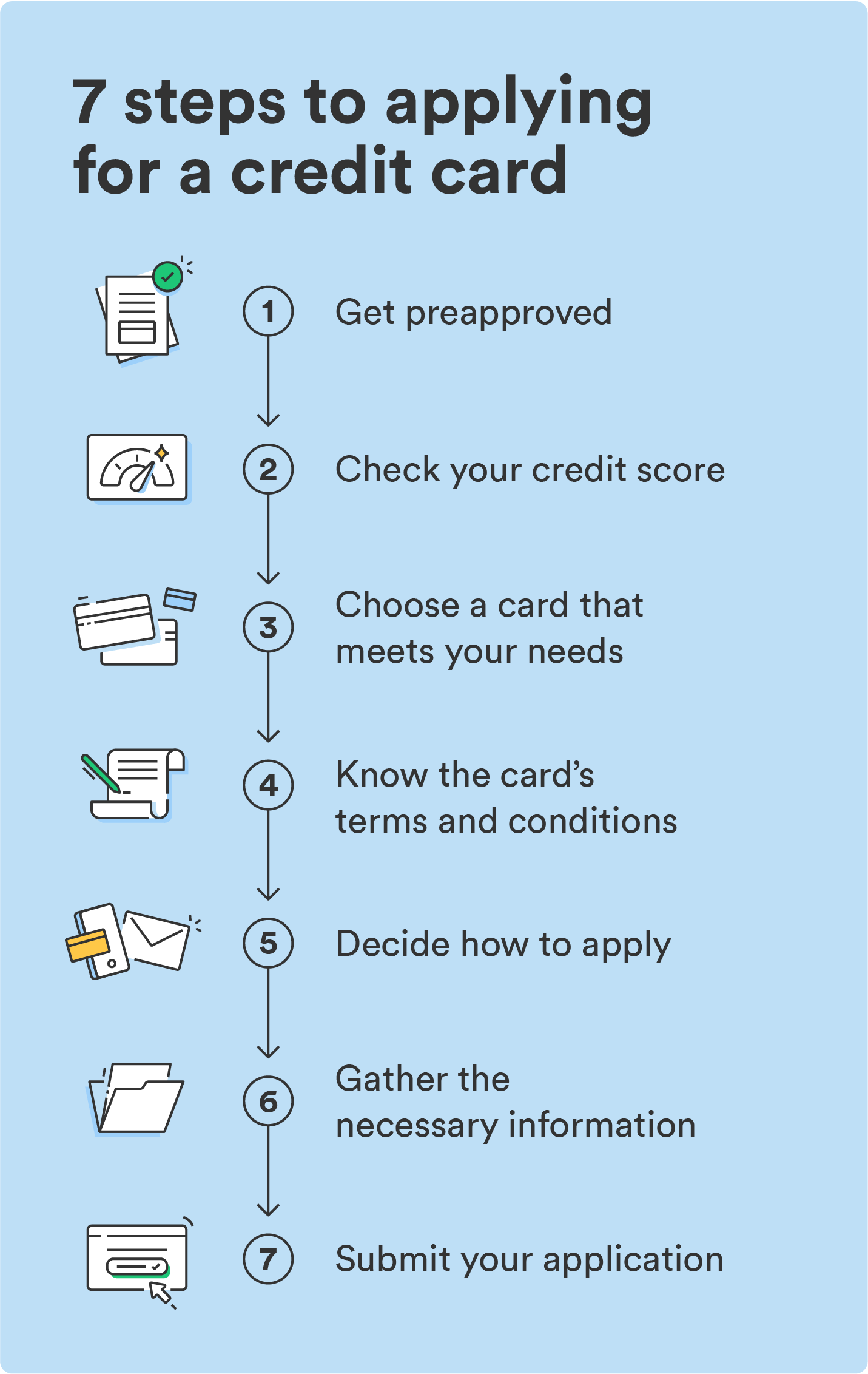
Once you understand where you stand financially, the next phase is the application itself. Applying for the wrong card can result in a “hard inquiry” on your credit report, which temporarily lowers your score, without the benefit of an approval.
Researching Card Types Based on Your Profile
Not all credit cards are created equal. You must match the card to your current financial status:
- Secured Cards: Ideal for those with no credit or damaged credit. These require a refundable security deposit that usually acts as your credit limit.
- Student Cards: Tailored for college students with limited income and history, often featuring lower limits but easier approval.
- Rewards and Cashback Cards: Aimed at those with “Good” to “Excellent” credit who want to earn money back on daily spending.
- Premium Travel Cards: For high-scorers who want luxury perks like airport lounge access and high-value points for international travel.
The Power of Pre-Approval Tools
To minimize the risk of rejection, use the “pre-approval” or “pre-qualification” tools available on most major bank websites (such as Chase, American Express, or Capital One). These tools use a “soft pull” on your credit, which does not impact your score. While pre-approval is not a 100% guarantee of success, it provides a very strong indication of which cards you are likely to be approved for.
Completing the Application with Accuracy
When you finally fill out the application, accuracy is paramount. Discrepancies in your income, address, or employment status can trigger a manual review or an automatic denial. Ensure you include all eligible income; for those over 21, this can include shared household income if you have a reasonable expectation of access to it. Once submitted, the decision is often instant, though some applications may be held for “further review,” which usually involves a human verifying your documentation.
Strategies for First-Time Applicants and Rebuilding Credit

If you find that you are consistently denied or have a “thin” credit file, you need to shift your strategy toward “laddering”—building a foundation that makes you attractive to premium lenders later.
Utilizing Secured Credit Cards
A secured credit card is the most reliable “entry-way” into the credit system. Because you provide a deposit (e.g., $200), the bank takes zero risk. If you fail to pay, they keep the deposit. However, if you use the card responsibly for 6 to 12 months, many banks will “graduate” the card to an unsecured version, refund your deposit, and increase your limit. This is the fastest way to prove you can handle revolving debt.
The “Authorized User” Strategy
Often called “credit piggybacking,” this involves having a family member or partner with a long, positive credit history add you as an “authorized user” on their account. You don’t even need to use the physical card. Their years of on-time payments and high credit limits will reflect on your credit report, instantly boosting your score and making it much easier for you to get approved for your own individual card.
Reporting Alternative Payments
Newer financial technology (FinTech) services now allow you to report “alternative” data to credit bureaus. This includes your history of paying rent, utility bills, and even streaming subscriptions. For someone with no credit history, these data points can bridge the gap and provide the “proof of character” a lender needs to approve a first-time application.
Mastering Credit Card Management for Long-Term Success
Getting the card is only half the battle; keeping it and using it to enhance your financial life is where the real work begins. Improper use of a credit card can lead to a cycle of high-interest debt that takes years to escape.
The 30% Utilization Rule and Beyond
Your “Credit Utilization Ratio” is the amount of credit you are using compared to your total limit. If you have a $1,000 limit and spend $300, your utilization is 30%. Financial experts recommend keeping this under 30% to avoid hurting your score. However, for maximum score optimization, keeping it under 10% is ideal. This shows lenders that you have access to credit but do not depend on it to survive.
The Importance of the Grace Period and Full Payments
The most important rule of credit cards is: Pay your statement balance in full every month. Credit cards typically have a “grace period” (usually 21–25 days) between the end of the billing cycle and the due date. If you pay the full balance by the due date, you are charged 0% interest. If you carry even $1 over to the next month, you will be charged the high APR (Annual Percentage Rate) on the entire balance. Using a credit card this way effectively gives you a short-term, interest-free loan and rewards you for spending money you already have.
Monitoring for Fraud and Errors
Credit cards offer superior protection compared to debit cards under the Fair Credit Billing Act. If a fraudulent charge appears on your card, you are generally not liable for it while the bank investigates. It is vital to review your statements weekly through a mobile app. Identifying an error or a fraudulent charge early protects your credit score and your available balance.
Advanced Tips for Maximizing Card Benefits
Once you have mastered the basics and have a solid credit score, you can move from “getting a card” to “winning with cards.”
Leveraging Sign-Up Bonuses (SUBs)
Most mid-tier and high-tier cards offer sign-up bonuses—large sums of points or cashback if you spend a certain amount in the first three months. For example, a card might offer $500 back if you spend $3,000. By timing these applications with large, necessary purchases (like a new appliance or car insurance), you can effectively get a 10% to 20% discount on your cost of living.
Understanding Merchant Category Multipliers
The most successful credit card users don’t use just one card for everything. They use different cards for different categories. You might use one card that gives 4% back on groceries and dining, and another card that gives 2% back on all other purchases. By aligning your spending with the card’s “multiplier” categories, you maximize the “Money” aspect of your personal finance strategy, turning everyday expenses into future travel or savings.
In conclusion, getting a credit card is a process of demonstrating financial maturity. By understanding the criteria lenders use, choosing the right entry-level products, and maintaining disciplined payment habits, you can transform a credit card from a potential debt trap into a powerful engine for wealth building and financial security. Whether you are starting from scratch or looking to upgrade your wallet, the key is patience, research, and a commitment to never paying a cent in interest.
aViewFromTheCave is a participant in the Amazon Services LLC Associates Program, an affiliate advertising program designed to provide a means for sites to earn advertising fees by advertising and linking to Amazon.com. Amazon, the Amazon logo, AmazonSupply, and the AmazonSupply logo are trademarks of Amazon.com, Inc. or its affiliates. As an Amazon Associate we earn affiliate commissions from qualifying purchases.