
The arrival of tax season often brings a mix of trepidation and anticipation. For many taxpayers, the prospect of a tax refund represents a significant financial milestone—a chance to pay off high-interest debt, bolster an emergency fund, or make a long-awaited purchase. However, waiting until the Internal Revenue Service (IRS) processes your return to discover the amount can lead to unnecessary stress or poor financial planning. Getting an estimate on your tax refund before you file is not only possible but is a prudent step in managing your personal finances. By understanding the mechanics of the tax system and leveraging the right tools, you can gain a clear picture of your expected windfall or potential liability.

The Fundamental Logic of the Tax Refund
To accurately estimate your tax refund, you must first understand what a refund actually is. From a personal finance perspective, a tax refund is essentially a return of your own money that you overpaid to the government throughout the prior year. This usually happens because the amount of federal income tax withheld from your paychecks exceeded your actual tax liability for the year.
Tax Liability vs. Total Payments
Your tax liability is the total amount of tax you owe the government based on your taxable income, filing status, and applicable tax rates. Throughout the year, you make payments toward this liability through employer withholding or quarterly estimated tax payments. When you file your annual return, you reconcile these two numbers. If your total payments plus any refundable tax credits are greater than your tax liability, the IRS owes you the difference. If they are less, you owe the IRS. Estimating your refund requires you to project both your total income and your total deductions and credits to determine that final balance.
Why Your Withholding Matters
For most W-2 employees, the primary driver of a tax refund is the Form W-4. This document tells your employer how much tax to take out of each paycheck. If you claim fewer allowances or have extra money withheld, your “payments” throughout the year will be higher, increasing the likelihood of a large refund. Conversely, if you adjust your withholding to match your liability precisely, your refund will be smaller, but your monthly take-home pay will be higher. When seeking an estimate, looking at your most recent pay stub is the best way to see how much you have already contributed toward your annual tax “bill.”
Top Tools and Methods for Estimating Your Refund
In the modern financial landscape, you no longer need a green eyeshade and a massive ledger to calculate your potential refund. Several digital tools provide high levels of accuracy by walking you through the complex tax code step-by-step.
The IRS Tax Withholding Estimator
The most authoritative tool available is the IRS Tax Withholding Estimator. This online application is designed to help taxpayers ensure they have the right amount of tax withheld from their paychecks. By inputting your current salary, the amount of tax withheld to date, and your expected deductions, the tool provides a projection of whether you will receive a refund or owe money at the end of the year. The primary advantage of this tool is its direct alignment with current tax laws and IRS regulations, making it highly reliable for middle-income earners with standard filing situations.
Commercial Tax Software Estimators
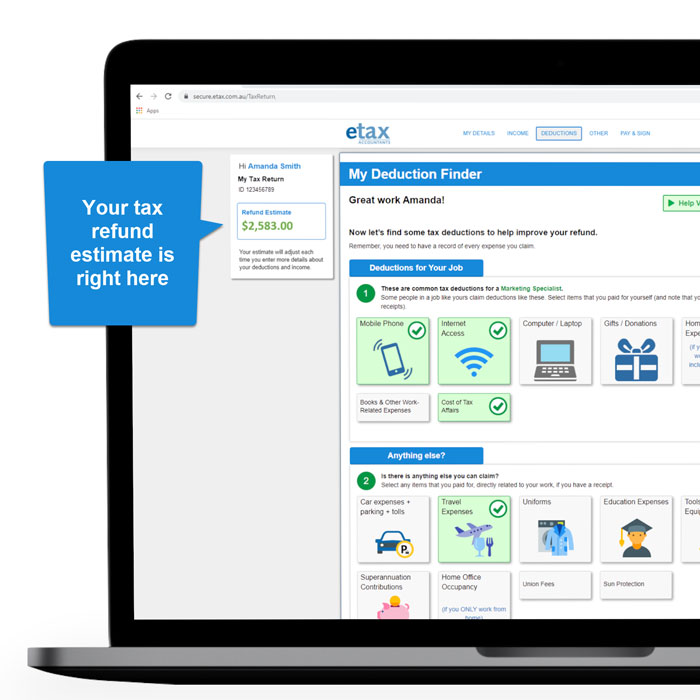
Major tax preparation software companies, such as TurboTax, H&R Block, and FreeTaxUSA, offer free “tax calculators” on their websites. These tools are often more user-friendly than the IRS estimator, using an interview-style format to gather information. They are particularly useful because they frequently update their algorithms to reflect the latest changes in tax legislation, such as adjustments to the Standard Deduction or changes in the Child Tax Credit. These calculators allow you to run “what-if” scenarios, such as how your refund might change if you contribute more to a 401(k) or if you decide to itemize your deductions.
Manual Estimation and the Form 1040-ES
For those who prefer a more hands-on approach—or for self-employed individuals with fluctuating income—using the worksheet for Form 1040-ES (Estimated Tax for Individuals) is an effective method. While this form is technically used to calculate quarterly payments, the logic remains the same. It requires you to calculate your expected adjusted gross income (AGI), subtract your deductions to find your taxable income, apply the current tax brackets, and then subtract your credits and prepayments. This manual method provides a deeper insight into how each financial decision impacts your bottom line.
Gathering the Necessary Data Points for Accuracy
An estimate is only as good as the data you provide. To get a precise figure, you need to gather specific documents that represent your financial activity for the entire calendar year.
Reporting All Streams of Income
The foundation of your estimate is your total gross income. This includes more than just your base salary. You must account for:
-
W-2 Income: Earnings from traditional employment.
-
1099-NEC/MISC: Income from freelance work, side hustles, or contract labor.
-
1099-INT/DIV: Interest from savings accounts and dividends from investments.
-
Capital Gains: Profits from the sale of stocks, bonds, or real estate.
-
Unemployment Compensation: This is generally taxable income at the federal level.
By aggregating these sources, you establish the starting point for your tax calculation.
Navigating Deductions: Standard vs. Itemized
The next step is reducing your gross income to your taxable income. Most taxpayers choose the Standard Deduction, which is a fixed dollar amount that reduces the income you’re taxed on. For the current tax year, these amounts are adjusted for inflation. However, if your specific expenses—such as mortgage interest, state and local taxes (up to the $10,000 limit), medical expenses, and charitable contributions—exceed the Standard Deduction, you should itemize. Estimating these expenses accurately is crucial, as the difference between itemizing and taking the standard deduction can shift your refund amount by thousands of dollars.
Maximizing Tax Credits
Credits are far more powerful than deductions because they provide a dollar-for-dollar reduction of your tax bill. When estimating your refund, you must identify which credits you qualify for. Common credits include:
-
The Child Tax Credit (CTC): A significant credit for parents with qualifying children.
-
The Earned Income Tax Credit (EITC): A refundable credit for low-to-moderate-income working individuals and couples.
-
Education Credits: The American Opportunity Tax Credit (AOTC) and the Lifetime Learning Credit (LLC) for those paying higher education tuition.
-
Energy Credits: Incentives for home improvements like solar panels or energy-efficient windows.
Identifying these early allows you to see the potential for a “refundable” credit, which can result in a refund even if your tax liability is zero.
Common Variables That Alter Your Final Refund Amount
Even with a robust calculator, certain life events and financial shifts can cause your actual refund to deviate from your estimate. Awareness of these variables allows for more nuanced financial planning.
Life Changes and Filing Status
Your filing status (Single, Married Filing Jointly, Head of Household) significantly impacts your tax brackets and deduction amounts. If you got married, divorced, or had a child during the tax year, your estimate needs to reflect these changes. For instance, moving from “Single” to “Head of Household” usually results in a higher standard deduction and more favorable tax brackets, which often increases the refund for the year the change occurred.
Investment Gains and Losses
The volatility of the financial markets can play a major role in your tax outcome. If you sold stocks or cryptocurrency for a profit, you may owe capital gains tax, which could eat into your expected refund. Conversely, if you realized investment losses, you can use those losses to offset gains, or even deduct up to $3,000 of losses against your ordinary income. This “tax-loss harvesting” is a sophisticated way to improve your refund estimate through active portfolio management.
Transitioning from Estimate to Reality: Filing and Timing
Once you have your estimate, the final stage is the actual filing process and the logistical wait for the funds to arrive in your account.
The Importance of E-Filing
The IRS strongly encourages taxpayers to file electronically. E-filing software includes built-in error checking that catches simple math mistakes or missing information that could delay your refund. When you use your estimate as a baseline and then enter your final, official documents (like your actual W-2s) into an e-file system, the software performs a final reconciliation to ensure you are claiming every cent you are owed.

Tracking Your Refund Status
After you file, the “estimate” phase is over, and the “tracking” phase begins. The IRS “Where’s My Refund?” tool and the IRS2Go mobile app provide the most current information regarding the status of your return. Generally, the IRS issues most refunds in less than 21 calendar days for taxpayers who file electronically and choose direct deposit. If your estimate was significantly different from your actual refund, it is an excellent time to revisit your W-4 and adjust your withholding for the current year, ensuring that your financial goals—whether that’s a big refund or a bigger paycheck—stay on track.
aViewFromTheCave is a participant in the Amazon Services LLC Associates Program, an affiliate advertising program designed to provide a means for sites to earn advertising fees by advertising and linking to Amazon.com. Amazon, the Amazon logo, AmazonSupply, and the AmazonSupply logo are trademarks of Amazon.com, Inc. or its affiliates. As an Amazon Associate we earn affiliate commissions from qualifying purchases.