
In the world of real estate and high-stakes investing, information is the primary currency. The Multiple Listing Service, commonly known as the MLS, represents the gold standard of that information. For individual investors, aspiring business owners, and those looking to build significant equity through property, the question of how to gain access to the MLS is not merely a technical one—it is a fundamental business inquiry. Access to this database provides the raw data necessary to perform accurate valuations, identify emerging market trends, and execute transactions with a level of precision that public-facing platforms simply cannot match.
While the MLS is often perceived as a “walled garden” reserved exclusively for licensed professionals, the landscape is shifting. Understanding how to navigate the entry points to this data is essential for anyone serious about managing their financial portfolio through real estate.
Understanding the MLS as a Financial Powerhouse
The MLS is not a single, centralized database. Instead, it is a suite of approximately 600 regional databases where real estate brokers share information on properties for sale. From a financial perspective, the value of the MLS lies in its accuracy and its “closed-loop” nature. Unlike third-party aggregate sites, the data on the MLS is updated in near real-time and is governed by strict rules regarding accuracy and disclosure.
Why MLS Data is Gold for Investors
For a personal finance enthusiast or a professional investor, the MLS provides the “why” behind market movements. It offers deep insights into “comps” (comparable sales) that include nuances like seller concessions, days on market, and original list price versus final sale price. This level of detail is critical when calculating the Potential Return on Investment (ROI) or determining the Maximum Allowable Offer (MAO) for a fix-and-flip project. Without direct access, an investor is essentially making financial decisions based on delayed or incomplete information, which increases risk and narrows profit margins.
The Business Structure of Real Estate Data
The MLS operates on a principle of reciprocity and compensation. Brokers agree to share their listings in exchange for the right to see everyone else’s listings and the promise of a commission if they bring a buyer. This cooperative business model is what makes the data so reliable. Because there are financial penalties for inaccurate reporting within the system, the integrity of the data remains high, making it a dependable tool for financial modeling and business forecasting.
Traditional Paths to Access: The Professional Route
For those who view real estate as a primary business or a significant side hustle, the most direct way to get MLS access is to join the industry formally. This path requires a financial and time investment, but for many, the long-term wealth-building potential justifies the upfront costs.
Becoming a Licensed Real Estate Agent
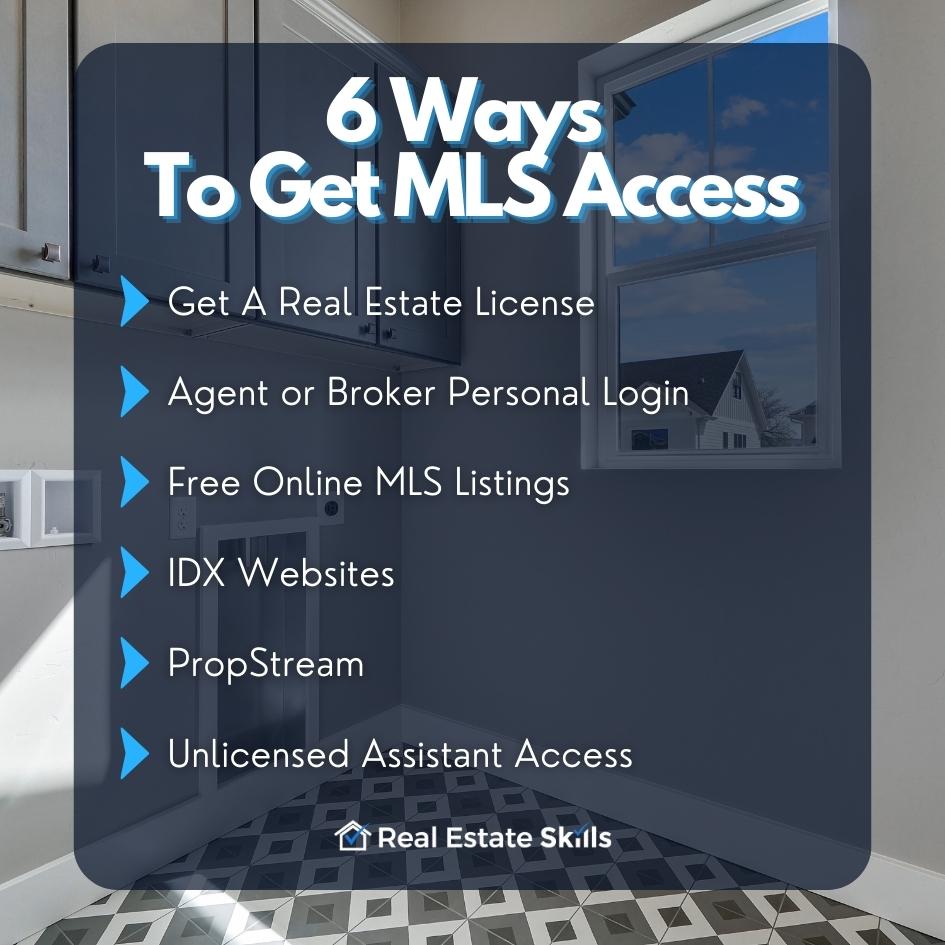
The most common way to secure full, unrestricted access to the MLS is to obtain a real estate license. This involves completing pre-licensing education (which varies by state but typically ranges from 60 to 150 hours), passing a state exam, and hanging your license with a supervising broker. From a business standpoint, this is an investment in professional infrastructure. As a licensed agent, you are not just a consumer of data; you are a participant in the market with the ability to earn commissions, which can then be reinvested into further property acquisitions.
Joining Local Realtor Associations and Boards
Simply having a license is often not enough. To access the MLS, you usually must join a local Board of Realtors and the National Association of Realtors (NAR). This carries annual dues and monthly or quarterly fees for the MLS software itself. When treating real estate as a business finance activity, these expenses are typically tax-deductible as “ordinary and necessary” business costs. These fees grant you the seat at the table where the highest-velocity transactions occur.
The Cost-Benefit Analysis of Professional Access
Before pursuing a license for the sake of MLS access, one must perform a cost-benefit analysis. The initial investment—including school, exam fees, background checks, association dues, and brokerage splits—can range from $2,000 to $5,000 in the first year. If you are an active investor planning to buy or sell multiple properties a year, the savings on commissions alone, combined with the strategic advantage of real-time data, often result in a 10x return on those initial fees. However, if your goal is a single primary residence purchase, the professional route may be a financial overreach.
Alternative Access for Investors and Business Owners
Not everyone who needs MLS data wants to be a real estate agent. For those focused on the “Money” niche—investing, side hustles, and portfolio management—there are alternative ways to harness the power of the MLS without the burden of licensing.
Leveraging Partnerships with Licensed Professionals
One of the most effective business strategies is to build a “power team.” By partnering with a dedicated real estate agent, you can gain indirect access to MLS data. Many agents can set up automated “IDX” (Internet Data Exchange) feeds for their clients. While this isn’t the full “backend” access that allows for deep analytical searches, it provides real-time alerts that are far faster than public portals. For a serious investor, a collaborative relationship with an agent who understands your financial criteria is a high-value asset.
Utilizing Investor-Centric Data Tools
The rise of “PropTech” (Property Technology) has led to the creation of platforms that license MLS data and repackage it for investors. Services like PropStream, Privy, or BatchService pay significant fees to access MLS “sold” data and active listings. They then layer this information with public records, such as tax liens, pre-foreclosure status, and owner equity. For a monthly subscription fee—usually between $100 and $300—an investor can access a data suite that rivals the professional MLS, specifically tailored for finding “off-market” deals and analyzing investment potential.
Public Portals and the Limits of “Free” Data
Sites like Zillow, Redfin, and Realtor.com have democratized real estate data to a certain extent. These platforms use IDX feeds to show most active MLS listings. For the average consumer, this is sufficient. However, for those managing a business or an investment portfolio, these sites have limitations. They often lack the specific “agent-only” remarks that might disclose issues with a property (e.g., “cash only,” “foundation issues,” or “subject to short sale approval”). In a competitive financial environment, missing these details can lead to wasted time and lost capital.
Strategic Benefits of MLS Access for Wealth Building
Why do professionals and high-net-worth individuals fight so hard for MLS access? It comes down to the ability to make data-driven financial decisions that mitigate risk.
Accurate Comparative Market Analysis (CMA)
The cornerstone of real estate valuation is the CMA. To perform an accurate CMA, you need to see what properties actually sold for, not just what they were listed for. The MLS provides the most accurate “sold” data, including whether the seller paid for the buyer’s closing costs—a detail that effectively lowers the true sales price. In business finance, understanding the “net” price versus the “gross” price is the difference between a profitable acquisition and an overpriced liability.
Identifying Market Trends and Absorption Rates
Wealth building requires timing the market or, at the very least, understanding its current velocity. MLS access allows you to calculate the “absorption rate”—how many months it would take to sell the current inventory at the current pace of sales. An investor who sees the absorption rate climbing can pivot their strategy from flipping to long-term rentals, protecting their capital from a potential market downturn.
Speed as a Competitive Advantage
In real estate, the best deals are often gone within hours. Public sites can have a lag of anywhere from 15 minutes to several hours. For a high-velocity side hustle or a full-time investment business, that lag is unacceptable. Direct MLS access allows you to see a listing the second it goes live, and in some cases, see “Coming Soon” listings before they are even available to the general public. This “first-mover advantage” is a classic principle of successful financial arbitrage.
The Future of MLS Access: Regulatory and Legal Shifts
The landscape of real estate finance is currently undergoing its most significant transformation in decades. Recent legal settlements involving the National Association of Realtors (NAR) are changing how commissions are handled and how data is shared.
The Impact of Legal Settlements on Business Models
New regulations are decoupling buyer agent commissions from the MLS. This shift is forcing a re-evaluation of the “agent-as-gatekeeper” model. As the industry moves toward more transparent fee structures, we may see new ways for consumers and investors to pay for direct data access without having to commit to a full brokerage relationship. This could lead to a “subscription-based” model for MLS access, treating real estate data more like a Bloomberg Terminal for the stock market.

Technological Disruption and Data Transparency
As blockchain and AI continue to integrate with business finance tools, the pressure on the MLS to become more open is increasing. We are seeing a move toward “Open Data” initiatives in real estate. While the core MLS remains a private entity for now, the sheer volume of financial tech startups competing for this data means that the “barrier to entry” is likely to lower over the next decade. For those looking to build wealth through property, staying informed about these shifts is as important as the data itself.
In conclusion, getting access to the MLS is a strategic business move that requires weighing the costs of professional licensing against the benefits of real-time, high-integrity data. Whether you choose the path of the licensed professional, the tech-empowered investor, or the strategic partner, having your finger on the pulse of the MLS is an essential component of modern real estate finance. In the quest for financial independence and business growth, the right data is not just an advantage—it is a necessity.
aViewFromTheCave is a participant in the Amazon Services LLC Associates Program, an affiliate advertising program designed to provide a means for sites to earn advertising fees by advertising and linking to Amazon.com. Amazon, the Amazon logo, AmazonSupply, and the AmazonSupply logo are trademarks of Amazon.com, Inc. or its affiliates. As an Amazon Associate we earn affiliate commissions from qualifying purchases.