
In the realm of finance, numbers are the language of progress, but percentages are the grammar that gives those numbers meaning. Whether you are tracking the growth of a retirement portfolio, calculating the impact of inflation on your purchasing power, or determining the profitability of a business venture, understanding “how to do percentages” is the foundational skill of financial literacy. Percentages allow us to normalize data, compare disparate investments, and make informed decisions that transcend simple dollar amounts.
To master your money, you must move beyond basic arithmetic and learn to view every financial move through the lens of proportional change. This guide explores the critical applications of percentages in personal finance, investment strategy, and business management, providing a roadmap for leveraging these calculations to build long-term wealth.
The Foundations of Personal Finance: Budgeting and Debt Proportions
At the heart of a stable financial life lies the ability to allocate resources effectively. While many people focus on the raw dollar amount of their income, the most successful wealth-builders focus on the percentage of that income allocated to specific categories.
The 50/30/20 Rule of Budgeting
One of the most effective ways to apply percentages to your daily life is through the 50/30/20 rule. This framework suggests that 50% of your after-tax income should go toward “Needs” (housing, utilities, groceries), 30% toward “Wants” (entertainment, dining out), and 20% toward “Financial Goals” (debt repayment, savings, and investments).
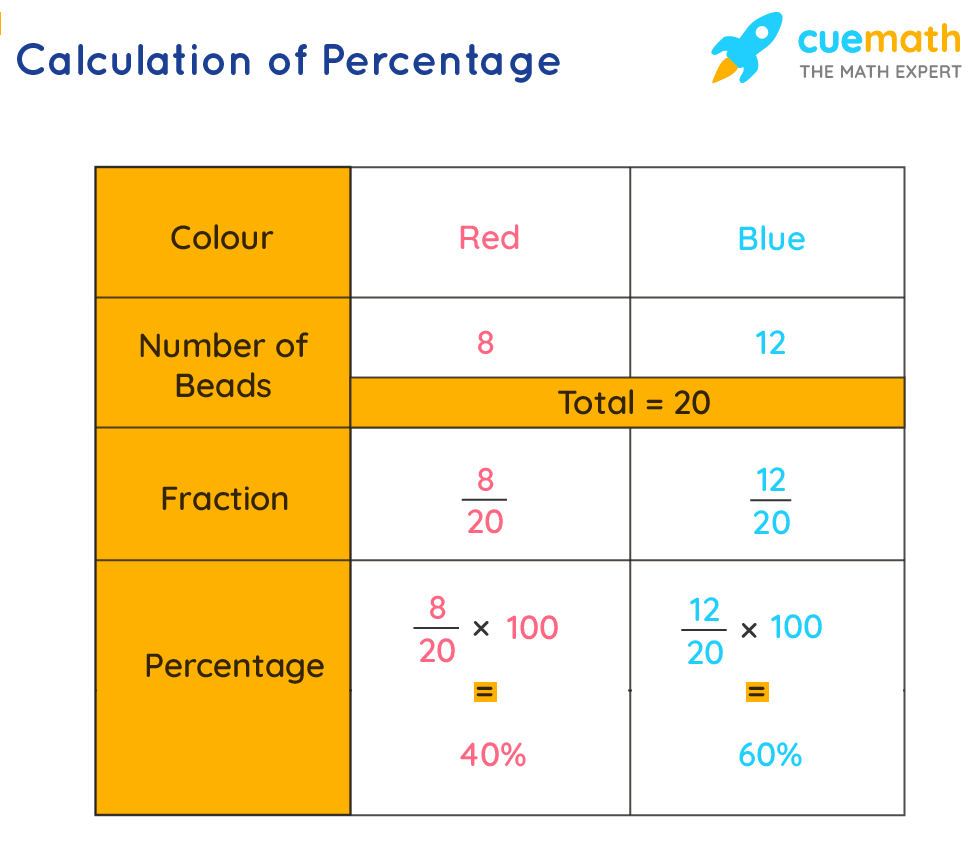
By calculating these percentages, you gain an objective view of your lifestyle. If your housing costs consume 45% of your income, you are “house burdened,” a realization that is much clearer when expressed as a percentage than as a monthly payment. Mastering this calculation involves dividing your specific expense by your total net income and multiplying by 100.
Interest Rates and Debt Amortization
Understanding percentages is perhaps most vital when dealing with debt. Credit cards, mortgages, and student loans all operate on Annual Percentage Rates (APR). A 20% interest rate on a credit card doesn’t just mean you owe more; it means the “cost of money” is incredibly high.
To calculate the impact of debt, you must understand how percentages compound. If you carry a $10,000 balance at a 20% APR, you are effectively paying $2,000 a year just for the privilege of borrowing that money. Recognizing the percentage-based nature of debt allows you to prioritize high-interest liabilities—those with the highest percentage cost—over lower-interest ones, a strategy known as the “avalanche method.”
Calculating Your Savings Rate
Your savings rate is the single most important percentage in your financial life. It is calculated by taking your total monthly savings and dividing it by your gross income. A 15% to 20% savings rate is often cited as the “gold standard” for a comfortable retirement. By focusing on increasing this percentage rather than just the dollar amount, you ensure that your savings grow in proportion to any raises or bonuses you receive, preventing “lifestyle creep.”
Advanced Investment Metrics: Yields, ROI, and Asset Allocation
Once you have mastered your internal budget, percentages become the primary tool for evaluating external opportunities. In the world of investing, “how much you made” is a meaningless metric unless it is compared to “how much you risked.”
Return on Investment (ROI) and Total Return
The most common question in investing is: “Is this a good deal?” The answer lies in the Return on Investment (ROI). The formula for ROI is simple but powerful: (Current Value – Original Cost) / Original Cost. Multiplying the result by 100 gives you the percentage return.
For example, if you buy a stock for $1,000 and sell it for $1,200, your profit is $200, but your ROI is 20%. This percentage allows you to compare that stock to a real estate investment or a high-yield savings account. Without the percentage, you cannot objectively determine which asset class is performing better relative to the capital deployed.
The Power of Compound Interest and the Rule of 72
Compound interest is often called the eighth wonder of the world. It is the process where your earnings earn their own earnings, calculated as a percentage of the new, higher total. To quickly estimate the power of these percentages, investors use the “Rule of 72.” By dividing 72 by your expected annual percentage return, you can determine roughly how many years it will take for your money to double. A 10% return (the historical average of the S&P 500) will double your wealth every 7.2 years. Understanding this percentage-based shortcut is essential for long-term retirement planning.
Strategic Asset Allocation
Diversification is managed entirely through percentages. An investor might decide on a “60/40” portfolio—60% stocks and 40% bonds. As the market fluctuates, these percentages will shift. If stocks perform well, the portfolio might become 70/30. “Rebalancing” is the process of selling assets in the overweight category to return to the original percentage targets. This disciplined, percentage-based approach forces you to “buy low and sell high,” taking emotion out of the investment process.
Business Finance: Profitability and Growth Analysis
For entrepreneurs and business professionals, percentages are the indicators of corporate health. Revenue figures can be deceptive; a company making $10 million in sales might be less healthy than a company making $1 million if their margins are poor.
Gross vs. Net Profit Margins
A profit margin is the percentage of revenue that remains after costs.
- Gross Margin: (Revenue – Cost of Goods Sold) / Revenue. This shows how efficiently a company produces its products.
- Net Margin: (Total Revenue – Total Expenses) / Revenue. This is the “bottom line” percentage.
A business with a 5% net margin has very little room for error. A business with a 25% net margin is a “cash cow.” By monitoring these percentages, management can identify whether they have a pricing problem, a spending problem, or an efficiency problem.
Markup vs. Margin: A Critical Distinction
Many business owners confuse these two, often to their detriment. Markup is the percentage added to the cost to reach a selling price, while margin is the percentage of the selling price that is profit. If you buy an item for $80 and sell it for $100, you have a 25% markup but only a 20% profit margin. Knowing how to calculate these percentages correctly ensures that you don’t inadvertently price your products so low that you cannot cover overhead costs.
Year-over-Year (YoY) Growth
Growth is rarely measured in flat numbers; it is measured in percentages. Investors look for YoY growth to see if a company is scaling. The formula—(Current Year – Last Year) / Last Year—tells the story of momentum. A company growing at 30% annually is a “growth stock,” whereas a company growing at 2% is a “mature” or “declining” business.
Economic Indicators and Tax Optimization
The final layer of financial percentage mastery involves understanding the external forces that erode or enhance your wealth.
The Erosion of Purchasing Power: Inflation
Inflation is expressed as a percentage, representing the rate at which the general level of prices for goods and services is rising. If inflation is at 3% and your bank account is paying 1% interest, you are effectively losing 2% of your wealth every year in “real terms.” Understanding this “real” vs. “nominal” percentage is crucial for protecting your capital over decades.
Effective Tax Rates vs. Marginal Tax Brackets
Many people fear that moving into a higher tax bracket (e.g., from 22% to 24%) will result in them taking home less money overall. This is a misunderstanding of how percentages work in a progressive tax system. Your “marginal rate” only applies to the dollars earned within that specific range. Your “effective tax rate”—the total tax paid divided by your total income—is the actual percentage of your wealth going to the government. Mastering this calculation allows for better tax planning and smarter utilization of deductions.
APR vs. APY: The Cost of Compounding
In the world of banking and loans, you will encounter both Annual Percentage Rate (APR) and Annual Percentage Yield (APY). APR is the simple interest rate, while APY accounts for the effect of compounding within the year. When you are borrowing, you want the lowest APR; when you are saving, you want the highest APY. Recognizing the subtle percentage difference caused by the frequency of compounding can result in thousands of dollars saved or earned over a lifetime.
Conclusion: The Percentage-Driven Mindset
Learning “how to do percentages” is not a one-time mathematical hurdle; it is a shift in perspective. In finance, raw numbers provide the “what,” but percentages provide the “so what.” They allow you to strip away the noise and see the underlying efficiency of your money.
By applying percentage-based thinking to your budget (the 50/30/20 rule), your investments (ROI and asset allocation), and your professional life (margins and growth rates), you gain a level of control that is impossible with simple addition and subtraction. Wealth is built in the margins, and those margins are always measured in percentages. Whether you are aiming for financial independence or managing a corporate balance sheet, your success will ultimately be defined by your ability to calculate, interpret, and optimize the percentages that govern your financial world.
aViewFromTheCave is a participant in the Amazon Services LLC Associates Program, an affiliate advertising program designed to provide a means for sites to earn advertising fees by advertising and linking to Amazon.com. Amazon, the Amazon logo, AmazonSupply, and the AmazonSupply logo are trademarks of Amazon.com, Inc. or its affiliates. As an Amazon Associate we earn affiliate commissions from qualifying purchases.