
Social Security stands as a cornerstone of financial security for millions of Americans, providing retirement income, disability benefits, and survivor benefits. For many, it represents a significant portion of their post-career income, making a clear understanding of how benefits are calculated not just helpful, but absolutely essential for effective financial planning. While the Social Security Administration (SSA) provides personalized estimates, deciphering the underlying mechanics can empower you to make more informed decisions about your career, savings, and when to claim your benefits.
The calculation of Social Security benefits is a complex process, rooted in your lifetime earnings and adjusted by various factors, most notably the age at which you choose to begin receiving payments. It’s not a one-size-fits-all formula, but rather a personalized projection designed to reflect your contributions to the system over decades. This article will demystify the core components of Social Security benefit calculation, guiding you through the steps involved and highlighting the critical decisions that can profoundly impact your financial future.

Understanding the Core Pillars of Social Security Calculation
At the heart of your Social Security benefit lies a multi-step process that translates your decades of work and earnings into a monthly payment. This process is designed to be progressive, providing a higher percentage of pre-retirement earnings for lower-income workers while still offering substantial benefits to higher earners, up to a certain maximum.
Your Earnings Record: The Foundation
The very first step in calculating your Social Security benefit is to meticulously review your earnings record. The Social Security Administration bases your benefits on your average indexed monthly earnings over your highest 35 years of covered employment. This means that if you have worked for more than 35 years, your lowest earning years will be dropped from the calculation, effectively boosting your average. Conversely, if you have worked fewer than 35 years, each year with no earnings will be counted as a zero, which can significantly lower your average.
It is paramount that your earnings record, as maintained by the SSA, is accurate. Discrepancies, no matter how minor, could reduce your future benefits. This is why regularly checking your Social Security statement or your online SSA account is crucial throughout your working life. The SSA indexes your past earnings to account for changes in the national average wage level over time. This process ensures that earnings from decades ago are valued in a way that reflects their purchasing power closer to retirement age, rather than their nominal value at the time they were earned. For example, $10,000 earned in 1980 is indexed to a much higher amount in current dollars to reflect its relative economic value. This indexing is applied to earnings up to the “bend points” year, which is typically two years before the year you turn 62.
Average Indexed Monthly Earnings (AIME)
Once your earnings record is complete and indexed, the SSA calculates your Average Indexed Monthly Earnings (AIME). This is a crucial metric, representing the average of your highest 35 years of indexed earnings. To arrive at the AIME, your total indexed earnings from those 35 years are summed up and then divided by 420 (the number of months in 35 years).
The AIME serves as the direct input into the next stage of the calculation, which determines your Primary Insurance Amount. It’s important to understand that the AIME is capped each year by the Social Security earnings limit. Any earnings above this limit for a given year are not subject to Social Security taxes and, therefore, do not count towards your benefit calculation. This means that even very high earners will eventually hit a maximum AIME, which in turn limits their maximum possible benefit. The AIME is a critical number because it directly feeds into the formula for your Primary Insurance Amount (PIA), essentially setting the stage for your baseline benefit.
Primary Insurance Amount (PIA): Your Baseline Benefit
Your Primary Insurance Amount (PIA) is the monthly benefit you would receive if you elect to begin receiving retirement benefits precisely at your Full Retirement Age (FRA). The PIA is not a flat percentage of your AIME; instead, it’s calculated using a progressive formula that applies different percentages to different segments of your AIME. These segments are known as “bend points.”
For individuals who become eligible for retirement benefits (i.e., turn 62) in a given year, their PIA is calculated by applying a set of fixed percentages to different “chunks” of their AIME. For example, for someone reaching age 62 in 2024, the formula is:
- 90% of the first $1,174 of your AIME, plus
- 32% of your AIME between $1,174 and $7,078, plus
- 15% of your AIME above $7,078.
These “bend points” are updated annually based on the national average wage index. The progressive nature of this formula means that lower-income individuals receive a higher percentage of their average indexed earnings as a benefit, reflecting the program’s social insurance goal. Your PIA is the starting point for all subsequent adjustments, whether you claim benefits early, on time, or late. It is the fundamental figure upon which all other benefit amounts (including spousal, survivor, and disability benefits) are based.
The Critical Role of Claiming Age
While your PIA provides a baseline, it’s the age at which you choose to claim your benefits that ultimately determines the monthly amount you receive. This decision is one of the most significant financial choices many individuals will make, with implications for their entire retirement.
Full Retirement Age (FRA): The Benchmark
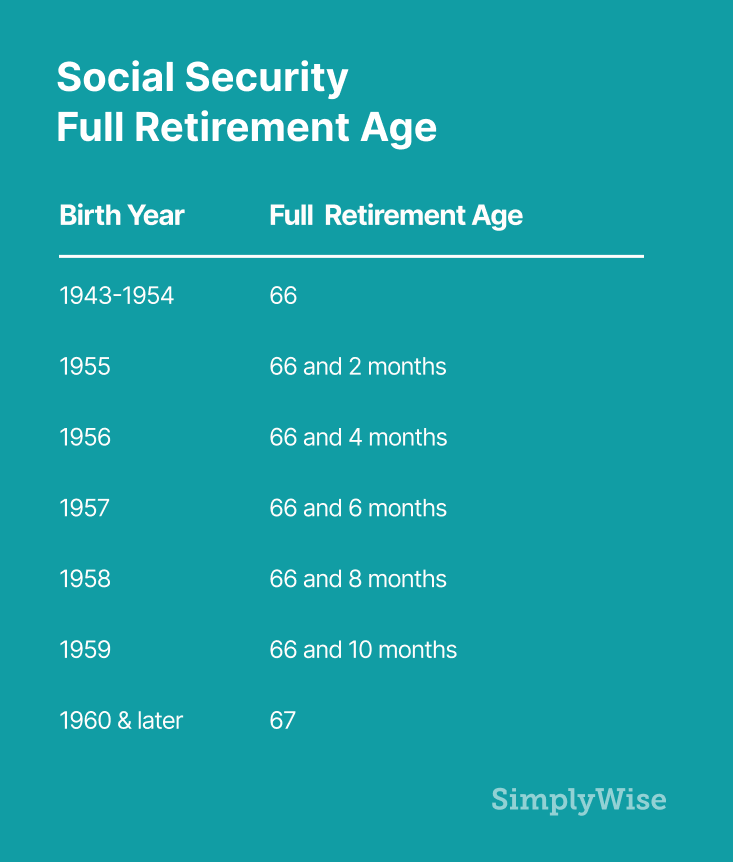
Your Full Retirement Age (FRA), sometimes referred to as “normal retirement age,” is the age at which you are entitled to receive 100% of your Primary Insurance Amount (PIA). This age is not fixed for everyone; it depends on your birth year. For those born in 1937 or earlier, FRA was 65. For those born between 1943 and 1954, it is 66. It gradually increases for those born later, reaching 67 for anyone born in 1960 or later.
Claiming at your FRA ensures you receive the full benefit calculated from your earnings record, without any reductions or increases due to early or delayed claiming. Understanding your specific FRA is vital because it serves as the pivot point for all claiming strategies. Claiming before it leads to permanent reductions, while claiming after it leads to permanent increases.
Claiming Early: Reduced Benefits
You have the option to begin receiving Social Security retirement benefits as early as age 62. However, choosing to claim early comes with a significant and permanent reduction in your monthly benefit amount. The benefit is reduced for each month you claim before your FRA.
The reduction rate is structured in two tiers:
- For the first 36 months you claim early, your benefit is reduced by 5/9 of 1% per month.
- For any months beyond 36, your benefit is reduced by an additional 5/12 of 1% per month.
These reductions are cumulative. For example, if your FRA is 67 and you claim at age 62, you are claiming 60 months early. The reduction would be 30% (5/9 of 1% x 36 months = 20% + 5/12 of 1% x 24 months = 10%). This means you would receive only 70% of your PIA for the rest of your life. This permanent reduction is a critical factor to weigh against the immediate need for income, as it significantly impacts your total lifetime benefits, especially if you live a long life.
Claiming Late: Increased Benefits (Delayed Retirement Credits)
Conversely, if you choose to delay claiming your Social Security benefits past your Full Retirement Age, you can significantly increase your monthly payments. The SSA provides “Delayed Retirement Credits” (DRCs) for each month you postpone claiming, up to age 70. These credits are typically 8% per year (or 2/3 of 1% per month) for those born in 1943 or later.
This means that if your FRA is 67 and you delay claiming until age 70, you accrue 3 years of Delayed Retirement Credits. At an 8% annual rate, your monthly benefit would increase by 24% (3 years x 8% per year). This boost is added to your PIA and is permanent. So, someone with a $2,000 PIA at FRA could receive $2,480 per month by waiting until age 70. After age 70, there are no further increases for delaying, making 70 the maximum age to claim for the highest possible monthly benefit. This strategy is particularly appealing for those who are in good health, have other sources of income, and can afford to wait, as it provides a robust hedge against inflation and longevity risk.
Practical Ways to Estimate Your Benefits
While understanding the theoretical calculation is valuable, the most practical way to ascertain your specific benefit estimates is directly through the Social Security Administration’s resources. These tools offer personalized projections based on your actual earnings record.
The Social Security Administration (SSA) Online Account
Without a doubt, the most accurate and convenient method to estimate your Social Security benefits is through your personalized online “my Social Security” account. This free service, provided by the SSA, allows you to:
- View your complete earnings record: This is crucial for verifying that all your employers have reported your income correctly. Any discrepancies can be addressed directly with the SSA.
- Get personalized benefit estimates: The SSA provides estimates for your benefits at various claiming ages (early, at FRA, and delayed up to age 70), based on your actual, indexed earnings. These estimates are recalculated regularly as new earnings are posted.
- Access benefit statements: You can download your latest Social Security Statement, which summarizes your earnings history and estimated benefits.
- Manage your benefits: Once you begin receiving benefits, this portal allows you to manage direct deposit, change your address, and get a replacement Medicare card.
Creating a “my Social Security” account is straightforward and provides invaluable data for retirement planning. It’s recommended that everyone, regardless of age, establish an account to monitor their earnings and stay informed.
Social Security Statements
Historically, the SSA mailed annual Social Security Statements to workers aged 25 and older. While the frequency and age thresholds for mailed statements have changed (they are now typically mailed to workers aged 60 and over who are not yet receiving benefits and do not have an online account), you can always access your statement through your “my Social Security” online account.
Your Social Security Statement is a concise document that provides:
- A summary of your yearly earnings for every year you’ve worked.
- Estimated benefits at full retirement age, early retirement age (62), and if you delay until age 70.
- Estimated disability benefits.
- Estimated survivor benefits for your family.
- Important information about Medicare.
Reviewing this statement periodically helps you track your progress towards retirement goals and identify any potential issues with your earnings record.
Online Calculators (Third-Party and SSA)
In addition to your personalized account, the SSA offers several online calculators on its website that allow for more detailed scenario planning:
- Retirement Estimator: This tool allows you to plug in different future earnings assumptions and claiming ages to see how they impact your estimated benefit. It’s useful for “what-if” scenarios, such as how working longer or earning more could affect your payout.
- Benefit Calculators: The SSA provides more advanced calculators for specific situations, such as calculating benefits under the Windfall Elimination Provision (WEP) or Government Pension Offset (GPO), which affect those with non-covered pensions.
While many third-party websites also offer Social Security benefit calculators, it is essential to exercise caution. Always prioritize calculators directly from the SSA or reputable financial planning institutions. Ensure that any third-party calculator clearly states its methodology and data sources to avoid inaccurate or misleading estimates. For serious planning, the SSA’s official tools are the gold standard.
Beyond Your Own Retirement: Other Benefit Types
Social Security is more than just individual retirement income; it’s a comprehensive social insurance program that extends protection to family members and in times of hardship. Understanding these additional benefit types is crucial for holistic financial planning.
Spousal Benefits
Social Security offers benefits to spouses (and eligible divorced spouses) based on their partner’s work record. A spouse can receive up to 50% of the working spouse’s Primary Insurance Amount (PIA) if they claim at their own Full Retirement Age (FRA). If the spouse claims benefits before their FRA, the spousal benefit will be permanently reduced. It’s important to note that a spouse can only claim spousal benefits once the primary worker has filed for their own retirement benefits.
A common strategy involves the lower-earning spouse claiming spousal benefits while the higher-earning spouse delays their own claim to earn Delayed Retirement Credits. For divorced spouses, similar rules apply, provided the marriage lasted at least 10 years, the divorced spouse is not remarried, and both ex-spouses are at least 62. The fascinating aspect of divorced spousal benefits is that claiming by one ex-spouse does not impact the benefits of the primary worker or their current spouse.
Survivor Benefits
In the unfortunate event of a worker’s death, Social Security provides critical financial support to eligible family members, known as survivor benefits. These benefits are paid to widows, widowers, and eligible dependent children. The amount of the survivor benefit is based on the deceased worker’s PIA. A widow or widower who has reached their own Full Retirement Age (FRA) can receive 100% of the deceased worker’s benefit amount. If they claim earlier, their benefit will be reduced, similar to early retirement reductions.
Dependent children (under age 18, or 19 if still in high school, or any age if disabled before age 22) can also receive survivor benefits, typically up to 75% of the deceased worker’s PIA. There is a family maximum benefit limit, however, which caps the total amount paid to all eligible survivors on a single worker’s record. Survivor benefits are a vital safety net, providing ongoing income to families after the loss of a primary income earner, and should be factored into any comprehensive financial or estate planning discussion.
Disability Benefits
Social Security also administers one of the largest disability insurance programs in the world, providing benefits to individuals who are unable to work due to a severe medical condition. To qualify for Social Security Disability Insurance (SSDI), you must have worked long enough and recently enough under Social Security to be “insured.” The calculation of disability benefits is very similar to retirement benefits. It is based on your Average Indexed Monthly Earnings (AIME) and then your Primary Insurance Amount (PIA), just as if you had reached your full retirement age when you became disabled.
The key difference is that when calculating disability benefits, the SSA often uses a shorter period of earnings than the 35 years used for retirement benefits, reflecting the fact that disabled workers may not have had a full working career. Additionally, the formula considers “drop-out years” (years with low or no earnings due to the disability) to ensure a fair calculation. While the application process for disability benefits can be complex and lengthy, the benefit amount itself is derived from the same foundational earnings record and PIA calculation as retirement benefits, emphasizing the interconnected nature of Social Security’s various programs.
Strategies for Maximizing Your Social Security Benefits
Understanding how Social Security benefits are calculated is the first step; the next is to develop strategies to maximize the income you receive. Thoughtful planning can lead to significantly higher lifetime benefits.
Work Longer and Earn More (Up to the Maximum)
Since your Social Security benefit is based on your highest 35 years of indexed earnings, one of the most direct ways to boost your benefit is to ensure you have 35 years of substantial earnings. If you have fewer than 35 years of earnings, each additional year of work will replace a zero-earning year, thereby increasing your AIME. Even if you have more than 35 years of work, continuing to work can replace a lower-earning year from earlier in your career with a higher-earning year, which again will increase your AIME and, consequently, your PIA.
It’s also important to be aware of the Social Security earnings limit (the maximum amount of earnings subject to Social Security taxes). While earnings above this limit don’t contribute to your benefit, working up to and consistently reaching this limit for 35 years will ensure you receive the maximum possible AIME. For many, simply continuing to work for a few more years, especially if they are high-earning years, can make a noticeable difference in their monthly benefit.
Carefully Choose Your Claiming Age
As discussed, the age at which you begin receiving benefits has the most profound impact on your monthly payment. This decision requires careful consideration of several factors:
- Health and Longevity: If you anticipate a long lifespan, delaying benefits to earn Delayed Retirement Credits (DRCs) often makes financial sense, as the higher monthly payments will compound over many years. Conversely, if your health is poor or you have a family history of shorter lifespans, claiming earlier might be more advantageous to receive benefits for as long as possible.
- Other Income Sources: If you have substantial retirement savings, pensions, or other income streams, you may be able to afford to delay claiming Social Security, allowing your benefits to grow. If Social Security will be your primary source of retirement income, you might need to claim earlier.
- Spousal Coordination: For married couples, the decision becomes even more strategic. Often, it makes sense for the higher-earning spouse to delay claiming until age 70 to maximize their benefit, which will also maximize the potential survivor benefit for the lower-earning spouse. The lower-earning spouse might claim earlier or take a spousal benefit.
There is no single “best” claiming age; the optimal choice is highly individualized and depends on your unique circumstances. It often pays to model different claiming scenarios to understand their long-term impact.
Coordinate with Your Spouse
For married couples, Social Security claiming strategies can significantly impact combined lifetime benefits. It’s crucial to look at Social Security as a family asset rather than individual assets. A key strategy involves determining which spouse should delay claiming to maximize survivor benefits. Typically, the higher earner should delay claiming until age 70 if possible, as their higher benefit will become the survivor benefit for the surviving spouse. If the higher earner passes away first, the surviving spouse will step up to the higher deceased spouse’s benefit.
Couples should also explore the option of one spouse claiming spousal benefits while the other continues to defer their own benefit, though certain strategies like “file and suspend” have largely been phased out for new filers. Understanding all available options and how they interact is essential. Divorcees may also have options to claim benefits based on an ex-spouse’s record without impacting the ex-spouse or their current spouse’s benefits. These decisions can be complex and often benefit from consultation with a financial advisor specializing in Social Security claiming strategies.

Monitor Your Earnings Record
While not a direct calculation strategy, proactively monitoring your Social Security earnings record through your “my Social Security” account is a critical preventative measure. Errors in reported earnings can occur due to employer mistakes, miskeyed Social Security numbers, or other administrative glitches. Uncorrected errors could lead to a lower AIME and, subsequently, a lower PIA and reduced monthly benefits in retirement. By regularly checking your earnings record, you can identify and rectify any discrepancies promptly, ensuring that your future benefit calculations are based on accurate data. This diligence ensures that you receive every dollar you are entitled to based on your lifetime contributions.
In conclusion, calculating Social Security benefits involves a detailed process based on your earnings history, indexed for inflation, and then adjusted by your claiming age. While the formulas can appear intricate, the key takeaway is that your decisions about work and when to claim benefits have a tangible and lasting impact on your financial well-being in retirement. By leveraging the SSA’s online tools, understanding the core components of the calculation, and strategically planning your claiming age, you can empower yourself to make the most of this vital retirement resource. For personalized advice, especially for complex situations or couples, consulting with a qualified financial advisor is always recommended.
aViewFromTheCave is a participant in the Amazon Services LLC Associates Program, an affiliate advertising program designed to provide a means for sites to earn advertising fees by advertising and linking to Amazon.com. Amazon, the Amazon logo, AmazonSupply, and the AmazonSupply logo are trademarks of Amazon.com, Inc. or its affiliates. As an Amazon Associate we earn affiliate commissions from qualifying purchases.