
Understanding your yearly income is not just an administrative task; it’s a foundational pillar of sound personal finance. Whether you’re planning a budget, applying for a loan, strategizing for retirement, or simply aiming for better financial clarity, an accurate grasp of your earnings is indispensable. This article will guide you through a comprehensive process to calculate your yearly income, transforming a seemingly complex task into an empowering financial exercise. We’ll delve into the nuances of different income types, practical calculation methods, and the crucial role this knowledge plays in your broader financial well-being.
Understanding the Fundamentals of Your Income
Before you can accurately calculate your yearly income, it’s essential to define what constitutes “income” in various contexts and identify all the sources from which you receive money. This initial step is critical for a complete and precise financial picture.
Gross vs. Net Income: A Crucial Distinction
The terms “gross income” and “net income” are often used interchangeably, but they represent very different figures, each vital for specific financial purposes.
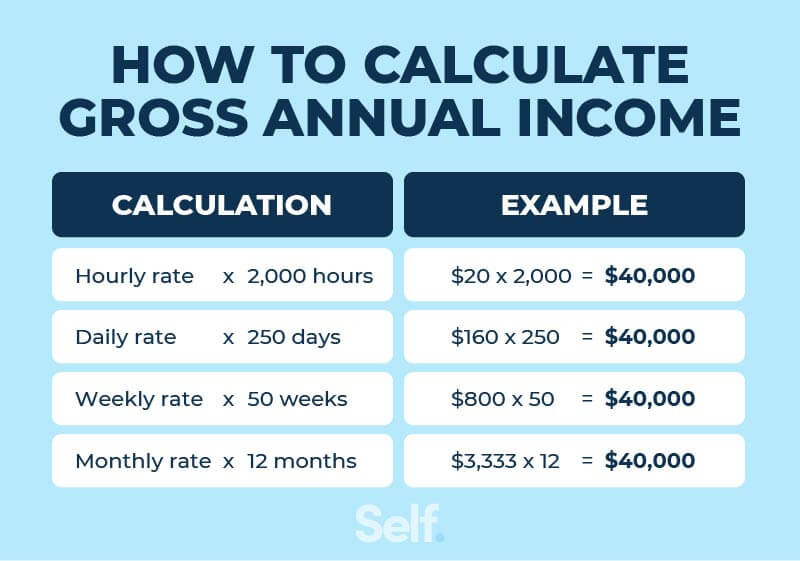
- Gross Income: This is the total amount of money you earn before any deductions are taken out. For an employee, it’s your salary or hourly wages multiplied by the hours worked, plus any bonuses, commissions, or overtime. For self-employed individuals, it’s the total revenue generated from their services or sales before business expenses. Gross income is important for understanding your earning capacity and is often the figure requested for loan applications or income verification.
- Net Income (Take-Home Pay): This is the amount of money you actually receive after all mandatory and voluntary deductions have been subtracted from your gross income. These deductions typically include federal, state, and local taxes, Social Security and Medicare contributions (FICA), health insurance premiums, retirement plan contributions (e.g., 401(k)), and other benefits. Net income is what you have available for spending, saving, and investing, making it the primary figure for daily budgeting and cash flow management.
When calculating your yearly income, it’s beneficial to calculate both. Your gross yearly income gives you the full scope of your earnings, while your net yearly income reveals your actual purchasing power.
Identifying All Income Streams
Most people have more than one source of income, and overlooking any of them can lead to an inaccurate calculation. A comprehensive tally requires identifying every channel through which money flows into your accounts.
- Primary Employment Income: This is typically the largest component for most individuals, encompassing salaries, wages, bonuses, commissions, and overtime pay from your main job.
- Self-Employment or Freelance Income: If you work as a contractor, freelancer, gig worker, or run a small business, this includes all revenue generated before business expenses. For yearly income calculation, you’ll need to sum up all payments received for services rendered or goods sold.
- Investment Income: Money earned from investments can significantly contribute to your total income. This includes dividends from stocks, interest from savings accounts, bonds, or CDs, capital gains from selling assets, and rental income from properties.
- Benefit Payments: Certain government or private benefits also count as income, such as Social Security benefits, unemployment benefits, disability payments, workers’ compensation, and certain pension distributions.
- Alimony or Child Support: Payments received from alimony or child support agreements should also be included in your yearly income calculation, depending on tax regulations and your specific financial needs.
- Other Miscellaneous Income: This can include a wide range of less frequent or smaller income sources like prize winnings, royalties, gifts (above certain thresholds), or income from selling personal items.
By creating a detailed list of all potential income sources, you lay the groundwork for a truly comprehensive and accurate yearly income calculation.
Step-by-Step Methods for Accurate Calculation
Once you understand what constitutes income and have identified all your sources, the next step is to gather the necessary documentation and perform the actual calculation. The method you use will depend largely on the nature and consistency of your income.
Leveraging Pay Stubs and Employment Records
For those with a consistent salary or hourly wage, your pay stubs are your most reliable resource.
- Locate Recent Pay Stubs: Gather all pay stubs from the past year. If you have electronic pay stubs, they are usually accessible through your employer’s online portal.
- Identify Gross and Net Pay: On each pay stub, clearly locate your gross pay and net pay for that pay period.
- Determine Pay Frequency: Note whether you are paid weekly, bi-weekly, semi-monthly, or monthly.
- Calculate Annualized Income:
- For Salary: If you have a fixed annual salary, this figure is already your gross yearly income. To find your net yearly income, sum up the net pay from all your pay stubs for the year, or multiply your typical net pay by the number of pay periods in a year (e.g., 26 for bi-weekly).
- For Hourly Wage: Sum the gross pay from all pay stubs over the year. Alternatively, if your hours are consistent, multiply your hourly rate by the number of hours worked per period, then by the number of pay periods in a year.
- Include Bonuses/Commissions: Ensure any one-time bonuses or variable commissions are added to your gross total. These will typically appear on the pay stub for the period they were paid.
Consolidating Income from Diverse Sources
Calculating income becomes more intricate when you have multiple, varied income streams beyond a standard salary.
- Organize by Source: Create separate categories for each income type (e.g., primary job, freelance client A, rental property, investment dividends).
- Gather Documentation for Each Source:
- Freelance/Self-Employment: Keep meticulous records of invoices, payments received, and bank statements. For tax purposes, you’ll also track business expenses, but for gross income calculation, you’re looking at total revenue.
- Investment Income: Collect statements from brokerage accounts, banks (for interest), and mutual funds, typically summarized at year-end. Look for Forms 1099-DIV, 1099-INT, and 1099-B.
- Rental Income: Track all rent payments received throughout the year, usually recorded in a spreadsheet or property management software.
- Benefits: Gather statements from Social Security, unemployment offices, or pension administrators.
- Sum Each Category: Add up all income within each category for the entire year.
- Total All Categories: Finally, sum the totals from all categories to arrive at your overall gross yearly income. Repeat the process for net figures where applicable (e.g., net rental income after expenses, or net investment income after fees, though for initial income calculation, gross figures are often used).
Accounting for Variable and Irregular Income
Income that fluctuates significantly from month to month, such as from gig work, sales commissions, or seasonal employment, requires a slightly different approach.
- Consistent Tracking: The most crucial step is to track this income meticulously as it comes in. Use a spreadsheet, an accounting app, or even a simple ledger.
- Review Bank Statements: For irregular income, especially from diverse platforms, cross-referencing with your bank statements is vital. Look for all deposits that are income-related.
- Projecting for the Future: If you are trying to estimate your yearly income mid-year, average your monthly income over the past few months and extrapolate for the remainder of the year. Always build in a buffer for variability, especially if your income is prone to significant swings.
- Tax Forms: If you’re looking back at a completed year, tax forms like Form 1099-NEC (for non-employee compensation) or Schedule C (for self-employment income) will provide an aggregated total, but these only reflect taxable income reported, not necessarily all gross income received.
The Role of Financial Tools and Technology

In the modern financial landscape, you don’t have to rely solely on manual calculations. A variety of tools and technologies can streamline the process of calculating and tracking your yearly income, enhancing accuracy and efficiency.
Spreadsheets and Manual Tracking
For those who prefer a hands-on approach or have relatively straightforward income structures, a spreadsheet remains an excellent tool.
- Customization: Spreadsheets (like Microsoft Excel or Google Sheets) allow you to create a personalized tracking system. You can set up columns for dates, income sources, gross amounts, deductions, and net amounts.
- Formulas: Utilize basic formulas to automatically sum up your income for any given period (weekly, monthly, annually). This reduces manual errors and updates totals instantly as you add new data.
- Visibility: A well-designed spreadsheet provides a clear, at-a-glance overview of your income trends and totals throughout the year.
While manual tracking requires discipline to consistently input data, it offers a deep understanding of your financial inflows.
Utilizing Personal Finance Software and Apps
For greater automation and integration, personal finance software and apps are invaluable. These tools can connect directly to your bank accounts, investment platforms, and credit cards, automatically categorizing transactions and providing real-time financial insights.
- Automated Aggregation: Apps like Mint, YNAB (You Need A Budget), Personal Capital, or Quicken can pull in all your income transactions from linked accounts, consolidating them into one dashboard.
- Categorization: Many tools automatically categorize income, making it easy to see how much you’ve earned from salary, freelance work, investments, etc. If a transaction is miscategorized, you can usually correct it.
- Reporting: These platforms offer robust reporting features that can generate annual income summaries, cash flow statements, and net worth reports, saving you significant time and effort.
- Budgeting Integration: Beyond just income calculation, these tools seamlessly integrate your income figures into a broader budgeting framework, allowing you to see how your earnings relate to your spending and savings goals.
The convenience and analytical power of these digital tools make them highly recommended for managing complex financial situations or simply seeking more automated financial clarity.
Consulting Tax Documents and Professionals
For the most official and comprehensive annual income figures, especially in retrospect, tax documents are indispensable.
- W-2 Forms: If you are an employee, your W-2 Form (Wage and Tax Statement) will report your total gross wages, tips, and other compensation for the year, as well as withheld taxes. This is a definitive record of your primary employment income.
- 1099 Forms: Various 1099 forms report different types of non-employee income:
- 1099-NEC: For non-employee compensation (freelance, contractor work).
- 1099-INT: For interest income.
- 1099-DIV: For dividend income.
- 1099-R: For retirement plan distributions.
- 1099-G: For government payments like unemployment benefits.
- Schedule K-1: Reports income from partnerships, S corporations, and trusts.
- Tax Returns: Your completed federal income tax return (Form 1040) will summarize all reported income on lines designated for wages, interest, dividends, business income (from Schedule C), capital gains, etc., leading to your Adjusted Gross Income (AGI) and total income.
- Financial Advisors/Accountants: For complex income situations, consulting a certified financial planner or a tax professional (CPA) is invaluable. They can help you accurately gather and calculate all income sources, ensure compliance with tax regulations, and provide insights into optimizing your financial strategy. Their expertise can uncover income sources you might have overlooked and provide the most accurate annual figures for official purposes.
Why Knowing Your Yearly Income Matters
Calculating your yearly income is not an end in itself; it’s a powerful means to achieve greater financial stability and pursue your long-term goals. The insights gained are fundamental to virtually every aspect of personal finance.
Budgeting, Savings, and Debt Management
At its core, a budget is a plan for how you will use your income. Without knowing how much you earn, creating an effective budget is impossible.
- Effective Budgeting: Knowing your net yearly income (or monthly equivalent) allows you to allocate funds strategically across various spending categories. You can ensure that your expenses do not exceed your earnings, preventing debt accumulation.
- Achieving Savings Goals: Whether you’re saving for a down payment, a child’s education, or an emergency fund, your yearly income dictates how much you can realistically set aside. It helps you calculate a feasible savings rate and track progress toward your targets.
- Strategic Debt Repayment: Understanding your income relative to your debt obligations (like credit cards, student loans, or mortgages) allows you to formulate a sensible debt repayment strategy. You can determine how much extra you can afford to pay down debt, potentially saving thousands in interest over time.
Financial Planning and Goal Setting
Your yearly income is a critical input for any forward-looking financial plan. It shapes your ability to achieve significant life milestones.
- Retirement Planning: Accurate income figures are essential for determining how much you can contribute to retirement accounts (401(k), IRA) and estimating your future retirement lifestyle. Financial planners use your current income to project future earnings and suggest appropriate savings rates.
- Major Purchases: Planning for large expenses like buying a home, a car, or funding higher education relies heavily on your income. Lenders assess your income to determine loan eligibility and affordability.
- Investment Strategy: Your disposable income directly influences how much you can invest. Knowing your income helps you assess your risk tolerance and choose investment vehicles that align with your financial capacity and long-term objectives.

Tax Planning and Compliance
Income calculation is inextricably linked to your tax obligations. Accurate records ensure compliance and can lead to optimized tax outcomes.
- Accurate Tax Filings: Your yearly income is the primary figure reported on your tax return. An accurate calculation minimizes the risk of errors, audits, and penalties from tax authorities.
- Identifying Deductions and Credits: By understanding your income streams and associated expenses, you can identify potential tax deductions and credits that may reduce your taxable income and overall tax liability.
- Estimating Quarterly Taxes: For self-employed individuals or those with significant income not subject to withholding, accurately calculating yearly income is crucial for estimating and paying quarterly estimated taxes, avoiding underpayment penalties.
- Income-Driven Repayment Plans: For student loans, income-driven repayment plans rely heavily on your reported yearly income to determine your monthly payment.
In conclusion, calculating your yearly income is far more than a simple numerical exercise. It’s an essential act of financial empowerment, providing the clarity and data needed to make informed decisions, manage your money effectively, and build a secure financial future. By diligently tracking and understanding your earnings, you gain an invaluable tool for navigating the complexities of your personal finances and achieving your most ambitious financial aspirations.
aViewFromTheCave is a participant in the Amazon Services LLC Associates Program, an affiliate advertising program designed to provide a means for sites to earn advertising fees by advertising and linking to Amazon.com. Amazon, the Amazon logo, AmazonSupply, and the AmazonSupply logo are trademarks of Amazon.com, Inc. or its affiliates. As an Amazon Associate we earn affiliate commissions from qualifying purchases.