
Understanding your monthly income is the cornerstone of sound personal finance. It’s not just a number on your pay stub; it’s the fuel that powers your financial life, dictating everything from your daily spending habits to your long-term investment strategies. Without an accurate assessment of what flows into your accounts each month, you’re essentially navigating your financial journey blindfolded, making it nearly impossible to budget effectively, save for the future, or make informed decisions about debt.
Many people only have a vague idea of their income, often confusing gross pay with net pay, or underestimating the variability of non-salaried earnings. This article will demystify the process of calculating your monthly income, breaking down different income types, guiding you through a step-by-step calculation, and highlighting why this fundamental financial literacy skill is indispensable for everyone aiming for financial stability and growth. We will delve exclusively into the realm of personal finance, providing a clear roadmap to understanding your earning power and leveraging that knowledge for a more secure future.

Why Accurately Calculating Your Monthly Income Matters
The seemingly simple act of figuring out your monthly income holds profound implications for your financial well-being. It’s the critical first step in virtually every aspect of personal finance, from managing daily expenses to planning for major life events.
Foundation for Budgeting and Financial Planning
Your monthly income is the absolute bedrock of any effective budget. A budget is essentially a spending plan that allocates your income to various expenses and savings goals. Without knowing precisely how much money you have coming in, creating a realistic budget is impossible. You might overestimate your available funds, leading to overspending and debt, or underestimate, missing opportunities to save or invest more aggressively. An accurate income figure allows you to assign specific amounts to housing, food, transportation, entertainment, and debt repayment, ensuring you live within your means and direct your money where it matters most. It also provides a clear picture for long-term financial planning, enabling you to project future cash flows for retirement, education, or significant purchases.
Debt Management and Loan Applications
When it comes to debt, whether it’s a mortgage, car loan, student loan, or credit card debt, lenders critically assess your income to determine your ability to repay. They use metrics like the debt-to-income (DTI) ratio to gauge your financial health. An accurate and clearly calculable monthly income helps you understand your own DTI and present a strong case to lenders. More importantly, for your own management, knowing your net monthly income is crucial for creating a realistic debt repayment plan. It allows you to determine how much you can comfortably allocate to principal payments each month, accelerating your journey to becoming debt-free without compromising other essential expenses.
Setting Realistic Financial Goals
What are your financial aspirations? Buying a home, starting a business, traveling the world, or retiring early? All these goals require capital, and reaching them demands careful planning that begins with understanding your income. If you want to save a down payment for a house, for example, knowing your monthly income allows you to calculate how much you can realistically set aside each month and, consequently, how long it will take to reach your goal. Without this clarity, your goals remain abstract desires rather than actionable plans. Accurate income calculation transforms vague aspirations into concrete, measurable objectives with a clear timeline.
Identifying Income Streams and Growth Opportunities
The process of calculating your monthly income forces you to compile and scrutinize all your sources of money. This can be an eye-opening exercise. You might discover income streams you hadn’t fully considered, or realize that certain income is more volatile than you initially thought. This detailed understanding helps you identify patterns, recognize opportunities to increase your income, and assess the reliability of various earnings. Perhaps you realize a side hustle isn’t as profitable as you assumed, or that a particular investment yields consistent dividends. This knowledge empowers you to make strategic decisions about where to invest your time and energy to maximize your earning potential.
Deconstructing Different Income Types
Not all income is created equal. The way you calculate your monthly earnings varies significantly depending on how you receive your money. Understanding these distinctions is crucial for an accurate overall picture.
Salaried Employment: The Fixed Income
For many, salaried employment is the most straightforward income type. You receive a fixed amount, typically paid bi-weekly or semi-monthly.
Net vs. Gross Income Explained
The most common pitfall here is confusing gross income with net income.
-
Gross Income is your total earnings before any deductions. This is the figure often quoted in job offers.
-
Net Income (often called “take-home pay”) is the amount you actually receive after all deductions have been subtracted.
Understanding Deductions (Taxes, Benefits, 401k)
Deductions can significantly reduce your gross pay. These typically include:
-
Federal, State, and Local Income Taxes: Mandatory deductions based on your earnings and tax jurisdiction.
-
FICA Taxes: Social Security and Medicare contributions.
-
Health Insurance Premiums: Your share of the cost for health, dental, or vision insurance.
-
Retirement Contributions: Deductions for 401(k), 403(b), or other employer-sponsored retirement plans.
-
Other Benefits: Deductions for life insurance, disability insurance, commuter benefits, etc.
-
Garnishments: Court-ordered deductions for debts.
To calculate your monthly net income from a salary, simply take your net pay from one pay period and multiply it by the number of pay periods in a month (e.g., if paid bi-weekly, multiply by 2; if semi-monthly, multiply by 2). If your pay periods are less regular, it’s often easiest to annualize your net pay and then divide by 12.
Hourly Wages: The Variable Income
Hourly wage earners face a bit more variability, as their income depends on the number of hours worked.
Accounting for Overtime and Irregular Shifts
If your hours fluctuate, or if you frequently work overtime, a simple multiplication of your hourly rate by a standard 160 hours (40 hours/week x 4 weeks/month) won’t give an accurate picture. You need to account for:
-
Varying Hours: Some weeks might be 30 hours, others 45.
-
Overtime Pay: Hours worked beyond a standard threshold (e.g., 40 hours/week) are often paid at a higher rate (e.g., 1.5x regular pay).
-
Shift Differentials: Some jobs pay more for night shifts, weekends, or holidays.
Calculating Average Monthly Income
For hourly workers, calculating an average monthly income is often the most practical approach.
-
Track Your Hours: Keep meticulous records of all hours worked, including regular and overtime hours, for at least 3-6 months.
-
Calculate Gross Pay for Each Period: Multiply regular hours by regular rate, overtime hours by overtime rate, and sum for gross pay.
-
Apply Deductions: Just like salaried employees, subtract taxes and other deductions from your gross pay to find your net pay for each period.
-
Average It Out: Sum up your net pay for the tracking period (e.g., 3 months) and divide by the number of months. This gives you a more realistic average monthly net income.
Freelance, Gig, and Business Income: The Unpredictable
This category presents the most complexity due to its inherent variability and the unique tax and expense considerations.
Tracking Gross Revenue
For freelancers, gig workers, and small business owners, income is often received as gross revenue before any business expenses or self-employment taxes. You need to meticulously track all payments received from clients or sales.
Factoring in Business Expenses (Self-Employment Tax, Supplies, Software)
A critical step for self-employed individuals is understanding that your personal net income is not your gross revenue. You must deduct all legitimate business expenses. These can include:
-
Supplies and Equipment: Tools, software, office supplies.
-
Marketing and Advertising: Costs to promote your services.
-
Travel and Meals: Business-related travel.
-
Home Office Deduction: A portion of rent/mortgage, utilities if you have a dedicated home office.
-
Self-Employment Taxes: Unlike W-2 employees, you’re responsible for both the employer and employee portions of Social Security and Medicare taxes (currently 15.3% on net earnings up to a certain threshold).
-
Health Insurance Premiums: Often paid out-of-pocket, which can be a significant expense.
Estimating Net Profit
-
Track Gross Revenue: Sum all income received over a period (e.g., 3-6 months or a full year).
-
Track All Business Expenses: Categorize and sum all legitimate expenses for the same period.
-
Calculate Net Business Income: Gross Revenue – Total Business Expenses.
-
Estimate Self-Employment Tax: Apply the appropriate self-employment tax rate to your net business income.
-
Calculate Estimated Monthly Personal Net Income: (Net Business Income – Estimated Self-Employment Tax) / Number of Months. This gives you a rough estimate of what you can personally draw from your business after covering taxes and operational costs. It’s often wise to err on the conservative side.
Other Income Streams: Diversifying Your Portfolio
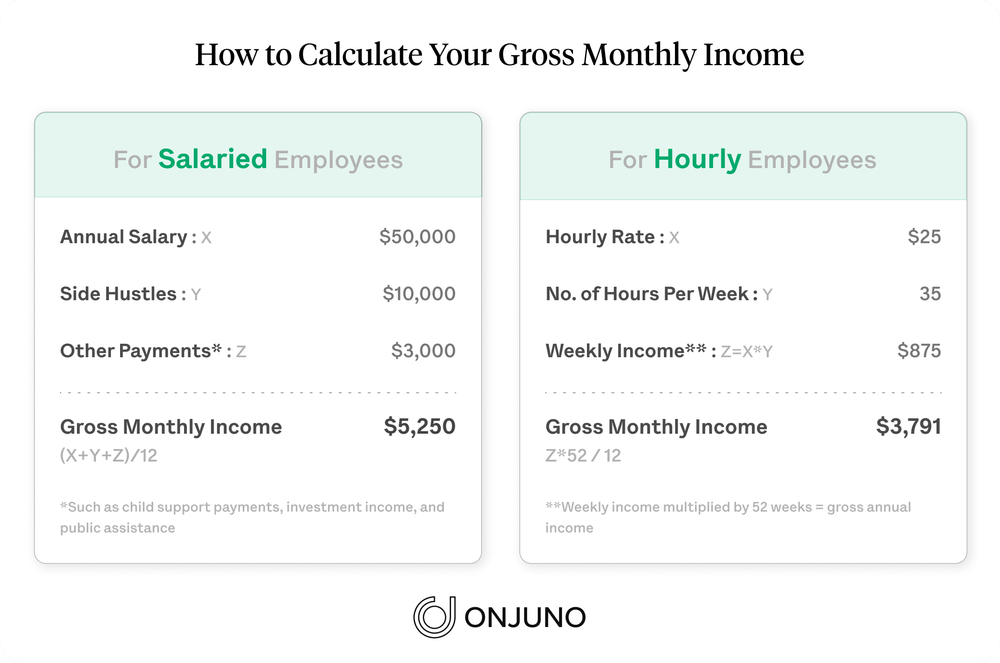
Beyond primary employment, many individuals have additional sources of income that contribute to their overall financial picture.
-
Rental Income: Income from properties you rent out. Remember to subtract property taxes, insurance, maintenance, and mortgage interest to get your net rental income.
-
Investment Dividends and Interest: Earnings from stocks, bonds, savings accounts, or other investments. These might be paid quarterly, semi-annually, or annually, so you’ll need to annualize and then divide by 12.
-
Alimony or Child Support: Regular payments received, which are often fixed.
-
Royalties or Passive Income: Earnings from intellectual property, online content, or other passive ventures. These can be highly variable and may require averaging over several months.
Step-by-Step Guide to Calculating Your Monthly Income
Now that we’ve explored the various income types, let’s put it all together into a practical, actionable guide.
Step 1: Gather All Your Income Sources
Before you start crunching numbers, compile a complete list of every single way money flows into your life. This includes:
-
Your primary job (salaried or hourly)
-
Freelance or gig work
-
Rental properties
-
Investment dividends or interest
-
Alimony or child support
-
Pension or retirement benefits
-
Social Security benefits
-
Any other regular payments or earnings
Collect relevant documentation: recent pay stubs (at least 2-3 to see various deductions), bank statements, invoices, tax returns from previous years (especially useful for self-employment), and any statements from investment accounts.
Step 2: Determine Gross Income for Each Source
For each income stream identified in Step 1, calculate its gross amount for a typical month.
-
Salaried: Use your gross monthly salary. If you’re paid bi-weekly, (Gross Pay per Period x 26 Pay Periods) / 12 Months. If semi-monthly, (Gross Pay per Period x 24 Pay Periods) / 12 Months.
-
Hourly: Calculate your average gross monthly pay based on past pay stubs for 3-6 months, accounting for regular and overtime hours.
-
Freelance/Gig/Business: Sum up your gross revenue for a consistent period (e.g., the last 3-6 months) and divide by the number of months to get an average monthly gross revenue.
-
Other Sources: Use the fixed amount for things like child support. For variable sources like dividends, annualize the total and divide by 12.
Step 3: Account for Deductions and Expenses (Net Income Focus)
This is the critical step where you transition from gross earnings to the money you actually have available to spend and save.
-
For W-2 Employees (Salaried/Hourly): Use the net pay amount from your most recent pay stubs. This figure already has federal, state, and FICA taxes, health insurance premiums, 401(k) contributions, and other deductions subtracted. If your deductions vary, average your net pay over several pay periods.
- Calculation: Net Pay per Period x (Number of Pay Periods in Month or Annual Net Pay / 12)
-
For Self-Employed Individuals (Freelance/Gig/Business Owners): This is more involved.
-
Subtract Business Expenses: From your average monthly gross revenue (from Step 2), subtract your average monthly business expenses (e.g., supplies, software, marketing, travel, office costs).
-
Estimate Self-Employment Tax: Take your net business income (gross revenue minus business expenses) and multiply by 0.9235 (to account for the deduction for half of SE tax). Then multiply that result by the current self-employment tax rate (15.3% for Social Security and Medicare). Divide this annual estimate by 12 for a monthly figure.
-
Estimate Income Tax: You’ll also owe federal and potentially state income tax on your net business income. It’s wise to set aside an additional percentage (e.g., 15-25% depending on your income bracket and deductions) for this. This is often an estimate, and consulting a tax professional is highly recommended.
- Calculation: (Average Monthly Gross Revenue – Average Monthly Business Expenses – Average Monthly Self-Employment Tax – Average Monthly Estimated Income Tax) = Estimated Monthly Personal Net Income from Business
-
-
For Rental Income: Subtract average monthly expenses (mortgage interest, property taxes, insurance, maintenance, vacancy allowance) from your average monthly gross rent.
-
For Investment Income: If taxes are not already withheld, remember to factor in potential capital gains or income taxes on these earnings when considering your net available funds.
Step 4: Annualize and Then Monthly-ize Variable Income
For any income source that is highly irregular (e.g., a one-time bonus, an annual dividend, or sporadic freelance work), it’s best to look at your earnings over an entire year, or at least 6-12 months.
-
Sum Annual Net Income: Add up all the net income received from that specific source over the past 12 months.
-
Divide by 12: Divide the annual total by 12 to get an average monthly figure. Use this average for your budgeting purposes, acknowledging that some months might be higher and others lower.
Step 5: Sum It All Up for Your Total Monthly Income
Once you have a net monthly figure for each of your income sources, simply add them all together.
Total Monthly Income = Net Monthly Income (Source 1) + Net Monthly Income (Source 2) + …
This final figure is your most accurate representation of your monthly take-home pay – the money you truly have available to manage your finances, save, and invest.
Tools and Strategies for Income Tracking
Maintaining an accurate understanding of your income is an ongoing process. Fortunately, various tools and strategies can simplify this task.
Manual Methods: Spreadsheets and Notebooks
For those who prefer a hands-on approach, a simple spreadsheet (like Excel or Google Sheets) or even a dedicated notebook can be highly effective.
-
Spreadsheet: Create columns for Date, Income Source, Gross Amount, Deductions, Net Amount, and Notes. This allows for easy tracking, totaling, and averaging. You can even set up formulas to automate calculations.
-
Notebook: Dedicate a section to “Income Tracking.” Record each payment received, noting the source and the net amount. While less automated, it provides a tangible record.
The key to manual methods is consistency. Update your records regularly, ideally as soon as you receive payment or a pay stub.
Digital Tools: Budgeting Apps and Software
In today’s digital age, numerous apps and software solutions are designed to automate and simplify income and expense tracking.
-
Budgeting Apps (e.g., Mint, YNAB, Personal Capital): Many popular budgeting apps link directly to your bank accounts and credit cards, automatically categorizing transactions. While primarily focused on expenses, they can also track deposits, helping you see your net income flow. Some allow you to manually input non-banked income.
-
Accounting Software (e.g., QuickBooks Self-Employed, FreshBooks): For freelancers and small business owners, dedicated accounting software is invaluable. These tools help you track invoices, payments received, and business expenses, making it easy to generate reports that show your net business income, which is crucial for personal income calculations.
These tools often provide visual dashboards, helping you quickly identify trends and understand your financial position without complex manual calculations.
Professional Help: Accountants and Financial Planners
If your income situation is particularly complex (e.g., multiple businesses, significant investments, or unique tax situations), seeking professional guidance can be a wise investment.
-
Accountants: Can help you accurately calculate your business’s net income, understand your tax liabilities, and ensure you’re taking advantage of all eligible deductions. They can provide precise figures for your personal income calculation from complex sources.
-
Financial Planners: Can help you integrate your income calculations into a broader financial strategy, assisting with budgeting, investment planning, and long-term goal setting based on a clear understanding of your cash flow.
Don’t hesitate to leverage their expertise, especially when uncertainty looms over your income calculations.
Regular Review and Adjustment
Your income isn’t static. Promotions, job changes, new side hustles, or changes in investment returns can all impact your monthly earnings.
-
Monthly Check-ins: At the beginning of each month, or after receiving your final pay stub for the month, take a few minutes to review your actual income against your projected income.
-
Quarterly or Bi-Annual Adjustments: If you notice significant, consistent deviations or if your financial situation changes, re-do your full income calculation every few months or at least twice a year. This ensures your budget and financial plans remain based on the most current and accurate information.
Maximizing Your Income & Financial Health
Calculating your monthly income is not an end in itself; it’s a powerful beginning. The insights gained from this exercise can inform strategies to not only manage your current income but also to grow it, ultimately bolstering your overall financial health.
Identifying Underutilized Income Streams
Through the meticulous process of tracking, you might uncover opportunities you hadn’t fully recognized. Perhaps you have a hobby that could generate a small income, or an unused asset that could be rented out. The comprehensive overview helps you see where additional earnings might be hiding, or where you could diversify your income to create more stability. This could be anything from selling unused items online to leveraging a skill for occasional freelance work.
Strategies for Increasing Income (e.g., Negotiations, Side Hustles)
With a clear picture of your current earnings, you’re better positioned to advocate for yourself or explore new avenues.
-
Salary Negotiation: Knowing your current market value and your personal financial needs can empower you to negotiate a higher salary or better benefits in your primary job.
-
Side Hustles: If your calculations reveal a gap between your income and your financial goals, a side hustle can bridge that gap. This could be anything from tutoring, delivering food, freelance writing, or consulting.
-
Skills Development: Investing in new skills can lead to higher-paying roles or new income-generating opportunities.

The Link Between Income Calculation and Wealth Building
Ultimately, an accurate understanding of your monthly income is the bedrock of wealth building. It allows you to:
-
Optimize Savings: Knowing your precise net income enables you to set realistic and aggressive savings goals.
-
Strategic Investing: You can allocate a consistent portion of your income to investments, taking advantage of compound interest.
-
Reduce Debt Effectively: By understanding your available funds, you can create a focused plan to tackle high-interest debt, freeing up more income for saving and investing.
-
Make Informed Decisions: Whether it’s taking on a new expense, changing jobs, or making a large purchase, your income calculation provides the data needed for financially sound decisions.
By consistently calculating and reviewing your monthly income, you transform what might seem like a mundane accounting task into an empowering act of financial self-awareness. It moves you from merely earning money to actively managing and growing your wealth, setting a solid foundation for achieving all your financial aspirations.
aViewFromTheCave is a participant in the Amazon Services LLC Associates Program, an affiliate advertising program designed to provide a means for sites to earn advertising fees by advertising and linking to Amazon.com. Amazon, the Amazon logo, AmazonSupply, and the AmazonSupply logo are trademarks of Amazon.com, Inc. or its affiliates. As an Amazon Associate we earn affiliate commissions from qualifying purchases.