
Embarking on the journey of stock market investing can seem daunting at first glance. The world of finance often appears shrouded in complex jargon and intricate mechanisms, leading many to believe it’s an exclusive club reserved for seasoned professionals. However, the reality is far more accessible. Buying shares in a company, which means purchasing a small piece of ownership in a publicly traded entity, is a fundamental step towards building personal wealth and participating in the growth of innovative businesses. This guide aims to demystify the process, providing a clear, step-by-step roadmap for anyone looking to make their first foray into stock investing. Whether your goal is long-term wealth accumulation, generating passive income through dividends, or simply understanding how the financial markets work, acquiring shares is a powerful financial tool that is within your reach.
Understanding the Fundamentals of Share Ownership
Before you dive into the act of buying shares, it’s crucial to grasp what you’re actually acquiring and the implications of that ownership. A solid foundational understanding will not only empower you to make informed decisions but also help mitigate potential risks.
What Exactly is a Share?
At its core, a share, also known as a stock or equity, represents a fractional ownership interest in a company. When you buy a share, you become a part-owner of that business. For example, if a company has 1 million shares outstanding and you own 1,000 of them, you own 0.1% of that company. This ownership comes with certain rights, though they vary depending on the type of share (e.g., common vs. preferred stock). Typically, common shareholders have voting rights on company matters, such as electing the board of directors, and a claim on a portion of the company’s assets and earnings. The value of your shares fluctuates based on the company’s performance, industry trends, broader economic conditions, and investor sentiment.
Why Invest in Shares? Potential Benefits and Growth
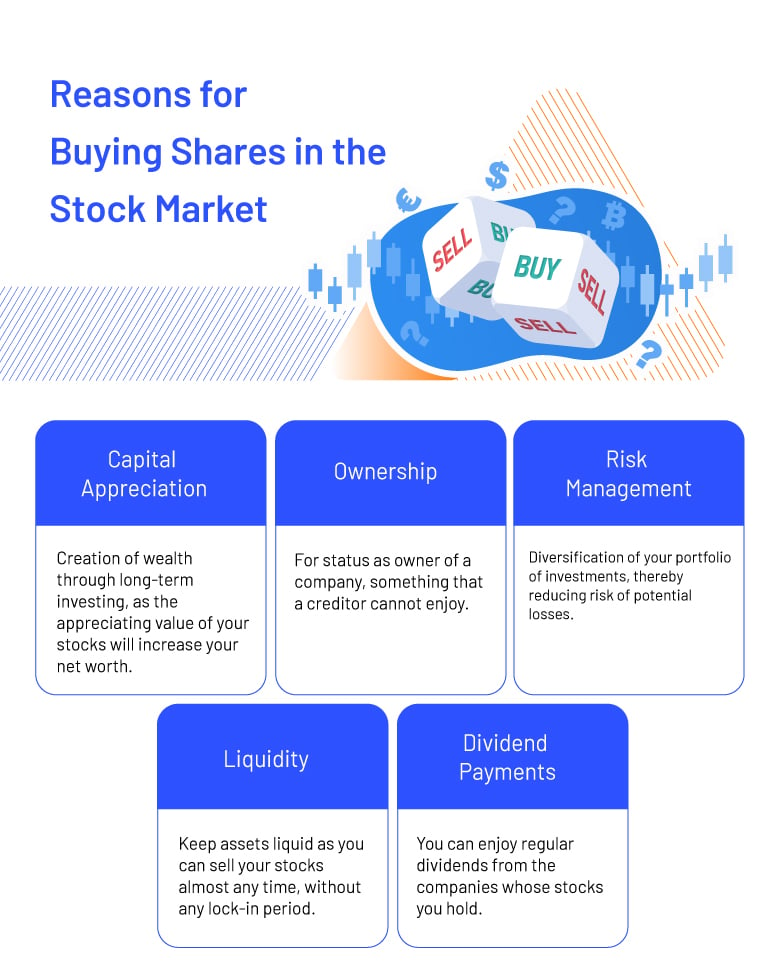
People invest in shares for a variety of compelling reasons, primarily centered around wealth creation and financial growth. The most significant potential benefit is capital appreciation. If the company you invest in performs well, its value increases, and so does the price of its shares. When you sell these shares at a higher price than you bought them, you realize a profit. Another attractive aspect is dividends. Many established companies distribute a portion of their profits to shareholders in the form of regular cash payments (dividends). These can provide a steady stream of passive income, especially appealing to income-focused investors. Beyond these direct financial benefits, investing in shares allows you to participate in the economic growth of various industries and countries, offering a hedge against inflation and the potential for long-term compounding returns that can significantly outpace traditional savings accounts.
Recognizing and Managing Investment Risks
While the allure of high returns is strong, it’s equally important to acknowledge that investing in shares carries inherent risks. The primary risk is the potential loss of capital. Share prices can fall, sometimes significantly, due to poor company performance, industry downturns, economic recessions, or unforeseen events. This is known as market volatility. Unlike bank deposits, your initial investment in shares is not guaranteed. Company-specific risks also exist, such as management issues, product failures, or competitive pressures, which can adversely affect a single company’s stock price regardless of the broader market. To manage these risks, investors often employ strategies like diversification (spreading investments across different companies and industries) and investing only capital they can afford to lose without impacting their financial stability. A clear understanding of your personal risk tolerance is paramount before making any investment decisions.
Preparing for Your Initial Foray into Investing
Successful investing isn’t just about picking the right stock; it’s also about thorough preparation. Laying the groundwork financially and intellectually will significantly improve your chances of achieving your investment goals.
Defining Your Personal Investment Goals
Before you even consider which shares to buy, you need to articulate why you’re investing. Your investment goals will dictate your strategy, the types of companies you choose, and your time horizon. Are you saving for a down payment on a house in five years? Planning for retirement in thirty? Looking to generate supplemental income? Different goals require different approaches. A short-term goal might necessitate a more conservative strategy, while long-term goals often allow for greater risk-taking with the expectation of higher returns over time. Clearly defining these objectives helps you select appropriate investments and stay disciplined during market fluctuations.
Establishing Your Investment Budget
A critical step is determining how much money you can realistically allocate to investments. It’s a golden rule of personal finance: never invest money you cannot afford to lose. This means ensuring you have an emergency fund covering 3-6 months of living expenses safely tucked away in an accessible, low-risk account. Only after securing your immediate financial stability should you consider investing in the stock market. Start small if necessary; many brokerage firms allow you to buy fractional shares or have low minimum investment requirements. Consistency is often more important than the initial amount, as regular contributions compound over time.
Conducting Thorough Company Research
Once your goals and budget are set, the exciting part begins: researching potential investment opportunities. This isn’t about guesswork; it’s about understanding the businesses you’re considering owning. Look for companies with strong fundamentals, a clear competitive advantage, a robust business model, and competent management. Key areas to research include:
- Financial Health: Examine revenue growth, profitability (net income, profit margins), debt levels, and cash flow.
- Industry Trends: Understand the industry the company operates in. Is it growing? Facing disruption? What are the competitive dynamics?
- Management Team: Assess the experience, track record, and vision of the company’s leadership.
- Products/Services: Evaluate the quality and demand for what the company sells.
- Valuation: Compare the company’s current stock price to its earnings, sales, and book value, often using metrics like P/E ratio, to determine if it’s reasonably priced.
Reputable financial news sources, company annual reports (10-K filings for U.S. companies), and investor relations sections on company websites are excellent resources for this research.
Choosing the Right Investment Platform
To buy shares, you’ll need an intermediary – an investment platform that facilitates transactions on the stock exchange. The choice of platform will significantly impact your investing experience, fees, and available tools.
Online Brokerage Accounts: Your Gateway to the Market
The most common way for individual investors to buy shares is through an online brokerage account. These platforms provide access to stock exchanges and offer a range of services. They broadly fall into two categories:
- Discount Brokers: These offer lower fees and commissions, often providing a self-service model. They are ideal for investors who are comfortable doing their own research and making their own investment decisions. Examples include Charles Schwab, Fidelity, E*TRADE, and Robinhood. They typically provide trading platforms, research tools, and educational resources.
- Full-Service Brokers: These offer comprehensive financial advice, portfolio management, and a wider range of investment products, often with higher fees. They are suited for investors who prefer personalized guidance from a financial advisor.
When choosing a broker, consider their fees (commissions, annual maintenance fees), the breadth of investment options (stocks, ETFs, mutual funds), the quality of their trading platform and research tools, customer service, and regulatory compliance (e.g., SIPC insurance in the U.S.).
Robo-Advisors: Automated Investing for Simplicity
For those who prefer a hands-off approach or are new to investing, robo-advisors offer an automated, algorithm-driven investment management service. After you answer a few questions about your financial goals and risk tolerance, a robo-advisor will create and manage a diversified portfolio for you, typically consisting of exchange-traded funds (ETFs) that track various market indices. They automatically rebalance your portfolio and reinvest dividends. Robo-advisors generally have lower fees than traditional financial advisors, making them an excellent choice for beginners or those seeking an efficient, low-cost way to invest. Popular options include Betterment and Wealthfront.
Direct Stock Purchase Plans (DSPPs)
Some companies offer Direct Stock Purchase Plans (DSPPs), which allow you to buy shares directly from the company itself, bypassing a traditional brokerage. These plans often allow for small, regular investments and may even offer dividend reinvestment plans (DRIPs). While they can be a cost-effective way to invest in a specific company, DSPPs limit your investment choices to companies that offer them and typically don’t provide the diversification or robust trading tools of a brokerage account. They are often used by employees of a company or individuals with a strong belief in a particular company’s long-term prospects.
The Practical Process of Buying Shares
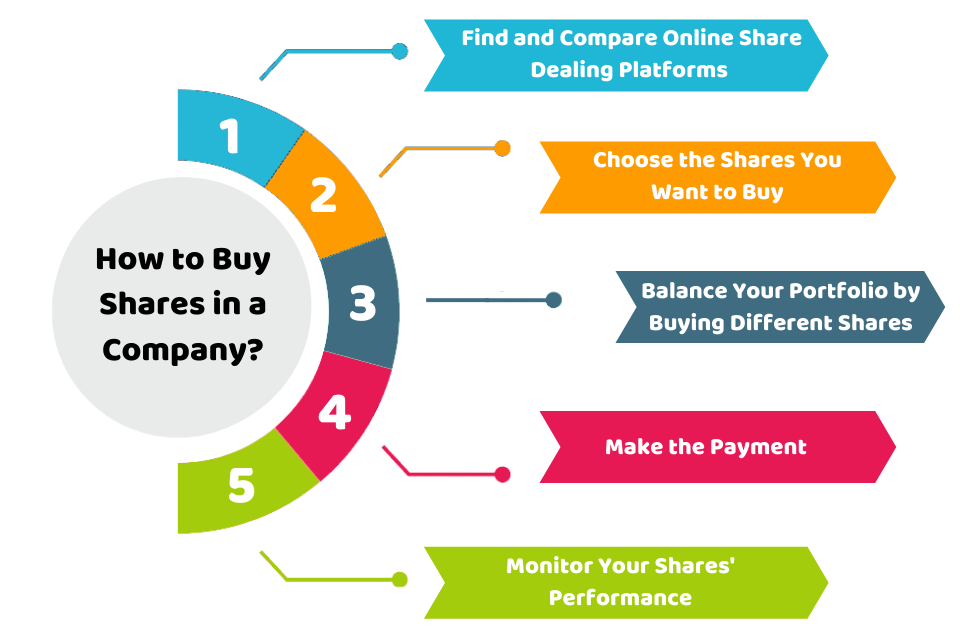
With your preparation complete and your platform chosen, you’re ready to execute your first stock purchase. This process involves a few key steps.
Opening and Funding Your Investment Account
The first step is to open an account with your chosen brokerage or robo-advisor. This typically involves an online application where you’ll provide personal information, including your Social Security number (or equivalent), address, and employment details. You’ll also likely undergo a Know Your Customer (KYC) process, which verifies your identity. Once approved, you’ll need to fund your account. Common methods include electronic transfers (ACH) from your bank account, wire transfers, or mailing a check. The funds will then be available for trading after a short processing period.
Placing Your First Order
After your account is funded, you can place an order to buy shares. When doing so, you’ll generally encounter two primary order types:
- Market Order: This is an instruction to buy or sell shares immediately at the best available current market price. While it guarantees execution, it doesn’t guarantee a specific price, which can be a disadvantage in rapidly moving markets.
- Limit Order: This allows you to specify the maximum price you’re willing to pay for a share (or the minimum price you’re willing to sell for). Your order will only be executed if the share reaches your specified price or better. Limit orders offer more control over the price but may not be executed if the stock never reaches your desired price.
For beginners, especially when buying less volatile, established stocks, a market order is often sufficient. However, for more volatile stocks or larger orders, a limit order provides greater price protection.
Monitoring and Managing Your Investments
Buying shares is not a one-time event; it’s the beginning of an ongoing process. Once you own shares, it’s important to regularly monitor their performance and manage your portfolio. This doesn’t mean obsessively checking prices daily, but rather periodically reviewing your investments to ensure they still align with your goals and risk tolerance. You might need to rebalance your portfolio if certain assets have grown disproportionately, or adjust your holdings if there are significant changes in a company’s fundamentals or your personal financial situation. Staying informed about economic news and company developments is also a part of responsible investing.
Long-Term Strategies and Key Considerations
Successful investing is a marathon, not a sprint. Adopting long-term strategies and understanding broader financial implications will significantly enhance your journey.
The Power of Diversification
One of the most fundamental principles of investing is diversification. This means spreading your investments across various companies, industries, and asset classes to reduce risk. Instead of putting all your eggs in one basket, you might own shares in technology companies, healthcare firms, consumer goods producers, and potentially even international stocks or bonds. If one sector or company performs poorly, the impact on your overall portfolio is mitigated by the performance of others. ETFs (Exchange-Traded Funds) and mutual funds are excellent tools for instant diversification, as they hold a basket of many different stocks or other assets.
Utilizing Dollar-Cost Averaging
Dollar-cost averaging is a strategy where you invest a fixed amount of money into an investment at regular intervals, regardless of the share price. For example, you might invest $100 every month into a particular stock or ETF. When the price is high, your fixed amount buys fewer shares; when the price is low, it buys more shares. Over time, this strategy helps to average out your purchase price, reducing the risk of making a large investment at an inopportune market peak. It’s a disciplined, systematic approach that removes emotional decision-making from investing and is particularly effective for long-term growth.
Continuous Learning and Financial Literacy
The world of finance is constantly evolving, and a commitment to continuous learning is vital for any investor. Stay updated on market trends, economic indicators, and company-specific news. Read financial publications, follow reputable financial analysts, and engage with educational resources provided by your brokerage or financial institutions. Understanding concepts like inflation, interest rates, economic cycles, and different investment vehicles will empower you to make more informed decisions and adapt your strategy as circumstances change. Financial literacy is an ongoing journey that pays significant dividends over your lifetime.
Understanding Tax Implications
Finally, it’s crucial to understand the tax implications of investing. Profits from selling shares are typically subject to capital gains tax. If you sell shares that you’ve held for less than a year, they are usually taxed at your ordinary income tax rate (short-term capital gains). Shares held for more than a year are typically subject to a lower long-term capital gains tax rate. Dividends you receive are also generally taxable income. The specific tax rules vary significantly by country and jurisdiction, so it’s always advisable to consult with a tax professional to understand how investment gains and income will affect your personal tax situation. Utilizing tax-advantaged accounts, such as IRAs or 401(k)s (if self-directed), can also provide significant tax benefits for long-term investing.
Buying shares in a company is a powerful way to participate in economic growth and build wealth. While it requires careful preparation, diligent research, and a clear understanding of risks, the process has never been more accessible to the average individual. By starting with a clear understanding of your goals, choosing the right platform, and committing to a strategy of diversification and continuous learning, you can confidently embark on your investing journey and work towards achieving your financial aspirations. Remember, patience and discipline are your most valuable assets in the stock market.
aViewFromTheCave is a participant in the Amazon Services LLC Associates Program, an affiliate advertising program designed to provide a means for sites to earn advertising fees by advertising and linking to Amazon.com. Amazon, the Amazon logo, AmazonSupply, and the AmazonSupply logo are trademarks of Amazon.com, Inc. or its affiliates. As an Amazon Associate we earn affiliate commissions from qualifying purchases.