
Investing in Berkshire Hathaway is often described as buying a piece of the American economy. Under the stewardship of Warren Buffett and the late Charlie Munger, the company has transformed from a struggling textile mill into a massive conglomerate with a market capitalization that consistently ranks among the largest in the world. For many individual investors, owning Berkshire stock is less about speculation and more about adopting a philosophy of value investing and long-term capital preservation. However, because of the company’s unique share structure and its storied history, the process of buying in requires an understanding of the different entry points and the underlying business model.
Understanding the Shares: Class A vs. Class B
Before placing your first order, you must distinguish between the two classes of stock offered by Berkshire Hathaway. This dual-class structure is one of the most famous in the financial world, designed specifically to protect the company’s long-term culture and provide accessibility to smaller investors.
The Legendary Class A (BRK.A)
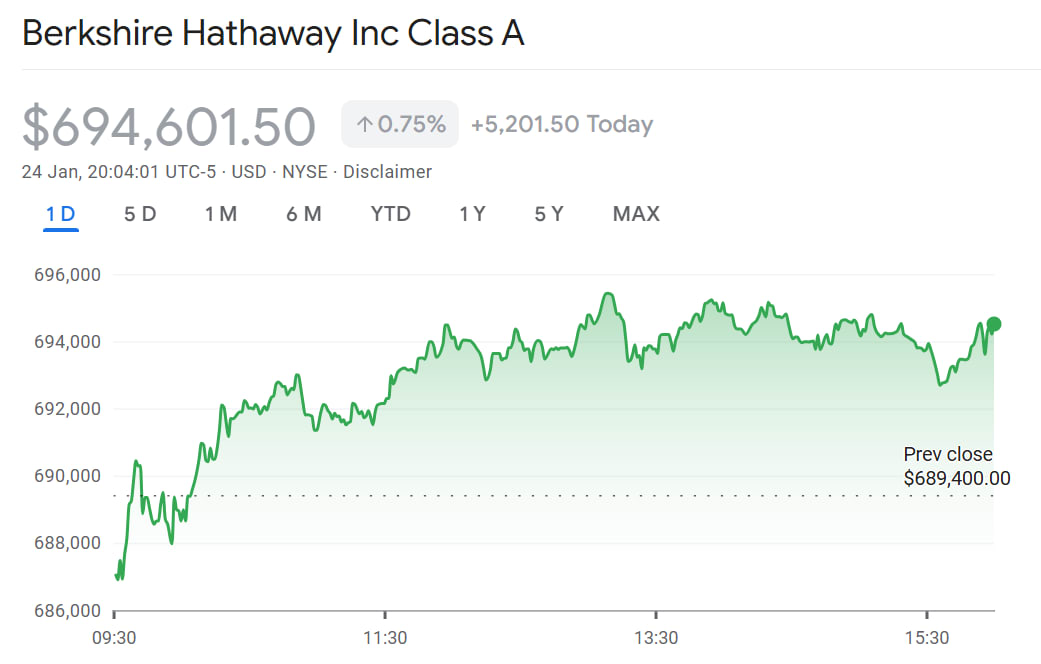
The Class A shares are the original shares of the company. Warren Buffett has famously never split these shares, believing that a high stock price attracts long-term, high-quality shareholders rather than short-term speculators. As a result, a single share of BRK.A costs as much as a luxury home in many parts of the United States. While these shares carry the most significant voting power and can be converted into Class B shares at any time, they are financially out of reach for the vast majority of retail investors.
The Accessible Class B (BRK.B)
In 1996, Berkshire Hathaway introduced Class B shares, often referred to as “Baby Berkshires.” Originally priced at 1/30th of a Class A share, they underwent a 50-to-1 split in 2010 to facilitate the acquisition of the Burlington Northern Santa Fe (BNSF) railroad. Today, one Class B share represents 1/1,500th of a Class A share in terms of economic interest. These shares are highly liquid, trade like any other common stock on the New York Stock Exchange, and allow everyday investors to participate in the company’s growth for a few hundred dollars. It is important to note that while Class A shares can be converted to Class B, the reverse is not possible.
Fractional Shares and Modern Accessibility
Even if the price of a single Class B share feels restrictive, modern brokerage technology has further democratized access. Many contemporary fintech platforms and traditional brokerages now offer fractional share trading. This means you can invest as little as $1, $5, or $10 into Berkshire Hathaway, essentially owning a small slice of a Class B share. This has removed the final barrier to entry, making “the Buffett way” accessible to anyone with a smartphone and a few dollars to spare.
The Step-by-Step Guide to Purchasing Berkshire Stock
Once you have decided which share class fits your budget—almost certainly Class B for most readers—the actual process of purchasing the stock is straightforward. It mirrors the process of buying any other publicly traded security.
Choosing the Right Brokerage Platform
To buy Berkshire stock, you need a brokerage account. If you do not already have one, you should choose based on your specific needs. Discount brokerages like Robinhood or Webull offer user-friendly interfaces and zero-commission trades, which are ideal for beginners. Established firms like Charles Schwab, Fidelity, or Vanguard provide more robust research tools, educational resources, and retirement account options (such as IRAs), which may be preferable if you are planning to hold Berkshire as a cornerstone of your long-term wealth strategy.
Opening and Funding Your Account
After selecting a broker, you will need to provide personal information, including your Social Security number and employment details, to comply with financial regulations. Once the account is approved, you can fund it via an ACH transfer from your bank account, a wire transfer, or by depositing a check. Many brokers now allow for “instant deposits,” letting you trade with a portion of your funds before the bank transfer fully clears.
Executing the Trade: Market vs. Limit Orders
When you are ready to buy, search for the ticker symbol “BRK.B” on your platform. You will then need to choose an order type. A “Market Order” executes the trade immediately at the current market price. While fast, the price can fluctuate slightly between the moment you click “buy” and the moment the trade is filled. A “Limit Order” allows you to specify the maximum price you are willing to pay. If the stock price hits your limit, the trade executes. For a stable, high-volume stock like Berkshire Class B, a market order is usually sufficient, but a limit order offers more control over your entry point.
What You Are Buying: The Berkshire Portfolio and Philosophy
Buying Berkshire Hathaway is often compared to buying an actively managed mutual fund or an exchange-traded fund (ETF), but without the management fees. When you own the stock, you are buying into a diverse ecosystem of businesses and a massive portfolio of public equities.
The Wholly Owned Subsidiaries
Berkshire is a conglomerate that owns dozens of companies outright. These businesses operate across a wide range of industries, providing a “moat” of diversified cash flow. Key holdings include:
-
Insurance: GEICO, National Indemnity, and Gen Re form the heart of Berkshire. They provide “float”—premiums collected upfront that Berkshire can invest for its own benefit before claims are paid out.
-
Infrastructure and Energy: BNSF Railway is one of the largest freight railroad networks in North America, while Berkshire Hathaway Energy provides utility services to millions.
-
Manufacturing and Retail: This includes household names like Dairy Queen, Duracell, Fruit of the Loom, See’s Candies, and Benjamin Moore.
The Public Equity Portfolio
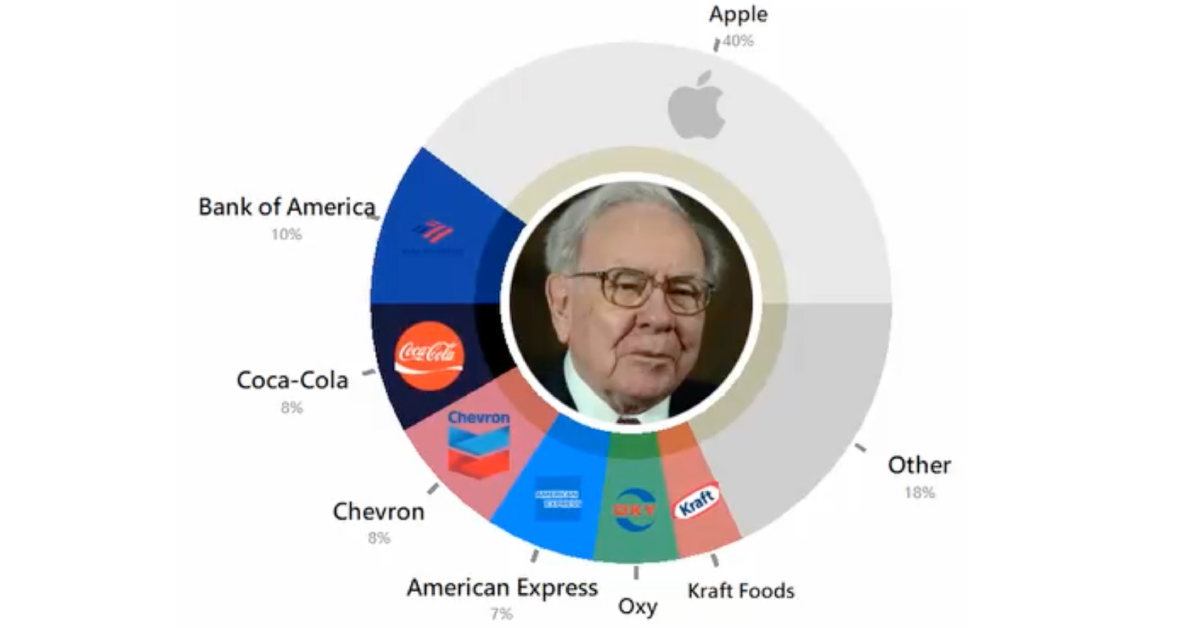
In addition to the companies it owns entirely, Berkshire holds significant minority stakes in some of the world’s most recognizable public corporations. As of recent filings, Berkshire’s largest holding is Apple, which it views more as a consumer products company than a tech firm. Other major holdings typically include American Express, Coca-Cola, Bank of America, and Chevron. When these companies pay dividends, that cash flows back into Berkshire, further increasing its “mountain of cash” available for future acquisitions.
The Value Investing Philosophy
The primary reason people buy Berkshire stock is to gain exposure to the investment philosophy of Warren Buffett. This approach prioritizes “intrinsic value”—the idea that a company is worth the present value of the cash it will generate in the future. Berkshire looks for businesses with durable competitive advantages, competent management, and reasonable valuations. By buying the stock, you are essentially outsourcing your capital allocation decisions to one of the most successful investment teams in history.
Risks and Considerations for Prospective Investors
No investment is without risk, and Berkshire Hathaway is no exception. While it is often viewed as a “defensive” stock that performs well during market downturns, investors should consider several factors before committing their capital.
Management Succession Post-Buffett
The most significant question mark hanging over Berkshire is the transition of leadership. For decades, the company’s success has been synonymous with the genius of Warren Buffett and Charlie Munger. Following Munger’s passing and considering Buffett’s advanced age, the company has spent years preparing a succession plan. Greg Abel, who oversees the non-insurance operations, has been designated as the successor to the CEO role. While the culture of decentralization and the “Berkshire way” are deeply embedded, the market may react with volatility when a formal change in leadership eventually occurs.
The Law of Large Numbers
Berkshire Hathaway is now so massive that it becomes mathematically difficult to achieve the triple-digit percentage gains seen in its early decades. It requires billions of dollars in new investments just to “move the needle” on its earnings. Prospective investors should expect steady, market-beating or market-matching returns over the long term, rather than the explosive growth often found in smaller, high-tech growth stocks.
Tax Implications and Long-Term Holding
Berkshire Hathaway famously does not pay a dividend. Instead, it reinvests its earnings into new acquisitions or share buybacks. For investors, this is often a tax advantage, as you only pay taxes when you choose to sell your shares (capital gains tax), rather than being taxed annually on dividend distributions. This makes it an exceptionally efficient vehicle for long-term wealth accumulation, particularly in taxable brokerage accounts.
Building Berkshire into a Diversified Portfolio
Deciding how much Berkshire Hathaway stock to own depends on your overall financial goals. Because the company is so diversified across insurance, energy, transportation, and consumer goods, some investors use it as a “core” holding that acts as a proxy for a diversified index fund.
Berkshire as a Proxy for the S&P 500
While Berkshire is a single company, its performance often correlates with the broader S&P 500, though it tends to outperform during bear markets and underperform during speculative bull markets. For an investor who prefers individual stocks over ETFs but wants the safety of diversification, Berkshire offers a unique middle ground. It provides exposure to the American industrial and financial heartland without the concentration risk of a typical single-stock investment.

Rebalancing and Strategic Allocation
Financial experts often suggest that no single stock should make up more than 5% to 10% of a beginner’s portfolio. However, because of Berkshire’s inherent diversification, some “Boglehead” style investors or value purists allocate a larger percentage. Regardless of the amount, the key to success with Berkshire is time. As Buffett frequently notes, his favorite holding period is “forever.” Buying Berkshire is not a strategy for those looking to “get rich quick”; it is a strategy for those looking to get—and stay—wealthy over several decades by participating in the compounding machine that is Berkshire Hathaway.
aViewFromTheCave is a participant in the Amazon Services LLC Associates Program, an affiliate advertising program designed to provide a means for sites to earn advertising fees by advertising and linking to Amazon.com. Amazon, the Amazon logo, AmazonSupply, and the AmazonSupply logo are trademarks of Amazon.com, Inc. or its affiliates. As an Amazon Associate we earn affiliate commissions from qualifying purchases.