
Blockchain technology, once a niche concept primarily associated with cryptocurrencies like Bitcoin, has transcended its origins to become a foundational component of the next generation of digital infrastructure. At its core, blockchain represents a revolutionary way of recording and sharing information – a distributed, immutable ledger that is transparent, secure, and resistant to tampering. Understanding how this intricate system functions is key to appreciating its transformative potential across a myriad of industries, from supply chain management to digital identity. Far more than just a buzzword, blockchain offers a paradigm shift in how trust is established and maintained in a digital world.
Understanding the Genesis: What is Blockchain?
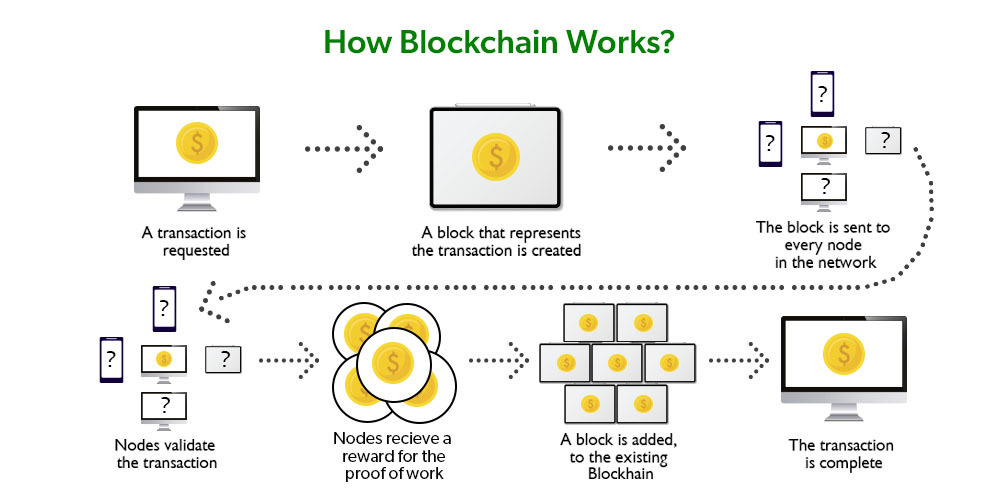
To grasp the mechanics of blockchain, it’s essential to first understand its foundational principles. Imagine a shared, continuously updated database that isn’t controlled by a single entity but by an entire network of computers. This database isn’t just any database; it’s structured in a specific way that ensures security and integrity.
The Fundamental Concept of a Distributed Ledger
At its heart, blockchain is a Distributed Ledger Technology (DLT). A ledger is simply a record book, and traditionally, these have been centralized – controlled by a bank, a government, or a corporation. In a DLT, this ledger is replicated and synchronized across multiple participants (nodes) in a network. Every participant holds an identical copy of the ledger. When a new transaction occurs, it is validated by the network and then added to every copy of the ledger. This distribution makes the system incredibly resilient. If one copy is corrupted or goes offline, the others remain, ensuring the continuity and integrity of the data. This eliminates the single point of failure inherent in centralized systems and significantly reduces the risk of data manipulation.
Unlike traditional databases where individual entries can be altered or deleted, blockchain adds data in “blocks,” and once a block is added, it cannot be changed. This creates an unalterable, chronological record of all transactions. This immutability is one of its most powerful features, fostering unprecedented levels of trust in digital records.
Beyond Cryptocurrency: A Decentralized Revolution
While Bitcoin introduced blockchain to the world as the underlying technology for its digital currency, the scope of blockchain extends far beyond financial transactions. The true innovation lies in its ability to create a system of trust without requiring a central authority. This “decentralization” is a revolutionary concept that impacts how data is owned, managed, and secured.
In a traditional centralized system, trust is placed in an intermediary – a bank to process payments, a government to manage land titles, or a social media company to host data. These intermediaries can be slow, expensive, and vulnerable to hacks or censorship. Blockchain removes the need for such intermediaries by distributing trust across the network. Instead of trusting a single entity, participants trust the cryptographic security and consensus mechanisms built into the protocol itself. This shift empowers individuals and creates more robust, transparent, and fair systems across various domains, paving the way for innovations in supply chain transparency, intellectual property rights, healthcare data management, and even voting systems.
The Anatomy of a Blockchain
To fully comprehend “how blockchain works,” one must dissect its fundamental components. These elements work in concert to create a secure, immutable, and decentralized system.
Blocks: The Building Blocks of Data
A blockchain is, as its name suggests, a chain of blocks. Each “block” is essentially a container for data. What kind of data depends on the purpose of the blockchain. For a cryptocurrency like Bitcoin, a block primarily contains a list of transactions (e.g., “Alice sent 1 BTC to Bob”). However, blocks can hold any type of digital information – medical records, voting data, supply chain logistics, legal contracts, or even sensor data from IoT devices.
Each block contains three key pieces of information:
- Data: The actual information being stored (transactions, records, etc.).
- Hash of the Current Block: A unique digital fingerprint for the block. This cryptographic hash is generated by a complex algorithm and is sensitive to even the slightest change in the block’s data. If any piece of data within the block is altered, its hash will change completely.
- Hash of the Previous Block: This is the critical link that creates the “chain.” By including the hash of the preceding block, each new block is cryptographically connected to the one before it. This interlocking mechanism is what makes the blockchain secure and immutable.
Chains: Linking Blocks with Cryptography
The “chain” aspect of blockchain is fundamental to its security. Imagine a series of digital containers, each securely locked to the previous one. This is achieved through cryptographic hashing. When a new block is created, it includes the hash of the block that came before it. If an attacker tried to tamper with an old block (Block #5, for example), its hash would change. Because Block #6 contains the original hash of Block #5, this discrepancy would be immediately obvious to anyone on the network trying to validate Block #6. The chain would be broken, and the alteration would be rejected.
This chaining mechanism creates an unbroken, tamper-proof historical record. To alter a transaction on a blockchain, an attacker would not only have to change the data in one block but also re-calculate the hashes for all subsequent blocks in the chain, a computationally intensive and virtually impossible task on a large, active network.
Nodes: The Network’s Backbone
Blockchain networks are powered by “nodes.” A node is simply a computer participating in the network. Every node maintains a complete and up-to-date copy of the entire blockchain ledger. When a new transaction or block is created, it’s broadcast to all nodes. These nodes then validate the new information according to the network’s rules.
Nodes play a critical role in decentralization and security:
- Validation: They verify transactions and new blocks.
- Storage: They store a copy of the blockchain.
- Propagation: They relay new information to other nodes.
- Consensus: They participate in the process of agreeing on the validity of new blocks.
The more nodes there are in a network, the more decentralized and secure it becomes, as there are more independent copies of the ledger and more participants validating transactions.
Consensus Mechanisms: Maintaining Integrity and Trust
How does a distributed network of anonymous nodes agree on the true state of the ledger and which new blocks are valid? This is where “consensus mechanisms” come into play. These are algorithms that ensure all participants agree on the validity of transactions and the order of blocks, without needing a central authority. Different blockchains use different mechanisms, each with its own trade-offs.
The most famous consensus mechanism is Proof of Work (PoW), used by Bitcoin. In PoW, “miners” (specialized nodes) compete to solve a complex mathematical puzzle. The first miner to solve it gets the right to add the next block to the chain and is rewarded. The “work” is computationally intensive, making it difficult for malicious actors to dominate the network.
Another popular mechanism is Proof of Stake (PoS). In PoS, instead of expending computational power, participants “stake” (lock up) a certain amount of the network’s native cryptocurrency as collateral. The likelihood of being chosen to validate and add a new block is proportional to the amount of stake held. If a validator acts maliciously, they risk losing their staked collateral. PoS is generally considered more energy-efficient than PoW.
Other mechanisms like Delegated Proof of Stake (DPoS), Proof of Authority (PoA), and federated Byzantine Fault Tolerance (FBFT) exist, each tailored for different use cases, balancing decentralization, security, and scalability.
The Lifecycle of a Blockchain Transaction
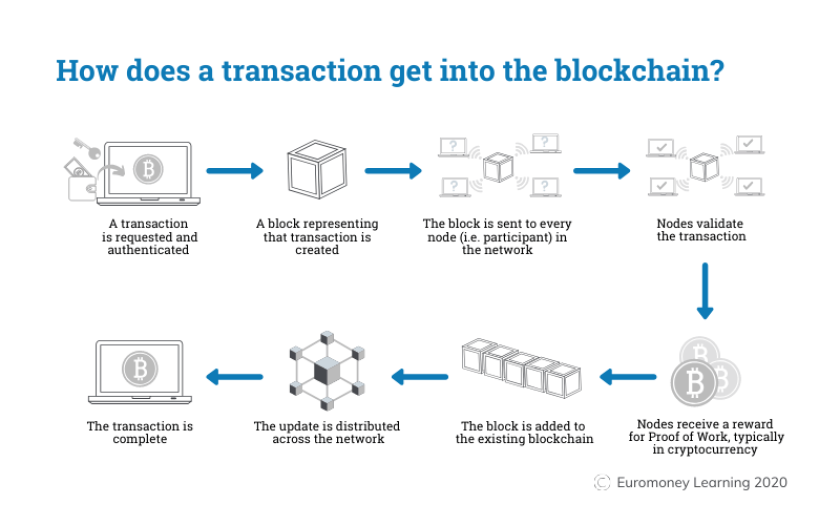
To illustrate how these components work together, let’s trace the journey of a typical transaction on a public blockchain network.
Initiating a Transaction
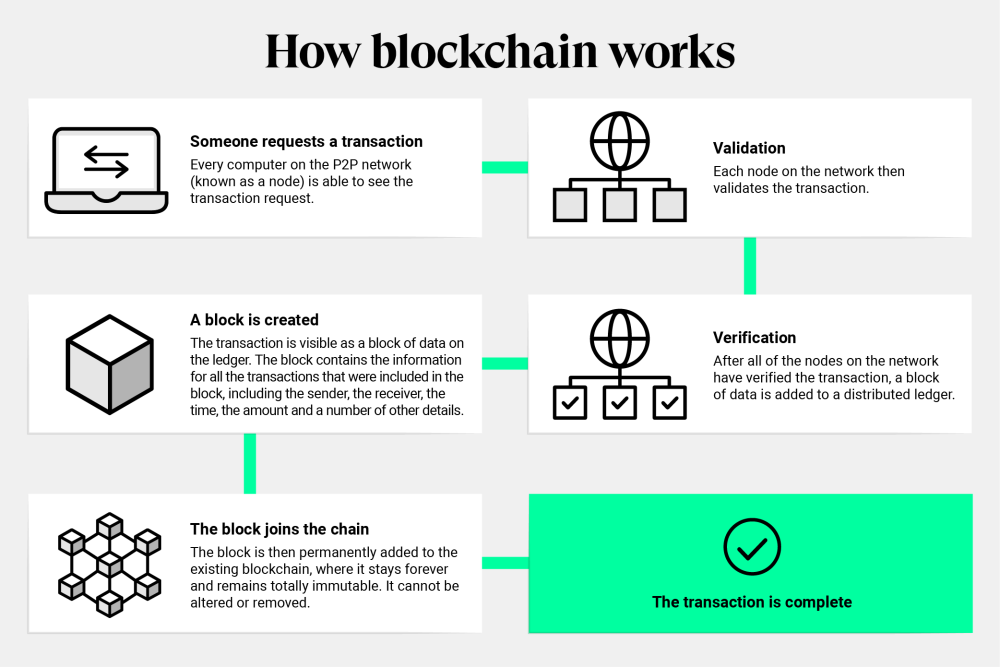
The process begins when a user initiates a transaction. For example, Alice wants to send 10 units of a cryptocurrency to Bob. She uses her digital wallet software to create a transaction request. This request includes the sender’s address, the recipient’s address, the amount, and a digital signature (generated using Alice’s private key) to prove her ownership of the funds and authorize the transaction. This ensures that only Alice can send her funds.
Validation and Propagation
Once signed, the transaction is broadcast to the entire blockchain network. Neighboring nodes receive the transaction and immediately begin validating it. This validation typically involves checking several things:
- Is the digital signature valid?
- Does Alice have sufficient funds in her account?
- Has this specific transaction already been processed (to prevent double-spending)?
- Does the transaction adhere to all network rules?
If the transaction is deemed valid, the nodes propagate it further across the network, adding it to a pool of unconfirmed transactions (often called the “mempool”).
Mining and Block Creation
On networks using Proof of Work (like Bitcoin), miners pick up valid, unconfirmed transactions from the mempool. They then group these transactions into a new block. To add this block to the blockchain, they must solve a cryptographic puzzle, which involves finding a “nonce” (a random number) that, when combined with the block’s data, produces a hash that meets a specific difficulty target (e.g., starts with a certain number of zeros). This process is computationally intensive and requires significant processing power.
The first miner to find the correct nonce broadcasts their newly mined block to the network.
Adding to the Chain: Immutability Ensured
Other nodes in the network receive the newly proposed block. They verify two main things:
- Block Validity: Is the block structure correct, are all transactions within it valid, and does the block’s hash meet the difficulty target?
- Chain Linkage: Does the new block correctly reference the hash of the previous block in the longest chain?
If the block is valid and linked correctly, nodes add it to their local copy of the blockchain. At this point, the transactions within that block are considered confirmed. As subsequent blocks are added on top of it, the original block becomes more deeply embedded and increasingly difficult to alter, reinforcing the immutability of the record. After a certain number of confirmations (e.g., six blocks in Bitcoin), the transaction is considered irreversibly settled.
Key Characteristics and Underlying Principles
The elegance of blockchain lies in how its core components intertwine to create a system with distinctive and powerful characteristics.
Decentralization: Power to the Network
Decentralization is arguably the most defining characteristic of blockchain. Unlike traditional client-server architectures where a central server holds all the power and data, blockchain distributes control and data across a network of participants. No single entity can unilaterally change the rules, censor transactions, or control the entire database. This mitigates risks associated with single points of failure, malicious actors, or governmental overreach. It empowers users by giving them greater control over their data and transactions, fostering a more democratic and resilient digital ecosystem.
Immutability: A Permanent Record
Once a block of data has been added to the blockchain and confirmed, it is extremely difficult, if not impossible, to alter or remove it. This immutability is guaranteed by the cryptographic linking of blocks and the distributed nature of the ledger. Any attempt to tamper with past data would require recalculating the hashes of all subsequent blocks, and doing so faster than the rest of the network could add new blocks – a task that is computationally unfeasible for large, established blockchains. This creates an auditable and trustworthy record, invaluable for applications requiring high integrity, such as legal documents, intellectual property, or financial audits.
Transparency: Open Yet Secure
Most public blockchains are transparent in a unique way. While the identity of participants can be pseudonymous (represented by cryptographic addresses rather than real names), all transactions and the entire history of the ledger are openly visible to anyone on the network. Anyone can inspect the chain, verify transactions, and audit the system. This transparency eliminates the need for trust in intermediaries, as the entire system is open for inspection. However, it’s important to distinguish between transparency of transactions and privacy of identity; while transaction details are public, the link to real-world identities is typically not, offering a layer of privacy.
Cryptographic Security: The Foundation of Trust
Cryptography is the backbone of blockchain security. Hash functions ensure the integrity of blocks and their chaining. Digital signatures, powered by public-key cryptography, verify the authenticity of transaction senders and ensure that transactions cannot be repudiated. These advanced cryptographic techniques make it incredibly difficult for unauthorized parties to forge transactions, impersonate users, or alter historical data. The mathematical proofs provided by cryptography replace the need for human trust, forming the bedrock of blockchain’s reliability.
Real-World Applications and Future Implications
The principles of blockchain, once abstract, are now manifesting in concrete applications across numerous sectors, signaling a profound shift in how industries operate and how data is managed.
Beyond Finance: Transforming Industries
While its origins are rooted in finance, blockchain’s potential stretches far beyond cryptocurrencies.
- Supply Chain Management: Blockchain can provide an immutable and transparent record of a product’s journey from origin to consumer. This enhances traceability, combats counterfeiting, and enables rapid recalls, benefiting industries from food to luxury goods.
- Healthcare: Securely managing patient records, ensuring data privacy, and enabling interoperability between healthcare providers can be streamlined with blockchain, while maintaining patient consent and regulatory compliance.
- Digital Identity: Self-sovereign identity solutions allow individuals to control their digital identities, granting selective access to personal data without relying on central authorities, enhancing privacy and security in an increasingly digital world.
- Voting Systems: Blockchain can offer more transparent, secure, and verifiable voting systems, reducing fraud and increasing public trust in electoral processes.
- Intellectual Property (IP) Rights: Artists and creators can timestamp and register their works on a blockchain, providing irrefutable proof of ownership and creation dates, protecting against plagiarism and facilitating royalty distribution.
- Real Estate: Streamlining property title transfers, reducing fraud, and improving transparency in real estate transactions.
Challenges and Considerations
Despite its promise, blockchain technology is not without its challenges.
- Scalability: Many current blockchain networks struggle with transaction throughput compared to traditional centralized systems like Visa, leading to slower speeds and higher fees during peak usage. Solutions like sharding, layer-2 protocols, and different consensus mechanisms are being developed to address this.
- Energy Consumption: Proof of Work blockchains, particularly Bitcoin, consume significant amounts of energy due to the computational demands of mining, raising environmental concerns. This has spurred a move towards more energy-efficient PoS systems.
- Regulatory Uncertainty: The nascent nature of blockchain technology means that regulatory frameworks are still evolving, creating uncertainty for businesses and investors.
- Interoperability: Different blockchains often operate in isolation, making it challenging for them to communicate and share data. Solutions for cross-chain communication are crucial for widespread adoption.
- Usability: For the average user, interacting with blockchain technology can still be complex, requiring an understanding of wallets, private keys, and transaction fees. User-friendly interfaces and abstraction layers are necessary for broader appeal.
The Evolving Landscape of Blockchain Technology
The blockchain space is incredibly dynamic, with continuous innovation driven by a global community of developers and researchers. We are witnessing the emergence of new protocols (e.g., Ethereum 2.0, Polkadot, Solana), advanced cryptographic techniques (e.g., zero-knowledge proofs for enhanced privacy), and sophisticated application layers (DeFi, NFTs, Web3). Enterprise blockchains (e.g., Hyperledger Fabric, Corda) are also gaining traction, offering permissioned networks for businesses seeking the benefits of DLT within a controlled environment.
As infrastructure matures and solutions to current challenges are refined, blockchain is poised to become an indispensable component of the digital economy. Its capacity to foster trust, ensure integrity, and enable decentralization positions it as a foundational technology that will reshape how we interact with data, systems, and each other in the decades to come. Understanding “how blockchain works” is not just about comprehending a technical marvel; it’s about recognizing the architectural shift towards a more transparent, secure, and resilient digital future.
aViewFromTheCave is a participant in the Amazon Services LLC Associates Program, an affiliate advertising program designed to provide a means for sites to earn advertising fees by advertising and linking to Amazon.com. Amazon, the Amazon logo, AmazonSupply, and the AmazonSupply logo are trademarks of Amazon.com, Inc. or its affiliates. As an Amazon Associate we earn affiliate commissions from qualifying purchases.