
Blockchain technology has moved from the fringes of digital finance to a global phenomenon, promising to revolutionize everything from currency to supply chains, and even the very fabric of our digital identities. Often discussed in the context of cryptocurrencies like Bitcoin, its underlying mechanics are far more profound, offering a decentralized, secure, and immutable way to record information. Understanding how blockchain works is crucial to grasping its transformative potential, debunking myths, and preparing for a future where trust is distributed, not centralized.
At its core, a blockchain is precisely what its name suggests: a chain of blocks, where each “block” contains a list of transactions or data, and these blocks are chronologically linked together using cryptographic principles. This digital ledger is not stored in one central location but is distributed across a vast network of computers, making it incredibly resilient to censorship, manipulation, and single points of failure. The elegance of blockchain lies in its ability to establish trust among disparate parties without the need for an intermediary, relying instead on mathematical proofs and network consensus.
The Foundational Principles of Blockchain
To truly appreciate blockchain, one must first understand the pillars upon which it is built. These foundational principles give the technology its unique properties and explain why it’s considered a paradigm shift in data management and digital security.
Decentralization: Eliminating the Middleman
The most radical departure of blockchain from traditional systems is its decentralized nature. In conventional systems, a central authority—like a bank, government, or tech giant—controls and verifies data. This centralized model creates single points of failure, making them vulnerable to attacks, corruption, and censorship. Blockchain, conversely, distributes the ledger across a peer-to-peer network. Every participant (or “node”) on the network holds a copy of the entire ledger. When new information is added, it’s validated by the network, not a single entity. This not only enhances security but also democratizes control, shifting power from institutions to the collective. The absence of a central arbiter means that no single entity can unilaterally alter the ledger, making it incredibly robust and transparent.
Cryptography: Securing the Chain
Cryptography is the backbone of blockchain security. It’s the art of securing communication and data, ensuring that only the sender and intended recipient can view its contents. In blockchain, cryptography is used in several key ways. Firstly, each block in the chain is linked to the previous one using a cryptographic hash. A hash is a fixed-size string of characters generated from an input of any size. Even a tiny change in the input data results in a completely different hash. This linking mechanism ensures that if someone tries to alter a transaction in an earlier block, the hash of that block would change, which would then invalidate the hash of the subsequent block, and so on, cascading through the entire chain. This makes tampering immediately detectable. Secondly, cryptography secures individual transactions through digital signatures, verifying the sender’s identity and ensuring the transaction hasn’t been altered.
Immutability: A Permanent Record
Once a block of transactions has been added to the blockchain, it is virtually impossible to alter or remove it. This characteristic, known as immutability, stems directly from the combination of decentralization and cryptographic hashing. Because every node holds a copy of the ledger and new blocks are cryptographically linked to previous ones, any attempt to change an old transaction would require recalculating the hashes of all subsequent blocks and getting the majority of the network to agree to this fraudulent version—an computationally infeasible task for any single attacker. This makes blockchain an ideal technology for applications requiring an audit trail that cannot be tampered with, such as financial records, land registries, or supply chain tracking.
Transparency (Pseudonymity): Public Yet Private
While transactions on a blockchain are publicly visible, the identities of the participants remain pseudonymous. Each participant is identified by a unique cryptographic address, rather than personal names or details. This means that anyone can view the ledger and inspect the transactions, but they cannot directly link those transactions to real-world identities without additional information outside the blockchain. This balance of public transparency and user privacy is a critical feature, offering a level of accountability without compromising individual anonymity. It ensures that the network is verifiable by anyone, promoting trust and preventing hidden actions, while still safeguarding user privacy to a degree.
Building Blocks of the Chain: Transactions and Blocks
Understanding the conceptual pillars is one thing; seeing how they translate into the actual structure of the blockchain is another. The entire system revolves around the creation and linking of “blocks.”
Individual Transactions: The Data Units
At the lowest level, a blockchain is composed of individual transactions. These transactions are essentially records of events. In a cryptocurrency context, a transaction details the transfer of value from one address to another, including the amount, sender, recipient, and a timestamp. For other applications, a transaction could be a record of a product moving through a supply chain, a medical record update, or a vote cast in an election. Each transaction is digitally signed by the initiator, verifying its authenticity and preventing repudiation.
Grouping Transactions into Blocks
Individual transactions are then grouped together into a “block.” Think of a block as a page in a ledger book. Each block has a maximum capacity for transactions, meaning that once it’s full, a new block must be created. Before being added to a block, transactions typically wait in a “mempool” (memory pool) of unconfirmed transactions, awaiting inclusion by a miner or validator. The process of gathering transactions into a block is performed by network participants responsible for maintaining the blockchain.
Cryptographic Hashing: The Block’s Digital Fingerprint
Every block created includes several key pieces of information: a timestamp, a list of validated transactions, a reference to the previous block’s hash, and a “nonce” (a number used once). The most critical component for linking is the cryptographic hash of the previous block. This hash acts like a unique digital fingerprint. When a new block is formed, it calculates its own unique hash, which incorporates the previous block’s hash, all the new transactions, and its own nonce. This intricate linking creates an unbroken chain. If even a single character in any past transaction were altered, the hash of its block would change, consequently invalidating the hash stored in the next block, and breaking the chain.
The Genesis Block and Linking Blocks
The very first block in a blockchain is called the “genesis block.” It’s unique because it doesn’t have a previous block to reference. From this genesis block onwards, each subsequent block contains the hash of its predecessor. This sequential, cryptographic linkage is what gives blockchain its tamper-proof nature. The integrity of the entire chain relies on the computational difficulty of altering past blocks, as doing so would require re-mining every subsequent block to regenerate their hashes, a task that becomes exponentially harder the deeper one goes into the chain.
The Consensus Mechanism: Reaching Agreement
For a distributed ledger to function effectively, all participants must agree on the validity of transactions and the order of blocks. This agreement is achieved through a “consensus mechanism,” which is arguably the most ingenious aspect of blockchain design. It solves the “Byzantine Generals’ Problem,” ensuring that even with untrustworthy participants, a reliable agreement can be reached.
Proof-of-Work (PoW): Bitcoin’s Engine
Proof-of-Work (PoW) is the original and most well-known consensus mechanism, pioneered by Bitcoin. In PoW, “miners” compete to solve a complex computational puzzle. This puzzle involves finding a nonce that, when combined with the block’s data, produces a hash that meets a specific difficulty target (e.g., starts with a certain number of zeros). This process is computationally intensive and requires significant energy, but it’s easy for other nodes to verify. The first miner to find the correct nonce gets to add their block to the chain and is rewarded (e.g., with new cryptocurrency). The difficulty of the puzzle is dynamically adjusted to ensure new blocks are found at a consistent rate (e.g., every 10 minutes for Bitcoin). The high computational cost makes it incredibly expensive and impractical for a malicious actor to gain enough computing power (51% attack) to rewrite the chain.

Proof-of-Stake (PoS): A Greener Alternative
Proof-of-Stake (PoS) emerged as an alternative to PoW, primarily to address concerns about energy consumption and scalability. Instead of miners competing with computational power, “validators” (often called “forgers” or “stakers”) are chosen to create new blocks based on the amount of cryptocurrency they “stake” as collateral. The more coins a validator stakes, the higher their chance of being selected to validate the next block. If a validator proposes a fraudulent block, they risk losing a portion or all of their staked funds, an incentive known as “slashing.” PoS is significantly more energy-efficient than PoW, as it doesn’t require massive computational races. Ethereum’s transition to PoS (Ethereum 2.0 or “The Merge”) is a prominent example of this shift.
Other Consensus Algorithms (e.g., PoA, DPoS)
Beyond PoW and PoS, numerous other consensus mechanisms have been developed to suit different blockchain applications and needs. Proof-of-Authority (PoA) is used in permissioned blockchains where a select group of authorized validators is responsible for creating new blocks. It offers higher transaction throughput but sacrifices some decentralization. Delegated Proof-of-Stake (DPoS) allows token holders to vote for a set of delegates who then validate transactions and create blocks. This is a more democratic but also potentially more centralized approach than pure PoS. Each mechanism comes with its own trade-offs between decentralization, security, and scalability.
The Role of Nodes in Validation
Regardless of the consensus mechanism, “nodes” are the unsung heroes of the blockchain network. A node is simply a computer participating in the network. Full nodes download and maintain a complete copy of the blockchain ledger, constantly verifying transactions and blocks against the network’s rules. They broadcast new transactions and blocks to other nodes, ensuring the ledger remains synchronized across the entire network. Without a robust network of honest nodes, the blockchain’s integrity and decentralization would be compromised.
The Network in Action: Adding a New Block
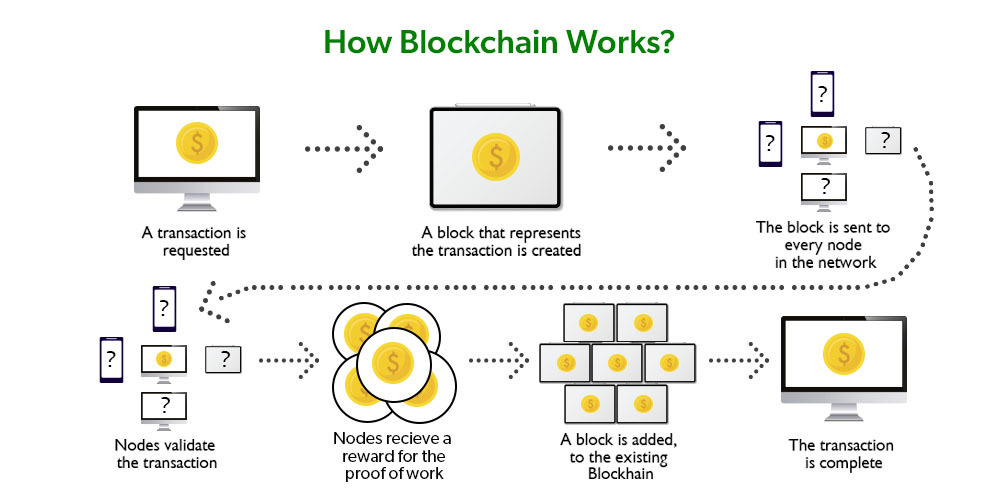
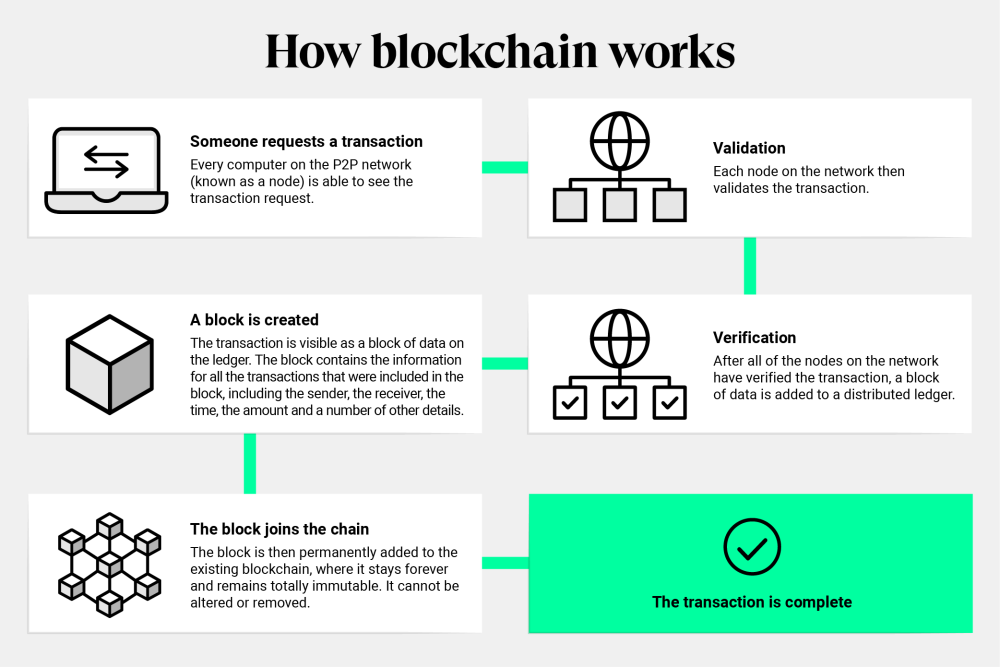
Let’s put all these pieces together to visualize how a new block is successfully added to the blockchain. This cycle is continuously repeated, ensuring the ledger grows over time.
Transaction Initiation and Broadcast
The process begins when a user initiates a transaction. This could be sending cryptocurrency, updating a supply chain record, or voting. The transaction is digitally signed by the initiator using their private key and then broadcast to the network.
Block Creation and Hashing
Network nodes (often specifically “miners” in PoW or “validators” in PoS) receive these broadcasted transactions. They gather a batch of unconfirmed transactions, verify their legitimacy (e.g., checking for sufficient funds, valid signatures), and then compile them into a new block candidate. This block candidate also includes a reference to the hash of the previous block, a timestamp, and other metadata. If using PoW, the miner then attempts to solve the computational puzzle by finding the correct nonce to achieve the target hash.
Network Consensus and Validation
Once a miner or validator successfully creates a valid block (i.e., solves the PoW puzzle or is chosen in PoS), they broadcast this newly formed block to the rest of the network. Other nodes receive this block and independently verify its validity. This involves checking all transactions within the block, ensuring the cryptographic hash links correctly to the previous block, and verifying the proof of work (if applicable). This verification is quick and computationally inexpensive for every node.
Adding the Block to the Distributed Ledger
If the majority of the network nodes agree that the new block is valid, they accept it and append it to their copy of the blockchain. This new block now becomes the latest, most up-to-date segment of the distributed ledger, and its hash becomes the reference point for the next block to be created. This continuous process of creating, validating, and adding blocks ensures that the blockchain grows steadily, creating an ever-lengthening, immutable record of all network activities.
Beyond Cryptocurrency: Practical Applications of Blockchain
While cryptocurrencies brought blockchain into the mainstream, its underlying technology has far-reaching implications across numerous industries, extending well beyond digital money. The core principles of decentralization, immutability, and transparency make it a powerful tool for various challenges.
Supply Chain Management
One of the most promising applications is in supply chain management. Blockchain can provide an unalterable, transparent record of a product’s journey from raw material to consumer. Each step—manufacturing, shipping, customs, retail—can be recorded as a transaction on the blockchain. This creates an immutable audit trail, allowing companies and consumers to verify product authenticity, track origins, identify bottlenecks, and ensure ethical sourcing. This transparency can help combat counterfeiting, improve food safety, and streamline logistics.
Digital Identity and Record Keeping
Traditional identity systems are often centralized and vulnerable to breaches. Blockchain offers a solution for decentralized digital identity, where individuals control their own personal data. Self-sovereign identity models allow users to selectively share verified credentials without revealing underlying personal information. Furthermore, blockchain can be used for secure record-keeping in areas like academic credentials, medical records, land titles, and voting systems, providing tamper-proof and easily verifiable documentation.
Smart Contracts and Decentralized Applications (dApps)
Smart contracts are self-executing contracts with the terms of the agreement directly written into lines of code. They run on a blockchain and automatically execute when predefined conditions are met, without the need for intermediaries. For example, an insurance payout could automatically be released upon verification of certain event data from an oracle. These smart contracts form the backbone of Decentralized Applications (dApps), which are applications that run on a blockchain network rather than a centralized server. dApps range from decentralized finance (DeFi) platforms to gaming, social media, and governance tools, offering censorship resistance and enhanced user control.
Healthcare and Data Security
In healthcare, blockchain can address critical issues of data interoperability, security, and privacy. Medical records, often fragmented and siloed across different providers, could be securely stored and managed on a blockchain, giving patients greater control over who accesses their data. Researchers could access anonymized data sets for studies, while ensuring patient privacy. The immutability of the ledger also makes it ideal for tracking pharmaceutical supply chains, verifying drug authenticity, and managing clinical trial data, thereby enhancing patient safety and reducing fraud.
In conclusion, blockchain technology is not just about digital money; it’s a fundamental shift in how we manage and trust information. By combining cryptographic security, decentralization, and consensus mechanisms, it creates a robust, transparent, and tamper-proof ledger that can underpin a vast array of applications. While still evolving, its foundational principles promise to reshape industries, empower individuals, and build a more secure and transparent digital future. Understanding these mechanics is the first step towards navigating this brave new technological frontier.
aViewFromTheCave is a participant in the Amazon Services LLC Associates Program, an affiliate advertising program designed to provide a means for sites to earn advertising fees by advertising and linking to Amazon.com. Amazon, the Amazon logo, AmazonSupply, and the AmazonSupply logo are trademarks of Amazon.com, Inc. or its affiliates. As an Amazon Associate we earn affiliate commissions from qualifying purchases.