
The emergence of Bitcoin in 2009 marked a pivotal moment in the history of technology, cryptography, and digital currency. Conceived by an anonymous entity known only as Satoshi Nakamoto, Bitcoin introduced a radical new paradigm: a decentralized, peer-to-peer electronic cash system that operated without the need for central authority or intermediaries. Its creation was not an overnight phenomenon but the culmination of decades of cryptographic research, a desire for digital sovereignty, and a brilliant synthesis of existing and novel technological concepts. Understanding “how Bitcoin was created” requires a deep dive into its technological underpinnings, the philosophical currents that preceded it, and the ingenious mechanisms that brought it to life.

The Precursors to Digital Cash: A Dream Deferred
Before Bitcoin, the idea of a purely digital, trustless currency had been a long-standing ambition within cryptographic and computer science circles. Early attempts to create digital cash often grappled with fundamental challenges, primarily the “double-spending problem,” where a digital asset could theoretically be spent more than once, undermining its value.
Early Attempts and Cryptographic Foundations
The journey toward Bitcoin began much earlier, in the 1980s and 90s, with various attempts at creating digital currency. David Chaum’s Digicash, Wei Dai’s B-money, and Nick Szabo’s Bit Gold were all notable efforts that laid crucial theoretical groundwork. These projects explored concepts like blind signatures for privacy (Digicash) and proof-of-work mechanisms (B-money, Bit Gold) to prevent double-spending and ensure scarcity. While none of these initiatives achieved widespread adoption or solved the double-spending problem in a fully decentralized manner, they demonstrated the potential of cryptography to secure digital transactions and create verifiable scarcity in the digital realm. The underlying cryptographic primitives – such as public-key cryptography, hashing functions, and digital signatures – developed by scientists like Whitfield Diffie, Martin Hellman, Ronald Rivest, Adi Shamir, and Leonard Adleman, formed the bedrock upon which any secure digital currency would eventually be built.
The Cypherpunk Movement and Decentralization Ideal
Parallel to these technical explorations, a philosophical movement known as cypherpunks championed the use of cryptography to protect privacy and promote political and economic freedom in the digital age. They envisioned a world where individuals could conduct transactions and communicate without surveillance or censorship from governments or corporations. This community, active through mailing lists and forums, fostered a strong ethos of decentralization and distrust of central authorities. They believed that strong cryptography was the only way to ensure individual liberty in an increasingly digital world. Bitcoin’s design, with its emphasis on pseudonymity, censorship resistance, and removal of central intermediaries, perfectly embodied the long-held ideals of the cypherpunk movement, providing a practical solution to their decades-long quest for “electronic cash that is secure, anonymous, and untraceable.”
Satoshi Nakamoto and the Genesis of Bitcoin
The elusive figure (or group) known as Satoshi Nakamoto made history by distilling these complex ideas and prior attempts into a coherent and functional system. The key to Bitcoin’s creation lay in Nakamoto’s ability to elegantly combine existing cryptographic techniques with a novel solution to the double-spending problem in a decentralized network.
The Whitepaper: A Blueprint for a Peer-to-Peer Electronic Cash System
On October 31, 2008, Satoshi Nakamoto published a whitepaper titled “Bitcoin: A Peer-to-Peer Electronic Cash System” to a cryptography mailing list. This nine-page document meticulously outlined the principles and mechanics of a new form of digital currency. It proposed a system where transactions would be timestamped into an ongoing chain of hash-based proof-of-work, forming a record that could not be changed without redoing the proof-of-work. This innovative solution, which would later be known as the blockchain, provided the crucial mechanism for achieving consensus and preventing double-spending in a decentralized environment. The whitepaper was a masterpiece of technical synthesis, clearly articulating how a network of participants could collectively maintain a secure and immutable ledger without any central coordinating body.
Core Innovations: Blockchain, Proof-of-Work, and Cryptography
Nakamoto’s genius lay in the specific combination and implementation of several key technological components:
- The Blockchain: The central innovation was the “chain of blocks,” a continuously growing list of records, called blocks, which are linked and secured using cryptography. Each block contains a timestamp, a reference to the hash of the previous block, and a batch of verified transactions. This structure makes the blockchain inherently resistant to modification, as altering one block would require altering all subsequent blocks, a computationally intensive task.
- Proof-of-Work (PoW): To secure the blockchain and achieve consensus without a central authority, Nakamoto utilized a proof-of-work system, similar in concept to Hashcash. In Bitcoin, “miners” compete to solve a complex computational puzzle. The first miner to find the solution gets to add the next block of transactions to the blockchain and is rewarded with newly created bitcoins and transaction fees. This process not only validates transactions but also makes it incredibly difficult and expensive for any single entity to maliciously alter the blockchain, as it would require controlling more than 50% of the network’s total computing power.
- Public-Key Cryptography: Bitcoin leverages asymmetric encryption for securing ownership and transactions. Each Bitcoin user has a public key (their Bitcoin address) and a private key. A user’s private key is used to “sign” a transaction, proving ownership of the bitcoins being spent without revealing the private key itself. The public key acts as the destination for incoming bitcoins. This cryptographic pairing ensures that only the rightful owner can spend their bitcoins.
The Genesis Block and the Birth of a Network
On January 3, 2009, Nakamoto mined the “genesis block,” Block 0, the very first block of the Bitcoin blockchain. Embedded within this block was the text “The Times 03/Jan/2009 Chancellor on brink of second bailout for banks,” a clear timestamp and an implicit commentary on the contemporary financial crisis, highlighting the motivation behind creating a decentralized alternative to traditional banking. With the genesis block, Bitcoin moved from a theoretical concept to a living, breathing network. Nakamoto then released the Bitcoin software as open-source code, allowing anyone to download it, run a node, and participate in the network. Early adopters and cypherpunks joined, running mining software and contributing to the network’s growth, thus bringing the decentralized vision to fruition.
The Technological Architecture of Bitcoin
At its core, Bitcoin is a meticulously engineered distributed system, designed for robustness, security, and autonomy. Its architecture is a testament to the power of open-source collaboration and the principles of cryptographic security.
The Blockchain: A Distributed Ledger of Trust
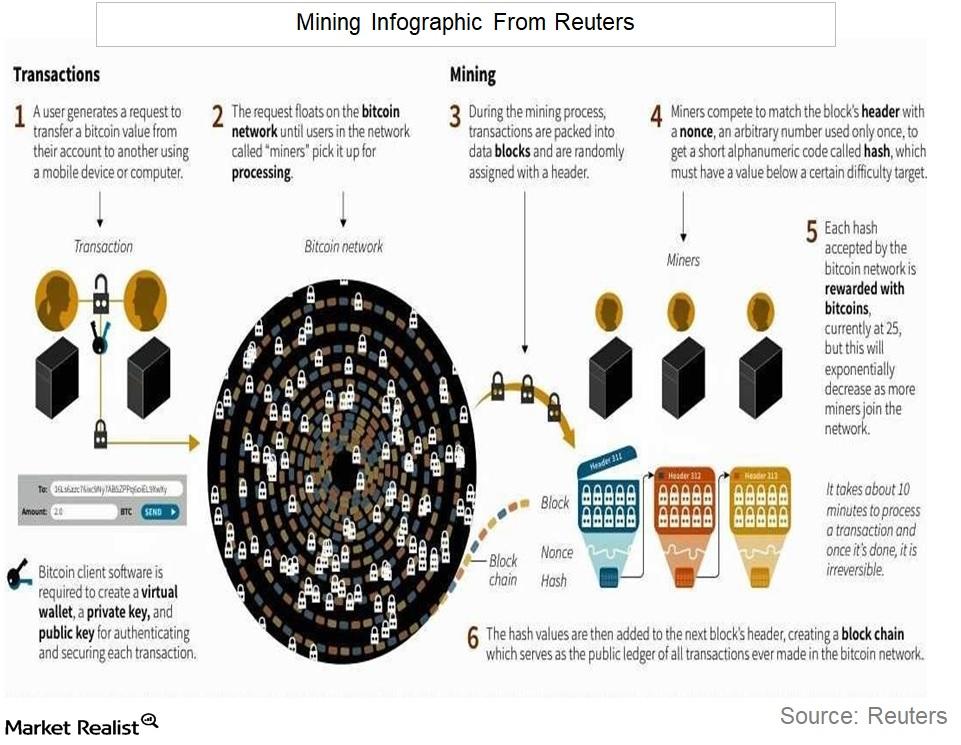
The blockchain is the digital, distributed, and immutable public ledger that underpins Bitcoin. Unlike traditional ledgers controlled by a single entity (like a bank), the Bitcoin blockchain is maintained by a global network of computers (nodes). Every transaction that ever occurs on the Bitcoin network is recorded on this ledger. Once a block of transactions is added to the chain, it is extremely difficult to alter or remove, due to the cryptographic linking and the proof-of-work mechanism. This distributed nature means there is no single point of failure; if some nodes go offline, the network continues to operate. Furthermore, every full node on the network holds a complete copy of the blockchain, allowing for independent verification of all transactions and the entire history of the network. This eliminates the need for trust in a central intermediary because trust is established cryptographically and through computational proof.
Cryptographic Hashing and Digital Signatures: Securing Transactions
Hashing functions, specifically SHA-256 in Bitcoin, play a critical role in data integrity and block linking. A hash function takes an input (data of any size) and produces a fixed-size output (a hash value or digest). Even a tiny change in the input data results in a drastically different hash output. This property is used to link blocks (each block’s header contains the hash of the previous block’s header) and to create transaction IDs.
Digital signatures, based on Elliptic Curve Digital Signature Algorithm (ECDSA), provide the means for users to prove ownership of their bitcoins and authorize transactions. When a user wants to send bitcoins, they create a transaction and sign it with their private key. Anyone on the network can then use the sender’s public key to verify that the signature is valid and that the transaction truly originated from the owner of the bitcoins. This cryptographic assurance ensures non-repudiation and prevents unauthorized spending.
Proof-of-Work: The Engine of Consensus and Security
The Proof-of-Work (PoW) algorithm is central to Bitcoin’s operation and security. It serves two primary functions:
- Consensus Mechanism: PoW ensures that all nodes in the decentralized network agree on the correct state of the ledger (which transactions are valid and have occurred). Miners expend computational energy to find a specific hash for a new block. This “work” is difficult to do but easy for any other node to verify. The first miner to find the solution broadcasts it to the network, and if valid, other nodes accept it, adding the block to their copy of the blockchain. This process creates a single, agreed-upon history of transactions.
- Security and Immutability: The immense amount of computational power (hash rate) continuously applied to Bitcoin’s PoW makes it incredibly secure. To alter a past transaction, an attacker would need to recalculate the PoW for that block and all subsequent blocks faster than the rest of the network combined. This is a monumental task, making such an attack economically unfeasible and practically impossible against a robust network like Bitcoin’s. PoW is thus Bitcoin’s primary defense against double-spending and other malicious manipulations.
Mining: Sustaining the Network and Creating New Bitcoins
Bitcoin mining is not merely about creating new bitcoins; it is the vital process that secures the network, validates transactions, and maintains the integrity of the blockchain. It’s the engine that keeps the entire system running.
The Role of Miners and Transaction Verification
Miners are specialized nodes in the Bitcoin network that perform the computationally intensive task of solving the PoW puzzle. Their primary responsibilities include:
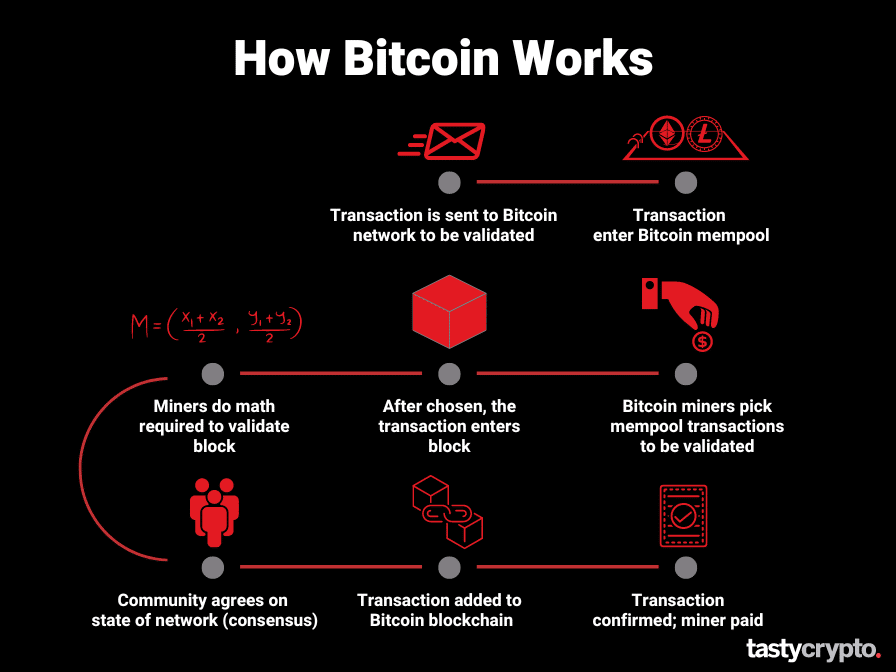
- Verifying Transactions: Miners gather unconfirmed transactions from the network, verify their validity (checking signatures, ensuring the sender has sufficient funds, and preventing double-spends).
- Assembling Blocks: Valid transactions are grouped into a new block.
- Solving the PoW Puzzle: Miners then compete to find a nonce (a number used only once) that, when combined with the block data and hashed, produces a result below a specific target value. This is the “difficult computational puzzle.”
- Broadcasting New Blocks: Once a miner finds the solution, they broadcast the new block to the rest of the network. Other nodes verify the block’s validity and add it to their copy of the blockchain, extending the chain. This process typically occurs every 10 minutes on average.
Block Rewards and the Halving Mechanism
For successfully mining a block, the miner is rewarded in two ways:
- Block Reward: A fixed amount of newly minted bitcoins. This is how new bitcoins are introduced into circulation. Satoshi Nakamoto programmed Bitcoin with a predefined monetary policy. The initial block reward was 50 BTC. This reward is halved approximately every four years (after every 210,000 blocks), an event known as “the halving.” This predictable reduction in the supply of new bitcoins ensures scarcity and mimics the mining of precious metals. The current block reward (as of 2024) is 3.125 BTC per block.
- Transaction Fees: Miners also collect the transaction fees voluntarily attached to transactions by users. These fees incentivize miners and will eventually become the primary revenue source for miners once the block reward dwindles to zero, after approximately 2140, when all 21 million bitcoins have been mined.
The Ever-Increasing Difficulty and Network Growth
The difficulty of the PoW puzzle is not static; it automatically adjusts approximately every two weeks (2016 blocks) to maintain an average block creation time of 10 minutes. If more computing power (hash rate) joins the network, the difficulty increases, making it harder to find a block. If computing power leaves the network, the difficulty decreases. This self-regulating mechanism ensures a consistent issuance schedule for new bitcoins and maintains the network’s security regardless of fluctuations in mining participation. The continuous increase in overall network hash rate since Bitcoin’s inception demonstrates its growing security and robustness.
Bitcoin’s Legacy and Ongoing Evolution
From its humble beginnings, Bitcoin has grown into a global phenomenon, transcending its initial identity as mere “digital cash” to become a groundbreaking technological platform. Its creation unleashed a wave of innovation that continues to reshape the digital landscape.
Open-Source Development and Community Governance
One of Bitcoin’s most significant technological contributions is its fully open-source nature. From the initial code released by Satoshi Nakamoto, development has been driven by a global community of developers, cryptographers, and enthusiasts. This decentralized development model means that no single entity controls Bitcoin’s future. Changes and improvements to the protocol are proposed, discussed, peer-reviewed, and then implemented through rough consensus, often requiring widespread adoption by network participants (nodes, miners, users). This open, transparent, and collaborative governance model, while sometimes slow, ensures that Bitcoin remains resistant to censorship and manipulation, aligning perfectly with its decentralized ethos. The Bitcoin Improvement Proposal (BIP) system facilitates these discussions and proposals for changes.
Scalability Challenges and Layer-Two Solutions
As Bitcoin’s popularity grew, its inherent design constraints for transaction throughput became apparent. The 10-minute block time and limited block size (originally 1MB) mean Bitcoin’s main chain (Layer 1) can process only a limited number of transactions per second (around 7). This limitation, a deliberate trade-off for security and decentralization, led to the development of “Layer 2” solutions. These are protocols built on top of the Bitcoin blockchain that aim to increase transaction capacity without compromising the security of the underlying Layer 1. The most prominent example is the Lightning Network, which allows for off-chain, near-instant, and low-cost transactions that are then periodically settled back onto the main blockchain. These technological advancements demonstrate the ongoing commitment to evolving Bitcoin’s capabilities while preserving its core principles.
The Unforeseen Impact on Technology and Beyond
Bitcoin’s creation did more than just introduce a new form of digital money; it unveiled the concept of blockchain technology to the world. The decentralized, immutable ledger system pioneered by Bitcoin has inspired thousands of other cryptocurrencies and countless applications across various industries, from supply chain management and digital identity to healthcare and intellectual property. It sparked a technological revolution, challenging conventional notions of trust, ownership, and financial systems. The technological principles behind Bitcoin, particularly decentralization, cryptographic security, and incentivized peer-to-peer networks, continue to be explored and expanded upon, cementing Bitcoin’s place not just as a financial innovation, but as a foundational breakthrough in distributed systems and computer science. Its creation story is a testament to the power of combining visionary ideals with meticulous engineering and a commitment to open-source collaboration.
aViewFromTheCave is a participant in the Amazon Services LLC Associates Program, an affiliate advertising program designed to provide a means for sites to earn advertising fees by advertising and linking to Amazon.com. Amazon, the Amazon logo, AmazonSupply, and the AmazonSupply logo are trademarks of Amazon.com, Inc. or its affiliates. As an Amazon Associate we earn affiliate commissions from qualifying purchases.