
The advent of Bitcoin in 2009 heralded a new era of digital finance, introducing the world to decentralized currency and the groundbreaking concept of blockchain technology. At its core, Bitcoin is not “issued” by a central authority like traditional fiat currency; instead, it is “generated” through a process known as mining. Far from a mere technical operation, Bitcoin mining is a sophisticated economic endeavor, driven by financial incentives, significant capital investment, and a complex interplay of market forces. Understanding how bitcoins are generated is to grasp the economic backbone of the entire cryptocurrency ecosystem, illuminating its scarcity, security, and inherent value proposition.

This article delves into the financial intricacies of Bitcoin generation, exploring the economic incentives that drive miners, the substantial costs involved, its role as a unique investment strategy, and its broader financial implications for global markets.
The Economic Incentive Driving Bitcoin Mining
At the heart of Bitcoin generation lies a powerful economic incentive system designed to secure the network and create new units of the cryptocurrency. Miners are not altruistic participants; they are rational economic actors motivated by the potential for financial reward. This reward mechanism is precisely what ensures the decentralized and robust nature of the Bitcoin network.
The Block Reward: Genesis of Digital Wealth
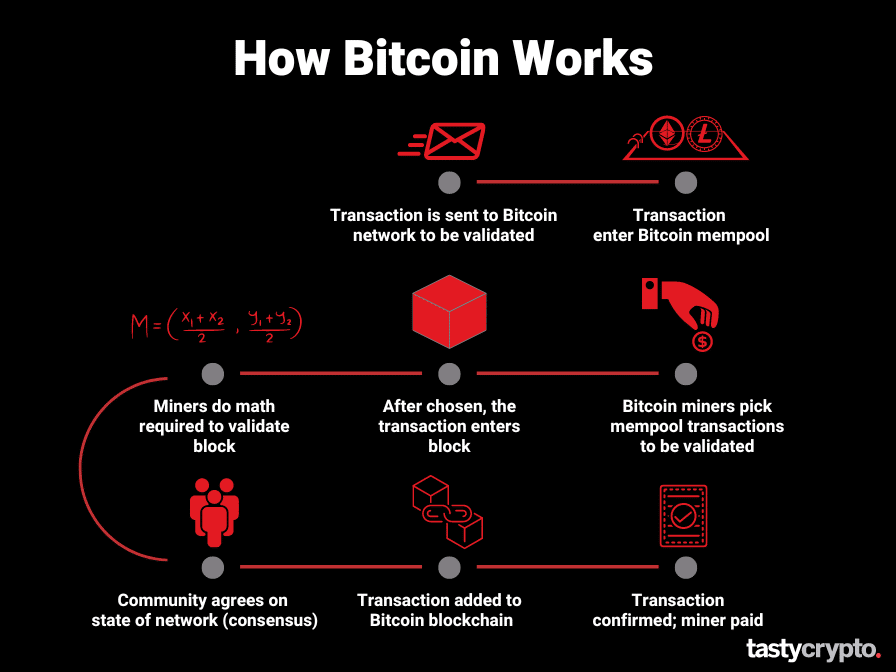
The primary financial incentive for Bitcoin miners is the “block reward.” Whenever a miner successfully solves a complex computational puzzle—a process known as “proof-of-work”—they are granted the right to add a new block of verified transactions to the blockchain. As part of this privilege, the miner receives a fixed amount of newly minted bitcoins. This block reward is the only mechanism through which new bitcoins are introduced into circulation.
Initially, the block reward was 50 BTC per block. However, Bitcoin’s protocol includes a programmed scarcity mechanism known as “halving.” Approximately every four years, or every 210,000 blocks, the block reward is cut in half. This deflationary schedule means that the issuance of new bitcoins steadily decreases over time, moving towards a capped supply of 21 million BTC. This predictable reduction in supply, independent of any central bank or government, is a core tenet of Bitcoin’s economic model, contributing significantly to its perceived value as a scarce digital asset. For miners, the halving events dramatically alter their profitability calculations, requiring continuous adaptation to maintain viable operations.
Transaction Fees: Supplementary Income Streams
Beyond the block reward, miners also earn revenue from transaction fees. Every transaction processed on the Bitcoin network includes a small fee paid by the sender. Miners are incentivized to include transactions with higher fees in their blocks, as this directly increases their overall earnings. While historically a smaller component of total revenue compared to the block reward, transaction fees can become significant during periods of high network congestion and demand.
The interplay between block rewards and transaction fees creates a dynamic where miners contribute to network security by validating transactions, and in return, are compensated. As the block reward diminishes with each halving, transaction fees are expected to play an increasingly vital role in sustaining the economic viability of mining operations, ensuring the network remains secure even after the last bitcoin has been mined (projected around 2140). This long-term transition from block reward dominance to transaction fee reliance is a critical aspect of Bitcoin’s sustainable economic model.
The Role of Scarcity and Deflation in Value Creation
The predictable, decreasing supply of Bitcoin, underpinned by the halving mechanism, stands in stark contrast to the inflationary policies often associated with fiat currencies. This engineered scarcity is a cornerstone of Bitcoin’s economic philosophy, driving its potential as a store of value. For miners, the inherent scarcity amplifies the value of each bitcoin generated. As the number of new bitcoins entering circulation diminishes, and assuming demand remains constant or increases, the economic value of existing bitcoins tends to appreciate. This appreciation can significantly boost the financial returns for miners, offsetting the decreasing block rewards and increasing operational costs, making the long-term investment in mining infrastructure a potentially lucrative bet on Bitcoin’s future value.
The Financial Mechanics of Bitcoin Generation
Generating bitcoins is far from a passive income stream; it requires substantial financial outlay and meticulous management of operational costs. Understanding these mechanics is crucial for anyone considering Bitcoin mining as a financial venture.
Capital Investment: Hardware and Infrastructure
The most significant upfront financial hurdle for Bitcoin miners is the capital investment in specialized hardware. Early Bitcoin mining could be done with standard computer CPUs, then GPUs. Today, effective Bitcoin mining necessitates Application-Specific Integrated Circuits (ASICs). These machines are custom-built solely for the purpose of solving Bitcoin’s cryptographic puzzles and are vastly more efficient than general-purpose hardware. ASICs are expensive, with top-tier models costing thousands of dollars each.
Beyond the ASICs themselves, miners must invest in appropriate infrastructure. This includes robust power supplies, cooling systems to prevent overheating (often requiring specialized ventilation or immersion cooling), and secure facilities to house hundreds or thousands of these machines. Large-scale mining operations, often referred to as “mining farms,” can represent investments running into the millions of dollars, resembling industrial data centers more than home computer setups. The financial commitment means that entering the competitive mining landscape requires significant upfront capital.
Operational Costs: The Electric Bill and Beyond
Once the capital investment is made, the ongoing operational costs become the primary concern for miners. By far the largest of these is electricity. ASICs consume vast amounts of power, running 24/7, to perform the millions of calculations per second required to mine. The profitability of a mining operation is incredibly sensitive to electricity prices. Miners constantly seek locations with access to cheap and abundant energy, often gravitating towards regions with surplus hydropower, geothermal, or other renewable energy sources. A slight increase in electricity rates can turn a profitable mining venture into a loss-making one overnight.
Other operational costs include internet connectivity, maintenance and repair of hardware, security for the physical mining facility, and personnel wages for larger operations. Software updates, pool fees (if participating in a mining pool), and insurance also contribute to the ongoing financial burden. Managing these costs efficiently is paramount to maintaining a competitive edge in the ever-evolving mining landscape.
Profitability Calculus: Hash Rate, Difficulty, and Price Volatility
Determining the profitability of Bitcoin mining involves a complex calculation influenced by several dynamic variables:
- Hash Rate: This is the total computational power being deployed by a miner or the entire network. A higher individual hash rate increases a miner’s chance of solving a block.
- Network Difficulty: Bitcoin’s protocol automatically adjusts the difficulty of the mining puzzle approximately every two weeks (or every 2016 blocks) to ensure that, on average, a new block is found every 10 minutes. As more miners join the network and deploy more hash rate, the difficulty increases, making it harder for any single miner to find a block and thus reducing their individual probability of earning the block reward.
- Bitcoin Price: The fiat currency value of Bitcoin is the ultimate determinant of a miner’s revenue. A surging Bitcoin price can make even less efficient operations profitable, while a sharp decline can quickly render highly optimized farms unprofitable, especially for those with high electricity costs.
- Block Reward and Transaction Fees: As discussed, these are the direct income streams.
Miners constantly perform profitability analyses, often using sophisticated calculators that factor in their hardware specifications, electricity rates, current network difficulty, and real-time Bitcoin price. The volatility of Bitcoin’s price means that profitability can fluctuate wildly, requiring miners to adopt strategies such as hedging or holding generated coins, rather than immediately selling, to maximize their long-term financial returns.
Bitcoin Mining as an Investment Strategy
For many, Bitcoin mining is not just an operational business; it’s a strategic investment in the future of digital assets. It represents a unique way to acquire Bitcoin, distinct from direct purchase on an exchange.
Risk Assessment: Hardware Obsolescence and Market Fluctuations
Like any investment, Bitcoin mining comes with significant risks. Hardware obsolescence is a major concern. Newer, more efficient ASICs are constantly being developed, rendering older models less competitive and less profitable over time. An ASIC purchased today might be outdated in 12-18 months, leading to a rapid depreciation of capital assets. This forces miners into a cycle of continuous upgrades to maintain profitability, requiring ongoing capital expenditure.
Market fluctuations in Bitcoin’s price represent another critical risk. A prolonged bear market can erode profitability, potentially leading to situations where the cost of electricity exceeds the value of the bitcoins mined. Miners must have sufficient financial reserves to weather these downturns or be prepared to operate at a loss until market conditions improve. Regulatory changes, such as outright bans on mining or increased energy tariffs, also pose significant risks, impacting the long-term viability of operations in certain jurisdictions.
Diversification and Cloud Mining Options
To mitigate some of these risks, investors sometimes explore alternative approaches. Cloud mining services allow individuals to rent hashing power from large mining farms, paying a fee for a share of the profits without the need to purchase and maintain hardware. While seemingly less risky due to no upfront hardware investment, cloud mining comes with its own set of concerns, including transparency issues, potential for scams, and often higher overall costs compared to direct mining.
Other investors might diversify their crypto holdings, combining mining activities with direct purchases of Bitcoin or other cryptocurrencies. This strategy aims to reduce exposure to the specific operational and hardware risks of mining, while still participating in the broader crypto market. For smaller investors, contributing to a mining pool, which aggregates hash power and shares rewards proportionally, is a way to reduce the variance of individual mining success, providing more predictable, albeit smaller, financial returns.
Tax Implications of Mining Income
A crucial financial consideration for Bitcoin miners is the tax implication of their earnings. Jurisdictions around the world are developing frameworks for taxing cryptocurrency activities. Generally, bitcoins earned through mining are considered taxable income at their fair market value on the day they are received. This income can be subject to income tax, and in some regions, self-employment taxes.
Furthermore, if the mined bitcoins are later sold for a profit, those profits may be subject to capital gains tax. The specific rules vary widely by country and even by state or province. Miners must maintain meticulous financial records, tracking their operational costs, the value of bitcoins mined, and their selling prices, to ensure compliance with tax laws. Ignoring these obligations can lead to significant financial penalties. Consulting with a tax professional specializing in cryptocurrency is essential for any serious mining operation.
The Broader Financial Impact of Bitcoin Generation
The process of generating bitcoins extends far beyond individual miners’ balance sheets; it has profound implications for the global financial landscape, contributing to Bitcoin’s unique economic properties and its role as a disruptive technology.
Controlling Supply: Bitcoin’s Predetermined Issuance Schedule
One of Bitcoin’s most revolutionary economic features is its strictly controlled and predictable supply schedule. Unlike fiat currencies, whose supply can be expanded indefinitely by central banks, Bitcoin’s total supply is capped at 21 million coins. The generation rate is algorithmic and transparent, defined by the halving events that reduce the block reward. This predetermined issuance schedule is a fundamental differentiator, imbuing Bitcoin with scarcity that is digitally verifiable and impossible to manipulate by any single entity.
This controlled supply is a powerful antidote to inflationary concerns prevalent in traditional financial systems. It positions Bitcoin as a potential hedge against inflation and a store of value, drawing parallels to precious metals like gold. The predictable decline in new supply generation impacts market dynamics, influencing price discovery, investor sentiment, and long-term accumulation strategies for institutions and individuals alike.
Decentralization and Financial Inclusion
The decentralized nature of Bitcoin generation is not just a technical feature; it has significant financial implications. By allowing anyone with the necessary hardware and electricity to participate in securing the network and earning new bitcoins, mining fosters financial inclusion and autonomy. It creates a meritocratic system where computational power, rather than connections to traditional financial institutions, determines the ability to generate new wealth.
This decentralized generation mechanism helps distribute wealth more broadly across the network, preventing any single entity from monopolizing Bitcoin’s creation. It reinforces the network’s censorship resistance and resilience, making it harder for governments or corporations to control the currency’s issuance or transaction flow. This economic decentralization is a core appeal for those seeking alternatives to centralized financial systems and institutions.
Impact on Global Energy Markets
While primarily a financial topic, the energy consumption associated with Bitcoin generation has become a significant economic and environmental consideration. Large-scale mining operations require immense amounts of electricity, leading to debates about their carbon footprint and overall sustainability. Economically, this demand for energy has influenced energy markets in various regions, leading some localities to embrace Bitcoin mining as a way to monetize surplus energy (e.g., hydroelectric power in remote areas) and others to implement restrictions due to environmental concerns or strain on existing grids.
From a financial perspective, energy efficiency is paramount. Miners are constantly seeking innovations in hardware and cooling technologies to reduce their energy footprint and improve their economic viability. The drive towards renewable energy sources in mining operations is not just an environmental imperative but also an economic one, as green energy often comes with lower, more stable costs, securing long-term profitability and mitigating regulatory risks.
Regulatory and Future Economic Outlook for Bitcoin Generation
The economic landscape for Bitcoin generation is dynamic, influenced by evolving regulatory frameworks and technological advancements. Its future remains a subject of intense scrutiny and innovation.
Evolving Legal Frameworks and Compliance
As Bitcoin gains mainstream acceptance, governments and regulatory bodies are increasingly scrutinizing mining activities. While some countries, like El Salvador, have embraced Bitcoin mining, others have imposed strict regulations or outright bans, citing concerns over energy consumption, financial stability, or illicit activities. These evolving legal frameworks present both opportunities and challenges for miners. Compliance with KYC (Know Your Customer) and AML (Anti-Money Laundering) regulations, along with environmental impact assessments, are becoming standard requirements for large-scale mining operations. The financial viability of mining in a given jurisdiction is heavily dependent on its regulatory stance, often pushing miners to seek out regions with favorable legal and energy policies.
The Sustainability Debate: Economic vs. Environmental Costs
The debate over Bitcoin mining’s energy consumption often pits its economic benefits against its environmental costs. While critics highlight the carbon footprint, proponents argue that a significant portion of mining uses renewable or otherwise curtailed energy, and that the financial incentive drives innovation in sustainable energy solutions. Economically, the industry is moving towards more efficient hardware and a greater reliance on renewable energy sources, not just for environmental stewardship but for long-term cost reduction and risk mitigation. The financial health of mining operations will increasingly be tied to their ability to demonstrate environmental responsibility and energy efficiency.

The Halving Cycle and its Economic Implications
The scheduled halving events are pivotal economic milestones for Bitcoin generation. Each halving significantly reduces the new supply of bitcoins entering the market, historically preceding periods of substantial price appreciation. For miners, these events necessitate a re-evaluation of their operational models. They must either upgrade to more efficient hardware, secure cheaper electricity, or manage their balance sheets effectively to survive the immediate reduction in revenue. The halving mechanism ensures Bitcoin’s long-term scarcity and remains a critical economic driver for its value proposition and the sustainability of its decentralized generation process.
In conclusion, the generation of bitcoins is an intricate economic ballet, choreographed by code, driven by financial incentives, and shaped by market forces. It is a testament to the power of decentralized economic systems, offering a unique blend of opportunity and challenge. As the world continues to grapple with the implications of digital currencies, understanding the economic underpinnings of Bitcoin generation remains essential for investors, policymakers, and anyone seeking to comprehend the future of finance.
aViewFromTheCave is a participant in the Amazon Services LLC Associates Program, an affiliate advertising program designed to provide a means for sites to earn advertising fees by advertising and linking to Amazon.com. Amazon, the Amazon logo, AmazonSupply, and the AmazonSupply logo are trademarks of Amazon.com, Inc. or its affiliates. As an Amazon Associate we earn affiliate commissions from qualifying purchases.