
Amazon.com, Inc. stands as an undisputed titan in the modern global economy, a corporate entity whose scale and influence are so vast that comprehending its true “bigness” requires a deep dive into its financial magnitude, market dominance, and strategic fiscal operations. Far more than just an online retailer, Amazon has meticulously constructed an economic machine that touches nearly every aspect of commerce, technology, and consumer behavior, making it a critical subject for anyone interested in business finance, investment, and the forces shaping the contemporary market landscape. To grasp “how big” Amazon truly is, one must dissect its monumental financial footprint, its multifaceted revenue streams, and its profound impact on both the market and the broader economic ecosystem.
The Colossal Financial Footprint
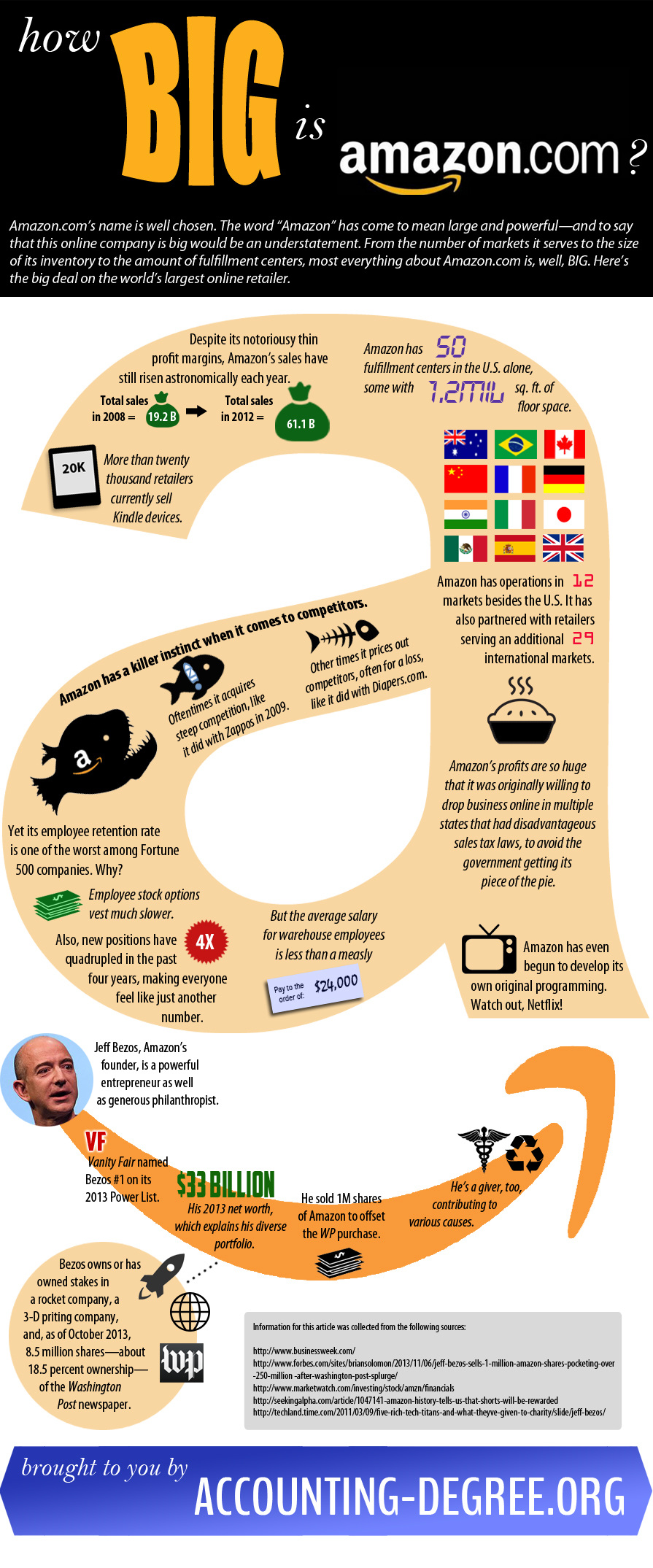
When we ask “how big is Amazon,” the most immediate and tangible answer lies in its financial statistics. The company’s market capitalization, revenue figures, and global operational scale paint a picture of an organization that has not just grown, but has fundamentally redefined what a “big” company looks like in the 21st century.
Market Capitalization and Valuation
Amazon’s market capitalization frequently places it among the top companies globally, fluctuating with market sentiment but consistently in the trillion-dollar club alongside a select few tech giants. This valuation is not merely a number; it represents the collective confidence of investors in Amazon’s future earning potential, its strategic vision, and its ability to continually innovate and expand. For institutional investors and individual shareholders alike, Amazon’s stock (AMZN) has been a cornerstone of growth portfolios for decades, a testament to its sustained financial performance and market resilience. Its valuation reflects the sum total of its diverse business segments, from e-commerce to cloud computing, all consolidated under one incredibly powerful brand. The sheer weight of its market cap means that movements in AMZN shares can significantly influence major stock indices and broader market sentiment, highlighting its systemic importance in global finance.
Revenue Streams and Growth Engines
Amazon’s financial magnitude isn’t built on a single pillar but a sophisticated interplay of multiple, high-growth revenue streams. While its origins as an online bookseller are legendary, today’s Amazon is a sprawling conglomerate.
Firstly, Online Stores remain a significant component, encompassing direct product sales and third-party seller services. This segment, though sometimes seen as lower-margin, generates immense cash flow and fuels Amazon’s customer acquisition strategy and logistical prowess. The vast network of fulfillment centers, delivery services, and sophisticated inventory management systems required to support this scale represents an enormous capital investment, yet it consistently yields impressive top-line growth.
Secondly, and perhaps most crucially, Amazon Web Services (AWS) is the powerhouse of profitability. AWS provides on-demand cloud computing platforms and APIs to individuals, companies, and governments, on a metered pay-as-you-go basis. It pioneered the cloud computing industry and remains its dominant player, consistently delivering robust operating margins and contributing a disproportionately large share of Amazon’s overall profits. AWS’s success has diversified Amazon’s financial risk, proving that the company is as much a technology infrastructure provider as it is a retailer.
Thirdly, Advertising Services have emerged as a stealthy but incredibly lucrative growth engine. Leveraging its vast first-party customer data and high-traffic retail platform, Amazon offers advertisers powerful tools to reach engaged consumers. This segment benefits from network effects and high margins, rapidly growing to compete with established digital advertising giants.
Beyond these primary drivers, other significant revenue contributors include Subscription Services (primarily Amazon Prime, offering shipping benefits, streaming content, and other perks), and its growing presence in Physical Stores (Whole Foods Market, Amazon Go). Each of these segments, individually, would constitute a substantial business, but collectively under the Amazon umbrella, they create an unparalleled financial juggernaut.
Unpacking Amazon’s Economic Machine
Understanding Amazon’s bigness also necessitates an examination of the scale of its operational machinery and the financial strategies that underpin its relentless pursuit of growth and market dominance. It’s a testament to long-term vision, aggressive investment, and a willingness to prioritize market share and infrastructure build-out over immediate short-term profits.
Scale of Operations and Global Reach
Amazon’s operational scale is breathtaking. It boasts millions of square feet in warehouse space globally, a sophisticated logistics network that spans continents, and a workforce numbering well over a million employees worldwide. This infrastructure is not just about moving goods; it’s a massive capital investment, financed through strategic debt, equity, and retained earnings, all aimed at enhancing efficiency, speed, and customer satisfaction. The company’s ability to manage such a complex global supply chain, leveraging advanced robotics, AI, and data analytics, is a marvel of business engineering. This global footprint allows Amazon to enter and dominate new markets, creating jobs and economic activity in countless regions, while also absorbing substantial financial risks associated with international operations, currency fluctuations, and geopolitical events. The sheer volume of transactions processed daily, from customer orders to server requests, underscores an operational complexity that few companies in history have managed to achieve.

Profitability and Reinvestment Strategy
While Amazon’s revenue figures are staggering, its profitability has often been a point of interest for financial analysts and investors. For much of its history, Amazon famously reinvested heavily in growth, infrastructure, and new ventures, often prioritizing market share and long-term potential over quarterly profit numbers. This strategy, initially questioned by traditional investors, ultimately proved prescient, allowing the company to build insurmountable competitive moats in various industries.
Today, while still investing aggressively, Amazon demonstrates robust profitability, particularly driven by high-margin segments like AWS and advertising. The profits generated are strategically allocated: a portion returns to shareholders, but a significant share is continuously plowed back into research and development, expansion into new markets, technological upgrades, and the development of new products and services (e.g., satellite internet with Project Kuiper, healthcare ventures). This reinvestment cycle is a core component of Amazon’s sustained “bigness,” ensuring it remains at the forefront of innovation and maintains its competitive edge, even at its immense scale. This disciplined approach to capital allocation, balancing growth with profitability, is a hallmark of sound business finance for a company of its stature.
Amazon’s Impact on Investing and Business Finance
The sheer scale and strategic financial decisions of Amazon have not only propelled its own growth but have also had a transformative impact on the broader investment landscape and the tenets of modern business finance. Its journey offers a case study in disruptive innovation and long-term value creation.
A Staple in Investor Portfolios
For a significant period, Amazon was a darling of growth investors, providing astronomical returns for those who believed in its long-term vision. Even as a mature giant, it remains a critical component of many institutional and retail investment portfolios, a blue-chip stock representing exposure to e-commerce, cloud computing, and digital advertising. Its inclusion in major indices like the S&P 500 means that countless passive investment vehicles are exposed to its performance. Understanding Amazon’s financial health, therefore, is crucial for anyone involved in market analysis, portfolio management, or personal investing. Its earnings reports, investor calls, and strategic announcements are closely scrutinized for insights into consumer spending, tech trends, and the overall economic climate, making it a bellwether for various sectors.
Disrupting Traditional Business Models
Amazon’s financial success stems from its willingness to challenge and disrupt traditional business models across various industries. From retail to logistics, media, and enterprise IT, Amazon’s innovative use of capital and aggressive market entry strategies have forced incumbents to adapt or face obsolescence. Its focus on customer obsession, economies of scale, and technological efficiency has set new benchmarks for operational excellence and cost management. Competitors have had to re-evaluate their own financial structures, supply chains, and investment priorities to keep pace. This disruptive force, fueled by Amazon’s massive financial resources, has spurred innovation across the economy, demonstrating how significant capital can be deployed to redefine entire industries and create new ones. Its impact on the financial health and strategic planning of countless businesses, both large and small, is profound.
Navigating Future Financial Frontiers
Even at its current colossal size, Amazon shows no signs of resting on its laurels. The company continues to explore new avenues for growth, requiring significant financial outlays and strategic foresight. Its future “bigness” will depend on its ability to navigate emerging challenges and capitalize on new opportunities.
Strategic Acquisitions and Diversification
A key aspect of Amazon’s growth strategy, financed by its robust cash flows and access to capital markets, has been strategic acquisitions. From Whole Foods Market to MGM Studios, Amazon has used its financial might to enter and expand into diverse sectors, broadening its revenue base and enhancing its ecosystem. Each acquisition represents a significant investment decision, requiring careful financial due diligence and integration planning. These moves are not just about adding new businesses but about strategically positioning Amazon for future growth, often by acquiring complementary technologies, customer bases, or intellectual property. The ability to make such large-scale investments is a hallmark of a financially powerful entity, allowing Amazon to accelerate its diversification efforts and hedge against market saturation in its core segments.

Regulatory Scrutiny and Financial Outlook
However, Amazon’s “bigness” also comes with increased scrutiny. Its market dominance has attracted significant attention from antitrust regulators globally, posing potential financial risks in the form of fines, forced divestitures, or restrictions on future growth. Navigating this regulatory environment will be a critical financial challenge, influencing investment decisions, business practices, and long-term strategic planning. Furthermore, the global economic climate, consumer spending patterns, and geopolitical stability all play a role in Amazon’s financial outlook. The company’s immense scale means it is highly sensitive to macroeconomic shifts, and its future financial performance will be a key indicator for the health of the broader digital economy. Managing these external pressures while continuing to innovate and grow will define Amazon’s next chapter in its journey of unparalleled corporate expansion.
In conclusion, “how big is Amazon” is a question with a multi-trillion-dollar answer. It’s a company whose financial might, expansive revenue streams, strategic investments, and market-disrupting capabilities have not only made it one of the largest corporations in history but also a fundamental force in global business finance and a compelling case study in wealth creation and sustained economic influence. Its continued evolution will undoubtedly shape financial markets and economic trends for decades to come.
aViewFromTheCave is a participant in the Amazon Services LLC Associates Program, an affiliate advertising program designed to provide a means for sites to earn advertising fees by advertising and linking to Amazon.com. Amazon, the Amazon logo, AmazonSupply, and the AmazonSupply logo are trademarks of Amazon.com, Inc. or its affiliates. As an Amazon Associate we earn affiliate commissions from qualifying purchases.