
Understanding how your Social Security benefits are calculated is not just an academic exercise; it’s a critical component of informed retirement planning. For millions of Americans, Social Security represents a foundational pillar of financial security in their later years. However, the calculation process can appear complex, shrouded in formulas and terminology that are not immediately intuitive. This article aims to demystify that process, providing a clear, insightful, and engaging explanation of the key factors that determine the size of your monthly Social Security check, empowering you to make strategic decisions about your financial future.

Social Security, established in 1935, is a pay-as-you-go system funded primarily through payroll taxes. Workers contribute a portion of their earnings, and these funds are used to pay benefits to current retirees, survivors, and disabled individuals. While the system ensures a baseline of income, the amount each individual receives is highly personalized, dependent on their unique work history and claiming decisions. Grasping these nuances is essential for anyone looking to optimize their retirement income and ensure they receive every dollar they’re entitled to.
The Foundation: Your Work History and Earnings
At the heart of your Social Security benefit calculation lies your earnings record. The system is designed to reward consistent work and higher lifetime earnings, creating a direct link between your contributions during your working years and the benefits you receive in retirement.
The Average Indexed Monthly Earnings (AIME)
The first crucial step in calculating your Social Security benefit involves determining your Average Indexed Monthly Earnings (AIME). This figure represents an average of your highest earning years, adjusted for inflation, and serves as the primary input for the benefit formula.
- Identifying Your Highest Earning Years: The Social Security Administration (SSA) looks at your entire earnings history and selects the 35 years in which you had the highest taxable earnings. If you have fewer than 35 years of earnings, the missing years are counted as zero, which can significantly reduce your AIME. This highlights the importance of a long and consistent work history.
- Indexing for Inflation: To ensure that earlier earnings are comparable to more recent earnings, the SSA “indexes” your past wages. Indexing adjusts your earnings from previous years to reflect the general increase in wages and living standards over time. This process stops at age 60; earnings after this age are included at their nominal value. This adjustment is vital because a dollar earned in 1980 had far more purchasing power than a dollar earned today. Without indexing, your early career earnings would be severely undervalued in the calculation.
- Calculating the Average: Once your 35 highest earning years are identified and indexed, the total indexed earnings are summed up and divided by 420 (which is 35 years multiplied by 12 months) to arrive at your Average Indexed Monthly Earnings. This AIME is the foundation upon which your Primary Insurance Amount is built.
Covered Earnings and the Earnings Limit
It’s important to note that not all earnings are subject to Social Security taxes, nor are all earnings considered when calculating benefits. There’s an annual limit on the amount of earnings subject to Social Security tax, known as the “maximum taxable earnings” or “contribution and benefit base.” For example, in 2024, earnings above $168,600 are not subject to Social Security taxes, and therefore, do not contribute to your Social Security earnings record for that year. Understanding this limit is important for high-income earners, as it caps the maximum earnings that can be considered for benefit calculation in any given year.
The Primary Insurance Amount (PIA) Formula
Once your AIME is established, the SSA uses a progressive formula to translate this average into your Primary Insurance Amount (PIA). The PIA is the monthly benefit you would receive if you start collecting Social Security benefits exactly at your Full Retirement Age (FRA).
Bending Points and Progressive Nature
The PIA formula is progressive, meaning it replaces a higher percentage of earnings for lower-income workers than for higher-income workers. This is achieved through a series of “bending points.” The formula applies different percentages to different segments of your AIME.
For individuals who turn 62 in 2024, the PIA formula is:
- 90% of the first $1,174 of AIME, PLUS
- 32% of AIME over $1,174 up to $7,078, PLUS
- 15% of AIME over $7,078.
These dollar amounts (bending points) are adjusted annually for inflation. This progressive structure means that Social Security serves as a more significant safety net for those with lower lifetime earnings, while still providing benefits for higher earners, albeit at a lower replacement rate relative to their income. For instance, someone with an AIME of $1,000 would have 90% of their earnings replaced, while someone with an AIME of $8,000 would have a significantly smaller overall percentage replaced once all segments are factored in.
Why the PIA is Crucial
Your PIA is the cornerstone of your Social Security benefits because all other benefit calculations—whether for early or delayed retirement, spousal benefits, or survivor benefits—are derived as a percentage of your PIA. It sets the baseline amount that your personal claiming decisions will then modify. Understanding your estimated PIA, which you can find on your annual Social Security statement, is therefore an indispensable first step in planning your retirement income.
The Impact of Claiming Age
While your AIME and PIA establish your base benefit, the age at which you choose to start receiving benefits is arguably the most significant factor you directly control in determining your actual monthly payment.
Understanding Your Full Retirement Age (FRA)
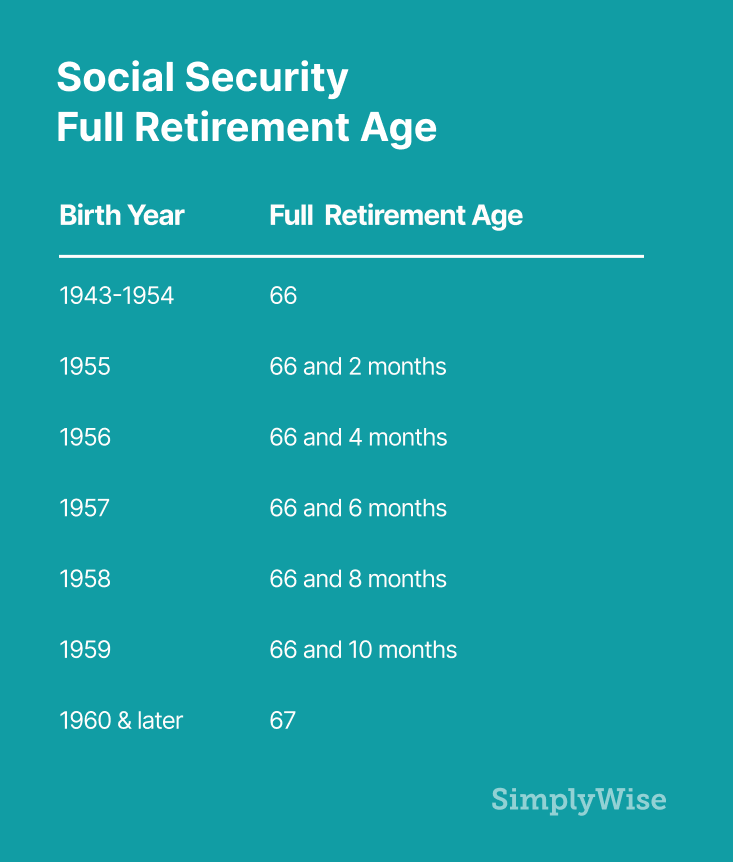
Your Full Retirement Age (FRA) is the age at which you are entitled to receive 100% of your PIA. This age is not universal; it depends on your birth year.
- For those born in 1943-1954, FRA is 66.
- For those born in 1955, FRA is 66 and 2 months.
- For those born in 1956, FRA is 66 and 4 months.
- …and so on, until those born in 1960 or later, whose FRA is 67.
Knowing your specific FRA is vital because it acts as the pivot point around which early and delayed retirement decisions are made.
Claiming Early: Reductions in Benefits
You can elect to start receiving Social Security benefits as early as age 62. However, choosing to claim before your FRA results in a permanent reduction of your monthly benefit. This reduction is actuarially calculated to account for the fact that you will be receiving benefits for a longer period.
- Reduction for Early Claiming: For each month you claim before your FRA, your benefit is reduced. The reduction is typically 5/9 of 1% for each of the first 36 months and 5/12 of 1% for each additional month.
- Example: If your FRA is 67 and you claim at age 62, you would be claiming 60 months early. This could result in a benefit reduction of approximately 30%. This means if your PIA was $2,000, claiming at 62 would reduce your monthly benefit to around $1,400 for the rest of your life. This significant reduction underscores the financial trade-offs involved in early claiming.
Claiming Late: Delayed Retirement Credits
Conversely, if you delay claiming Social Security benefits past your FRA, your monthly benefit will increase. These increases are known as Delayed Retirement Credits (DRCs). You can earn DRCs up until age 70.
- Increase for Delayed Claiming: For each year you delay claiming benefits past your FRA, your annual benefit increases by 8%. This amounts to 2/3 of 1% per month.
- Example: If your FRA is 67 and your PIA is $2,000, delaying until age 70 would mean you accumulate 3 years of DRCs (3 years * 8% per year = 24% increase). Your monthly benefit would then increase to $2,480 (2,000 * 1.24). This substantial increase can be a powerful incentive for those who are able to defer claiming benefits.
- Maximum Delay: There’s no further benefit increase for delaying past age 70. Therefore, waiting beyond this age does not yield additional financial advantage from DRCs.
Other Factors Influencing Your Final Benefit
Beyond your earnings history and claiming age, several other factors can affect the amount of Social Security benefits you and your family ultimately receive.
Spousal and Survivor Benefits
Social Security is more than just an individual retirement program; it also provides crucial protections for families.
- Spousal Benefits: If your spouse has a higher PIA, you may be eligible to receive a benefit equal to up to 50% of their PIA, assuming you claim at your own FRA. You generally need to be at least 62, and your spouse must have already filed for their benefits. If you claim your spousal benefit before your FRA, it will be reduced, similar to how individual benefits are reduced. You will always receive the higher of your own benefit or your spousal benefit.
- Survivor Benefits: In the event of a spouse’s death, surviving spouses (and sometimes children or dependent parents) may be eligible for benefits. A surviving spouse can receive up to 100% of the deceased worker’s benefit (including any DRCs the deceased worker would have earned), provided the surviving spouse claims at their own FRA or later. Claiming survivor benefits early also results in a reduction. These provisions are vital for maintaining financial stability during difficult times.
Cost-of-Living Adjustments (COLAs)
To help maintain the purchasing power of benefits in the face of inflation, Social Security benefits are subject to annual Cost-of-Living Adjustments (COLAs). These adjustments are typically announced in the fall and take effect in December for benefits paid in January of the following year. COLAs are determined by changes in the Consumer Price Index for Urban Wage Earners and Clerical Workers (CPI-W). While COLAs do not increase your real benefit amount, they are critical for preventing inflation from eroding the value of your monthly payments over time.
Taxation of Benefits
For some retirees, a portion of their Social Security benefits may be subject to federal income tax. This depends on your “combined income,” which is the sum of your adjusted gross income (AGI), any tax-exempt interest, and half of your Social Security benefits.
- Tax Thresholds: If your combined income is between $25,000 and $34,000 for an individual ($32,000 and $44,000 for a married couple filing jointly), up to 50% of your benefits may be taxable.
- If your combined income exceeds $34,000 for an individual ($44,000 for a married couple filing jointly), up to 85% of your benefits may be taxable.
It’s important to factor potential taxes into your overall retirement income planning. Some states also tax Social Security benefits, though most do not.
The Earnings Test (if claiming before FRA)
If you claim Social Security benefits before your Full Retirement Age and continue to work, your benefits may be subject to an earnings test. If your earnings exceed a certain annual limit, the SSA will temporarily withhold a portion of your benefits.
- Before FRA: For every $2 you earn above the annual limit, $1 in benefits will be withheld.
- In the Year You Reach FRA: The rules are more lenient. For every $3 you earn above a higher annual limit, $1 in benefits will be withheld, but only for earnings before the month you reach FRA.
- At or After FRA: Once you reach your FRA, the earnings test no longer applies, and you can earn any amount without it affecting your Social Security benefits.
Any benefits withheld due to the earnings test are not lost permanently; they typically lead to a recalculation of your benefits at FRA, potentially increasing your future monthly payments. Nonetheless, this rule is a crucial consideration for those planning to work part-time in early retirement.
Strategic Planning for Maximizing Your Benefits
Understanding the intricate mechanics of Social Security benefit calculation empowers you to make proactive decisions that can significantly impact your financial well-being in retirement.
Review Your Social Security Statement
The SSA provides an annual Social Security Statement that details your earnings history and provides estimated benefits at various claiming ages. Reviewing this statement regularly is crucial to ensure that your earnings record is accurate. Errors in your earnings history, such as missing wages from a past employer, could result in a lower AIME and, consequently, a lower benefit. Contacting the SSA to correct any discrepancies is highly recommended.
Consider Your Longevity and Financial Needs
The decision of when to claim Social Security benefits is a deeply personal one, with no single “right” answer. Your life expectancy, overall health, other sources of retirement income, and immediate financial needs should all factor into your decision. If you anticipate a long lifespan and have sufficient alternative savings, delaying benefits to maximize your monthly payment might be a wise strategy. Conversely, if you have pressing financial needs or health concerns that suggest a shorter life expectancy, claiming earlier might be more appropriate.

Seek Professional Advice
Navigating the complexities of Social Security, particularly when considering spousal benefits, survivor benefits, and the optimal claiming strategy for couples, can be challenging. A qualified financial advisor specializing in retirement planning can help you analyze your specific situation, project various scenarios, and develop a personalized strategy to maximize your Social Security benefits in conjunction with your other retirement assets. Their expertise can provide invaluable clarity and confidence in making one of your most important retirement decisions.
In conclusion, your Social Security benefits are the product of a well-defined formula influenced by your lifetime earnings, your full retirement age, and critically, the age at which you choose to begin receiving payments. By understanding the AIME, PIA, and the implications of early versus delayed claiming, you can approach retirement with greater clarity and confidence. Take the time to review your statements, assess your personal circumstances, and seek professional guidance to ensure you unlock the full potential of this vital retirement resource.
aViewFromTheCave is a participant in the Amazon Services LLC Associates Program, an affiliate advertising program designed to provide a means for sites to earn advertising fees by advertising and linking to Amazon.com. Amazon, the Amazon logo, AmazonSupply, and the AmazonSupply logo are trademarks of Amazon.com, Inc. or its affiliates. As an Amazon Associate we earn affiliate commissions from qualifying purchases.