
Understanding how your Social Security benefits are calculated is a cornerstone of effective retirement planning. For many, Social Security represents a significant, if not primary, source of income in their later years. Yet, the precise mechanisms that determine an individual’s monthly payout often remain a mystery, shrouded in a complex web of legislation, historical earnings, and personal choices. This article aims to demystify that process, breaking down the key factors and formulas that the Social Security Administration (SSA) uses to arrive at your benefit amount. By gaining a clear perspective on these calculations, you can make more informed decisions about your career, savings, and, crucially, when to claim your benefits, ultimately optimizing your financial security in retirement.

The journey to your Social Security benefit amount begins not just years, but often decades, before you ever file a claim. It’s a calculation deeply intertwined with your entire working life, reflecting your earnings history, the number of years you’ve contributed, and the age at which you choose to begin receiving payments. We will delve into these critical components, revealing how each piece contributes to the final puzzle, and providing insights that empower you to project and plan for your financial future with greater certainty.
The Foundation: Your Earnings History and Contribution
At its core, Social Security is an earned benefit program. The benefits you receive are directly tied to the income on which you paid Social Security taxes throughout your working life. The more you’ve earned and contributed, up to a certain annual limit, the higher your potential benefits. However, it’s not simply a matter of total contributions; the SSA employs a specific method to assess your earnings history, ensuring fairness and accounting for changes in wage levels over time.
Understanding Indexed Earnings
Raw historical earnings alone don’t tell the full story. A dollar earned in 1980 had far greater purchasing power than a dollar earned today. To address this disparity and ensure that earlier earnings are given appropriate weight in the calculation, the SSA “indexes” your past earnings. This process adjusts your earnings from prior years to reflect the general increase in wages that has occurred across the economy.
For example, an individual who earned $20,000 in 1985 might have that income indexed to a significantly higher amount in today’s dollars, making it comparable to what a higher earner might make in a more recent year. This indexing is crucial because it prevents early career earnings from being diluted by inflation, ensuring that your earliest contributions retain their value in the overall benefit calculation. The indexing process typically applies up to age 60, meaning earnings from that point onward are generally used at their nominal (actual) value. This mechanism ensures that your benefit adequately reflects your lifetime economic contributions, providing a more accurate measure of your average earnings across your entire career. Without indexing, someone with significant earnings early in their career would be unfairly disadvantaged compared to someone whose earnings peaked later in life, simply due to the effects of inflation.
The 35-Year Rule: Identifying Your Highest Earnings
While your entire earnings history is considered, the Social Security benefit formula specifically focuses on your highest-earning years. The SSA calculates your Average Indexed Monthly Earnings (AIME) based on your 35 years of highest indexed earnings. This is a critical point that often surprises individuals. If you have worked for fewer than 35 years, any years short of that count will be filled in with zeros. This significantly impacts your average and, consequently, your benefit amount.
Conversely, if you have worked for more than 35 years, the years with the lowest indexed earnings will be dropped from the calculation. This “highest 35 years” rule incentivizes longer careers and allows individuals who may have had periods of lower earnings (e.g., due to education, caregiving, or unemployment) to still maximize their benefits by continuing to work and replacing those lower-earning years with higher ones. It means that even a few additional years of higher earnings late in your career can significantly boost your overall average and, thus, your monthly benefit. Therefore, understanding this rule can influence career decisions, such as whether to continue working part-time or full-time into your later years, even after reaching traditional retirement age.
Deciphering the Benefit Formula: From AIME to PIA
Once your indexed earnings are established and your highest 35 years are identified, the SSA moves to the core of the calculation: determining your Primary Insurance Amount (PIA). The PIA is the benefit you would receive if you started claiming Social Security at your Full Retirement Age (FRA). This involves two distinct steps: calculating your Average Indexed Monthly Earnings (AIME) and then applying a progressive formula using “bend points” to convert your AIME into your PIA.
Calculating Your Average Indexed Monthly Earnings (AIME)
The first step after identifying your 35 highest indexed earning years is to sum up these indexed earnings. Once you have this total, you divide it by the total number of months in those 35 years (35 years * 12 months/year = 420 months). The result is your Average Indexed Monthly Earnings (AIME).
The AIME is essentially a measure of your average monthly income over your working life, adjusted for inflation. It’s important to remember that this is not your actual average income, but rather an average of your indexed earnings. The AIME serves as the primary input into the next stage of the calculation, where it is converted into your Primary Insurance Amount (PIA). A higher AIME directly translates to a higher potential PIA, emphasizing the long-term impact of consistent and substantial earnings on your Social Security benefits. This step consolidates your decades of work into a single, representative monthly figure, laying the groundwork for the final benefit determination.
Applying the Primary Insurance Amount (PIA) Bend Points
The calculation of your PIA from your AIME is not a straightforward percentage. Instead, the SSA uses a progressive formula that incorporates “bend points.” These bend points are specific dollar amounts in the AIME formula that change annually and are designed to provide a higher replacement rate for lower-income workers compared to high-income workers. This progressive structure is a fundamental aspect of Social Security, aiming to ensure a basic level of income replacement for all beneficiaries while still rewarding higher lifetime earners.
For example, in a given year, the PIA formula might look something like this:
- 90% of the first X dollars of AIME
- 32% of AIME between X and Y dollars
- 15% of AIME above Y dollars
(Where X and Y are the bend points for that year).
This means that the first segment of your AIME is replaced at a much higher rate (90%) than subsequent segments. As your AIME increases, the percentage of that additional income that is converted into benefits decreases. This progressive nature is why Social Security is often described as redistributive; it provides a larger proportion of pre-retirement earnings to those with lower lifetime incomes. Understanding these bend points helps clarify why two individuals with seemingly similar earnings histories might end up with different benefit amounts if one’s earnings consistently fell into the lower AIME brackets while the other’s consistently hit the higher ones. This also highlights that while higher earnings always lead to higher benefits, the increase in benefits slows down for very high earners.
The Crucial Role of Your Retirement Age
While your earnings history determines your Primary Insurance Amount (PIA), when you decide to start receiving benefits is arguably the single most impactful personal choice you make regarding your Social Security. Your claiming age can significantly increase or decrease your monthly payment relative to your PIA. The SSA defines a “Full Retirement Age” (FRA), which varies based on your birth year, and serves as the benchmark for receiving 100% of your PIA.
Claiming Before Your Full Retirement Age (FRA)
You can choose to start receiving Social Security benefits as early as age 62. However, if you claim benefits before your Full Retirement Age (FRA), your monthly benefit will be permanently reduced. This reduction is applied because you will be receiving benefits for a longer period. The earlier you claim, the greater the reduction. For someone with an FRA of 67, claiming at age 62 results in a permanent reduction of about 30% of their PIA.
This early claiming reduction is not a temporary penalty; it’s a permanent adjustment to your monthly benefit amount for the rest of your life. While receiving benefits earlier might seem appealing for immediate cash flow, it comes at a significant long-term cost. The decision to claim early should be carefully weighed against your financial needs, health status, and other retirement income sources. It’s a trade-off: more years of benefits, but each payment is smaller. For many, this decision is often driven by necessity due to job loss, health issues, or caregiving responsibilities rather than a purely strategic choice.
Claiming at Your Full Retirement Age
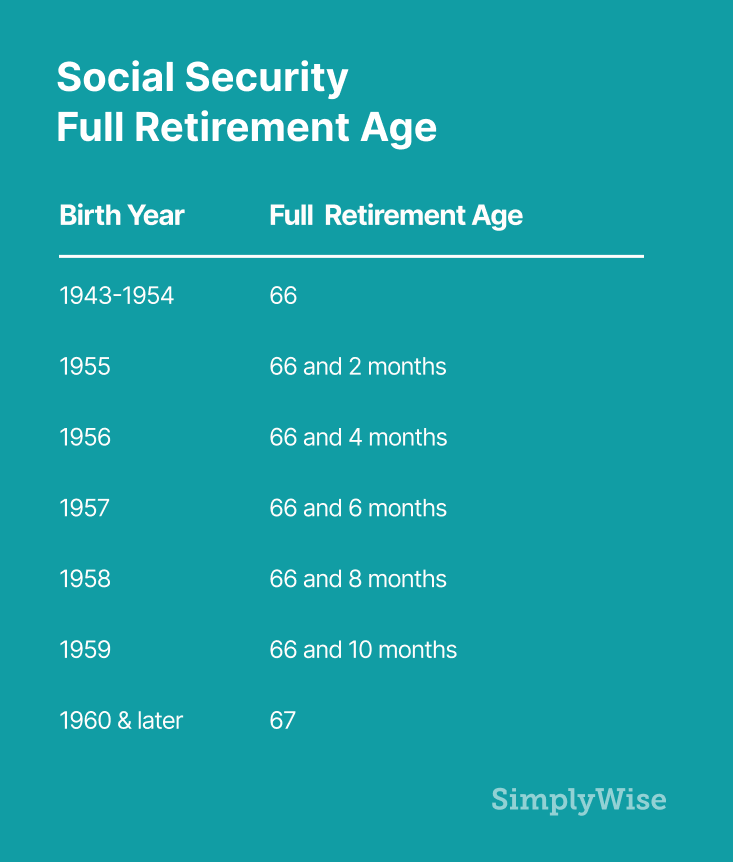
Your Full Retirement Age (FRA) is the age at which you are entitled to receive 100% of your calculated Primary Insurance Amount (PIA). For individuals born in 1960 or later, the FRA is 67. For those born between 1943 and 1959, the FRA gradually increases from 66 to 67. Claiming at your FRA avoids any permanent reduction for early claiming and any increase for delayed claiming.
This is the benchmark age used by the SSA to determine your base benefit. If you claim at your FRA, the monthly amount you receive will be exactly your PIA. This age represents the most straightforward claiming option, providing your full earned benefit without either the penalties of early claiming or the bonuses of delayed claiming. For many, claiming at their FRA represents a balanced approach, allowing them to access their full benefits without further delay, while having preserved their PIA through earlier deferral. It’s a practical choice for those who are ready to retire and don’t feel compelled to wait longer for increased benefits.
The Advantage of Delayed Retirement Credits
Conversely, if you delay claiming Social Security benefits beyond your Full Retirement Age, you can earn Delayed Retirement Credits (DRCs). These credits permanently increase your monthly benefit amount for each month you delay, up to age 70. The annual increase is typically 8% for each year you defer beyond your FRA, meaning your benefit can increase by up to 24-32% if you delay from FRA to age 70.
This is a powerful incentive for those who are financially able to defer benefits. By waiting, you are essentially purchasing a significantly larger monthly annuity for the rest of your life. For someone with an FRA of 67, delaying until age 70 means their monthly benefit will be approximately 124% of their PIA. This strategy is particularly attractive to individuals who are in good health, have other retirement income sources, or simply enjoy working longer. The decision to delay can be a highly effective way to maximize your guaranteed lifetime income, offering a hedge against inflation and longevity risk. For couples, strategic delayed claiming can also play a crucial role in maximizing survivor benefits.
Beyond the Basics: Other Influencing Factors
While earnings history and claiming age are the primary determinants, several other factors can influence the final amount of Social Security benefits you receive, or even whether you receive them. These include cost-of-living adjustments, spousal and survivor benefits, taxation, and the impact of working while receiving benefits.
Cost-of-Living Adjustments (COLAs)
Once you begin receiving Social Security benefits, your monthly payment is not static. It is subject to annual Cost-of-Living Adjustments (COLAs), which are designed to help maintain the purchasing power of your benefits against inflation. Each year, usually in October, the SSA announces the COLA for the following year, based on the Consumer Price Index for Urban Wage Earners and Clerical Workers (CPI-W).
If the CPI-W increases, your benefits will generally increase by the same percentage. If inflation is low or negative, the COLA might be zero, meaning no increase in benefits for that year. These adjustments are vital for long-term retirees, as they help ensure that your fixed income stream can keep pace with rising living costs over potentially decades of retirement. COLAs are a critical component of Social Security’s design, providing an essential safety net against the erosive effects of inflation.
Spousal, Survivor, and Disability Benefits
Social Security is not solely for individual retirees. It also provides vital financial protection for families through spousal, survivor, and disability benefits.
- Spousal Benefits: If you are married, you may be eligible to receive benefits based on your spouse’s earnings record, even if you never worked or had low earnings. This can be up to 50% of your spouse’s full retirement age benefit.
- Survivor Benefits: After a covered worker dies, certain family members (e.g., surviving spouses, children, dependent parents) may be eligible for survivor benefits. A surviving spouse can receive up to 100% of the deceased worker’s benefit.
- Disability Benefits: If you become disabled and unable to work before retirement, you may be eligible for Social Security Disability Insurance (SSDI). The calculation for disability benefits is similar to retirement benefits, based on your AIME up to the point of disability.
These ancillary benefits underscore Social Security’s role as a comprehensive social insurance program, extending beyond individual retirement income to provide a safety net for various life events and family structures. Understanding eligibility for these benefits is crucial for holistic financial planning.
The Impact of Working While Receiving Benefits
If you claim Social Security benefits before your Full Retirement Age and continue to work, your benefits may be temporarily reduced or withheld if your earnings exceed certain annual limits. This is known as the “earnings test.”
- Before FRA: If you are under FRA, the SSA will deduct $1 from your benefits for every $2 you earn above the annual limit (e.g., $22,320 in 2024).
- In the year you reach FRA: A higher limit applies, and the SSA deducts $1 for every $3 you earn above that limit (e.g., $59,520 in 2024), only counting earnings before the month you reach FRA.
- At or after FRA: Once you reach your FRA, the earnings test no longer applies, and you can earn any amount without your Social Security benefits being reduced.
Any benefits withheld due to the earnings test are not lost forever; they contribute to a recalculation of your benefits at your FRA, often resulting in a slightly higher monthly payment moving forward. However, it’s a significant consideration for individuals planning to ease into retirement with part-time work before reaching their FRA.
Taxation of Social Security Benefits
For some beneficiaries, a portion of their Social Security benefits may be subject to federal income tax. Whether your benefits are taxable depends on your “provisional income,” which is calculated as your adjusted gross income (AGI) plus non-taxable interest plus one-half of your Social Security benefits.
- Individuals: If your provisional income is between $25,000 and $34,000, up to 50% of your benefits may be taxable. Above $34,000, up to 85% may be taxable.
- Married Filing Jointly: If your provisional income is between $32,000 and $44,000, up to 50% of your benefits may be taxable. Above $44,000, up to 85% may be taxable.
Some states also tax Social Security benefits. Understanding these thresholds is essential for accurate retirement tax planning, as it impacts the net amount of benefits you actually receive.
Empowering Yourself: Accessing Your Information and Planning
Navigating the complexities of Social Security benefit calculations can seem daunting, but the SSA provides robust tools and resources to help you understand your specific situation and plan effectively. Proactive engagement with these resources is key to making informed decisions that optimize your retirement income.
Your Personal Social Security Statement
The single most valuable tool for understanding your benefits is your personal Social Security Statement. You can access this online by creating an account at mySocialSecurity on the SSA website (ssa.gov). This statement provides a personalized estimate of your:
- Retirement benefits: At various claiming ages (early, full, and delayed).
- Disability benefits: If you become unable to work.
- Survivor benefits: For your family members in the event of your death.
- Earnings record: A detailed history of your reported earnings that the SSA has on file.
Regularly reviewing your statement, especially your earnings record, is crucial. Errors in your earnings record can directly impact your benefit calculation, so it’s important to identify and correct any discrepancies promptly. Your statement is not just a projection; it’s a snapshot of your potential financial future, based on your actual contributions.

Strategic Retirement Planning
Armed with a clear understanding of how your Social Security benefits are calculated, you are better positioned for strategic retirement planning. Consider the following:
- Maximizing Earnings: If you are still working, remember the 35-year rule. Higher earnings in your later career can replace lower-earning years, potentially boosting your AIME.
- Claiming Age Optimization: Use the SSA’s online calculators or consult with a financial advisor to analyze the long-term impact of various claiming ages on your total lifetime benefits, considering your health, longevity expectations, and other income sources.
- Coordination with Other Assets: Integrate your projected Social Security income into your overall retirement portfolio strategy. Understand how it interacts with pensions, 401(k)s, IRAs, and other savings.
- Tax Planning: Factor in the potential taxation of benefits when forecasting your retirement income and expenses.
Social Security is a dynamic system, and while the core calculation methods remain consistent, annual adjustments to bend points, earning limits, and COLAs mean that the precise figures evolve. By staying informed, actively monitoring your Social Security statement, and making strategic choices, you can effectively navigate the system and secure the maximum benefits you’ve earned, ensuring a more financially stable and confident retirement.
aViewFromTheCave is a participant in the Amazon Services LLC Associates Program, an affiliate advertising program designed to provide a means for sites to earn advertising fees by advertising and linking to Amazon.com. Amazon, the Amazon logo, AmazonSupply, and the AmazonSupply logo are trademarks of Amazon.com, Inc. or its affiliates. As an Amazon Associate we earn affiliate commissions from qualifying purchases.