
Navigating the world of car finance can often feel like deciphering a complex mathematical puzzle. For many, a car loan represents one of the largest financial commitments outside of a mortgage. Understanding how these loans are calculated is not just about satisfying curiosity; it’s a critical step towards making informed decisions, saving money, and ensuring financial stability. At its core, a car loan calculation involves several key variables that lenders use to determine your monthly payment and the total cost of borrowing.
The Fundamental Components of a Car Loan
Every car loan, regardless of its specific terms or the lender, is built upon a foundation of three primary elements: the principal amount, the interest rate, and the loan term. Grasping these foundational components is the first step toward demystifying the calculation process.
Principal Amount
The principal amount is the actual sum of money you borrow to purchase the vehicle. This isn’t necessarily the sticker price of the car. Instead, it’s the agreed-upon sale price minus any down payment you make and any trade-in value from your old vehicle. For instance, if a car costs $30,000, and you put down $5,000 and trade in your old car for $3,000, your principal amount would be $22,000. This is the base figure upon which all interest calculations will be made. A lower principal means less money borrowed, which inherently translates to lower interest payments over the life of the loan.
Interest Rate
The interest rate is arguably the most crucial factor determining the overall cost of your loan. Expressed as an annual percentage rate (APR), it represents the cost of borrowing money from the lender. This percentage is applied to the outstanding principal balance over the loan term. A higher interest rate means you’ll pay more for the privilege of borrowing, significantly increasing both your monthly payment and the total amount repaid. Interest rates are influenced by various factors, including your creditworthiness, market conditions, and the loan term.
Loan Term
The loan term refers to the duration over which you agree to repay the loan, typically measured in months. Common car loan terms range from 36 to 84 months, with 60 and 72 months being popular choices. While a longer loan term might offer the appeal of lower monthly payments, it’s a double-edged sword. Extending the repayment period means you’ll pay interest for a longer time, often resulting in a significantly higher total cost of the loan, even if the interest rate remains the same. Conversely, a shorter term leads to higher monthly payments but a lower total interest paid and quicker debt elimination.
Understanding the Calculation Formula
While lenders use sophisticated software, the underlying principles of car loan calculation are based on amortization, which systematically breaks down each payment into principal and interest.
Amortization and Monthly Payments
Car loans are typically amortizing loans, meaning that each scheduled payment consists of both a portion that reduces the principal balance and a portion that covers the interest accrued since the last payment. Early in the loan term, a larger share of your monthly payment goes towards interest, as the principal balance is at its highest. As the loan progresses and the principal balance decreases with each payment, a larger portion of your payment is allocated to reducing the principal.
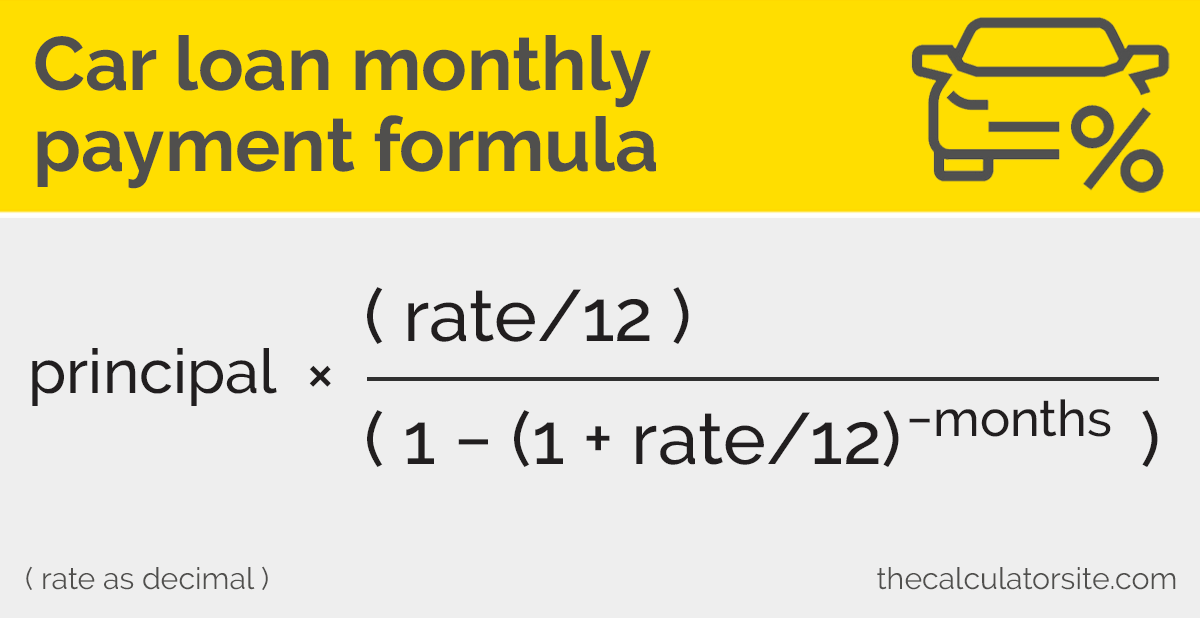
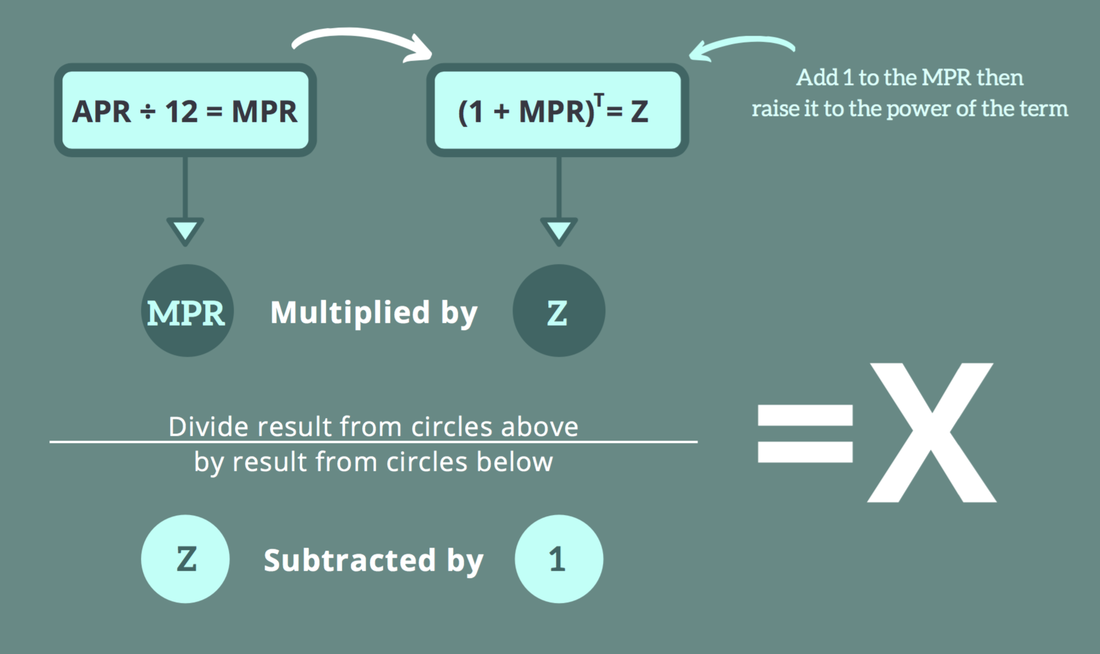
The exact formula used by lenders to calculate your fixed monthly payment can appear complex, but it essentially takes into account the principal amount (P), the monthly interest rate (r), and the total number of payments (n). The monthly interest rate is derived by dividing the annual interest rate (APR) by 12. The number of payments is simply the loan term in years multiplied by 12. The formula ensures that by the end of the loan term, the entire principal balance, along with all accrued interest, has been repaid through equal monthly installments.
Factors Influencing Your Interest Rate
The interest rate you qualify for is not arbitrary; it’s a direct reflection of the lender’s perceived risk in lending you money. Several key factors play a pivotal role:
- Credit Score: Your credit score is perhaps the most significant determinant. A higher score (typically 700+) indicates a lower risk to lenders, leading to more favorable—i.e., lower—interest rates. Conversely, a lower score suggests a higher risk, resulting in higher rates to compensate the lender for that increased risk.
- Debt-to-Income (DTI) Ratio: Lenders assess your DTI ratio to gauge your ability to handle additional debt. A high DTI indicates that a significant portion of your income is already committed to existing debts, which could lead to a higher interest rate or even loan denial.
- Loan-to-Value (LTV) Ratio: This ratio compares the amount you’re borrowing to the car’s actual value. A lower LTV (meaning you’re borrowing less relative to the car’s worth, often due to a large down payment) typically signals less risk for the lender, potentially securing a better rate.
- Market Interest Rates: Broader economic conditions, particularly actions by central banks like the Federal Reserve, influence overall interest rate levels. If the fed funds rate increases, borrowing costs for consumers, including car loan rates, tend to follow suit.
- Loan Term: As mentioned, longer loan terms often come with slightly higher interest rates. Lenders view longer terms as carrying more risk due to the extended period over which circumstances could change.
- New vs. Used Car: New car loans often have lower interest rates than used car loans. This is because new cars typically hold their value better initially, making them less risky collateral for the lender.
Key Variables That Impact Your Car Loan Calculation
Beyond the fundamental components, several practical variables directly influence the final loan amount and your monthly payments.
The Role of Down Payment
A down payment is an upfront sum of money you pay towards the purchase of a car. Its primary benefit is reducing the principal amount you need to borrow. A larger down payment translates directly to a smaller loan, which in turn means less interest paid over the loan term and potentially lower monthly payments. Furthermore, a substantial down payment can improve your LTV ratio, making you a more attractive borrower and potentially qualifying you for a lower interest rate. Financial advisors often recommend aiming for at least a 10-20% down payment, if feasible.
Trade-In Value
If you own a car that you’re looking to replace, its trade-in value can significantly impact your new car loan. Similar to a down payment, the agreed-upon value of your trade-in vehicle is subtracted from the new car’s price, directly reducing the principal amount you need to finance. This can be a convenient way to lower your loan burden without needing additional cash out-of-pocket. Ensure you research your car’s trade-in value beforehand to negotiate effectively.
Additional Costs Included in the Loan
When calculating your total car loan, it’s crucial to account for more than just the vehicle’s price. Several additional costs can be rolled into your loan, increasing the principal and thus your total cost. These include:
- Sales Tax: Varies by state and can add a significant percentage to the car’s price.
- Registration Fees: Required to legally operate your vehicle.
- Documentation Fees: Charged by dealerships for processing paperwork.
- Extended Warranties/Service Contracts: While these can offer peace of mind, financing them means paying interest on their cost. Carefully consider if they are necessary and if the added interest makes them worthwhile.
- GAP Insurance: Covers the difference between what you owe on your car and its actual cash value if it’s totaled or stolen. If you have a small down payment or a long loan term, this can be a wise investment, but financing it adds to your loan.
While rolling these costs into your loan makes them manageable monthly, it’s essential to remember that you’ll pay interest on them over the life of the loan. Paying these costs upfront, if possible, is generally more financially prudent.
The Amortization Schedule: Visualizing Your Repayment
An amortization schedule is a detailed table showing each periodic loan payment, how much of that payment is applied to the interest versus the principal, and the remaining principal balance.
What an Amortization Schedule Shows
Each row in an amortization schedule represents a single loan payment. It typically breaks down:
- Payment Number: Which payment in the sequence it is.
- Starting Balance: The principal remaining before this payment.
- Interest Paid: The portion of the payment that covers interest for that period.
- Principal Paid: The portion of the payment that reduces the principal balance.
- Ending Balance: The new principal balance after this payment.
- Cumulative Interest Paid: The running total of interest paid over the loan’s life.
Early Payments vs. Later Payments
A key insight from an amortization schedule is the distribution of interest versus principal within each payment. In the initial phases of the loan, a significantly larger portion of your monthly payment goes towards interest. For example, in a 60-month loan, your first payment might see 70-80% of it covering interest. As you continue to make payments and the principal balance decreases, the interest charged on the remaining balance also decreases. Consequently, a larger percentage of your subsequent payments is applied directly to reducing the principal. This means that early in the loan, your equity in the car grows slowly.
Impact of Extra Payments
One of the most powerful strategies for accelerating loan repayment and saving on interest is making extra principal payments. When you pay more than your scheduled monthly amount, and you specify that the extra funds are for principal reduction, that additional money bypasses interest and goes straight to reducing your principal balance. This immediate reduction in principal means that less interest will accrue on the next payment cycle, effectively shortening the loan term and reducing the total amount of interest paid over the life of the loan. Even small, consistent extra payments can yield significant savings.
Strategies for Optimizing Your Car Loan
Understanding car loan calculations empowers you to proactively seek better terms and reduce your overall financial burden.
Improving Your Credit Score
Before you even step foot in a dealership or apply for a loan, focusing on improving your credit score can save you thousands. Pay bills on time, reduce existing debt, and avoid opening new lines of credit to boost your score. A stronger credit profile signals lower risk to lenders, making you eligible for the most competitive interest rates.
Shopping Around for Rates
Never accept the first loan offer you receive, especially from the dealership. Dealerships often offer financing, but it might not be the best rate available to you. Pre-approval from multiple banks, credit unions, and online lenders before visiting the dealership allows you to compare offers and leverage them to negotiate better terms. This competitive shopping can lead to significantly lower APRs.
Negotiating the Car Price
Remember that the loan calculation starts with the principal, which is based on the car’s final negotiated price. The lower you can negotiate the vehicle’s price, the less money you’ll need to borrow, directly reducing your monthly payments and the total interest you’ll pay. Separate the car negotiation from the financing negotiation for clarity and leverage.
Shorter Loan Terms
While longer terms offer lower monthly payments, opting for the shortest loan term you can comfortably afford will invariably save you money on interest in the long run. If you can manage a 48-month loan instead of a 72-month one, the total interest savings can be substantial, even if the monthly payment is higher.

Understanding the Fine Print
Before signing any loan agreement, meticulously read and understand all terms and conditions. Look for any prepayment penalties that might negate the benefits of paying off your loan early. Clarify all fees and charges to ensure there are no surprises. A transparent lender will be happy to explain every detail, empowering you to make a confident and financially sound decision.
aViewFromTheCave is a participant in the Amazon Services LLC Associates Program, an affiliate advertising program designed to provide a means for sites to earn advertising fees by advertising and linking to Amazon.com. Amazon, the Amazon logo, AmazonSupply, and the AmazonSupply logo are trademarks of Amazon.com, Inc. or its affiliates. As an Amazon Associate we earn affiliate commissions from qualifying purchases.