
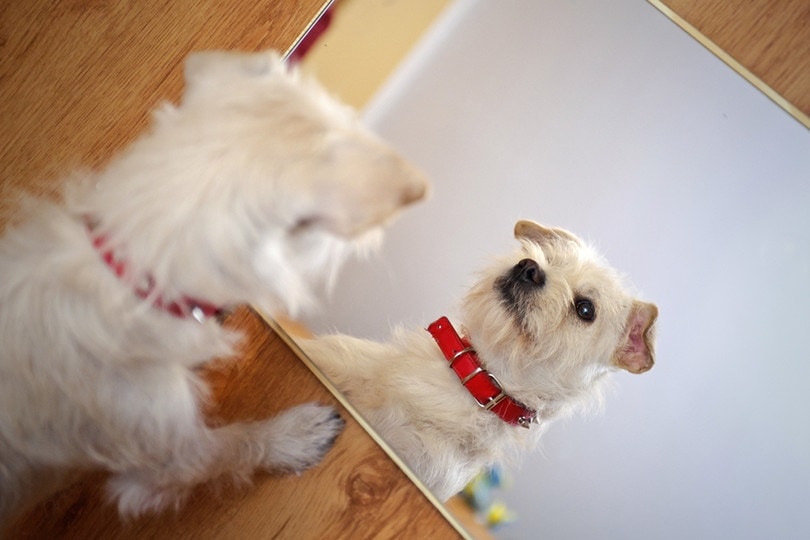
It’s a question that has likely crossed the mind of every dog owner, every casual observer, and certainly every animal cognition researcher: when Fido stares intently into a mirror, does he recognize the furry face staring back as his own? The answer, while seemingly simple, opens a fascinating Pandora’s Box into the intricate world of canine perception, intelligence, and even into the technological, branding, and financial ecosystems that surround our beloved companions.
Our human understanding of “knowing what one looks like” is deeply rooted in visual self-recognition – the ability to identify oneself in a reflection or image. For humans, this develops early, typically by 18-24 months of age. But dogs, as we’ll explore, inhabit a sensory universe vastly different from our own, prompting us to reconsider what “self-recognition” truly means for them, and how modern advancements in technology, the power of branding, and the vast economics of the pet industry are shaping our quest for answers.

The Elusive Reflection: Understanding Canine Self-Recognition
The scientific journey to understand animal self-awareness often begins with a seemingly simple tool: the mirror. The Mirror Self-Recognition (MSR) test is the gold standard for assessing visual self-awareness in animals. It involves placing an animal in front of a mirror and then marking them with an undetectable (to them) spot, usually on their forehead. If the animal touches or investigates the spot on their own body while looking in the mirror, it suggests they recognize the reflection as themselves, rather than another individual.
The Mirror Test and Its Limitations
When dogs are subjected to the classic MSR test, they overwhelmingly “fail.” They might bark at the reflection, investigate behind the mirror for the “other dog,” or even ignore it entirely. This consistent failure has led many to conclude that dogs lack visual self-recognition. However, this conclusion might be premature and, crucially, anthropocentric.
The MSR test is heavily biased towards species that rely primarily on vision for processing their world. Great apes, dolphins, elephants, and even some birds like magpies have passed the MSR test. What these animals share is a strong reliance on visual cues for social interaction, navigation, and understanding their environment. Dogs, on the other hand, navigate a world dominated by scent and sound. Asking a dog to recognize itself purely through vision might be akin to asking a human to recognize themselves based solely on their unique body odor – a task we’d likely struggle with.
Beyond Visuals: The Multisensory Canine World
To truly understand if dogs “know what they look like,” we must first acknowledge that their “likeness” isn’t primarily a visual construct. A dog’s identity, both to themselves and to other dogs, is profoundly shaped by olfaction. A dog’s unique scent profile is a complex biological “signature” that conveys a wealth of information about their age, sex, health, emotional state, and individual identity.
Experiments involving dogs sniffing their own urine samples alongside those of other dogs have yielded fascinating insights. Dogs spend less time investigating their own scent, suggesting they recognize it as belonging to themselves. This “olfactory mirror test” provides a compelling argument that while dogs might not see their reflection as “them,” they absolutely smell their unique identity. This multi-sensory approach challenges our visual-centric biases and opens avenues for understanding canine self-awareness on their own terms. Could a dog recognize its own unique barks or whines? Future research might explore auditory self-recognition as well.
Anthropomorphism vs. Scientific Inquiry
Our desire for dogs to be self-aware often stems from a deeply human tendency towards anthropomorphism – attributing human characteristics or emotions to animals. While this connection fosters empathy and strengthens the human-animal bond, it can also cloud scientific judgment. The question “do dogs know what they look like?” is not merely a philosophical musing but a complex neuroscientific and behavioral puzzle requiring rigorous, unbiased inquiry. Understanding their true capabilities, rather than projecting our own, ultimately allows us to better care for them and appreciate their unique form of intelligence.
Leveraging Technology to Unravel Canine Cognition
The limitations of traditional behavioral tests are increasingly being overcome by advancements in technology. From AI-powered analysis to sophisticated tracking devices, the tech world is providing researchers and pet owners alike with unprecedented insights into the minds and behaviors of our canine companions.
AI and Advanced Analytics: Peeking into the Dog’s Mind
Artificial Intelligence and machine learning are revolutionizing the study of animal behavior. AI tools can process vast amounts of data, identifying subtle patterns that human observers might miss.
- Behavioral Recognition Software: Imagine AI cameras that can track a dog’s posture, facial expressions (yes, dogs have them!), and micro-movements to detect subtle changes in mood or health. This kind of software can help researchers analyze how dogs react to visual stimuli, including mirrors, without human bias. It can differentiate individual dogs based on their gait, fur patterns, or even micro-expressions, offering a non-invasive way to study their responses to their own image or scent.
- Olfactory AI: While still nascent, the development of “electronic noses” and AI algorithms trained to recognize complex scent profiles holds immense promise. If perfected, these tools could objectively confirm a dog’s recognition of its own scent or distinguish it from others with unparalleled precision, providing definitive evidence for olfactory self-recognition.
- Brain Imaging: Techniques like fMRI, while challenging with animals, are being adapted to study canine brain activity. Advanced AI can help interpret these complex scans, potentially revealing neural correlates of self-recognition or awareness when dogs are exposed to various self-referential stimuli (e.g., their own scent, sound, or even visual image in novel ways).
The Digital Pet Ecosystem: From Wearables to Virtual Reality
The pet tech industry is booming, driven by a desire to enhance pet welfare and strengthen the human-animal bond. These gadgets, initially designed for convenience, are also generating valuable data for understanding canine life.
- Smart Collars and Wearables: These devices monitor activity levels, sleep patterns, heart rate, and even GPS location. While not directly measuring self-recognition, the cumulative data can inform studies on stress, comfort, and general well-being, which are foundational to cognitive function. Imagine a smart collar that tracks a dog’s engagement with visual stimuli, correlating physiological responses with behavioral reactions to a mirror.
- Pet Cameras with AI Features: Many home pet cameras now offer AI-powered features like bark detection, activity alerts, and even two-way audio. Some can recognize specific family members (human and pet). This technology can be adapted for research to observe dogs’ long-term interactions with mirrors or screens displaying their own image, gathering data on habituation and specific behavioral responses.
- Data Security and Privacy: As more data is collected from pets, questions about data security and privacy arise. While perhaps less critical for pets than humans, the ethical collection and use of this information, especially for research purposes, must be carefully considered. Ensuring that data gathered from pet tech genuinely benefits animal welfare, rather than merely serving commercial interests, is paramount.
The Brand and Business of Canine Identity
Beyond the scientific and technological frontiers, the very concept of a dog’s “identity” and “look” has become a powerful force in the commercial world, influencing marketing strategies and creating new economic opportunities.
Branding Through Anthropomorphism: Marketing to the Pet Parent
The pet industry, a multi-billion-dollar global market, masterfully leverages the emotional bond between humans and their dogs. Understanding whether dogs “know what they look like” might be a scientific enigma, but marketing departments operate on the assumption that pet owners certainly do.
- Marketing & Design: Pet food brands use images of healthy, vibrant dogs on their packaging, subtly implying that their product contributes to a dog’s beautiful coat or strong physique. Grooming product brands emphasize “shine” and “luster,” appealing to an owner’s desire for their dog to look its best. Designer pet accessories, from ornate collars to bespoke beds, are crafted to enhance a dog’s aesthetic appeal, catering to the owner’s perception of their pet’s “personal brand” or style. This strategy often capitalizes on anthropomorphism, portraying dogs with distinct personalities and preferences, further encouraging owners to project their own understanding of “looks” onto their pets.
- Corporate Identity: Companies like PetSmart or Chewy build their corporate identity around the joy and responsibility of pet ownership. Their branding often evokes warmth, care, and a deep understanding of what pets “need” and how they “see themselves” (through the owner’s eyes). This translates into product lines that promise not just functionality but also aesthetic appeal for the dog and owner alike.
The Influencer Economy and Personal Branding for Pets
The digital age has given rise to a unique phenomenon: pet influencers. These animals, carefully curated and often meticulously styled by their owners, command millions of followers on social media platforms.
- Online Income & Side Hustles: Dogs with distinctive “looks” – unusual fur patterns, specific breeds, or simply photogenic expressions – become stars. Owners monetise these pets through sponsored posts, brand collaborations, and merchandise sales. This is a direct example of “looks” being transformed into “online income” for their human counterparts. It’s an entire side hustle economy built on the visual appeal of pets, regardless of whether the dog itself understands its own celebrity status. This niche branding demonstrates a profound human investment in our pets’ public image.
Investing in Understanding: The Pet Tech & Research Market
The growing interest in animal cognition, coupled with the booming pet industry, has led to significant investment in research and development.
- Investing & Business Finance: Venture capitalists and established pet companies are pouring money into startups focused on pet tech, animal behavior analysis, and even pet genomics. Understanding canine intelligence, communication, and indeed, self-awareness, has tangible financial benefits. Companies that can convincingly demonstrate how their products enhance a dog’s cognitive well-being or deepen the human-animal bond are poised for significant growth. Research into how dogs perceive themselves could lead to more effective training tools, smarter toys, and even therapeutic interventions for anxious or stressed pets. This highlights a convergence of scientific curiosity and market demand, where financial investment fuels deeper understanding.
The Financial Footprint of Our Four-Legged Friends
The pet industry is not just about understanding our dogs’ minds; it’s a vast economic powerhouse, reflecting the incredible value we place on our furry family members.
Pet Care Economics: More Than Just Food and Shelter
Owning a dog is a significant financial commitment, far beyond the initial adoption fee. This expenditure underscores the deep integration of pets into our lives and the expansive market built around their needs.
- Money: Annual spending on dogs includes premium food, veterinary care (routine check-ups, vaccinations, emergency treatments), grooming services, training classes, toys, bedding, and accessories. The average cost of dog ownership can run into thousands of dollars annually, demonstrating the profound financial investment that accompanies our emotional bond. This industry thrives on our desire to provide the best for our pets, often influenced by perceptions of their health, happiness, and even their “looks” (e.g., specific grooming for certain breeds).
- Financial Tools: To manage these costs, a range of financial tools has emerged. Pet insurance, once a niche product, is now widely offered, helping owners mitigate the high costs of unexpected veterinary emergencies. Budgeting apps designed for pet owners help track expenses, ensuring responsible pet ownership. These tools are direct responses to the substantial financial footprint of our canine companions.
Monetizing Man’s Best Friend: Entrepreneurship in the Pet Sector
The diverse needs of pet owners and their dogs have fostered a vibrant entrepreneurial landscape, offering numerous opportunities for online income and side hustles.
- Side Hustles & Online Income: Services like professional dog walking, pet sitting, and specialized training programs cater to busy owners. Entrepreneurs also find success in e-commerce, selling bespoke pet products, organic treats, or fashionable accessories. The rise of “doggy daycares” and luxury pet hotels further illustrates the demand for high-end services. For many, turning their passion for dogs into a business is not just a side hustle but a full-time career, often leveraging the digital sphere for marketing and client acquisition.
These economic activities, from branding pet products to creating pet-centric businesses, implicitly acknowledge the dog’s importance in our lives, even if the dog itself remains unaware of its economic impact or its own aesthetic appeal in human eyes.
Conclusion
The question “do dogs know what they look like?” remains a nuanced one. While they may not grasp their visual reflection in the same way a human does, modern science, powered by technological innovation, is revealing that dogs possess a sophisticated form of self-recognition rooted in their dominant senses, particularly smell.
This quest for understanding is no longer confined to the laboratory. It intersects powerfully with the worlds of technology, where AI and gadgets unlock new insights; with branding and marketing, which skillfully tap into our anthropomorphic tendencies and the visual appeal of our pets; and with the vast economic ecosystem that has blossomed around our shared lives with dogs. From the burgeoning pet tech market to the thriving pet influencer economy, our fascination with canine identity – and how we perceive it – drives innovation, investment, and entirely new forms of income.
Ultimately, while the exact nature of canine self-awareness continues to be explored, our evolving understanding, enhanced by cutting-edge tools and a recognition of their unique sensory world, deepens our appreciation for these incredible creatures. And in doing so, it continues to shape a multi-faceted industry that reflects just how much our dogs truly mean to us.
aViewFromTheCave is a participant in the Amazon Services LLC Associates Program, an affiliate advertising program designed to provide a means for sites to earn advertising fees by advertising and linking to Amazon.com. Amazon, the Amazon logo, AmazonSupply, and the AmazonSupply logo are trademarks of Amazon.com, Inc. or its affiliates. As an Amazon Associate we earn affiliate commissions from qualifying purchases.