
The question of where to store your ever-expanding game library is a perennial one for gamers. As titles become more graphically intensive and require larger download sizes, the limitations of internal storage become a pressing concern. For those delving into the technical aspects of their gaming devices, or perhaps even venturing into more niche hardware, the term “NAND” might surface. This brings us to a crucial question for the tech-savvy gamer: Can you install games to NAND?
This exploration will dissect the role of NAND flash memory in gaming devices, understand its inherent characteristics, and compare it to other storage solutions. We’ll also touch upon the implications for gaming performance and longevity, providing a comprehensive understanding for anyone looking to optimize their gaming setup.
Understanding NAND Flash Memory: The Backbone of Modern Storage
Before we can answer whether games can be installed on NAND, it’s essential to understand what NAND flash memory is and how it functions. NAND flash is a type of non-volatile storage technology that forms the foundation of many modern storage devices, including Solid State Drives (SSDs), USB flash drives, SD cards, and the internal storage of smartphones and tablets.
What is NAND Flash Memory?
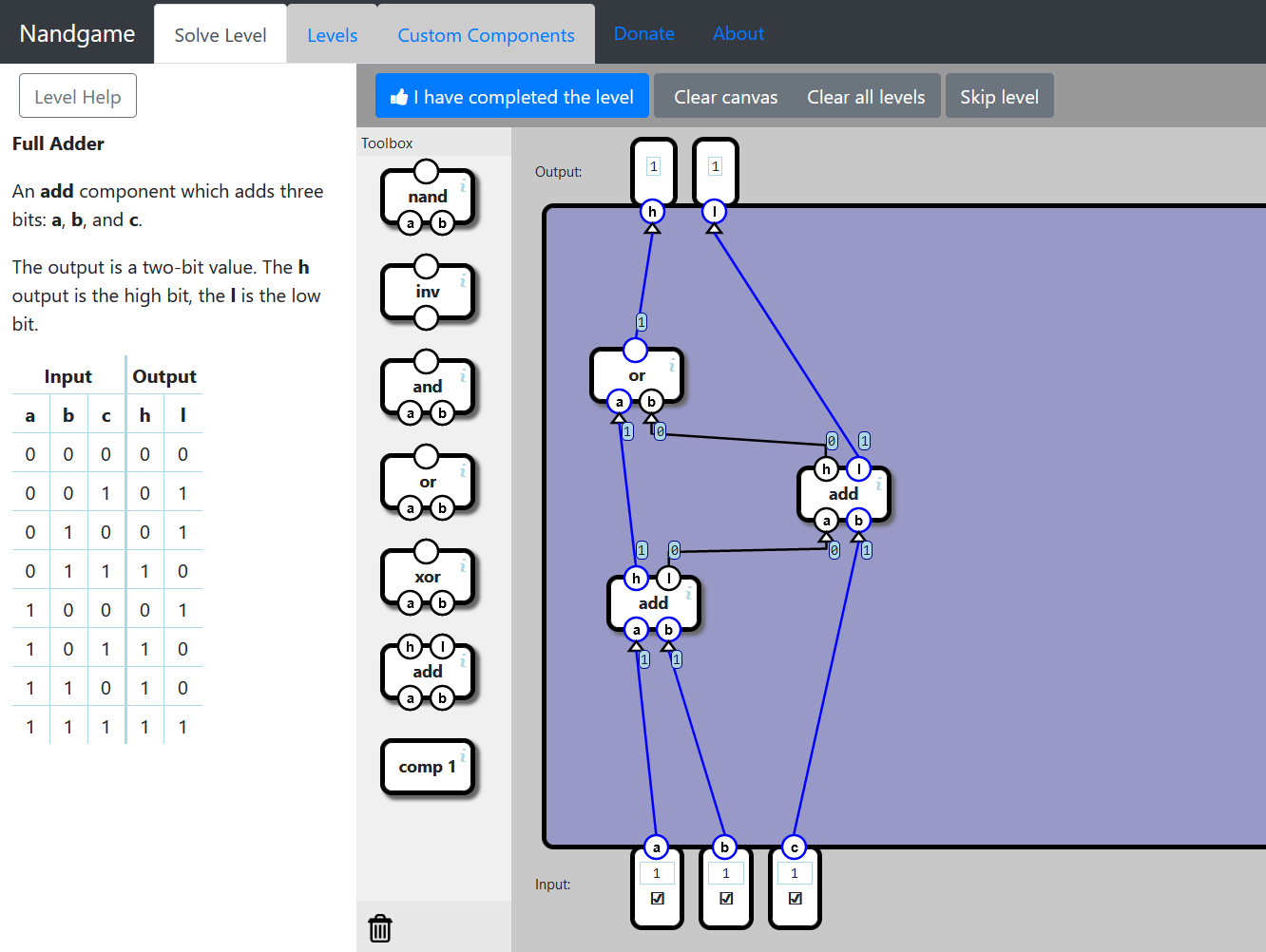
NAND flash memory is a type of electronic data storage that can be erased and reprogrammed. It’s called “NAND” due to the specific logic gate configuration used in its design, derived from Boolean algebra. Unlike traditional Hard Disk Drives (HDDs) that use spinning platters and magnetic heads to read and write data, NAND flash relies on storing data in memory cells. These cells are arranged in a grid, and data is accessed in blocks.
The key characteristics of NAND flash that make it so prevalent are:
- Non-volatility: Data stored on NAND flash persists even when power is removed, unlike RAM (Random Access Memory) which loses its data when the power is off.
- Speed: NAND flash offers significantly faster read and write speeds compared to HDDs. This is because there are no mechanical parts to move, allowing for near-instantaneous data access.
- Durability: With no moving parts, NAND flash is much more resistant to physical shock and vibration, making it ideal for portable devices.
- Compactness: NAND flash can be manufactured in incredibly small and dense packages, enabling the miniaturization of storage devices.
Types of NAND Flash Memory and Their Implications
NAND flash memory itself comes in different flavors, each with its own trade-offs in terms of cost, performance, and endurance:
- SLC (Single-Level Cell): Stores one bit of data per memory cell. This offers the highest performance, endurance (number of write/erase cycles), and reliability. However, it’s also the most expensive and has the lowest storage density. SLC is typically found in high-end enterprise applications where extreme reliability is paramount.
- MLC (Multi-Level Cell): Stores two bits of data per memory cell. This strikes a balance between cost, performance, and endurance. MLC offers better density and lower cost than SLC but is not as fast or durable. It was once common in consumer SSDs but has largely been superseded by TLC.
- TLC (Triple-Level Cell): Stores three bits of data per memory cell. This provides even higher storage density and lower cost per gigabyte, making it the most common type of NAND used in consumer SSDs and other everyday devices. However, TLC has lower performance and endurance compared to SLC and MLC.
- QLC (Quad-Level Cell): Stores four bits of data per memory cell. QLC offers the highest storage density and the lowest cost per gigabyte, allowing for very large capacity drives at an affordable price. The trade-off is significantly reduced performance and endurance compared to TLC, MLC, and SLC. QLC is best suited for read-intensive workloads or for storing less frequently accessed data.
The type of NAND used directly impacts how quickly a game can load, how fast installation proceeds, and how many times data can be written and erased before the memory cell begins to degrade.
Where Does NAND Fit in the Gaming Ecosystem?
NAND flash memory is ubiquitous in the gaming world, though often not as the sole storage solution. Its presence is felt in various capacities, from the consoles you play on to the portable devices you might carry.
NAND in Gaming Consoles
Modern gaming consoles like the PlayStation 5 and Xbox Series X/S utilize custom NVMe SSDs (Non-Volatile Memory Express Solid State Drives) which are built using NAND flash technology. These consoles are designed from the ground up to leverage the speed of NAND-based storage for incredibly fast game loading times, rapid asset streaming, and overall a smoother gaming experience.
- Internal SSDs: The primary storage in these consoles is an NVMe SSD. While technically a form of NAND storage, it’s a highly optimized and integrated solution designed for the specific needs of the console’s operating system and games.
- Expandable Storage: Some consoles allow for storage expansion, often through proprietary SSD cards that also utilize NAND flash. These are essentially high-performance SSDs designed to meet the specific bandwidth and latency requirements of the console.
NAND in Handheld Gaming Devices
The resurgence of handheld gaming has further cemented the role of NAND. Devices like the Nintendo Switch, Steam Deck, and various Android-based gaming handhelds all rely on NAND flash memory.
- Nintendo Switch: The internal storage of the Nintendo Switch is a form of NAND flash. While relatively limited in capacity (starting at 32GB or 64GB), it’s used for the operating system, save data, and smaller downloaded games. For larger game libraries, users typically rely on microSD cards, which are also NAND-based.
- Steam Deck: The Steam Deck comes with various internal SSD storage options (NVMe SSDs), all of which are NAND flash based. These provide a significant boost in loading times compared to traditional HDDs. Additionally, the Steam Deck supports expandable storage via a microSD card slot, offering a cost-effective way to increase game capacity.
- Android Gaming Handhelds: Many Android-based gaming devices leverage the onboard NAND storage of the Android system. For larger game collections, they also heavily depend on microSD cards for expanded storage.
NAND in PC Gaming
For PC gamers, NAND flash memory is most commonly encountered in the form of Solid State Drives (SSDs).
- SATA SSDs: These are a more traditional form of SSD that connect to the motherboard via a SATA interface. They offer a significant upgrade over HDDs in terms of speed but are limited by the SATA interface’s bandwidth.
- NVMe SSDs: These are the current gold standard for PC gaming storage. NVMe (Non-Volatile Memory Express) is a protocol designed specifically for flash memory. NVMe SSDs connect directly to the PCIe (Peripheral Component Interconnect Express) lanes on the motherboard, offering vastly superior bandwidth and lower latency compared to SATA SSDs. These are the types of drives found in high-end gaming PCs and modern consoles.
Can You Directly Install Games to “Raw” NAND?
This is where the technical nuance comes into play. The term “NAND” can be interpreted in a few ways.
Scenario 1: Installing Games to an SSD (Which Uses NAND)
Yes, you can absolutely install games to an SSD, and SSDs are built using NAND flash memory. This is the most common and practical way gamers utilize NAND for their game libraries. When you purchase a gaming console with an internal SSD, or install an SSD in your PC, you are installing games onto a device that uses NAND flash.
The performance benefits are undeniable:
- Faster Load Times: Games installed on SSDs load significantly faster, reducing the time spent staring at loading screens.
- Quicker Asset Streaming: Modern games often stream game assets (textures, models, audio) on the fly. Faster storage means these assets are delivered more quickly, leading to a smoother experience with fewer pop-ins or stuttering.
- Expedited Installation and Updates: Installing games and applying patches is also much faster on an SSD.
Scenario 2: Installing Games to a Raw NAND Chip (Highly Impractical and Not Recommended)
If by “install game to NAND” you mean directly connecting to and programming raw NAND flash chips without a proper controller and interface, then the answer is generally no, not in a practical or intended way for modern gaming.
Here’s why:
-
Complexity of NAND Management: NAND flash memory requires sophisticated management to function correctly. This includes:
- Wear Leveling: To ensure that all memory cells are used evenly and to prevent premature failure of specific cells due to excessive writes.
- Error Correction Code (ECC): To detect and correct errors that can occur during data read and write operations, especially as cells degrade.
- Garbage Collection: To manage deleted data and reclaim space for new writes.
- Bad Block Management: To identify and isolate memory blocks that have become unusable.
These complex tasks are handled by a NAND controller, which is a dedicated chip that acts as an intermediary between the host system and the NAND flash memory. Without this controller, directly interacting with raw NAND is extremely difficult and inefficient.
-
Lack of Standardized Interface: Raw NAND chips don’t have a standardized plug-and-play interface like an SSD or a USB drive. Connecting and communicating with them requires specialized hardware and software.
-
Performance Degradation: Even if you could somehow manage to write data to raw NAND, without the optimized algorithms of a controller, you would experience extremely poor performance and rapid wear out of the memory cells.
-
Gaming Software Design: Game installers and operating systems are designed to interact with storage devices through standard interfaces (SATA, NVMe, USB, SD Card interfaces). They don’t have the capability to directly address raw NAND flash chips.
In essence, while the NAND flash chip is the physical medium, it’s the NAND controller and the standardized interface it presents that allow us to “install” and “run” games. Think of it like trying to drive a car by directly manipulating the engine pistons; it’s technically the core component, but it’s not designed for direct user interaction without the surrounding systems.
The Future of NAND in Gaming: Faster, Denser, and More Efficient
The evolution of NAND flash technology continues to push the boundaries of what’s possible in gaming and beyond.
Advancements in NAND Technology
Manufacturers are constantly working to improve NAND flash:
- Increased Layer Count: The number of layers in 3D NAND (where memory cells are stacked vertically) is increasing. This allows for higher storage densities and lower costs.
- Improved Controllers: NAND controllers are becoming more powerful and sophisticated, enabling faster speeds and better endurance even for TLC and QLC NAND.
- New Interfaces: Protocols like NVMe are constantly being updated to offer higher bandwidth, allowing SSDs to reach their full potential.
Implications for Gaming
These advancements translate directly into benefits for gamers:
- Larger Game Libraries: As NAND becomes denser and more affordable, we can expect to see consoles and PCs with even larger built-in storage capacities, reducing the need for external solutions for many users.
- Even Faster Loading: The continuous improvement in NAND performance means even quicker game loading times and smoother in-game experiences.
- New Gaming Possibilities: Developers might be able to design games with even more detailed environments and richer assets, knowing that storage speed is less of a bottleneck.
- Enhanced Cloud Gaming: For cloud gaming services, fast and efficient NAND storage is crucial for rapidly loading game instances on servers.
Conclusion: NAND is Integral, but Not Directly Accessible for Gaming Installations
So, to directly answer the question: Can you install games to NAND?
The most practical and accurate answer is yes, when you install games to a Solid State Drive (SSD), you are installing them to NAND flash memory. SSDs are the sophisticated storage devices that package NAND flash chips with a controller and a standard interface, making them usable for storing and running games.
Directly installing games to raw NAND chips without a controller and proper interface is not feasible for the average user and would require a deep level of technical expertise and specialized equipment, rendering it impractical for gaming. The technology we interact with as gamers – the SSD in our PC, the internal storage of our console, or the microSD card in our handheld – is already a highly engineered solution that leverages the power of NAND flash.
As technology progresses, our reliance on NAND flash for gaming storage will only deepen. From faster load times to larger game worlds, the future of gaming is intrinsically linked to the continued innovation in NAND flash technology. So, while you won’t be soldering NAND chips to your motherboard to install your next AAA title, rest assured that the very foundation of your fast-loading, immersive gaming experience is built upon this remarkable technology.
aViewFromTheCave is a participant in the Amazon Services LLC Associates Program, an affiliate advertising program designed to provide a means for sites to earn advertising fees by advertising and linking to Amazon.com. Amazon, the Amazon logo, AmazonSupply, and the AmazonSupply logo are trademarks of Amazon.com, Inc. or its affiliates. As an Amazon Associate we earn affiliate commissions from qualifying purchases.