
The concept of “making money while you sleep” has transitioned from a late-night infomercial trope into a cornerstone of modern financial independence. In a traditional economic model, most individuals trade their time for money—an exchange known as active income. However, time is a finite resource, which inherently caps one’s earning potential. Passive income breaks this cycle by decoupling earnings from hours worked.
Creating passive income is not about “get-rich-quick” schemes; rather, it is about the strategic deployment of capital or “sweat equity” to create assets that generate recurring revenue over time. This guide explores the multifaceted world of passive income through the lens of personal finance and investing, providing a roadmap for those looking to build a resilient financial future.
Understanding the Fundamentals of Passive Income
Before diving into specific vehicles for wealth generation, it is essential to establish a clear definition of what passive income is—and what it is not. Many beginners mistake passive income for effortless income. In reality, every passive stream requires one of two things at the start: a significant investment of money or a significant investment of time.
Defining Passive Income vs. Active Income
Active income is the result of direct labor. If you stop working, the paycheck stops. This includes salaries, hourly wages, and commissions. Passive income, conversely, is money earned from an enterprise in which the individual is not actively involved on a day-to-day basis. The Internal Revenue Service (IRS) often defines it as income from “trade or business activities in which you do not materially participate.” For the modern investor, it represents a cash flow that requires minimal maintenance once the initial infrastructure is built.
The Role of Initial Capital and Sweat Equity
There are two primary paths to passive income. The first is the Capital-Intensive Path, where you use existing wealth to purchase assets like stocks, bonds, or real estate. The money does the work for you. The second is the Time-Intensive Path, also known as building “sweat equity.” This involves spending months or years creating a product—such as a book, a piece of software, or a brand—which then generates sales for years to come. Understanding which resource you have more of (time or money) is the first step in choosing the right passive income strategy.
Investment-Based Passive Income Streams
For those who have managed to save a portion of their active income, the financial markets offer the most scalable and traditional routes to passive wealth. These methods focus on the power of compounding and asset appreciation.
Dividend Growth Investing
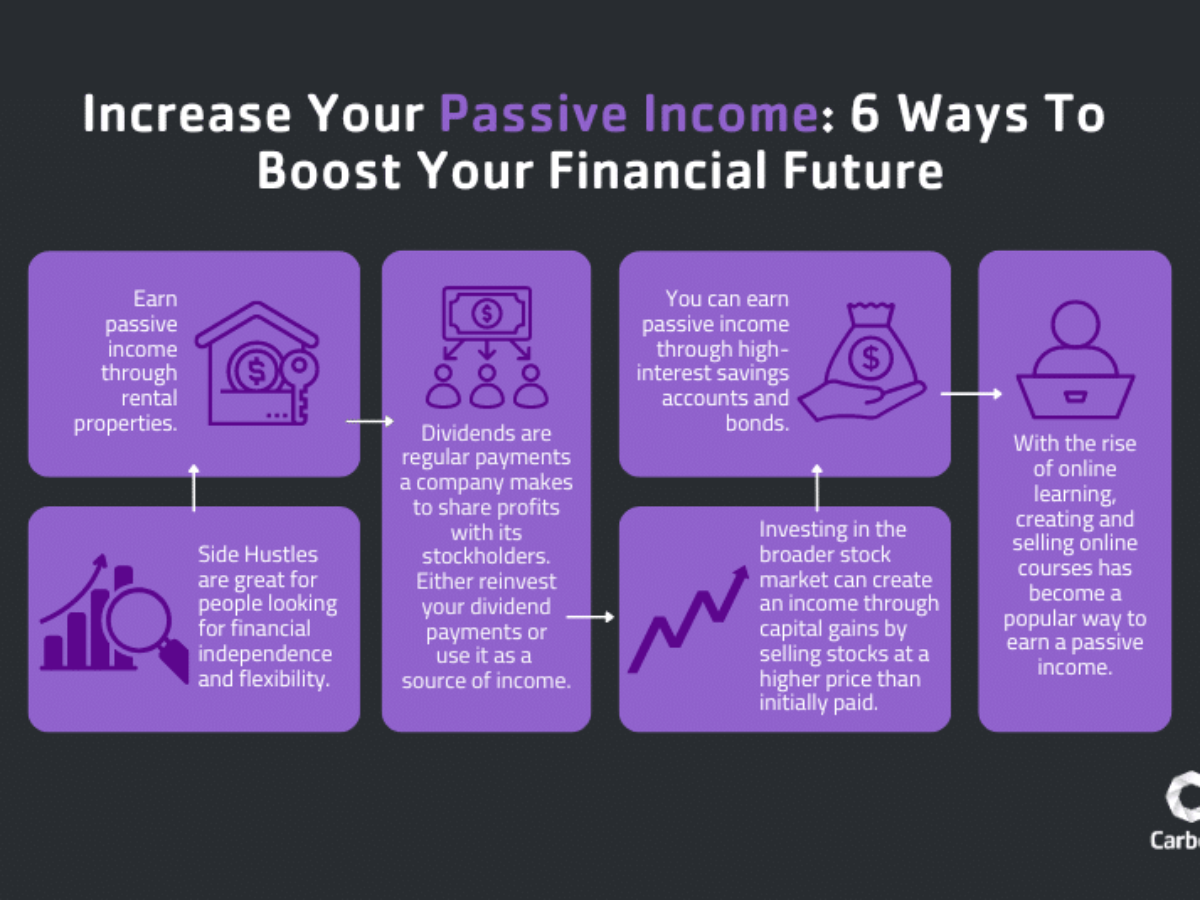
Dividend investing is perhaps the most classic form of passive income. When you buy shares of a profitable company, that company may distribute a portion of its earnings to shareholders in the form of dividends. To build a true passive income engine, many investors focus on “Dividend Aristocrats”—companies that have not only paid but increased their dividends for at least 25 consecutive years. By utilizing a Dividend Reinvestment Plan (DRIP), you can automatically use those payments to buy more shares, creating a compounding effect that can grow into a substantial monthly or quarterly payout.
Real Estate and REITs
Real estate has long been a favorite for wealth builders due to its dual benefit: monthly rental income and long-term property appreciation. However, being a physical landlord involves significant “active” work, such as maintenance and tenant management. To make real estate truly passive, investors can utilize property management firms or pivot toward Real Estate Investment Trusts (REITs). REITs are companies that own, operate, or finance income-producing real estate. By buying shares of a REIT on the stock exchange, you receive a portion of the rent collected from shopping malls, apartment complexes, or office buildings without ever having to pick up a wrench.
High-Yield Savings and Fixed Income
While the returns are often lower than the stock market, fixed-income assets provide a “safety floor” for a passive income portfolio. Certificates of Deposit (CDs), high-yield savings accounts, and government or corporate bonds provide predictable interest payments. In a high-interest-rate environment, these tools become highly effective for preserving capital while generating enough cash flow to cover basic expenses.
Digital and Intellectual Property Assets
The digital age has democratized the ability to create income-generating assets. Unlike physical real estate, digital assets often have low overhead costs and can reach a global audience instantly.
Content Creation and Monetization
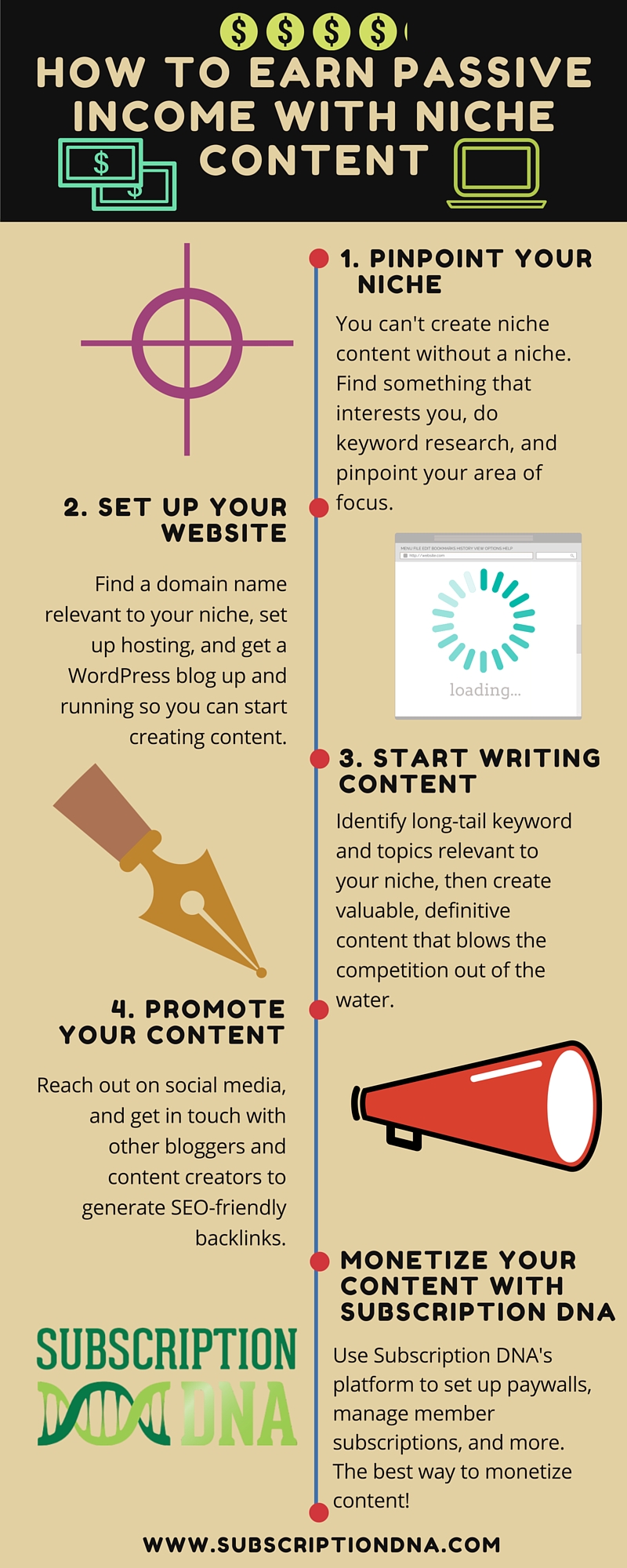
In the realm of personal finance, content is an asset. Whether it is a niche blog, a YouTube channel, or a podcast, high-quality content attracts an audience. Once an audience is established, that content can be monetized through advertising revenue, sponsorships, and evergreen “back-catalog” views. A well-written article or a well-produced video can continue to generate ad revenue years after it was originally posted, provided the topic remains relevant. This is the epitome of front-loaded work yielding long-tail financial rewards.
Creating Online Courses and Digital Products
If you possess specialized knowledge, you can package that expertise into a digital product such as an E-book or an online course. Platforms like Teachable or Udemy allow creators to host their content and handle transactions. Once the curriculum is designed and recorded, the marginal cost of selling to the 1,000th student is virtually zero. This scalability is what makes digital products one of the most lucrative forms of passive income for professionals and educators.
Automated Business Models and Side Hustles
Beyond the stock market and digital products, there are business structures designed to operate with minimal oversight. These models often bridge the gap between a side hustle and a fully automated enterprise.
Peer-to-Peer (P2P) Lending
P2P lending platforms allow individuals to act as the bank. You lend your money directly to other individuals or small business owners through a platform that handles the vetting and legalities. In exchange for taking on the risk of the loan, you receive interest payments. By diversifying your investment across hundreds of small “micro-loans,” you can mitigate the risk of default and create a steady stream of interest income that often outperforms traditional savings accounts.
Affiliate Marketing Systems
Affiliate marketing involves promoting a company’s products and earning a commission on every sale made through your unique referral link. To make this passive, one must build a “system”—usually a website or social media presence that ranks for specific search terms. When users search for product reviews or “best of” lists, they land on your page, click your link, and purchase. The income is passive because the “salesperson” (your content) works 24/7 without requiring your presence.
Strategies for Scaling and Risk Management
Creating a single stream of passive income is a significant achievement, but true financial security comes from a “portfolio” of streams. Managing these streams requires a professional approach to risk and reinvestment.
Diversification Across Income Streams
The greatest risk to passive income is “platform risk” or market volatility. If all your passive income comes from one rental property, a vacancy could drop your income to zero. If it all comes from one dividend stock, a dividend cut could be devastating. A robust strategy involves diversification. A balanced portfolio might include a mix of dividend stocks for growth, REITs for high yield, and digital assets for high-margin cash flow. This ensures that if one sector underperforms, the others can carry the load.

Managing Taxes and Reinvestment
Passive income is often taxed differently than earned income. For example, “qualified dividends” and long-term capital gains are usually taxed at a lower rate than standard salary in many jurisdictions. Understanding these nuances is vital for maximizing your net return. Furthermore, the fastest way to scale passive income is to resist the urge to spend the initial profits. By reinvesting your passive earnings back into the acquisition of more assets—a process known as the “Wealth Flywheel”—you accelerate your journey toward financial independence.
In conclusion, creating passive income is an exercise in delayed gratification and strategic planning. It requires an initial sacrifice of either capital or labor, but the result is the most valuable asset of all: time. By diversifying across traditional investments, digital assets, and automated systems, anyone can build a financial foundation that provides security and freedom long after their last day of active work.
aViewFromTheCave is a participant in the Amazon Services LLC Associates Program, an affiliate advertising program designed to provide a means for sites to earn advertising fees by advertising and linking to Amazon.com. Amazon, the Amazon logo, AmazonSupply, and the AmazonSupply logo are trademarks of Amazon.com, Inc. or its affiliates. As an Amazon Associate we earn affiliate commissions from qualifying purchases.