
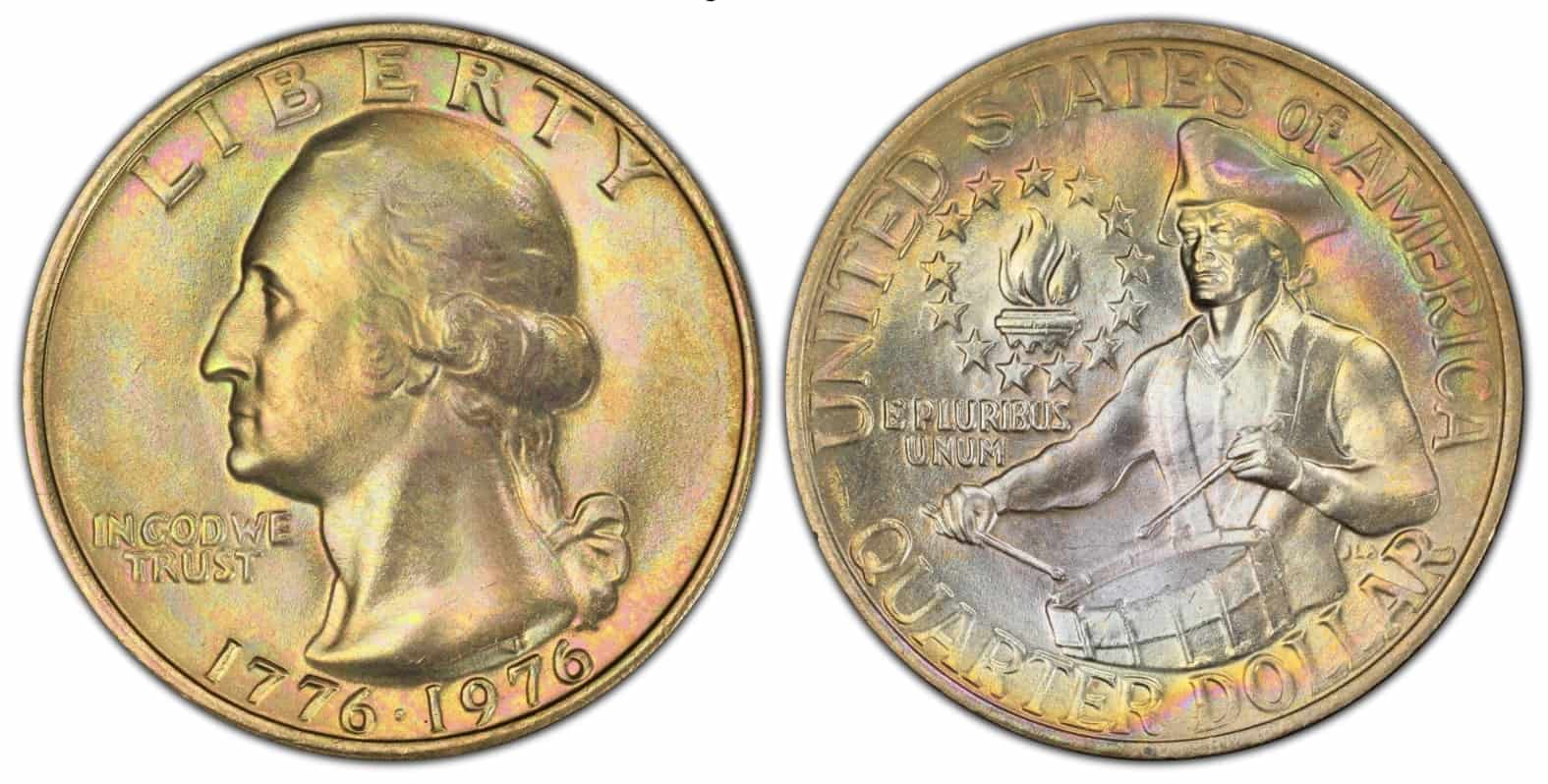
The bicentennial quarter, minted in 1976 to commemorate 200 years of American independence, is a familiar sight in change. Produced in staggering numbers, most examples retain only their face value of 25 cents. However, a select few have transcended their humble origins to become valuable numismatic assets, commanding significant premiums in the collector’s market. Understanding the specific characteristics that elevate a common quarter to a prized possession requires delving into the nuanced world of coin grading, rarity, and market dynamics, squarely positioning it within the realm of strategic financial acumen and astute collecting.

Understanding the Bicentennial Quarter’s Monetary Baseline
To appreciate what makes certain bicentennial quarters valuable, it’s crucial to first understand their foundational monetary standing and general perception. The vast majority were produced for circulation, never intended to accrue significant monetary worth beyond their quarter-dollar denomination.
Face Value vs. Numismatic Value
Every bicentennial quarter, regardless of its condition, inherently holds a face value of $0.25, guaranteed by the U.S. Treasury. This is its transactional worth. However, for a coin to be “worth money” in a collector’s sense, its numismatic value must exceed this face value. This premium is driven by factors entirely distinct from its utility as currency. Unlike commodities where intrinsic metal content might dictate a floor price, the bicentennial quarter’s composition (copper-nickel clad) has negligible melt value, meaning any appreciation is purely due to collector demand, rarity, and condition. The initial production run was enormous—over 1.6 billion quarters from the Philadelphia Mint (no mint mark), over 860 million from the Denver Mint (D), and over 7 million Proof coins from the San Francisco Mint (S). This sheer volume meant that for decades, most bicentennial quarters were considered non-collectible common issues.
The Initial Market Impact and Common Misconceptions
When the bicentennial quarters were released, they were met with public enthusiasm, but quickly became ubiquitous. Many people hoarded them, believing they would instantly become valuable due to their commemorative design. This widespread hoarding, paradoxically, ensured that countless examples survived in uncirculated condition, making the vast majority of “common” bicentennial quarters worth very little above face value even today. The misconception that “all bicentennial quarters are rare” persists, often leading individuals to overestimate the value of their circulated coins. True value appreciation requires specific, identifiable attributes that differentiate a coin from the billions of others produced.
Key Factors Driving Premium Valuations
The path from a 25-cent coin to a high-value collectible is paved by several critical factors. These elements dictate rarity, demand, and ultimately, the market price that a financially savvy collector or investor is willing to pay.
Rarity and Mintage Figures: Beyond the Billions
While the overall mintage figures for bicentennial quarters were exceptionally high, certain sub-categories within this production run possess genuine rarity. For instance, while business strike quarters from Philadelphia (P) and Denver (D) are common, the “S” mint mark quarters, which were typically proof coins (featuring a highly reflective surface and sharper details), were produced in much smaller quantities. Furthermore, within these “S” proofs, specific anomalies or errors created ultra-rare examples. The financial leverage here is clear: lower supply coupled with consistent demand drives prices upward, turning a common denomination into a tangible asset.
Mint Marks: A Geographic and Value Indicator
The mint mark, a small letter indicating where a coin was struck, plays a significant role in determining value. Bicentennial quarters were produced at three U.S. Mints:
- P (Philadelphia): Initially, Philadelphia coins had no mint mark. A small ‘P’ was added starting in 1980 for quarters. For bicentennials, a quarter without a mint mark is from Philadelphia.
- D (Denver): Identified by a ‘D’ mint mark.
- S (San Francisco): Identified by an ‘S’ mint mark. These were typically proof coins, struck with special dies and planchets to produce a higher-quality, mirror-like finish.
The “S” mint mark is particularly critical for bicentennial quarters because it denotes a proof coin, which are inherently produced in smaller numbers and often command higher prices due to their superior aesthetics and limited availability compared to circulating coinage.
Condition and Grading: The Role of Preservation
For any collectible, condition is paramount, and coins are no exception. A coin’s state of preservation, or “grade,” directly impacts its market value. Professional coin grading services (like PCGS and NGC) use a 70-point scale (Sheldon scale) to assess a coin’s condition, ranging from “Poor” (P-1) to “Perfect Uncirculated” (MS-70 or PR-70 for proofs).
- Uncirculated (MS-60 to MS-70): Coins that have never been used in commerce. The higher the number, the more pristine the coin, with MS-70 being flawless. These command the highest premiums.
- Proof (PR-60 to PR-70): Special strikes intended for collectors, characterized by mirrored fields and frosted devices. High-grade proofs are also highly valuable.
- Circulated Grades: Coins that have seen everyday use will show wear and tear, significantly reducing their value to near face value, regardless of their original potential.
The financial implication of grading is immense: a bicentennial quarter that might be worth 25 cents in “Good” condition could be worth hundreds or thousands of dollars if it grades out as a high-end MS-67 or PR-69. The investment in professional grading can often yield substantial returns by providing objective authentication and condition assessment, thereby enhancing market confidence and liquidity.
Error Coins: The Unintended Fortunes
Perhaps the most exciting factor driving exceptional value in bicentennial quarters is the presence of mint errors. These are anomalies that occur during the manufacturing process, making the coin unique and often highly sought after by collectors. Error coins are fundamentally rare because they represent deviations from standard production, making their supply extremely limited. Discovering a significant error can transform a quarter into an instant high-value asset, representing a substantial return on a minimal initial investment (the coin’s face value).
Identifying Valuable Varieties and Errors
For those seeking to uncover a high-value bicentennial quarter, specific varieties and errors offer the greatest financial potential. Understanding these allows for targeted searching and informed appraisal.
“No S” Proof Quarters: A Minting Oversight
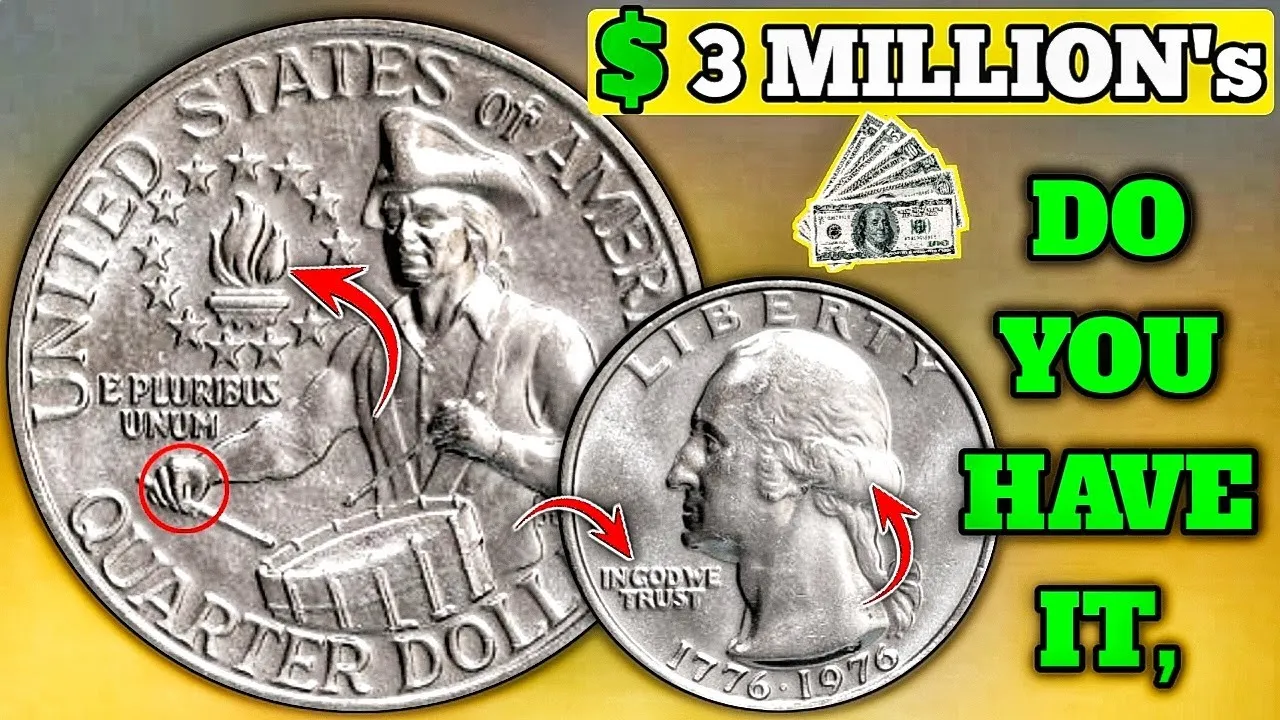
One of the most famous and valuable bicentennial quarter errors is the “No S” proof. In 1975, for reasons unknown, some bicentennial proof quarter dies were sent from the Philadelphia Mint (which did not use an ‘S’ mint mark) to the San Francisco Mint for production without the ‘S’ mint mark being punched onto them. Consequently, a small number of bicentennial proof quarters were struck at San Francisco but lack the expected ‘S’ mint mark. These are extremely rare, with only a few thousand known examples, and can fetch thousands of dollars, particularly in high proof grades. This error represents a significant investment opportunity due to its verified rarity and strong historical context within numismatic production.
Doubled Die Errors: Distinguishing Characteristics
A doubled die error occurs when the die used to strike the coin has an impression from the hub that is misaligned or double-struck. This results in a noticeable doubling of design elements, most commonly on the lettering or date. While subtle doubling might be common, significant and clear doubling can command high prices. Collectors specifically look for pronounced doubling that can be seen without extreme magnification. The 1976-D and 1976-P bicentennial quarters have documented doubled die varieties, though none are as dramatic or valuable as other series. However, a clearly identifiable doubled die can still add substantial value, turning a common quarter into a premium collectible.
Off-Center Strikes and Planchet Errors
An off-center strike occurs when the coin blank (planchet) is not properly seated in the coining press, resulting in a portion of the design being missing and an un-struck blank area. The degree of off-centerness often dictates value, with more dramatic examples (e.g., 20-50% off-center while still showing a full date) being more desirable. Planchet errors encompass a broader category, including:
- Broadstrikes: When the retaining collar that normally holds the planchet in place fails, causing the coin to spread out wider than usual.
- Clipped Planchets: When a portion of the coin blank is missing before it’s struck, often appearing as a crescent-shaped void.
- Defective Planchets: Imperfections in the metal itself before striking.
These errors introduce unique visual characteristics that collectors find appealing, making them valuable due to their distinctiveness and the relative rarity of such production faults.
Die Breaks and Cuds: Minor Flaws, Major Gains
Die breaks occur when a piece of the coin die breaks off, leaving a raised, irregular blob or line of metal on the struck coin. When a larger piece of the die breaks off at the rim, it’s called a “cud.” Cuds are particularly sought after, especially if they are large and clearly defined, as they represent a dramatic alteration to the coin’s appearance due to manufacturing defects. While less common than some other errors, significant die breaks and cuds can elevate a bicentennial quarter’s value well beyond face. These anomalies serve as tangible evidence of the minting process, appealing to collectors who appreciate the unique history embedded in each flawed piece.
The Financial Landscape of Coin Collecting as an Investment
Investing in numismatics, particularly specific error coins or high-grade examples like valuable bicentennial quarters, requires a robust understanding of market dynamics, authentication processes, and long-term financial strategies. It’s an arena where knowledge translates directly into financial gain.
Assessing Market Demand and Liquidity
The value of any collectible, including rare bicentennial quarters, is ultimately determined by market demand. Rarity alone is not enough; there must be a consistent pool of collectors willing to pay a premium. Online auction sites, specialized dealer networks, and numismatic shows provide avenues for both assessing current market value and liquidating assets. For highly sought-after errors like the “No S” proof, demand is consistently strong, ensuring good liquidity. For more obscure or minor errors, demand can be more niche, potentially affecting the speed and price of resale. Understanding current auction results and dealer price guides is crucial for an investor to gauge potential returns.
The Role of Certification Services in Value Assessment
For any bicentennial quarter considered valuable, professional grading and authentication by reputable third-party services like PCGS (Professional Coin Grading Service) or NGC (Numismatic Guaranty Company) are virtually indispensable. These services encapsulate the coin in a tamper-evident holder, assign a numerical grade, and verify its authenticity and variety. This certification provides a universally recognized standard of condition and legitimacy, significantly boosting a coin’s market value, liquidity, and investor confidence. A raw (ungraded) coin, no matter how rare or perfect, will almost always fetch less than its certified counterpart because of the inherent risks of counterfeiting or misgrading by an untrained eye.
Strategies for Buying and Selling for Profit
For those looking to engage with bicentennial quarters as an investment, strategic buying and selling are key. Buying often involves researching specific valuable varieties, monitoring auction results, and establishing relationships with reputable dealers. Seeking out coins that are currently undervalued or have strong potential for grade appreciation (if raw) can lead to profit. Selling involves leveraging certified coins, showcasing their attributes effectively, and choosing the right platform—whether it’s a major auction house for high-value items, a specialized coin dealer for quick transactions, or online marketplaces for broader reach. Understanding transaction fees, shipping, and insurance costs is also vital to calculate net returns.
Long-Term vs. Short-Term Investment Potential
While some specific error coins can see rapid appreciation due to sudden demand or new discoveries, most numismatic investments, particularly in established varieties, are best viewed with a long-term horizon. The value of classic errors and high-grade specimens tends to appreciate steadily over time, mirroring general economic trends and the growth of the collector base. For bicentennial quarters, the “No S” proof is a prime example of a long-term appreciating asset, while the discovery of a new, significant doubled die could lead to short-term speculative gains. Investors should align their strategy with the specific characteristics of the bicentennial quarter varieties they acquire, balancing potential for quick returns with the stability of established, historically valuable pieces.
aViewFromTheCave is a participant in the Amazon Services LLC Associates Program, an affiliate advertising program designed to provide a means for sites to earn advertising fees by advertising and linking to Amazon.com. Amazon, the Amazon logo, AmazonSupply, and the AmazonSupply logo are trademarks of Amazon.com, Inc. or its affiliates. As an Amazon Associate we earn affiliate commissions from qualifying purchases.