
In the vast and complex landscape of modern networking, understanding the fundamental principles that govern data transmission is crucial. Among these principles, unicast communication stands out as a bedrock for nearly all internet activity and enterprise connectivity. When we couple this concept with the intricacies of Wide Area Networks (WANs), we uncover the operational backbone that connects global offices, cloud services, and remote users. This article delves into the essence of unicast within a WAN environment, dissecting its mechanics, advantages, and pivotal role in today’s interconnected world.
Demystifying Unicast Communication
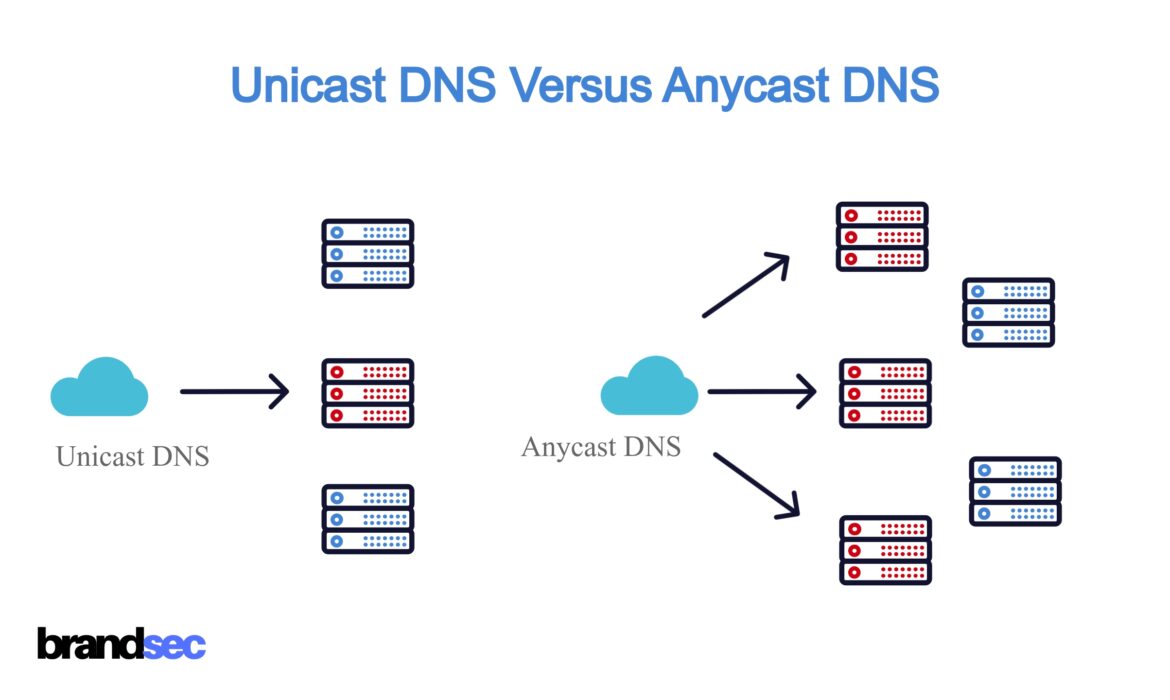
At its core, unicast is a one-to-one communication method. It’s the digital equivalent of a private phone call or a direct letter, where a single sender transmits data to a single, specific receiver. This directness makes unicast the most prevalent form of data transfer across virtually all network types, from local area networks (LANs) to the expansive internet.
The Fundamental Principle of Unicast
The defining characteristic of unicast is its specificity. Each data packet sent via unicast is addressed to a unique destination MAC address at the data link layer and a unique IP address at the network layer. This explicit addressing ensures that the data travels along a path optimized for that particular recipient, minimizing unnecessary traffic on other network segments. When a device wants to communicate with another device, it first resolves the destination’s IP address to a MAC address (if on the same segment) and then encapsulates the data within frames or packets specifically marked for that single target.
Unicast vs. Broadcast, Multicast, and Anycast
To truly appreciate unicast, it’s helpful to understand how it differs from other communication paradigms:
- Broadcast: This is a one-to-all communication where a sender sends data to every device on a specific network segment. While useful for discovery services (like ARP requests), it consumes significant bandwidth and can overwhelm devices not interested in the data.
- Multicast: A one-to-many communication where a sender transmits data to a select group of recipients who have explicitly joined a multicast group. This is efficient for streaming video or audio to multiple subscribers without sending duplicate streams to each.
- Anycast: A one-to-nearest communication, typically used in IPv6 and for services like DNS. A sender transmits data to any one of a group of receivers, typically the one closest in network topology. This provides redundancy and load balancing.
Unicast’s precision and directed nature contrast sharply with these other methods, making it the go-to for most point-to-point data exchanges, from browsing a webpage to sending an email or downloading a file.
How Unicast Ensures Efficiency
The targeted nature of unicast is central to network efficiency. By sending data only to the intended recipient, it conserves bandwidth on other network links. Routers and switches process unicast packets by consulting their forwarding tables, directing them along the most efficient path to their specific destination. This avoids flooding network segments with irrelevant traffic, which would otherwise lead to congestion, increased latency, and reduced overall network performance. Without unicast, the internet as we know it—with its billions of individualized connections and requests—would be entirely unmanageable.
Unicast in the Wide Area Network (WAN) Context
While unicast is fundamental across all network scales, its application and significance in Wide Area Networks (WANs) take on a particular importance. WANs are the backbone that stitches together geographically dispersed local area networks, connecting branches, data centers, and cloud resources across vast distances, often spanning cities, countries, or even continents.
WAN Fundamentals: Connecting Distant Networks
A WAN is designed to provide connectivity over large geographical areas, overcoming the limitations of LANs that are confined to a single building or campus. It uses a variety of technologies, including leased lines, MPLS (Multiprotocol Label Switching), VPNs (Virtual Private Networks) over the public internet, and software-defined WAN (SD-WAN) solutions. The primary goal of a WAN is to allow seamless communication and resource sharing between disparate locations, acting as the digital glue for global enterprises.
Why Unicast is Critical for WAN Operations
In a WAN, unicast communication is the workhorse for virtually all business-critical operations. When an employee in a satellite office accesses a file server at headquarters, that’s unicast. When data is synchronized between two data centers, it’s predominantly unicast. When a user streams an application from the cloud, that connection is unicast.
The targeted delivery of unicast packets is vital in a WAN because bandwidth across long distances is often a premium resource. Unlike LANs where high bandwidth is typically abundant, WAN links can be costly and have lower throughput. Efficient utilization of this precious bandwidth through unicast ensures that specific applications and services receive the necessary data without imposing undue load on the entire network. Without unicast, the constant broadcasting or multicasting of data across an entire WAN would quickly bring it to a halt, making global operations impossible.
Examples of Unicast Traffic Across a WAN
Consider a few real-world scenarios illustrating WAN unicast:
- Remote Desktop Access: An engineer connecting to a server in a data center from a home office initiates a unicast session. All keyboard strokes, mouse movements, and screen updates are unicast packets flowing between their client and the remote server.
- Database Synchronization: When two geographically separated database servers synchronize their records, the data exchange occurs via unicast connections between the specific database instances.
- Cloud Application Usage: Accessing a SaaS application like Salesforce or Microsoft 365 from any enterprise location involves unicast communication between the user’s device and the cloud service providers’ servers, traversing the internet, which is a global WAN.
- Voice over IP (VoIP) Calls: A one-on-one VoIP call between two individuals in different branch offices relies on unicast to deliver the voice packets directly between their respective IP phones or softphones.
These examples underscore how unicast is not just a theoretical concept but the practical foundation for nearly every interaction across an enterprise’s distributed network.
The Mechanics of Unicast Delivery in a WAN
The successful delivery of a unicast packet across a WAN involves a sophisticated interplay of addressing, routing protocols, and network devices. This intricate process ensures that data finds its way from source to destination, often spanning multiple network hops and diverse physical media.
IP Addressing and Routing: The Unicast Backbone
Every device connected to a WAN (and indeed, any IP network) has a unique IP address. This address serves as the primary identifier for unicast communication at the network layer. When a sender wants to reach a specific destination, it uses the destination’s IP address.

Routers, the workhorses of the network layer, are responsible for directing unicast traffic across the WAN. They maintain routing tables that map destination IP addresses to specific next-hop interfaces. These tables are populated either manually (static routes) or dynamically through routing protocols such as OSPF (Open Shortest Path First), EIGRP (Enhanced Interior Gateway Routing Protocol), or BGP (Border Gateway Protocol). BGP, in particular, is critical for inter-domain routing across the internet, ensuring that unicast traffic can traverse autonomous systems (large network segments) belonging to different organizations.
Role of Routers and Switches in Unicast Forwarding
- Routers: Routers are pivotal for unicast across a WAN. When a router receives a unicast packet, it inspects the destination IP address, consults its routing table, and forwards the packet out the appropriate interface towards the next hop on the path to the destination. This process repeats at each router until the packet reaches the local network segment of the destination.
- Switches: While routers handle inter-network communication, switches operate within a single LAN segment (or VLAN) at the data link layer. Once a unicast packet has been routed to the correct destination LAN, the local switch uses the destination MAC address to deliver the frame directly to the specific host device. Switches maintain MAC address tables, mapping MAC addresses to specific physical ports, ensuring precise local delivery.
Protocols Facilitating WAN Unicast (e.g., TCP/IP)
The entire mechanism of unicast delivery relies heavily on the TCP/IP suite of protocols.
- IP (Internet Protocol): Provides the addressing and routing capabilities for unicast packets. It defines how data is encapsulated into packets and how these packets are addressed and routed from source to destination across different networks.
- TCP (Transmission Control Protocol): Often layered on top of IP, TCP provides reliable, connection-oriented unicast communication. It ensures that data packets arrive in the correct order, without loss, and handles retransmissions if errors occur. This reliability is crucial for applications where data integrity is paramount, such as file transfers, email, and web browsing.
- UDP (User Datagram Protocol): Also layered on IP, UDP offers a faster, connectionless unicast service. It does not guarantee delivery or order but is suitable for applications where speed is more critical than absolute reliability, such as real-time audio/video streaming or online gaming, where small packet loss is tolerable.
These protocols, in conjunction with the routing infrastructure, form the sophisticated engine that drives unicast traffic across the vast expanse of the WAN.
Advantages and Challenges of WAN Unicast
While unicast is indispensable for WAN operations, it comes with a distinct set of advantages and challenges that network architects must consider.
Key Benefits: Security, Bandwidth, and Scalability
- Enhanced Security: By directing data only to the intended recipient, unicast inherently offers a degree of privacy. It prevents unauthorized devices on other network segments from passively receiving traffic not meant for them, contributing to a more secure data environment compared to broadcast methods.
- Efficient Bandwidth Utilization: As discussed, unicast conserves bandwidth by not sending unnecessary traffic across the entire network. This is particularly critical in WANs where bandwidth is often limited and expensive. Each link carries only the data explicitly destined for endpoints accessible via that link.
- Scalability: The one-to-one nature of unicast allows WANs to scale to support millions of endpoints and billions of simultaneous connections. Each connection is handled independently, and routing tables can efficiently direct traffic without overwhelming individual segments with global broadcasts.
- Targeted Troubleshooting: Because traffic flows from a specific source to a specific destination, troubleshooting connectivity issues in unicast environments is more straightforward. Network administrators can trace paths, analyze traffic flows, and pinpoint problems more precisely.
Common Challenges: Latency, Jitter, and Packet Loss
Despite its benefits, WAN unicast is susceptible to issues inherent to long-distance networking:
- Latency: The time it takes for a unicast packet to travel from source to destination. In WANs, this is often a significant factor due to the physical distances data must traverse and the multiple routers it must pass through. High latency can impact real-time applications like VoIP and video conferencing.
- Jitter: Variation in the delay of received unicast packets. This can severely affect the quality of real-time communication, leading to choppy audio or video.
- Packet Loss: Occurs when unicast packets fail to reach their destination. This can be caused by network congestion, errors, or faulty hardware. While TCP can retransmit lost packets, this adds to latency and reduces throughput. For UDP-based applications, lost packets are simply gone.
- Congestion: If multiple unicast streams contend for limited bandwidth on a WAN link, congestion can occur, leading to increased latency, jitter, and packet loss. Quality of Service (QoS) mechanisms are often employed to prioritize critical unicast traffic.
Optimizing Unicast Performance in WANs
To mitigate these challenges, network engineers employ various optimization techniques:
- QoS (Quality of Service): Prioritizes critical unicast traffic (e.g., VoIP, video) over less time-sensitive data, ensuring performance for essential applications.
- SD-WAN (Software-Defined WAN): Leverages intelligent path selection, dynamically choosing the best available link for unicast traffic based on real-time network conditions (latency, jitter, loss). SD-WAN can also incorporate WAN optimization techniques like deduplication and compression.
- WAN Optimization Appliances: These devices can reduce the amount of unicast data sent across a WAN by caching frequently accessed files, compressing data, and optimizing TCP flows.
- Traffic Shaping and Policing: Controls the rate at which unicast traffic is sent or received to prevent congestion on specific links.
Practical Applications and Future Implications
Unicast communication forms the invisible but omnipresent fabric of global digital interaction. Its role in WANs is not static but continues to evolve with technological advancements.
Enterprise Connectivity and Cloud Access
For enterprises, unicast is the lifeblood of their distributed operations. It enables employees in branch offices to securely access corporate resources in data centers, facilitates inter-office collaboration, and underpins the growing reliance on cloud services. As businesses increasingly adopt hybrid and multi-cloud strategies, secure and efficient unicast pathways to cloud providers become paramount, often managed through dedicated connections or optimized internet links.
Real-time Services (VoIP, Video Conferencing)
The quality and reliability of real-time unicast streams are critical for modern communication. VoIP and video conferencing tools, which rely on unicast packets for each participant, demand low latency and jitter to provide a seamless user experience. Advancements in network infrastructure, coupled with intelligent routing and QoS, continually strive to enhance the performance of these unicast-dependent applications across WANs.

The Evolving Landscape of WAN Unicast
The future of WAN unicast will likely be shaped by several trends:
- Increased Automation and AI: AI-driven network management tools will further optimize unicast routing and performance, predicting congestion and dynamically adjusting traffic flows.
- Zero Trust Architectures: As security threats evolve, unicast traffic will be subject to even more granular inspection and authentication, reinforcing the one-to-one principle with rigorous access controls.
- Edge Computing: With processing moving closer to the data source, unicast traffic will shift to more localized WAN segments, reducing backhauling to central data centers and improving latency for edge applications.
- 5G and Next-Gen Wireless: The widespread deployment of 5G and future wireless technologies will provide new, high-bandwidth access methods for WANs, enabling more robust unicast connectivity for mobile and remote workforces.
In conclusion, unicast communication, particularly within the context of a Wide Area Network, is far more than a technical term; it is the fundamental mechanism that underpins global connectivity, enabling secure, efficient, and scalable data exchange across vast distances. Its continued evolution will be key to meeting the demands of an increasingly interconnected world.
aViewFromTheCave is a participant in the Amazon Services LLC Associates Program, an affiliate advertising program designed to provide a means for sites to earn advertising fees by advertising and linking to Amazon.com. Amazon, the Amazon logo, AmazonSupply, and the AmazonSupply logo are trademarks of Amazon.com, Inc. or its affiliates. As an Amazon Associate we earn affiliate commissions from qualifying purchases.