
In the realm of technology, “loud” transcends a mere subjective experience; it is a precisely measurable and scientifically understood phenomenon. From the roar of a jet engine to the subtle hum of a server rack, understanding what constitutes loudness and how it is managed is fundamental to audio engineering, environmental science, and consumer electronics. At its core, loudness refers to the intensity of a sound wave, an energy transfer that vibrates through a medium, typically air, before reaching our ears or an acoustic sensor.
The Science of Sound Intensity
Loudness, from a technical perspective, is a characteristic directly tied to the amplitude of a sound wave. Higher amplitude means more energy is carried by the wave, resulting in a more intense sound. However, our perception of this intensity is complex, influenced by various factors beyond simple amplitude.
Decibels (dB): The Universal Metric
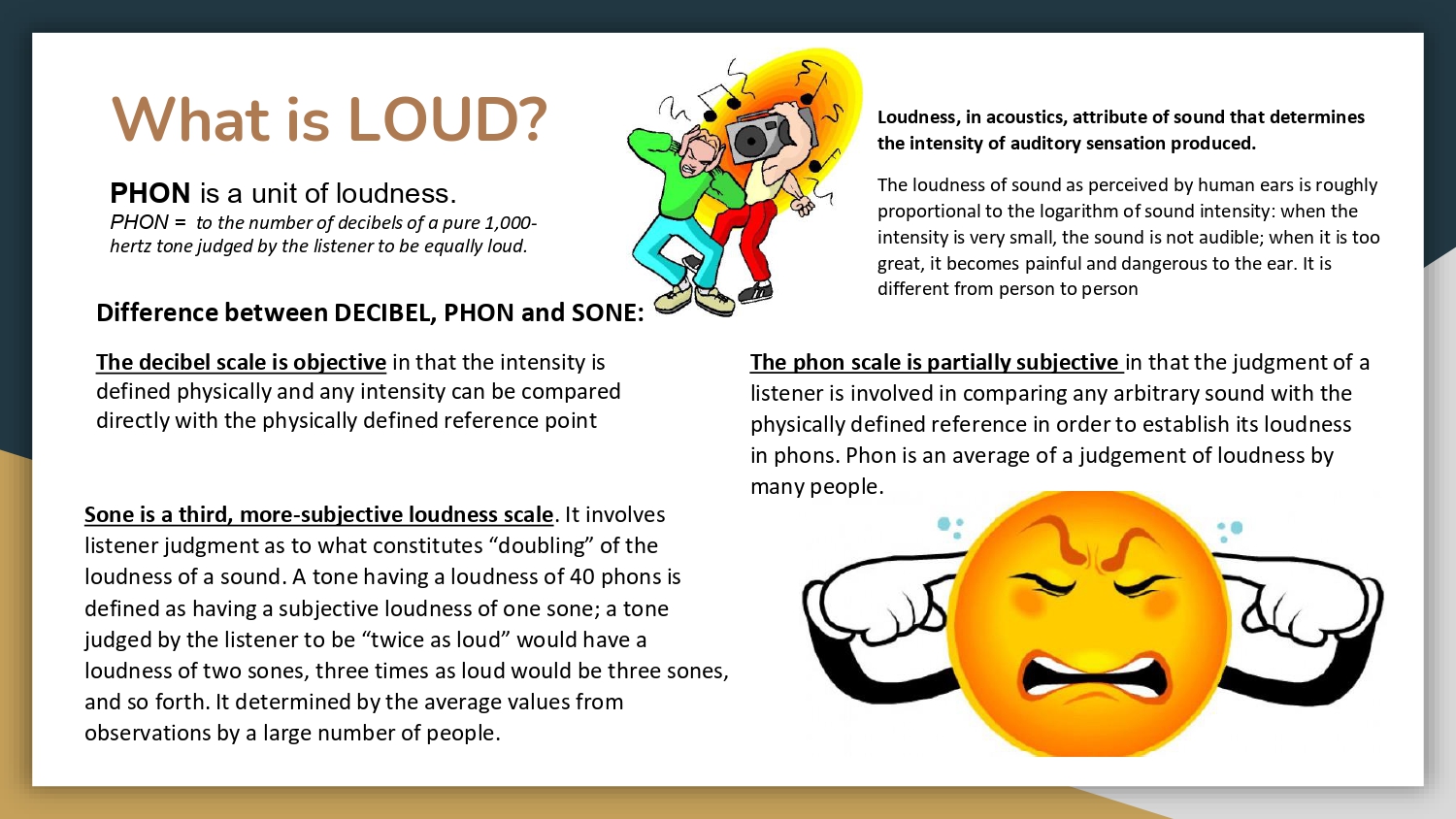
The decibel (dB) is the most common unit used to measure sound intensity. It’s a logarithmic unit, which effectively compresses the vast range of human hearing into a more manageable scale. This logarithmic nature means that a small increase in decibels represents a large increase in sound power. For instance, a 10 dB increase signifies a tenfold increase in sound intensity.
This scale is critical because the human ear perceives sound intensity logarithmically, not linearly. A whisper might be around 30 dB, normal conversation 60 dB, and a rock concert could easily exceed 100 dB. Prolonged exposure to levels above 85 dB can cause permanent hearing damage, highlighting the importance of this measurement in occupational safety and public health.
Sound Pressure Level (SPL) vs. Sound Power Level (SWL)
While decibels are pervasive, it’s crucial to distinguish between Sound Pressure Level (SPL) and Sound Power Level (SWL).
Sound Pressure Level (SPL) is what a microphone or our ear typically measures. It quantifies the pressure fluctuations in the air caused by a sound wave relative to a reference pressure. SPL is dependent on the distance from the sound source and the environment (e.g., reflections from walls). It’s measured in dB SPL. When you see a specification for headphones or a microphone, it’s usually referring to SPL.
Sound Power Level (SWL), on the other hand, is an absolute measure of the total acoustic energy emitted by a source per unit of time, irrespective of the environment or distance. It’s an intrinsic property of the sound source itself, much like the wattage of a light bulb. SWL is measured in dB SWL or just dB, with reference to 1 picowatt (10^-12 W). For manufacturers, SWL is vital for comparing the inherent acoustic output of different machines or devices. Understanding both SPL and SWL is essential for accurate acoustic design and analysis.
Frequency and Pitch: More Than Just Volume
While intensity relates to “how loud,” frequency relates to “how high or low” a sound is perceived, which we call pitch. Frequency is measured in Hertz (Hz), representing the number of sound wave cycles per second. The human ear can typically perceive frequencies from about 20 Hz (very low bass) to 20,000 Hz (very high treble).
The interesting interplay here is that our perception of loudness is not uniform across all frequencies. The human ear is most sensitive to sounds in the mid-range frequencies (around 2,000 to 5,000 Hz), which coincidentally is where much of human speech resides. A sound at 50 Hz might need to be significantly more intense (higher SPL) to be perceived as equally loud as a sound at 3,000 Hz. This phenomenon is captured by equal-loudness contours (Fletcher-Munson curves or ISO 226:2003), which are vital for audio engineers designing sound systems or equalizers.
How We Measure and Perceive Loudness
Measuring sound intensity accurately is a cornerstone of acoustics and environmental noise control. However, understanding the subjective human experience of loudness adds another layer of complexity for tech developers.
Microphones and Sound Level Meters
The primary tools for measuring sound are microphones and sound level meters.
Microphones convert sound pressure waves into electrical signals. Different microphone types (condenser, dynamic, ribbon) and polar patterns (omnidirectional, cardioid, bidirectional) are chosen based on the specific measurement task, sensitivity requirements, and environmental conditions. High-precision measurement microphones are calibrated to provide accurate SPL readings across a wide frequency range.
Sound Level Meters (SLMs) are purpose-built devices designed to measure SPL. They integrate a calibrated microphone, signal processing circuitry, and a display. SLMs often include various weighting filters (A, B, C, Z) and time-averaging capabilities (fast, slow, impulse) to better mimic human hearing response or capture specific sound events. For environmental noise assessments or occupational health, SLMs are indispensable. Modern SLMs often include data logging, spectral analysis (FFT), and octave band analysis features, turning them into sophisticated acoustic analysis tools.
Human Perception: A-Weighting and Psychoacoustics
As noted, human hearing is not linear. To account for this, sound level meters often employ A-weighting. This filter adjusts the measured sound pressure levels to correspond more closely to the loudness perceived by the human ear at lower sound levels. Sounds at very low and very high frequencies are de-emphasized by the A-weighting filter, mirroring the ear’s reduced sensitivity in those ranges. Thus, measurements like “dB(A)” or “dBA” are very common in noise regulations and specifications, providing a more relevant indicator of perceived annoyance or potential hearing damage.
Psychoacoustics is the scientific study of sound perception, exploring how physical sound properties relate to psychological responses. It delves into phenomena like masking (where one sound makes another inaudible), binaural hearing (how two ears help localize sound), and the perception of timbre. For audio engineers designing headphones, speakers, or virtual reality soundscapes, understanding psychoacoustics is critical to creating truly immersive and comfortable audio experiences.
Factors Influencing Perceived Loudness
Beyond SPL and frequency, several other factors influence how loud a sound is perceived:
- Duration: Louder sounds of longer duration are generally perceived as louder and more impactful than short bursts of the same SPL.
- Timbre: The specific mix of harmonics and overtones that give a sound its unique character (e.g., distinguishing a flute from a clarinet) can also influence perceived loudness, even if their fundamental frequencies and SPLs are identical.
- Context: The environment (reverberant vs. anechoic), the listener’s attention, and even emotional state can subtly alter the perception of loudness. A sudden, unexpected sound at a moderate SPL might be perceived as louder and more alarming than a continuous, expected sound at a higher SPL.
- Individual Hearing Acuity: Age, previous noise exposure, and genetic factors all contribute to variations in individual hearing thresholds and sensitivity, leading to different subjective experiences of the same objective loudness.
Technologies for Managing and Optimizing Loudness

The understanding of “what is loud” fuels continuous innovation in technologies designed to control, enhance, or mitigate sound intensity across various applications.
Noise Cancellation and Reduction
One of the most impactful advancements in acoustic technology is Active Noise Cancellation (ANC). Pioneered for aircraft cockpits, ANC technology works by creating a sound wave that is precisely out of phase with unwanted ambient noise. This “anti-noise” wave interferes destructively with the incoming noise, effectively canceling it out. ANC headphones, earbuds, and even room-based systems rely on sophisticated microphones, digital signal processing (DSP), and loudspeakers to achieve this effect, offering users an unparalleled quiet experience in noisy environments.
Passive Noise Reduction (PNR), while simpler, is equally important. It involves using sound-absorbing materials, structural isolation, and acoustic baffling to prevent sound from entering or exiting an area. Examples include thick walls, double-pane windows, soundproofing panels in recording studios, and the physical seal provided by over-ear headphones. Many modern solutions combine both active and passive techniques for optimal noise control.
Audio Compression and Dynamic Range Control
In audio production and broadcast, managing loudness is crucial for clarity and consistency. Audio compression is a DSP technique that reduces the dynamic range (the difference between the loudest and quietest parts) of an audio signal. A compressor automatically reduces the gain of loud signals while leaving quiet signals untouched, or even boosting them. This makes the overall sound appear louder and more consistent, preventing extreme peaks and ensuring that quieter elements remain audible.
Related technologies include limiters (an extreme form of compressor that prevents a signal from exceeding a set maximum level) and expanders/noise gates (which increase the dynamic range by making quiet sounds even quieter or muting them altogether). These tools are indispensable in music mastering, live sound, and broadcast to ensure audio mixes are impactful without being distorted or overwhelming.
Speaker Design and Amplifier Technologies
The reproduction of sound at desired loudness levels is the core function of speaker and amplifier technology. Speakers convert electrical signals back into sound waves. Their design, including driver size, enclosure type (sealed, ported), and material science, profoundly impacts their efficiency, frequency response, and maximum SPL output. Advances in transducer materials (e.g., neodymium magnets), voice coil designs, and waveguide technologies allow for increasingly powerful, accurate, and compact speakers.
Amplifiers boost the low-level electrical signals from audio sources to a level powerful enough to drive speakers. Modern amplifiers leverage technologies like Class D amplification, which are highly efficient and compact, allowing for greater power output with less heat generation. Sophisticated DSP is often integrated into amplifiers for room correction, equalization, and dynamic processing, optimizing sound reproduction for specific environments and listener preferences. The pursuit of “loud and clear” audio without distortion continues to drive innovation in this sector.
Software for Audio Analysis and Mastering
Software plays a pivotal role in understanding and manipulating loudness. Digital Audio Workstations (DAWs) like Pro Tools, Logic Pro, and Ableton Live provide comprehensive suites of tools for recording, mixing, and mastering. Within these DAWs, plugins for spectral analysis, real-time loudness metering (e.g., conforming to EBU R128 or ITU-R BS.1770 standards for broadcast), and sophisticated equalization allow engineers to precisely control every aspect of a sound’s intensity and frequency content.
Furthermore, specialized acoustic simulation software is used by architects and sound engineers to model how sound will behave in a given space before construction begins. This allows for proactive design decisions to optimize acoustics, minimize unwanted reflections, and ensure uniform loudness distribution. Machine learning is also beginning to find applications in automated mastering and intelligent loudness normalization, promising even more efficient and consistent audio production workflows.
Practical Applications and Considerations
The technological mastery of “what is loud” has profound implications across diverse industries, from public health to entertainment.
Workplace Noise and Safety Standards
In industrial and occupational settings, understanding and controlling loudness is a critical safety issue. Prolonged exposure to high noise levels can lead to noise-induced hearing loss (NIHL), a permanent and irreversible condition. Regulatory bodies worldwide (e.g., OSHA in the US, EU directives) set permissible exposure limits (PELs) for workplace noise, typically around 85 dBA for an 8-hour workday. Technologies like personal dosimeters, sound level meters, and sophisticated acoustic mapping software help employers monitor noise levels. Engineering controls (e.g., machine enclosures, vibration dampeners) and administrative controls (e.g., job rotation) are implemented, along with personal protective equipment (e.g., earplugs, earmuffs), all informed by a detailed understanding of sound intensity.
Consumer Audio: Achieving Optimal Listening Experiences
For the average consumer, the desire for an optimal listening experience drives innovation in audio tech. Whether it’s the immersive clarity of high-fidelity headphones, the powerful bass of a home theater system, or the balanced soundscape of a smart speaker, manufacturers constantly strive to deliver a precise blend of loudness, clarity, and frequency response. Technologies like adaptive volume control, spatial audio processing, and personalized equalization settings cater to individual preferences and environmental conditions, ensuring that “loud” is not just powerful, but also pleasing and intelligible. The goal is to provide rich, dynamic audio that can be enjoyed at appropriate volumes without causing fatigue or discomfort.
Environmental Noise Pollution and Mitigation
Beyond workplaces, environmental noise from transportation, construction, and urban activity is a significant public health concern, contributing to stress, sleep disturbance, and cardiovascular issues. Acoustic sensors and IoT devices are increasingly deployed to monitor noise levels in real-time across cities. Data analytics help identify major noise sources and inform urban planning and policy decisions. Mitigation strategies include noise barriers, quieter vehicle technologies (e.g., electric cars), and even “soundscapes” that use pleasant ambient sounds to mask unwanted noise. Understanding the sources, pathways, and impacts of environmental loudness is key to creating healthier, more livable communities.

The Future of Sound Management in Tech
The future of understanding and managing loudness in technology promises even greater sophistication. We can anticipate more advanced AI-driven noise prediction and control systems, hyper-personalized audio experiences that adapt to individual ear physiology and real-time environments, and even haptic feedback systems that translate sound intensity into tactile sensations. Wearable tech will likely integrate more precise individual noise exposure monitoring, offering real-time advice for hearing protection. As our digital and physical worlds increasingly merge, the nuanced control over the “loudness” of our auditory environments will remain a critical frontier for technological innovation, aimed at enhancing human comfort, communication, and safety.
aViewFromTheCave is a participant in the Amazon Services LLC Associates Program, an affiliate advertising program designed to provide a means for sites to earn advertising fees by advertising and linking to Amazon.com. Amazon, the Amazon logo, AmazonSupply, and the AmazonSupply logo are trademarks of Amazon.com, Inc. or its affiliates. As an Amazon Associate we earn affiliate commissions from qualifying purchases.