
In the dynamic world of investing and trading, the ability to control the price at which you buy or sell assets is paramount to managing risk and optimizing returns. While the most straightforward transaction involves buying or selling at the immediate market price, savvy investors and traders often leverage more sophisticated order types to execute their strategies with precision. Among the most fundamental yet powerful of these tools are limit orders and stop orders. Understanding their mechanics, advantages, and limitations is crucial for anyone looking to navigate financial markets more effectively.
Understanding Market Orders: The Baseline
Before diving into the specifics of limit and stop orders, it’s essential to first grasp the concept of a market order, as it serves as the default and often the simplest way to interact with the market. A market order is an instruction to immediately buy or sell a security at the best available current price. When you place a market order, your primary goal is instant execution, not a specific price.
For example, if you place a market order to buy 100 shares of a stock currently trading at $50.00, your order will be filled almost instantly at or very near $50.00, depending on the current bids and offers. The advantage of a market order is its guaranteed execution; your trade will go through as long as there’s a buyer or seller. However, the downside, especially in volatile markets or for less liquid securities, is that the execution price might differ slightly from the last quoted price you saw, a phenomenon known as “slippage.” While minimal for highly liquid assets, this lack of price certainty can be a significant risk for larger orders or in rapidly moving markets. Market orders prioritize speed of execution over price control, making them suitable for situations where immediate entry or exit is more critical than a slight price discrepancy.
Demystifying Limit Orders: Precision and Control
A limit order offers a greater degree of control over the price at which your trade is executed, ensuring you don’t pay more or receive less than your desired threshold. It’s a fundamental tool for investors who prioritize price certainty over immediate execution.
What is a Limit Order?
A limit order is an instruction to buy or sell a security at a specific price or better. Unlike a market order, which executes immediately at whatever price is available, a limit order will only be filled if the market price reaches your specified limit price or a more favorable one. This characteristic makes limit orders invaluable for disciplined trading strategies.
How Limit Orders Work (Buy vs. Sell)
The functionality of a limit order depends on whether you are buying or selling:
- Buy Limit Order: When you place a buy limit order, you specify the maximum price you are willing to pay for a security. This limit price must be at or below the current market price. For instance, if a stock is trading at $50.00, and you believe it’s overvalued at that price but would be a good buy at $49.50, you would place a buy limit order at $49.50. Your order will only execute if the stock’s ask price drops to $49.50 or lower. If the price never reaches your limit, your order will remain unfilled.
- Sell Limit Order: Conversely, a sell limit order specifies the minimum price you are willing to accept for a security. This limit price must be at or above the current market price. If you own a stock currently trading at $50.00, but you want to sell it only if it reaches $50.50 or higher, you would place a sell limit order at $50.50. Your order will only execute if the stock’s bid price rises to $50.50 or higher. If the price doesn’t reach your limit, your shares will not be sold.
Advantages of Using Limit Orders
Limit orders offer several distinct advantages for investors:
- Price Certainty: The most significant benefit is the assurance that your order will only execute at your desired price or a more favorable one. This eliminates the risk of unfavorable slippage, which can be costly in volatile markets.
- Avoiding Overpayment/Underselling: By setting a price ceiling for buys and a price floor for sells, limit orders prevent you from making emotionally driven decisions to buy high or sell low.
- Strategic Entry and Exit Points: They allow investors to patiently wait for specific price levels to be met before entering or exiting a position, aligning with a pre-defined trading plan. This is particularly useful for implementing technical analysis strategies that target specific support or resistance levels.
- Managing Volatility: In markets experiencing rapid price swings, limit orders can help mitigate risk by ensuring trades only occur at pre-approved prices, preventing execution during temporary spikes or dips that don’t reflect true value.
- Capital Efficiency: By only executing at better prices, limit orders can potentially improve your average cost basis for buys or maximize your average selling price, leading to better overall returns.
Disadvantages and Considerations
Despite their benefits, limit orders are not without drawbacks:
- No Guarantee of Execution: The primary disadvantage is that a limit order may never be filled. If the market price never reaches your specified limit, your order will simply expire or be cancelled without a trade occurring. This can lead to missing out on a desired trade if the market moves quickly past your limit.
- Missing Market Movements: In fast-moving markets, if your limit price is too far from the current market price, the stock might move significantly in your favor without ever touching your limit, leaving you on the sidelines.
- Monitoring Required: While they offer set-and-forget potential to some extent, limit orders may still require monitoring, especially if market conditions change rapidly. You might need to adjust your limit price to remain relevant.
Navigating Stop Orders: Risk Management and Protection

Stop orders are powerful risk management tools designed to protect profits or limit potential losses on an existing position. Unlike limit orders, which focus on achieving a specific price, stop orders focus on triggering an action once a certain price threshold is breached.
What is a Stop Order?
A stop order is an instruction to buy or sell a security once a specified “stop price” is reached or passed. Once the stop price is triggered, the stop order becomes a market order (or a limit order, in the case of a stop-limit order), which then attempts to execute at the best available market price. Its primary function is automation in risk management.
How Stop Orders Work (Stop-Loss Sell vs. Stop-Loss Buy)
Stop orders are typically used in two main ways:
- Stop-Loss Sell Order: This is the most common type, used to limit potential losses on a long position (a stock you own). You set a stop price below the current market price. If the stock’s price drops to or below your stop price, the stop order is triggered and converts into a market order to sell your shares. For example, if you bought a stock at $50.00 and want to limit your loss to 10%, you might place a stop-loss sell order at $45.00. If the stock falls to $45.00, your shares will be sold at the best available price, which might be exactly $45.00 or slightly lower due to slippage.
- Stop-Loss Buy Order: Less common but equally important, a stop-loss buy order is primarily used to limit losses on a short position (a stock you’ve borrowed and sold, hoping to buy back cheaper) or to enter a long position on a breakout. You set a stop price above the current market price. If the stock’s price rises to or above your stop price, the stop order is triggered and converts into a market order to buy shares. For instance, if you shorted a stock at $50.00 and want to limit your loss if it rises, you might place a stop-loss buy order at $55.00. If the stock hits $55.00, shares will be bought to cover your short position.
Advantages of Using Stop Orders
The benefits of stop orders, particularly stop-loss orders, are significant for prudent financial management:
- Automated Risk Management: Stop orders provide an automated mechanism to cut losses or protect profits without constant monitoring of the market. This is invaluable for investors who cannot watch their portfolios throughout the trading day.
- Emotional Detachment: By setting stop prices in advance, investors can remove emotion from the decision to sell. This prevents holding onto losing positions for too long in the hope of a rebound.
- Profit Protection: Beyond limiting losses, stop orders can also be used to “trail” a rising stock, locking in profits as the price increases. A “trailing stop” moves the stop price up as the stock’s price rises, but holds it if the price falls, triggering a sale only if the stock reverses significantly.
- Discipline and Consistency: They enforce a disciplined approach to risk, ensuring that losses are kept within a predefined tolerance level, contributing to more consistent long-term performance.
Disadvantages and Considerations
While powerful, stop orders also come with important caveats:
- No Price Guarantee (Slippage): Once a stop order is triggered, it typically converts into a market order. This means the execution price can differ from the stop price, especially in volatile or fast-moving markets. You might sell below your stop-loss price or buy above your stop-buy price. This difference is known as slippage.
- Whipsaw Risk: Stop orders can be triggered by temporary, short-term price fluctuations or “whipsaws” that don’t reflect a fundamental change in the security’s trend. This can lead to selling a position only for the price to quickly recover, forcing you to miss out on subsequent gains or re-enter at a higher price.
- Stop Hunting: Some traders believe that large institutions or algorithms may deliberately drive prices down to trigger stop-loss orders, particularly in less liquid markets, to acquire shares at lower prices.
- Gap Risk: If a stock “gaps down” significantly overnight (e.g., due to bad news), opening far below your stop price, your stop order will trigger at the open and execute at the significantly lower opening price, potentially resulting in a much larger loss than anticipated.
Stop-Limit Orders: A Hybrid Approach
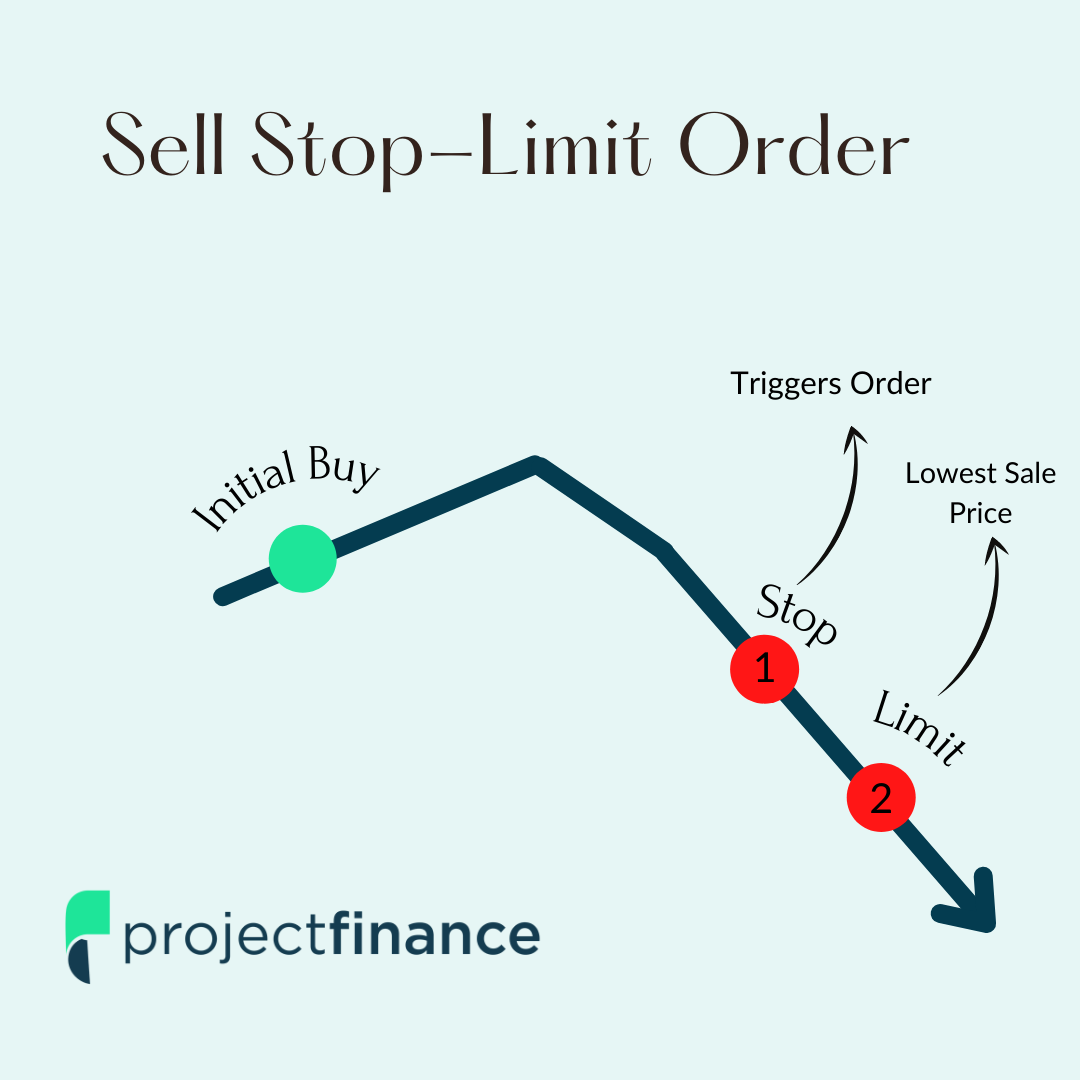
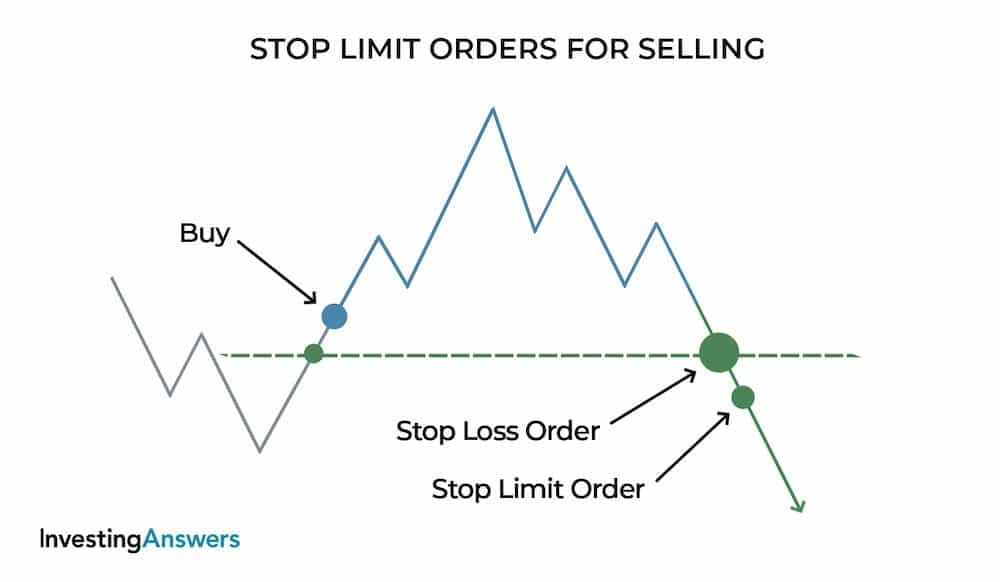
To address the price uncertainty of a standard stop order, investors can use a stop-limit order. This combines elements of both stop and limit orders. When you place a stop-limit order, you specify two prices: a stop price and a limit price.
- How it Works: Once the stock reaches or passes the stop price, the stop-limit order is triggered and becomes a limit order at your specified limit price.
- Advantage: This gives you price control after the stop is triggered, preventing execution at an undesirably low (for sell) or high (for buy) market price due to slippage.
- Disadvantage: The crucial trade-off is that execution is not guaranteed. If the market moves too quickly past your limit price after the stop is triggered, your limit order may not be filled. You might miss the opportunity to exit or enter the trade altogether, leaving you exposed to further price movements.
Strategic Integration: When and How to Use Them Together
Limit and stop orders are not mutually exclusive; they are complementary tools that can be strategically integrated into a comprehensive trading and investing plan. Their combined use can enhance both entry and exit discipline, providing robust risk management.
Consider an investor who identifies a promising stock currently trading at $100 but believes it will dip slightly before resuming its uptrend. They could place a buy limit order at $98 to enter the position, ensuring they acquire the shares at their desired price point or better. Once the buy order is filled, to protect against an unexpected downturn, they could immediately place a stop-loss sell order at $95. This setup ensures they enter the trade at a favorable price and automatically limit potential losses if the investment goes sour.
Conversely, a long-term investor holding a stock that has appreciated significantly might use a sell limit order at $120 to lock in profits if the stock reaches their target price. Simultaneously, they might employ a trailing stop-loss order set at 7% below the current market price. This allows them to continue participating in upside gains while ensuring that if the stock experiences a significant pullback (more than 7% from its peak), a sell order is triggered to protect a substantial portion of their accumulated profits.
The key to successful application lies in understanding your personal risk tolerance, investment horizon, and the specific market conditions. Limit orders are ideal for patience and precision, allowing you to “hunt” for specific prices. Stop orders are invaluable for risk control, acting as a disciplined guardian for your capital. By mastering both, investors can build more resilient portfolios, execute strategies with greater confidence, and navigate the inherent uncertainties of financial markets more effectively. These tools empower investors to maintain control, automate their trading rules, and adhere to their predefined financial objectives without being tethered to their screens constantly.
aViewFromTheCave is a participant in the Amazon Services LLC Associates Program, an affiliate advertising program designed to provide a means for sites to earn advertising fees by advertising and linking to Amazon.com. Amazon, the Amazon logo, AmazonSupply, and the AmazonSupply logo are trademarks of Amazon.com, Inc. or its affiliates. As an Amazon Associate we earn affiliate commissions from qualifying purchases.