
In the dynamic landscape of modern business, the journey from initial contact to loyal customer is rarely linear. Companies invest substantial resources in attracting prospects, generating inquiries, and fostering interest. Yet, not all leads are created equal. Some are ready to buy, others are merely browsing, and many fall somewhere in between. This fundamental challenge—distinguishing high-potential leads from casual inquiries—is precisely what lead scoring addresses.
Lead scoring is a sophisticated methodology used by sales and marketing teams to rank prospects based on their perceived value to a business. By assigning numerical values (scores) to leads, companies can objectively assess how likely a lead is to convert into a paying customer and prioritize their engagement efforts accordingly. This systematic approach ensures that valuable sales resources are directed towards the most promising opportunities, dramatically improving efficiency and return on investment for marketing campaigns and ultimately bolstering a brand’s growth trajectory.

The Strategic Imperative of Lead Scoring for Marketing
At its core, lead scoring is a strategic imperative that bridges the often-divergent objectives of marketing and sales. Marketing’s role is to generate interest and capture leads, while sales’ role is to convert those leads into revenue. Without an effective mechanism to qualify leads, sales teams can become overwhelmed by a deluge of unqualified prospects, leading to wasted time, frustration, and missed opportunities. Conversely, marketing efforts can be undervalued if quality leads aren’t recognized and nurtured appropriately.
Lead scoring provides a common language and a shared understanding of what constitutes a “sales-ready” lead. It empowers marketing teams to refine their campaigns, understanding which touchpoints and content resonate most with high-value prospects. For sales, it acts as a compass, guiding them to engage with individuals who have demonstrated a genuine need or strong interest, significantly increasing the probability of a successful close. This synergy is vital for building a robust sales funnel and ensuring that every stage of the customer journey contributes meaningfully to brand profitability.
Defining Lead Quality Through Data
The foundation of an effective lead scoring model lies in data analysis. Leads are typically scored based on two primary categories of information: explicit and implicit data.
- Explicit Data: This refers to information directly provided by the lead, often through forms, surveys, or direct interactions. It includes demographic details (e.g., job title, industry, company size, location), firmographic information (e.g., revenue, employee count, B2B vs. B2C), and budget considerations. For instance, a lead from a senior decision-maker in a target industry might receive a higher score than an intern from an unrelated sector.
- Implicit Data: This encompasses behavioral insights derived from a lead’s interactions with your brand. It tracks engagement levels, such as website visits, content downloads (e.g., whitepapers, case studies), email opens and clicks, webinar attendance, social media engagement, and product usage (for SaaS companies). A lead who has repeatedly visited pricing pages and downloaded product-specific content is demonstrating a stronger buying signal than one who merely opened a single marketing email.
Combining these data points allows for a nuanced and comprehensive assessment of a lead’s potential. Scores are assigned based on a predefined set of rules, with positive actions adding points and negative actions (e.g., unsubscribing from emails, visiting career pages) potentially deducting points. The culmination of these scores determines a lead’s overall ranking, moving them through different stages of qualification.
Constructing a Robust Lead Scoring Model
Building an effective lead scoring model requires careful planning, collaboration between sales and marketing, and a deep understanding of your ideal customer profile (ICP). It’s not a one-size-fits-all solution but a tailored system designed to reflect your specific business objectives and sales cycle.
Identifying Key Scoring Criteria
The first step involves identifying the specific attributes and behaviors that correlate with successful conversions for your brand. This typically includes:
- Fit Criteria: These are explicit data points that align with your ICP. What are the demographic and firmographic characteristics of your best customers? (e.g., specific industries, company sizes, job roles, geographic locations).
- Interest Criteria: These are implicit behavioral signals that indicate engagement and intent. What actions do prospects take when they are genuinely interested in your products or services? (e.g., visiting key product pages, requesting a demo, interacting with sales-focused content).
- Negative Criteria: Equally important is identifying behaviors or attributes that signal a lack of fit or interest. These could include high bounce rates, visiting “careers” or “support” pages predominantly, or being outside your target market. These actions can decrease a lead’s score, preventing sales from wasting time on dead ends.
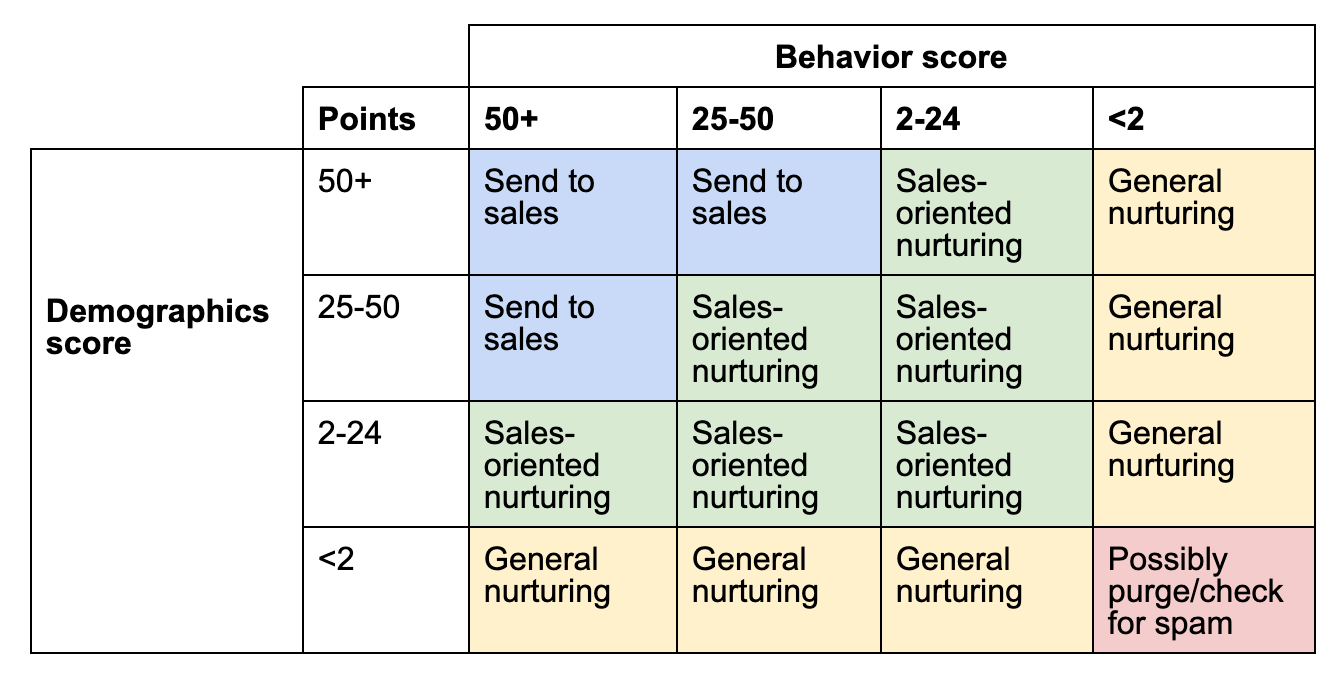
Each criterion is assigned a weight or point value based on its perceived impact on conversion. For example, a “request a demo” action might be worth significantly more points than “visited homepage.”
Defining Score Thresholds and Lifecycle Stages
Once scoring criteria are established, the next crucial step is to define score thresholds that correspond to different lead lifecycle stages. Typical stages include:
- Information Qualified Lead (IQL): A lead who has shown initial interest but needs more nurturing (e.g., downloaded an ebook, signed up for a newsletter).
- Marketing Qualified Lead (MQL): A lead deemed ready for marketing automation and further engagement, having shown sustained interest and met specific scoring criteria.
- Sales Qualified Lead (SQL): A lead that meets defined criteria for sales readiness and is ready for direct outreach from the sales team. This is often the threshold where a lead “flips” from marketing ownership to sales ownership.
- Customer: A converted lead.
These thresholds provide a clear roadmap for both marketing and sales teams, ensuring that leads are handed off at the optimal moment.
Driving Brand Growth and Marketing ROI
The tangible benefits of a well-implemented lead scoring system extend far beyond mere lead prioritization. It directly contributes to sustainable brand growth and a healthier marketing ROI.
Enhanced Sales Productivity and Efficiency
By directing sales teams to focus solely on high-scoring, qualified leads, companies witness a significant boost in sales productivity. Sales representatives spend less time chasing cold leads and more time engaging with prospects who are genuinely interested and ready to discuss solutions. This optimized allocation of resources leads to higher conversion rates, shorter sales cycles, and ultimately, increased revenue generation for the brand.
Improved Marketing Effectiveness
Lead scoring provides invaluable feedback to marketing teams. By analyzing which campaigns, content pieces, and touchpoints generate the highest-scoring leads, marketers can refine their strategies. This data-driven approach allows for more targeted campaign development, better personalization of content, and more efficient allocation of marketing budgets, ensuring every dollar spent contributes effectively to attracting quality prospects. It helps marketers understand the true impact of their efforts on the sales pipeline, rather than just lead volume.
Deeper Customer Understanding and Personalization
The detailed data collected for lead scoring offers a richer understanding of your audience. By segmenting leads based on their scores, attributes, and behaviors, marketing and sales teams can tailor their messaging and outreach strategies. High-scoring leads might receive personalized product demonstrations, while lower-scoring leads might be entered into nurturing sequences with educational content. This personalized approach enhances the customer experience, strengthens brand loyalty, and accelerates the buyer’s journey.

Continuous Optimization and Alignment
Lead scoring is not a static process; it requires continuous monitoring, evaluation, and refinement. Market dynamics, product offerings, and customer behaviors evolve, and so too must your scoring model. Regularly reviewing conversion rates from different lead segments, gathering feedback from sales on lead quality, and analyzing new behavioral patterns are essential for maintaining the model’s accuracy and effectiveness.
Moreover, ongoing alignment between marketing and sales is paramount. Regular meetings to discuss lead definitions, sales feedback, and process improvements ensure that both teams remain unified in their understanding of a qualified lead and their shared goal of driving brand success. By embracing lead scoring as a dynamic, collaborative process, businesses can consistently optimize their customer acquisition strategies, enhance their brand’s market position, and achieve sustainable growth.
aViewFromTheCave is a participant in the Amazon Services LLC Associates Program, an affiliate advertising program designed to provide a means for sites to earn advertising fees by advertising and linking to Amazon.com. Amazon, the Amazon logo, AmazonSupply, and the AmazonSupply logo are trademarks of Amazon.com, Inc. or its affiliates. As an Amazon Associate we earn affiliate commissions from qualifying purchases.