
Employment eligibility verification is a critical process for businesses operating in the United States, designed to confirm that every new hire is legally authorized to work in the country. This isn’t just a bureaucratic hurdle; it’s a fundamental aspect of responsible business operation, directly impacting a company’s financial stability, legal standing, and operational integrity. Understanding this process is paramount for business owners and financial managers looking to mitigate risk and ensure compliance.
The Core Concept: Ensuring a Legal Workforce
At its heart, employment eligibility verification is about adhering to federal law, specifically the Immigration Reform and Control Act (IRCA) of 1986. This legislation makes it illegal for employers to knowingly hire or continue to employ individuals who are not authorized to work in the United States. For businesses, this translates into a proactive responsibility to verify the identity and employment eligibility of all employees hired after November 6, 1986.
The Mandate of IRCA
IRCA introduced civil and criminal penalties for employers who violate the law, making robust verification procedures a non-negotiable part of HR and payroll functions. The act shifted the burden of proof, requiring employers to take reasonable steps to ensure their workforce is legally authorized. This mandate underscores a crucial financial risk for businesses: failure to comply can result in significant fines, legal fees, and even criminal charges, directly impacting the bottom line and long-term viability. From a business finance perspective, non-compliance represents a contingent liability that can suddenly materialize as a substantial unexpected cost.
Beyond Compliance: Business Imperatives
While legal compliance is the primary driver, effective employment eligibility verification offers broader business benefits. It safeguards a company’s reputation, ensuring ethical operations and preventing the negative publicity associated with employing an unauthorized workforce. Furthermore, it helps maintain a stable and predictable labor pool, reducing the risk of sudden workforce disruptions that could arise from enforcement actions. For businesses, workforce stability directly correlates with operational efficiency and predictable labor costs, both vital components of sound financial planning. An unstable workforce, perhaps due to sudden government audits, can lead to immediate drops in productivity, increased hiring costs, and a negative impact on investor confidence.
The Form I-9: The Cornerstone Document
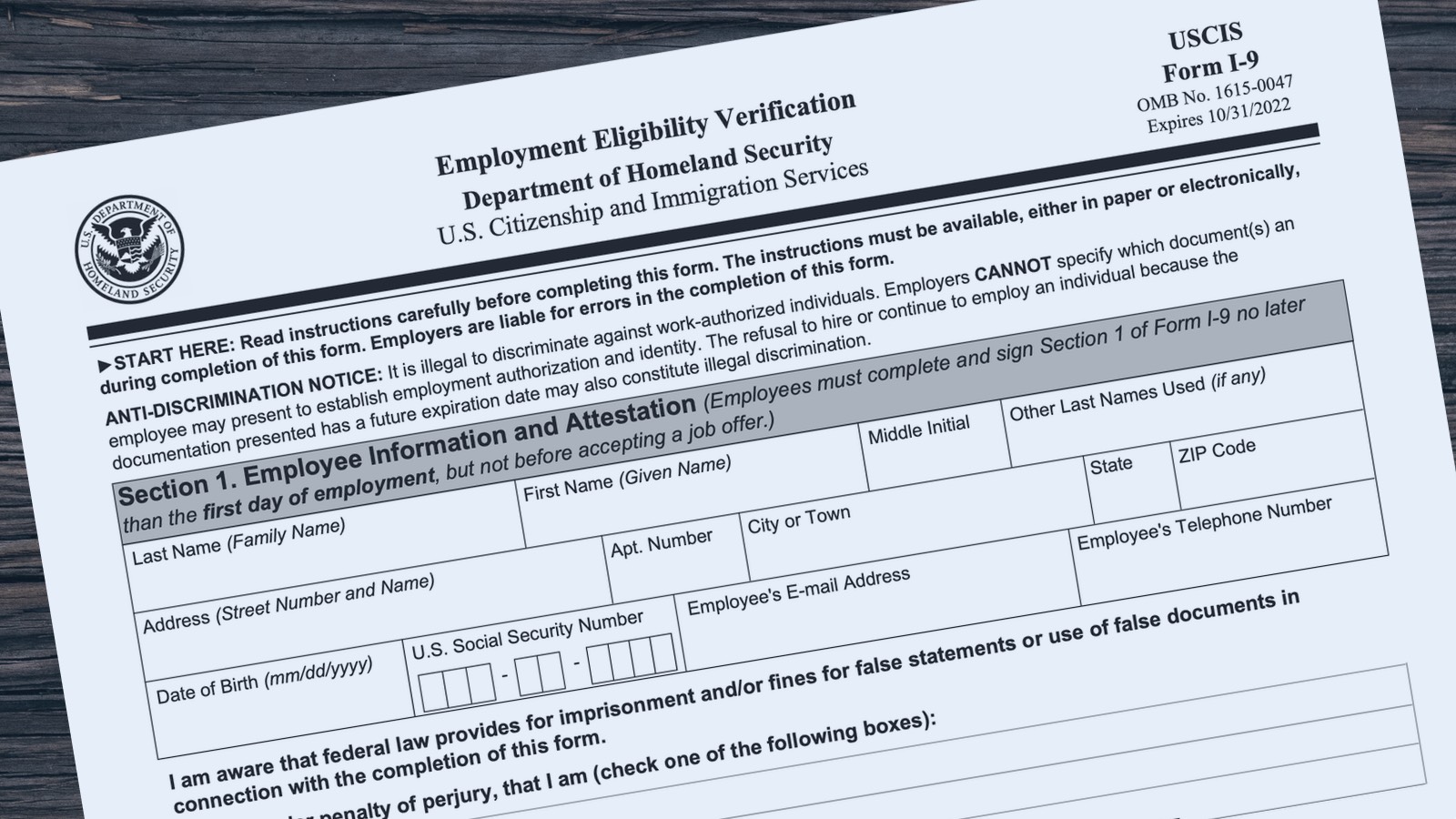
The primary tool for employment eligibility verification is Form I-9, Employment Eligibility Verification. All U.S. employers must complete and retain a Form I-9 for every individual they hire for employment in the United States, regardless of the individual’s citizenship status. This form serves as a standardized record of an employee’s identity and work authorization.
Employer and Employee Responsibilities
The process involves both the employer and the employee. Within three days of hire, the employee must complete Section 1 of Form I-9, attesting to their employment eligibility and providing supporting documentation. The employer then reviews these documents, ensuring they appear genuine and relate to the individual, and completes Section 2 of the form. It’s crucial for employers to remember that they cannot specify which documents an employee must present, provided the employee offers documents from the U.S. Citizenship and Immigration Services (USCIS) List of Acceptable Documents. This distinction is important for avoiding discrimination claims, which themselves can result in costly legal battles and reputational damage.
Acceptable Documents for Verification
USCIS provides a comprehensive list of acceptable documents, categorized into three lists:
- List A documents establish both identity and employment authorization (e.g., U.S. Passport, Permanent Resident Card).
- List B documents establish identity only (e.g., Driver’s License, State ID card).
- List C documents establish employment authorization only (e.g., Social Security card, Birth Certificate).
An employee must present either one document from List A OR one document from List B AND one document from List C. Employers must physically examine the original documents to ensure they appear to be genuine and relate to the person presenting them. Proper documentation review is a key control point in managing legal and financial exposure. Mistakes here can lead to direct fines for improper documentation, regardless of the employee’s actual eligibility.
Timelines and Record-Keeping
Strict timelines apply to Form I-9 completion. Section 1 must be completed by the employee no later than the first day of employment, but can be completed upon acceptance of a job offer. Section 2 must be completed by the employer within three business days of the employee’s first day of employment. If employment lasts less than three days, both sections must be completed on the first day.
Beyond completion, employers must retain the Forms I-9 for a specified period: either three years after the date of hire or one year after employment is terminated, whichever is later. These forms are subject to inspection by authorized government officials. Incorrect retention or inability to produce forms upon request can lead to fines, emphasizing the importance of robust record-keeping systems. Digitization of I-9 forms, while offering efficiency, requires careful attention to secure storage and accessibility protocols to ensure compliance and avoid data breaches. From a financial perspective, investing in reliable HR software or document management systems can be a cost-effective way to manage these requirements and reduce the risk of costly errors.

E-Verify: Modernizing the Process
E-Verify is an internet-based system operated by USCIS in partnership with the Social Security Administration (SSA). It allows employers to electronically confirm the employment eligibility of their newly hired employees by comparing information from the employee’s Form I-9 to data from U.S. Department of Homeland Security (DHS) and SSA records.
How E-Verify Works
After an employer completes an employee’s Form I-9, they enter the employee’s information from Section 1 into the E-Verify system. The system then rapidly checks this information against millions of government records. Typically, E-Verify provides a nearly instant initial response, either confirming employment authorization or indicating a “Tentative Nonconfirmation” (TNC). A TNC means the information did not match government records, and the employee must be given an opportunity to resolve the discrepancy with the relevant agency (DHS or SSA) within a set timeframe. This systematic check adds an additional layer of assurance beyond the visual inspection of documents.
Benefits for Businesses
For businesses, especially those operating in high-risk industries or with large workforces, E-Verify offers several compelling benefits:
- Enhanced Compliance: It significantly reduces the risk of unknowingly hiring unauthorized workers, thereby mitigating potential legal penalties and financial liabilities.
- Fraud Prevention: E-Verify helps identify fraudulent documents or identity theft more effectively than manual inspection alone.
- Streamlined Processes: While initially requiring data entry, E-Verify can integrate with existing HR and payroll systems, potentially streamlining the verification workflow and reducing administrative overhead in the long run.
- Reduced Auditing Risk: Employers using E-Verify in good faith are often viewed favorably by government agencies, potentially reducing the likelihood of costly audits or providing a defense in case of unforeseen issues.
Voluntary vs. Mandatory Participation
E-Verify is generally voluntary for most employers. However, certain federal contractors and employers in states with specific legislation are mandated to use the system. Even where not legally required, many businesses choose to participate due to the enhanced compliance and risk reduction benefits it offers. The decision to use E-Verify, while incurring some initial setup and training costs, can be a strategic financial move, effectively an investment in risk management that prevents potentially larger future expenses related to fines and legal challenges.
The Financial and Legal Stakes of Non-Compliance
Failing to adhere to employment eligibility verification requirements carries severe financial and legal repercussions for businesses. These consequences can range from hefty monetary fines to criminal charges, severely impacting a company’s financial health and market standing.
Penalties and Fines: A Costly Oversight
The most direct financial impact comes from civil penalties. Fines are imposed for various violations, including:
- Paperwork Violations: Incorrectly completing, retaining, or presenting Forms I-9 can lead to fines ranging from hundreds to thousands of dollars per form, depending on the severity and number of violations.
- Knowingly Hiring/Continuing to Employ Unauthorized Workers: This carries much steeper penalties, escalating for repeat offenders. First offense fines can range from thousands of dollars per unauthorized worker, with subsequent offenses reaching tens of thousands.
- Discrimination: Incorrectly applying verification procedures, such as demanding specific documents or refusing valid ones, can result in fines under anti-discrimination provisions of IRCA. These fines add another layer of potential financial burden and legal fees.
These fines are not merely administrative costs; they represent a direct drain on profits and can significantly impact a business’s cash flow, potentially diverting resources from growth initiatives or necessary investments.
Reputational Damage and Operational Disruptions
Beyond direct financial penalties, non-compliance can inflict substantial reputational damage. Public exposure of hiring unauthorized workers can erode customer trust, harm brand image, and impact investor confidence. Such damage can lead to decreased sales, difficulty attracting top talent, and a decline in market valuation – all of which have profound financial implications. Operationally, government audits and enforcement actions can disrupt business activities, diverting management attention and resources away from core functions. In severe cases, business operations could be temporarily or permanently shut down, leading to lost revenue and potential bankruptcy.

Best Practices for Robust Verification
To mitigate these risks, businesses should implement robust best practices:
- Centralized I-9 Management: Use a consistent system for all I-9 forms, whether physical or electronic.
- Regular Training: Ensure all personnel involved in the hiring process (HR, managers) are thoroughly trained on I-9 requirements and E-Verify procedures.
- Internal Audits: Conduct periodic internal audits of I-9 forms to identify and correct errors proactively before a government inspection.
- Stay Updated: Monitor changes in immigration and employment law to ensure ongoing compliance.
- Utilize E-Verify: Even if not mandatory, consider integrating E-Verify for enhanced verification accuracy and reduced risk.
Investing in these practices is a crucial financial decision. The costs associated with training, software, and internal controls are often significantly less than the potential fines, legal fees, and reputational damage resulting from non-compliance. In essence, robust employment eligibility verification is not just a legal obligation; it’s a sound financial strategy that protects a business’s assets and future.
aViewFromTheCave is a participant in the Amazon Services LLC Associates Program, an affiliate advertising program designed to provide a means for sites to earn advertising fees by advertising and linking to Amazon.com. Amazon, the Amazon logo, AmazonSupply, and the AmazonSupply logo are trademarks of Amazon.com, Inc. or its affiliates. As an Amazon Associate we earn affiliate commissions from qualifying purchases.