
Clean coal technology refers to a suite of advanced processes and systems designed to mitigate the environmental impact of coal-fired power generation. With coal remaining a significant global energy source due to its abundance and affordability, these technologies aim to reduce emissions of greenhouse gases, particularly carbon dioxide (CO2), alongside other pollutants like sulfur dioxide (SO2), nitrogen oxides (NOx), and particulate matter. The overarching goal is to enable the continued use of coal in a more environmentally responsible manner, addressing concerns about climate change and air quality while maintaining energy security.
The Rationale Behind Clean Coal Innovations
The push for clean coal technologies stems from a confluence of energy demands and environmental imperatives. Global energy consumption continues to rise, especially in developing economies, and coal accounts for a substantial portion of this supply. However, conventional coal combustion is a major contributor to atmospheric pollution.

The Energy Dilemma
Coal has long been a foundational element of global energy infrastructure. Its widespread availability makes it a crucial resource for electricity generation, industrial processes, and even heating in many parts of the world. For nations with substantial coal reserves but limited access to other energy sources, coal represents a strategic asset for energy independence and economic stability. The challenge lies in reconciling this energy security with the urgent need for climate action. Clean coal technologies seek to bridge this gap, offering a pathway to utilize existing coal resources while striving for lower emissions.
Environmental Imperatives
The combustion of coal releases a range of pollutants into the atmosphere. Beyond CO2, which is a primary greenhouse gas, conventional coal plants emit SO2, a precursor to acid rain and respiratory illnesses; NOx, which contributes to smog and respiratory problems; and particulate matter, linked to cardiovascular and respiratory diseases. The imperative to reduce these emissions is driven by international climate agreements, national environmental regulations, and growing public health concerns. Clean coal technologies are specifically engineered to capture or prevent the formation of these pollutants, thereby reducing the ecological footprint of coal power.
Key Technologies and Processes
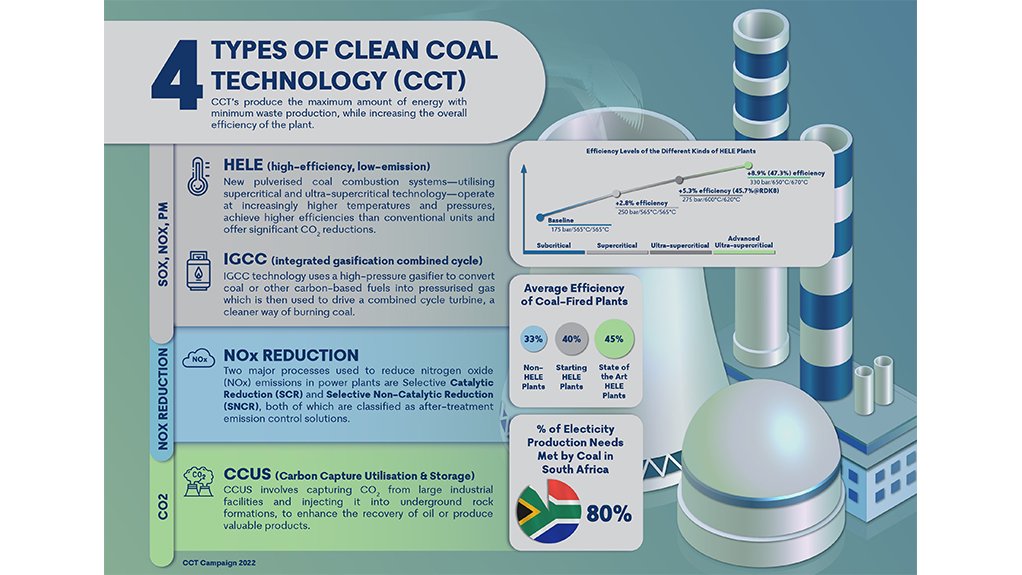
Clean coal technologies encompass a diverse array of innovations applied at various stages of the coal-to-energy process, from pre-combustion treatment to post-combustion capture.
Carbon Capture and Storage (CCS)
CCS is arguably the most prominent and ambitious component of clean coal technology. It involves capturing CO2 emissions from industrial sources, such as power plants, transporting them, and storing them deep underground in geological formations where they cannot enter the atmosphere.
Pre-combustion Capture
In pre-combustion capture, the coal is first gasified into a synthetic gas (syngas), primarily composed of hydrogen and carbon monoxide. This syngas then undergoes a shift reaction, converting the carbon monoxide into CO2, which is subsequently captured. The hydrogen-rich gas is then used to fuel a gas turbine for power generation, resulting in a significantly lower carbon footprint. This method is particularly effective when integrated with technologies like Integrated Gasification Combined Cycle (IGCC) power plants.
Post-combustion Capture
Post-combustion capture involves separating CO2 from the flue gases after the coal has been burned. This is typically achieved using chemical solvents (amines are common) that selectively absorb CO2. The CO2-rich solvent is then heated to release concentrated CO2, which can be compressed and transported for storage. This method is considered adaptable to existing power plants, though it presents challenges related to efficiency and cost.
Oxy-fuel Combustion
Oxy-fuel combustion involves burning coal in a high-purity oxygen environment rather than air. This produces a flue gas primarily composed of CO2 and water vapor, making CO2 capture much easier and less energy-intensive. After cooling and condensing the water, a highly concentrated stream of CO2 remains, ready for compression and storage. This approach requires significant infrastructure for oxygen production, which itself is an energy-intensive process.
Advanced Combustion Technologies
Beyond carbon capture, significant advancements have been made in the combustion process itself to reduce pollutant formation and improve efficiency.
Integrated Gasification Combined Cycle (IGCC)
IGCC power plants represent a significant leap in coal-fired power generation. Instead of direct combustion, coal is gasified at high temperatures and pressures to produce syngas. This syngas is then cleaned to remove pollutants before being burned in a gas turbine to generate electricity. The hot exhaust from the gas turbine is then used to produce steam, which drives a steam turbine for additional power generation, leading to a highly efficient combined cycle. The pre-combustion capture of CO2 is also more efficient with IGCC due to the concentrated CO2 stream in the syngas.
Circulating Fluidized Bed (CFB) Combustion
CFB technology burns coal more efficiently and at lower temperatures than conventional pulverized coal boilers. In a CFB boiler, coal particles are suspended in a hot, turbulent bed of inert material (like sand or limestone) by an upward flow of air. This ensures thorough mixing and combustion. The lower combustion temperatures reduce NOx formation, and the addition of limestone directly into the bed captures SO2 during combustion, eliminating the need for separate flue gas desulfurization units. CFB boilers are also capable of burning a wider variety of low-grade fuels and biomass.

Coal Beneficiation and Preparation
Even before combustion, technologies are applied to enhance the quality of coal and reduce its pollutant potential. These include physical and chemical cleaning processes to remove impurities like ash-forming minerals and sulfur. Advanced coal preparation techniques can significantly reduce the amount of sulfur and other undesirable components in the coal, leading to fewer emissions during combustion and improved overall plant performance. These methods involve crushing, washing, and separating coal based on density, often using gravity separation or froth flotation.
Technological Challenges and Hurdles
Despite the promise of clean coal technologies, their widespread deployment faces substantial technological, economic, and logistical challenges.
Economic Viability and Cost
The most significant barrier to the widespread adoption of clean coal technologies, especially CCS, is the high capital and operating costs. Building new power plants with CCS or retrofitting existing ones requires massive investments. The additional equipment, energy consumption for capture processes, and the infrastructure for transport and storage add considerably to the cost of electricity, making coal power less competitive compared to other energy sources, particularly renewables, in many markets. Subsidies and carbon pricing mechanisms are often cited as necessary to make these technologies economically viable.
Energy Penalty
Carbon capture processes are energy-intensive, consuming a significant portion of the electricity generated by the power plant itself. This “energy penalty” can range from 10% to 40% of the plant’s output, meaning that for the same amount of net electricity delivered to the grid, a plant with CCS needs to burn more coal and generate more gross power. This reduces the overall efficiency of the power plant and increases its operational costs, further exacerbating the economic challenges.
Infrastructure Requirements
The successful implementation of CCS requires extensive infrastructure that is largely non-existent today. This includes pipelines for transporting captured CO2 from power plants to storage sites, as well as the identification, characterization, and regulatory approval of suitable geological storage reservoirs. Developing this infrastructure on a scale necessary to make a meaningful impact on global emissions is a monumental undertaking, requiring coordinated efforts across industries and governments.
Public Acceptance and Regulatory Frameworks
While often perceived as a technical challenge, public acceptance plays a crucial role. Concerns about the safety of CO2 storage, potential leakage, and the overall environmental impact of large-scale CCS projects can lead to public opposition. Furthermore, clear and stable regulatory frameworks are essential for project developers, providing certainty around liability for stored CO2, monitoring requirements, and long-term stewardship of storage sites. The absence of such frameworks can hinder investment and deployment.
The Future Landscape of Coal Technology
The trajectory of clean coal technology is complex, situated at the intersection of energy needs, climate policy, and rapid advancements in renewable energy.
Innovation and Research
Ongoing research and development are critical to overcoming the current limitations. Innovations are focusing on reducing the energy penalty of capture technologies through new solvents, membranes, and sorbents that require less energy to regenerate. Research into enhanced geological storage techniques, including CO2 utilization (CCU) where captured CO2 is transformed into valuable products (e.g., fuels, chemicals, building materials), also offers potential pathways to improve economic viability and broaden deployment.
The Role in Energy Transition
As the world transitions towards a low-carbon future, the role of clean coal technology is intensely debated. While some advocate for a complete phase-out of coal, others argue that clean coal, particularly CCS, can serve as a bridge technology, allowing for continued baseload power generation while deeply decarbonizing the energy sector. For regions heavily reliant on coal and with young, efficient coal fleets, investing in clean coal could offer a path to decarbonization that avoids immediate and disruptive shutdowns, providing a more gradual transition.
Global Perspectives
The adoption and emphasis on clean coal technologies vary significantly across the globe. Countries like China and India, with vast coal reserves and rapidly growing energy demands, continue to invest in advanced coal technologies, including some CCS projects, as part of their energy security strategies. In contrast, many developed nations in Europe and North America are increasingly shifting focus directly to renewables, with clean coal projects facing steeper economic and political headwinds. The global future of clean coal technology will likely depend on a combination of regional energy policies, technological advancements, carbon pricing mechanisms, and the evolving competitiveness of alternative energy sources.
aViewFromTheCave is a participant in the Amazon Services LLC Associates Program, an affiliate advertising program designed to provide a means for sites to earn advertising fees by advertising and linking to Amazon.com. Amazon, the Amazon logo, AmazonSupply, and the AmazonSupply logo are trademarks of Amazon.com, Inc. or its affiliates. As an Amazon Associate we earn affiliate commissions from qualifying purchases.