
The Calvin Cycle stands as a foundational biological process, yet its intricate mechanisms and systemic efficiencies offer profound inspiration and actionable blueprints for modern technological innovation. Far from being confined to the pages of biology textbooks, this ancient biochemical pathway—nature’s primary method for converting atmospheric carbon dioxide into organic compounds—is increasingly becoming a focal point in diverse fields of technology, from advanced carbon capture systems to sophisticated agricultural analytics and synthetic biology. Understanding the Calvin Cycle through a technological lens reveals it not just as a natural phenomenon, but as a robust, optimized algorithm developed over millennia of evolution, ripe for emulation and improvement through computational and engineering approaches.

The Biological Blueprint for Innovation
At its core, the Calvin Cycle represents an exquisitely fine-tuned biological system for carbon fixation, a process critical for sustaining life on Earth. From a technological perspective, it is a masterclass in resource management and sustainable synthesis, offering insights into how complex chemical transformations can be achieved with remarkable precision and efficiency. Studying this cycle provides a rich dataset for engineers and computer scientists seeking to design more effective industrial processes, environmental solutions, and even novel forms of energy generation.
Core Mechanisms: A System Perspective
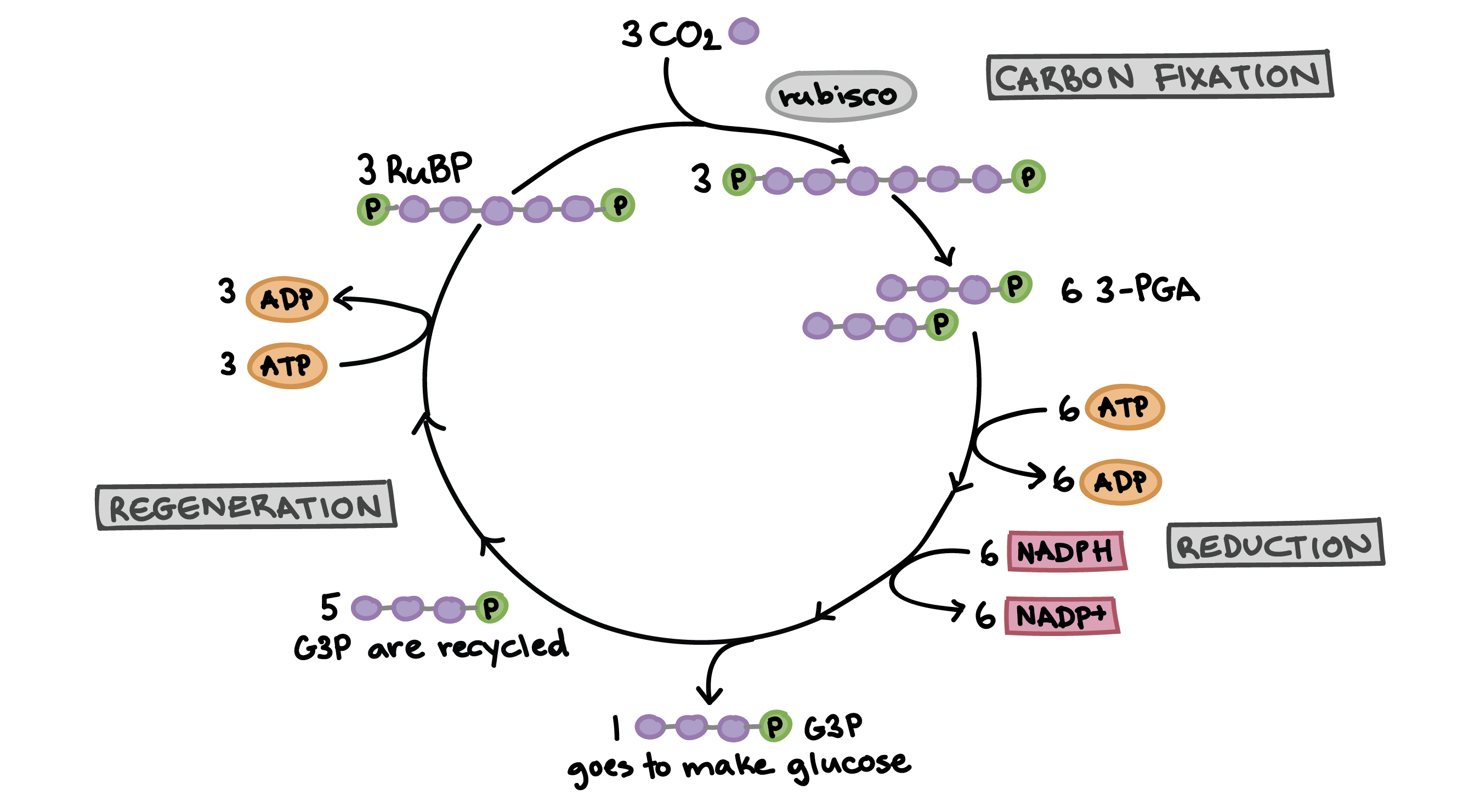
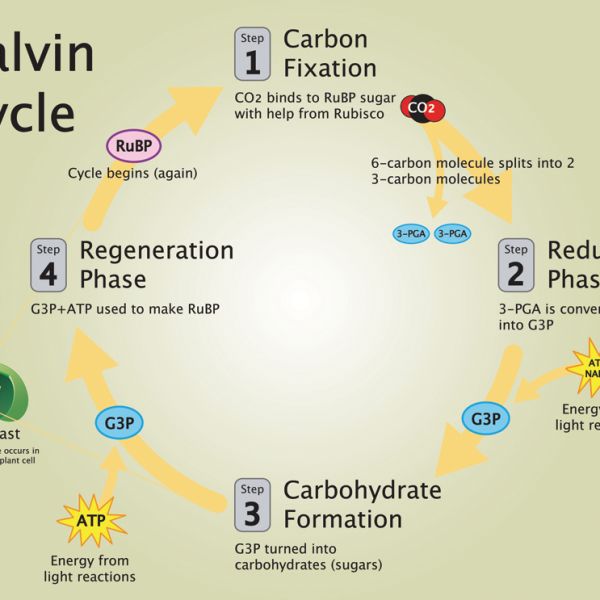
The Calvin Cycle operates as a cyclical metabolic pathway, an elegant three-phase biochemical engine. It begins with carbon fixation, where an enzyme called RuBisCO catalyzes the incorporation of carbon dioxide into an existing five-carbon sugar, ribulose-1,5-bisphosphate (RuBP). This initial step can be seen as the “input processing” phase, where atmospheric carbon is captured and integrated into the system. The subsequent reduction phase uses energy carriers (ATP and NADPH, generated from the light-dependent reactions of photosynthesis) to convert the unstable six-carbon intermediate into stable three-carbon sugar molecules. This is akin to a “data transformation” or “manufacturing” stage, converting raw inputs into usable building blocks. Finally, the regeneration phase reconstitutes the RuBP acceptor molecule, ensuring the cycle can continue. This “resource recycling” loop is a hallmark of sustainable design, minimizing waste and maximizing throughput. Each step is a module, interacting in a precise sequence, offering a model for modular and scalable technological systems.
Efficiency in Nature’s Design
Despite its seemingly complex array of enzymatic reactions, the Calvin Cycle demonstrates remarkable efficiency, particularly in its ability to operate under varying environmental conditions. While RuBisCO, the primary enzyme, is notoriously slow and promiscuous, competing with oxygen, the overall pathway has evolved compensatory mechanisms. Plants have developed adaptations like C4 and CAM photosynthesis to concentrate CO2 around RuBisCO, effectively bypassing its limitations in hot, dry climates. These adaptations highlight nature’s iterative optimization processes—a continuous refinement of existing “code” to improve performance under specific constraints. For technologists, this offers valuable lessons in designing resilient, adaptive systems that can perform optimally even when faced with inherent bottlenecks or fluctuating external parameters. The cyclic nature itself is a lesson in sustainable processing, where initial investment in materials is continuously reused and regenerated.
Tech Innovations Inspired by the Calvin Cycle
The insights gleaned from the Calvin Cycle are not merely academic; they are actively informing and catalyzing a new generation of technological advancements. Engineers and scientists are seeking to emulate, improve upon, or integrate aspects of this natural process into human-designed systems, particularly in areas critical to environmental sustainability and resource management.
Carbon Capture and Utilization (CCU) Technologies
One of the most direct applications of Calvin Cycle principles is in the burgeoning field of Carbon Capture and Utilization (CCU). Traditional industrial carbon capture often relies on energy-intensive chemical scrubbers. However, the Calvin Cycle provides a blueprint for a biological, or bio-inspired, approach to converting CO2 into valuable products. Researchers are developing bioreactors that house algae or engineered microorganisms whose photosynthetic machinery, including variations of the Calvin Cycle, can efficiently sequester CO2 from industrial emissions. These biological systems can then produce biofuels, bioplastics, or other organic chemicals, effectively turning a waste product into a resource. Furthermore, biomimetic catalysts are being developed that mimic RuBisCO’s function, aiming to achieve high specificity for CO2 while overcoming its inherent sluggishness, leading to more efficient artificial carbon fixation plants.
Synthetic Biology and Bioengineering
The field of synthetic biology is actively “re-engineering” the Calvin Cycle for enhanced performance in engineered organisms. By isolating and modifying the genes responsible for key enzymes, or even introducing entirely new enzymes from other organisms, scientists aim to create novel metabolic pathways that fix carbon more efficiently or produce desired compounds at higher yields. For instance, efforts are underway to introduce “faster” or more CO2-specific RuBisCO variants into crop plants to boost agricultural productivity. Beyond plants, synthetic biologists are designing bacteria and yeasts to incorporate synthetic carbon fixation pathways, allowing them to utilize CO2 as a primary carbon source for industrial fermentation, thus transforming waste CO2 into a sustainable feedstock for pharmaceutical, food, or material production. This represents a significant leap from merely understanding the cycle to actively reprogramming it for specific human needs.
Algorithmic Simulation and Optimization
The complex network of reactions within the Calvin Cycle makes it an ideal candidate for computational modeling and algorithmic optimization. Advanced software tools are employed to simulate the entire pathway, analyzing enzyme kinetics, metabolic flux, and energy balances under various conditions. These simulations allow researchers to identify rate-limiting steps, predict the effects of genetic modifications, and explore hypothetical “synthetic” Calvin Cycles that might outperform natural variants. Machine learning algorithms are particularly useful in sifting through vast biological data to pinpoint optimal enzyme combinations or regulatory strategies that could maximize carbon fixation efficiency or desired product output in engineered biological systems. This computational approach significantly accelerates the design-build-test cycle inherent in synthetic biology, transforming biological engineering into a data-driven discipline.
Software and Computational Tools in Carbon Management
The increasing relevance of the Calvin Cycle in technological applications has spurred the development of specialized software and computational tools. These tools are indispensable for designing, analyzing, and optimizing the bio-inspired and synthetic systems that aim to manage carbon more effectively. From predictive analytics in agriculture to creating digital replicas of biological processes, technology is providing unprecedented control and insight into carbon dynamics.
Predictive Modeling for Agricultural Yields
Understanding the nuances of the Calvin Cycle’s operation under various environmental stressors (e.g., drought, heat, CO2 levels) is crucial for optimizing agricultural productivity. Software models are now used to simulate how changes in specific Calvin Cycle enzymes or environmental parameters might affect crop yields. These predictive models integrate genetic data, physiological measurements, and climatic information to forecast plant growth and carbon assimilation efficiency. Farmers and agricultural technologists can leverage these insights to make data-driven decisions regarding crop selection, irrigation schedules, and fertilization strategies, potentially leading to increased food security and more sustainable farming practices. Such tools act as virtual laboratories, allowing for the rapid testing of hypotheses without resource-intensive field trials.
Digital Twins of Photosynthetic Systems
The concept of a “digital twin”—a virtual replica of a physical system—is being applied to complex biological processes like the Calvin Cycle. Researchers are creating digital twins of photosynthetic organisms or even entire agricultural fields, which incorporate detailed models of the Calvin Cycle, light capture, water transport, and nutrient uptake. These digital twins can run simulations in real-time or accelerate time, allowing for the precise monitoring of how various interventions or environmental shifts impact carbon fixation rates and overall plant health. This technology enables remote monitoring, predictive maintenance for large-scale bioreactors, and dynamic optimization of growth conditions, paving the way for hyper-efficient bio-manufacturing and precision agriculture where every variable is meticulously managed for maximum output.
Future Tech Horizons and the Calvin Cycle’s Legacy
The journey of unlocking the full technological potential of the Calvin Cycle is just beginning. As computational power grows and our understanding of biological systems deepens, we can anticipate even more sophisticated applications. Future developments might include truly autonomous biorefineries driven by engineered microorganisms that self-optimize their carbon fixation pathways in response to real-time environmental data, orchestrated by advanced AI algorithms. We might see the creation of fully synthetic chemical cycles that mimic the Calvin Cycle’s efficiency, using inorganic catalysts and renewable energy to convert atmospheric CO2 into fuels or industrial chemicals on a massive scale, entirely bypassing biological systems.
Moreover, the integration of quantum computing could revolutionize the simulation of enzyme kinetics, allowing for unprecedented accuracy in designing novel catalysts for carbon fixation. Nanotechnology might enable the creation of artificial “chloroplasts” that can perform photosynthesis-like reactions with superior efficiency. Ultimately, the Calvin Cycle, once seen primarily as a biological curiosity, is transforming into a cornerstone of a sustainable future—a testament to nature’s profound ingenuity and an enduring source of inspiration for technological advancement in an era defined by the critical need for carbon management and resource efficiency. Its legacy will not just be in sustaining natural ecosystems, but also in guiding the evolution of human technology towards a more harmonious relationship with the planet’s carbon cycle.
aViewFromTheCave is a participant in the Amazon Services LLC Associates Program, an affiliate advertising program designed to provide a means for sites to earn advertising fees by advertising and linking to Amazon.com. Amazon, the Amazon logo, AmazonSupply, and the AmazonSupply logo are trademarks of Amazon.com, Inc. or its affiliates. As an Amazon Associate we earn affiliate commissions from qualifying purchases.