
The Foundational System Behind Digital Innovation
Arabic numbering, more accurately known as the Hindu-Arabic numeral system, is the bedrock upon which virtually all modern technology is built. Far more than just a sequence of symbols, it represents a revolutionary conceptual leap in mathematics that paved the way for complex calculations, advanced engineering, and ultimately, the digital age. Without this elegantly simple yet profoundly powerful system, the intricate algorithms, vast datasets, and sophisticated hardware that define contemporary technology would simply not exist. Its adoption transformed not only commerce and science but also laid the groundwork for how we quantify, process, and interact with information in the digital realm.
Origins and Evolution: A Brief History
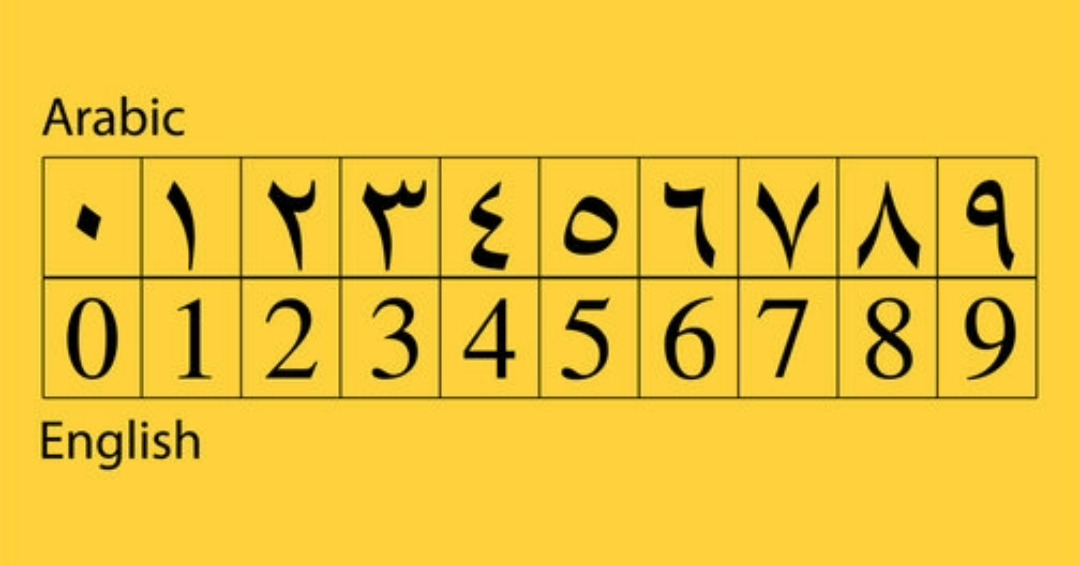
The journey of Arabic numerals began in ancient India, where the concept of a positional numeral system, along with the crucial invention of zero, first emerged. This system was later transmitted to the Arab world, notably through the works of Persian mathematicians like al-Khwarizmi in the 9th century, whose treatise “On the Calculation with Hindu Numerals” played a pivotal role in its dissemination. From the Arab world, it gradually made its way into Europe, displacing the cumbersome Roman numeral system over several centuries. Fibonacci’s “Liber Abaci” in the early 13th century was instrumental in introducing these numerals to Western Europe, highlighting their efficiency for arithmetic operations. The adoption was slow but inevitable, driven by the practical advantages it offered for trade, astronomy, and scientific inquiry. What truly distinguishes this system is not merely the shapes of the digits (0, 1, 2, 3, 4, 5, 6, 7, 8, 9), but the underlying principle that governs their value.
The Power of Place Value and Zero
The genius of the Hindu-Arabic numeral system lies in two interconnected innovations: place value and the numeral zero. Place value means that the position of a digit in a number determines its magnitude. For example, in the number 333, the first ‘3’ represents three hundreds, the second ‘3’ represents three tens, and the third ‘3’ represents three units. This hierarchical structure allows for the representation of arbitrarily large or small numbers using only ten unique symbols.
Equally critical is the concept of zero. Prior to its widespread adoption, number systems struggled to represent empty places, leading to ambiguity and complexity. Zero, as both a placeholder and a number in its own right, resolved this. It allows us to distinguish between numbers like 3, 30, and 300 with absolute clarity. This combination of place value and zero simplified arithmetic operations — addition, subtraction, multiplication, and division — making them far more efficient and less prone to error than systems like Roman numerals, which lacked these features. This efficiency was not just a convenience; it was a fundamental shift that enabled the development of complex mathematical theories and, centuries later, the logical operations required for computing.
Enabling Computation: From Abacus to Algorithms
The transition from manual calculation to automated computation is directly traceable to the inherent structure of Arabic numbering. The very design of modern digital computers, from their fundamental logic gates to their high-level programming languages, is predicated on the principles of positional notation and the capacity for abstract mathematical operations that the Hindu-Arabic system embodies.
Representing Data: Binary and Beyond
While we primarily use a base-10 (decimal) system in everyday life, the core concept of place value from Arabic numbering seamlessly extends to other bases, most notably the binary (base-2) system crucial for computers. In binary, only two digits, 0 and 1, are used. Each position represents a power of two. For example, the binary number 1011 translates to (1 * 2^3) + (0 * 2^2) + (1 * 2^1) + (1 * 2^0) = 8 + 0 + 2 + 1 = 11 in decimal. This adaptability allows computers to represent all data—numbers, text, images, and sound—as sequences of these binary digits, or bits. The fundamental logic gates (AND, OR, NOT) that form the building blocks of computer processors operate on these binary values, performing the arithmetic and logical operations that underpin every piece of software. Without the conceptual framework established by the Hindu-Arabic system’s place value, the elegant and efficient conversion of human-readable numbers into machine-processable binary code would be inconceivable. Beyond binary, other bases like octal (base-8) and hexadecimal (base-16), also leveraging place value, are used in computing for more compact data representation and memory addressing.
Algorithmic Efficiency and Digital Processing
The clarity and consistency of the Arabic numbering system are what make modern algorithms possible. An algorithm is a set of well-defined instructions for solving a problem or performing a computation. The ability to perform arithmetic operations systematically and predictably with Arabic numerals directly translated into the ability to design algorithms that computers could execute. Simple operations like addition or multiplication, which are trivial with Arabic numerals, become complex with systems like Roman numerals, hindering any attempt at automation.
In computing, algorithms are designed to operate on numeric data. Whether it’s sorting a list of numbers, calculating financial models, rendering complex graphics, or performing machine learning computations, the underlying processes rely on numerical manipulations. The efficiency of these manipulations is directly tied to the ease with which numbers can be represented and processed using the Hindu-Arabic system’s principles. Data structures like arrays, matrices, and trees, fundamental to software development, are populated and navigated using numerical indices and values. The entire edifice of digital processing, from the lowest-level machine code to the highest-level artificial intelligence, is a testament to the power and flexibility inherent in a system that allows for clear, unambiguous, and efficient numerical operations.
Ubiquitous in Modern Software and Hardware
The influence of Arabic numbering is not confined to the theoretical underpinnings of computing; it is pervasively embedded in every layer of contemporary technology, from the most visible user interfaces to the most obscure hardware components. Its principles guide how we interact with devices, how software is written, and how data is processed and stored.
User Interfaces and Data Visualization

Every digital display, from a smartphone screen to a complex control panel, relies on Arabic numerals to convey information. Clocks, battery indicators, progress bars, file sizes, performance metrics, and virtually all quantitative data are presented using these familiar digits. Data visualization tools, essential for interpreting complex information in fields like business intelligence, scientific research, and financial analysis, heavily depend on the clarity and universality of Arabic numerals. Graphs, charts, dashboards, and tables would be unintelligible without a universally understood numerical system. The seamless integration of these numerals ensures that users across different cultures and technical proficiencies can quickly grasp numerical information, making technology intuitive and accessible.
Programming Languages and Data Structures
At the heart of all software development are programming languages, and these languages are built to manipulate data, much of which is numerical. Variables store numbers, loops iterate a specific number of times, conditions check numerical comparisons, and functions perform mathematical computations. Whether it’s Python, Java, C++, or JavaScript, all modern programming languages inherit and extend the utility of Arabic numbering to represent integers, floating-point numbers, and complex numerical types.
Furthermore, data structures—the organized ways of storing data—are heavily reliant on numerical indexing and referencing. Arrays, lists, and hash tables use numerical indices to access elements. Databases use unique numerical identifiers to manage records. The logic of algorithms and the architecture of data structures are intricately woven with the fabric of Arabic numbering, enabling programmers to create sophisticated applications that process and manage vast quantities of information with precision.
The Backbone of AI, Analytics, and IoT
In the realms of artificial intelligence (AI), data analytics, and the Internet of Things (IoT), Arabic numbering is not just a display mechanism but the very lifeblood of their functionality. Machine learning models, a core component of AI, operate by performing complex mathematical computations on numerical datasets. Neural networks, for instance, are essentially vast systems of interconnected numerical weights and biases that are adjusted through iterative calculations to learn patterns and make predictions.
Data analytics, which seeks to extract insights from raw data, involves statistical analysis, regression, and pattern recognition—all fundamentally numerical operations. Gigabytes and terabytes of data generated by IoT devices—sensors, smart appliances, industrial machinery—are inherently quantitative. Temperatures, pressures, speeds, counts, and measurements are all collected and transmitted as numerical values, processed by algorithms, and stored in databases, all thanks to the efficient representation enabled by the Arabic numbering system. The scale and complexity of these modern technological marvels would be utterly unattainable without this universal numeric foundation.
Security and Precision in a Numbered World
In the digital landscape, where data integrity and secure transactions are paramount, the precision and unambiguous nature of Arabic numbering play a critical role. Its structured foundation contributes significantly to the reliability of digital systems, from safeguarding sensitive information to ensuring the accuracy of complex calculations.
Cryptography and Digital Security
Cryptography, the science of secure communication, relies heavily on advanced mathematical concepts, which in turn are built upon the solid ground of Arabic numbering. Encryption algorithms, such as RSA or AES, involve intricate numerical operations like modular arithmetic, prime number factorization, and large number exponentiation. These algorithms transform plaintext into ciphertext and vice versa, using keys that are essentially very large numbers. The integrity of digital signatures, which verify the authenticity of digital messages, also depends on numerical hashes and cryptographic functions. Any vulnerability in the handling or representation of these numbers could lead to severe security breaches. The inherent clarity and computational efficiency afforded by Arabic numerals allow for the development and implementation of these sophisticated cryptographic techniques, protecting sensitive data, financial transactions, and national security infrastructure in the digital age.
Ensuring Accuracy in Data Operations
The accuracy of numerical operations is non-negotiable in many tech applications, from scientific simulations to financial trading platforms. Arabic numbering’s clear place-value system minimizes ambiguity, which is crucial for preventing errors in data entry, processing, and interpretation. Financial software, for example, must perform calculations with absolute precision to avoid discrepancies in ledger balances or interest accruals. Scientific computing demands high-precision floating-point arithmetic for simulations in physics, engineering, and climate modeling, where small errors can lead to significant deviations in results. Quality control systems in manufacturing, medical diagnostic tools, and navigation systems all rely on precise numerical data and calculations. The global adoption and standardization of Arabic numerals mean that numerical data can be reliably exchanged and processed across diverse systems and platforms without loss of meaning or precision, a fundamental requirement for interconnected digital ecosystems.
The Future of Numeric Representation in Tech
As technology continues to evolve, the principles embedded in Arabic numbering will remain indispensable. Even as new computational paradigms emerge, the underlying need for a clear, efficient, and universal system of numerical representation persists.
Beyond Base-10: How Arabic Numerals Inform Other Systems
While our daily lives are dominated by base-10, the Hindu-Arabic system’s principles of place value and zero are robust enough to extend to other numerical bases fundamental to computing. Binary (base-2), octal (base-8), and hexadecimal (base-16) are not separate systems in their fundamental logic; they are merely different manifestations of the same positional numbering concept. Understanding Arabic numerals in base-10 provides the conceptual framework for comprehending how computers represent and manipulate data in binary. This adaptability means that as computing explores new architectures or even quantum computing states, the foundational logic derived from Arabic numbering continues to provide a coherent framework for understanding and operating with quantities, regardless of the base or the underlying physical representation.

The Enduring Legacy in Quantum and Advanced Computing
Even at the frontiers of computing, such as quantum computing, the abstract representation of quantities and the need for precise mathematical operations underscore the enduring legacy of Arabic numbering. Quantum states are described by complex numbers, and quantum algorithms involve sophisticated linear algebra. While the physical implementation of quantum bits (qubits) differs vastly from classical bits, the mathematical tools used to describe and manipulate these states are deeply rooted in the numeric systems derived from the Hindu-Arabic tradition. Similarly, in areas like neuromorphic computing, which mimics the human brain, numerical weights and thresholds remain crucial components of the computational model. The ability to clearly define, operate on, and interpret numerical values across any scale or complexity ensures that Arabic numbering, in its conceptual essence, will continue to be the universal language of quantification and computation, driving innovation in every facet of technology for generations to come.
aViewFromTheCave is a participant in the Amazon Services LLC Associates Program, an affiliate advertising program designed to provide a means for sites to earn advertising fees by advertising and linking to Amazon.com. Amazon, the Amazon logo, AmazonSupply, and the AmazonSupply logo are trademarks of Amazon.com, Inc. or its affiliates. As an Amazon Associate we earn affiliate commissions from qualifying purchases.