
Anchor links, often referred to as jump links or named anchors, are a fundamental yet powerful element in web development, designed to enhance user navigation and interaction within a single web page. Unlike standard hyperlinks that direct users to an entirely different page or external resource, an anchor link allows users to jump instantly to a specific section or element within the current document. This seemingly simple functionality plays a crucial role in optimizing user experience, improving content accessibility, and subtly influencing search engine discoverability, particularly for long-form content.
Understanding the Fundamentals of Anchor Links
At its core, an anchor link is a specialized hyperlink that targets a distinct point on the same page. This mechanism relies on two primary components: a designated target element with a unique identifier and a hyperlink pointing to that identifier.

Definition and Core Functionality
An anchor link functions as an internal navigation shortcut. Imagine a lengthy article, a comprehensive FAQ page, or an extensive piece of technical documentation. Without anchor links, a user seeking a specific piece of information would be forced to scroll manually through the entire page, a potentially frustrating and time-consuming endeavor. Anchor links circumvent this by creating a direct, clickable path to predefined sections.
When a user clicks an anchor link, the browser’s viewport smoothly (or instantly, depending on CSS settings) scrolls to the element on the page that corresponds to the link’s target. This creates a more fluid and efficient browsing experience, allowing users to quickly access the most relevant information without leaving the current context. It’s an essential tool for breaking down large blocks of content into manageable, navigable segments.
How Anchor Links Enhance User Experience (UX)
The impact of anchor links on user experience is significant and multifaceted:
- Improved Navigation: For content-heavy pages, anchor links transform a daunting scroll into an organized, navigable structure. They empower users by giving them control over their browsing journey, allowing them to pinpoint and access desired information with minimal effort.
- Reduced Cognitive Load: Users don’t have to remember where a specific piece of information is located on a long page. A well-structured table of contents using anchor links provides a clear roadmap.
- Increased Engagement: When users can easily find what they’re looking for, they are more likely to stay on the page longer and engage more deeply with the content. Frustration from endless scrolling can lead to higher bounce rates.
- Enhanced Scannability: Anchor links, especially when presented in a “Table of Contents” format at the top of an article, make the entire page’s structure and content scope immediately apparent, aiding quick assessment and decision-making.
- Accessibility Benefits: For users relying on screen readers or other assistive technologies, anchor links provide critical waypoints, allowing them to skip irrelevant sections and navigate directly to content of interest, significantly improving the accessibility of web content.
The Technical Mechanics: How Anchor Links Work
Implementing anchor links involves basic HTML structure, leveraging specific attributes to create both the destination and the linking mechanism. Understanding these technical underpinnings is crucial for correct and effective deployment.
The id Attribute: Creating the Destination
The first step in creating an anchor link is to designate the target section or element on the page. This is achieved by assigning a unique id attribute to an HTML element. The id attribute provides a distinct label for that specific element, making it addressable by a hyperlink.
For example, to mark a section heading as a destination, you might use:
<h2>Introduction to Anchor Links</h2>
Key considerations for the id attribute:
- Uniqueness: Every
idattribute within a single HTML document must be absolutely unique. Duplicate IDs can lead to unpredictable navigation behavior and validation errors. - Case-Sensitivity: IDs are case-sensitive.
#Introduction-To-Anchorsis different from#introduction-to-anchors. It’s a common best practice to use lowercase and hyphens (kebab-case) for consistency and readability. - Valid Characters: IDs should start with a letter and can contain letters, numbers, hyphens (
-), underscores (_), colons (:), and periods (.). However, sticking to alphanumeric characters and hyphens is generally recommended for broader compatibility.
The href Attribute: Linking to the Destination
Once a target element has been assigned a unique id, a hyperlink can be created to point to it. This is done using the standard <a> (anchor) tag with its href attribute. The href attribute’s value will consist of a hash symbol (#) followed immediately by the id of the target element.
For instance, to link to the section defined above:
<a href="#introduction-to-anchors">Jump to Introduction</a>
When a user clicks this link, the browser will locate the element with id="introduction-to-anchors" and scroll the viewport to bring that element into view.
Implementation in HTML and CMS Platforms
Manually adding anchor links involves directly editing the HTML. This provides the greatest control but requires familiarity with HTML syntax.
Many Content Management Systems (CMS) like WordPress, Squarespace, and Joomla, simplify this process:
- WordPress (Block Editor): Most heading blocks (and often other block types) have an “Advanced” settings panel where you can input an “HTML Anchor” value, which directly maps to the
idattribute. Creating the link then involves manually typing#your-anchor-idinto the link field. - Custom HTML Blocks: All CMS platforms allow for the insertion of custom HTML blocks where you can write the
idandhrefattributes directly. - Third-party Plugins/Extensions: Various plugins are available that automate the creation of tables of contents with anchor links, often by scanning heading tags (H1, H2, H3, etc.) within the content.
Regardless of the method, the underlying principle remains the same: a unique ID on the target, and a hash-prefixed reference in the link.

Practical Applications and Benefits in Web Design
Anchor links are more than just a convenience; they are strategic tools in modern web design and content strategy.
Navigating Long-Form Content and Articles
This is the most common and evident application. For any web page that extends beyond a few screen lengths, anchor links become indispensable:
- Blog Posts and Articles: A “Table of Contents” at the beginning of a long blog post, populated with anchor links, allows readers to skip directly to sections of interest.
- FAQ Pages: Each question can be an anchor link, with the answer below having its corresponding
id, enabling quick access to specific queries. - Technical Documentation: Manuals, guides, and API documentation often feature extensive sections. Anchor links facilitate efficient navigation through complex technical information.
- Legal Documents: Terms of Service, privacy policies, and other legal texts are often dense. Anchor links can help users quickly locate specific clauses.
Improving SEO and Discoverability (Technical SEO aspect)
While anchor links are not a direct SEO ranking factor, their positive influence on user experience can indirectly benefit search engine optimization:
- Google’s “Jump To” Links: For highly relevant and well-structured content, Google may display “jump to” links directly in the Search Engine Results Pages (SERP). These are essentially anchor links that Google automatically generates or detects from your page, allowing users to land directly on a specific section. This can increase click-through rates (CTR) by offering more specific entry points.
- Featured Snippets: If a specific section of your page directly answers a user’s query, an anchor link could potentially be used by Google in a featured snippet, further enhancing visibility.
- Content Structure Signaling: The presence of clear headings with IDs and a logical internal linking structure can signal to search engines that your content is well-organized and authoritative, aiding in better understanding and indexing of your page’s content.
- Reduced Bounce Rate: Improved UX from easy navigation can lead to lower bounce rates, which search engines may interpret as a signal of content quality and relevance.
Enhancing Accessibility
Anchor links are crucial for making web content more accessible to a wider audience, including individuals with disabilities:
- Screen Reader Navigation: Users of screen readers can easily navigate between sections when clear anchor links and semantic heading structures are in place. They can jump directly to headings or specific
idattributes without needing to listen to the entire page content. - Keyboard Navigation: For users who cannot use a mouse, anchor links provide clear tab stops and targets for keyboard navigation, making the page easier to traverse.
- WCAG Compliance: Implementing anchor links thoughtfully contributes to meeting various Web Content Accessibility Guidelines (WCAG) criteria related to navigation and information structure.
Streamlining User Flows in Web Applications
Beyond static content, anchor links can streamline interactive user flows within dynamic web applications:
- Dashboards: On complex user dashboards, anchor links can provide quick access to specific widgets, settings panels, or reporting sections.
- Multi-Step Forms: While not typically used to skip steps, anchor links can provide direct access to specific validation error messages or summary sections within a long form.
- Profile Pages: For user profiles with numerous sections (e.g., personal info, preferences, activity log), anchor links can offer a mini-navigation panel.
Best Practices and Advanced Considerations for Implementation
To maximize the effectiveness of anchor links, adhering to best practices and understanding potential challenges is essential.
Choosing Descriptive and Unique IDs
- Clarity: IDs should clearly describe the content of the section they represent (e.g.,
features-overview, notsection1). - Consistency: Use a consistent naming convention (e.g.,
kebab-casefor all IDs). - Uniqueness: Double-check that every
idon the page is unique to prevent conflicts and ensure reliable navigation. - Simplicity: Keep IDs concise and easy to type if you are linking to them manually.
Visual Feedback and User Expectations
- Smooth Scrolling: Implement
scroll-behavior: smooth;in CSS on thehtmlelement to provide a more visually pleasing transition when jumping to an anchor. - Active State Highlighting: For tables of contents, consider using JavaScript to dynamically highlight the currently active section as the user scrolls, providing visual context.
- Consistent Placement: Place anchor link navigation (e.g., Table of Contents) in a predictable location, usually at the top of the content or in a sticky sidebar.
Potential Pitfalls and How to Avoid Them
- Broken Links: A common issue is a mismatch between the
hrefin the link and theidof the target. Typographical errors are frequent culprits. Regularly test anchor links, especially after content updates. - Over-reliance: While useful for long pages, don’t use anchor links to artificially segment content that should ideally be on separate pages or is too short to warrant internal navigation.
- Impact on Analytics: Traditional analytics tools might not register a new “pageview” when an anchor link is clicked, as the URL only changes its hash part (
#hash). Advanced analytics setups (e.g., Google Analytics with event tracking) might be needed to track these interactions. - Sticky Headers: If your website has a sticky header, jumping to an anchor link might cause the target content to be partially hidden behind the header. This can be mitigated with CSS by adding
scroll-margin-topto the target element, which pushes the content down slightly when an anchor link is clicked. - URL History: While clicking an anchor link updates the URL in the browser’s address bar with the
#hash, navigating back using the browser’s back button might go back to the previous page, not just the previous anchor location on the same page.
The Future of Internal Navigation and Beyond
As web technologies evolve, the fundamental concept of anchor links remains robust, adapting to new paradigms.
Evolution with Modern Web Standards
In single-page applications (SPAs) built with frameworks like React, Angular, or Vue, client-side routing often mimics anchor link behavior for navigating within the application state without full page reloads. The use of semantic HTML elements and ARIA attributes further enhances the context and usability of internal links for assistive technologies. The push for better web performance and richer user experiences ensures that efficient in-page navigation will continue to be a vital aspect of web design.
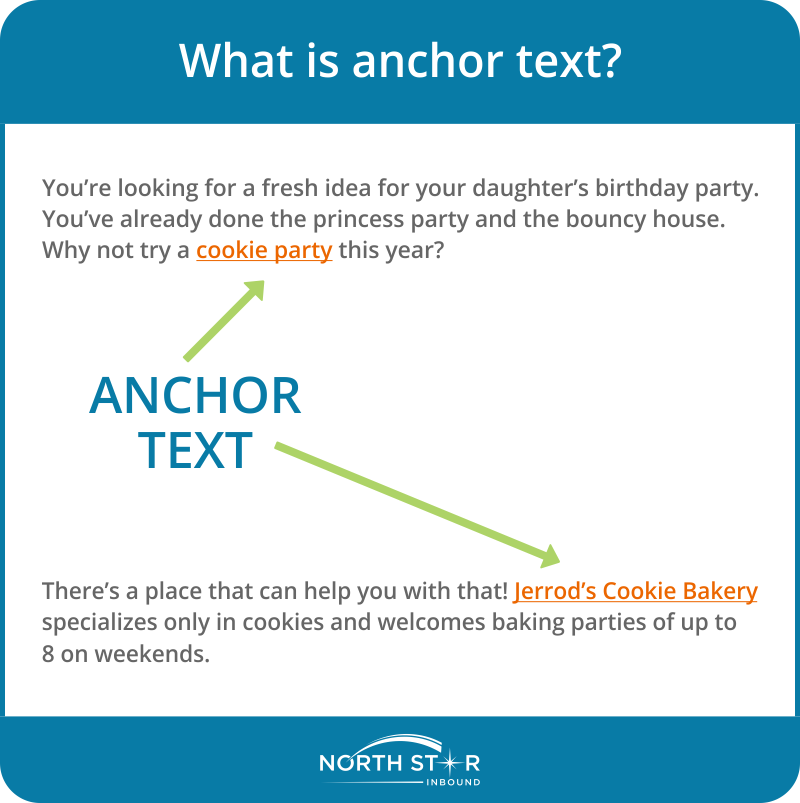
Impact on Content Strategy and Information Architecture
Anchor links encourage content creators and information architects to design content in a modular, well-structured manner. This approach not only benefits users directly through better navigation but also implicitly promotes clearer writing, logical organization, and a more robust information architecture. By thinking in terms of scannable, linkable sections, content creators can craft more valuable and user-friendly digital experiences. The strategic deployment of anchor links is a testament to the fact that even seemingly small technical details can have a significant impact on the overall quality and usability of a website.
aViewFromTheCave is a participant in the Amazon Services LLC Associates Program, an affiliate advertising program designed to provide a means for sites to earn advertising fees by advertising and linking to Amazon.com. Amazon, the Amazon logo, AmazonSupply, and the AmazonSupply logo are trademarks of Amazon.com, Inc. or its affiliates. As an Amazon Associate we earn affiliate commissions from qualifying purchases.