
A wide-angle lens is a fundamental piece of photographic equipment designed to capture a broader field of view than a standard or telephoto lens. Instead of zooming in on distant subjects, these lenses specialize in fitting more of a scene into a single frame, making them indispensable tools for a variety of photographic disciplines. Their defining characteristic is their shorter focal length, which directly correlates with their ability to encompass a wider perspective.
Defining the Wide-Angle Perspective
At its core, a wide-angle lens is categorized by its focal length, which is the distance in millimeters from the optical center of the lens to the camera’s sensor when the subject is in focus. For full-frame cameras, a lens is generally considered wide-angle if its focal length is 35mm or less. The shorter the focal length, the wider the field of view, and the more exaggerated the perspective distortion can become.

Focal Length and Field of View
The relationship between focal length and field of view is inverse: a shorter focal length results in a wider field of view. For instance, a 24mm lens will capture a significantly broader scene than a 50mm “standard” lens or a 200mm telephoto lens. This expanded perspective allows photographers to include more context, more background, and a greater sense of space within their images. It’s not just about fitting more into the frame; it’s about altering the perceived distance between foreground and background elements, often making objects appear further apart than they are in reality. This characteristic can be leveraged creatively to emphasize scale and depth within a composition.
Common Wide-Angle Focal Lengths
Wide-angle lenses span a range of focal lengths, each offering a distinct perspective:
- Moderate Wide-Angle (28mm to 35mm on full-frame): These lenses offer a noticeable expansion of the scene without extreme distortion. They are excellent for street photography, environmental portraits, and general documentary work where a natural, yet slightly expansive, view is desired.
- True Wide-Angle (20mm to 24mm on full-frame): This range is classic for landscapes, architecture, and interior photography. It provides a significant field of view, making it easy to capture grand vistas and the full scope of a room.
- Ultra Wide-Angle (14mm to 18mm on full-frame): Pushing the boundaries, ultra-wide lenses capture an immense amount of the scene. They are particularly popular for astrophotography, dramatic landscapes, and situations where extreme perspective is desired. At these focal lengths, careful composition is crucial to manage the inherent distortion.
- Fisheye Lenses (typically 8mm to 16mm): While technically ultra-wide, fisheye lenses are a distinct category due to their intentional and pronounced barrel distortion. They render straight lines as curves, creating a unique, spherical look. Some fisheye lenses are “circular,” producing a full circular image within a black frame, while others are “diagonal,” filling the entire rectangular sensor with a highly distorted view.
The Unique Advantages of Wide-Angle Lenses
The ability to capture an expansive view translates into several powerful creative and practical advantages, making wide-angle lenses a staple in many photographers’ kits.
Expansive Landscapes and Architecture
This is perhaps the most celebrated application of wide-angle lenses. When photographing vast landscapes, from sweeping mountain ranges to serene coastlines, a wide-angle lens allows the photographer to convey the grandeur and scale of the scene. It enables the inclusion of foreground elements, mid-ground interest, and a distant horizon all within a single, cohesive frame, creating a sense of immersion. Similarly, for architectural photography, wide-angle lenses are essential for capturing entire buildings, their intricate details, and the surrounding environment, especially in confined urban spaces where stepping back isn’t an option.
Interior Photography and Real Estate
In real estate and interior design photography, wide-angle lenses are invaluable. They can transform a small room into a spacious-looking environment by capturing its full dimensions, including ceilings and floors. This capability helps prospective buyers or clients visualize the entire space, which is critical for marketing and presentation. However, photographers must be mindful of distortion, especially with furniture and walls close to the edges of the frame, to avoid an unnatural or misleading representation.
Astrophotography
For capturing the night sky, particularly milky way shots or constellations, ultra-wide-angle lenses are paramount. Their wide field of view allows photographers to encompass a significant portion of the celestial sphere, while their typically fast maximum apertures (e.g., f/2.8 or wider) enable them to gather enough light in low-light conditions to capture fainter stars and nebulae without excessively long exposures that would result in star trails.
Creative Distortion and Perspective
While distortion is often managed, it can also be a powerful creative tool. Wide-angle lenses naturally exaggerate perspective, making objects closer to the lens appear larger and more prominent, while distant objects recede more rapidly. This can be used to create dramatic compositions, emphasize leading lines, or draw the viewer’s eye into the scene. Fisheye lenses, with their extreme curvature, offer an even more stylized and surreal perspective, perfect for artistic expressions or unconventional viewpoints.
Environmental Portraits
Unlike traditional portraits that isolate the subject, environmental portraits aim to include the subject’s surroundings to tell a story or provide context. A wide-angle lens excels at this, allowing the photographer to place the subject within their environment—a workspace, a natural setting, or a busy street—while still maintaining a reasonable size for the subject. This technique helps viewers understand the subject’s relationship with their world.
Understanding Wide-Angle Lens Characteristics
Beyond focal length, several other characteristics define wide-angle lenses and influence their performance and application.
Prime vs. Zoom Wide-Angles
Wide-angle lenses are available as both prime (fixed focal length) and zoom lenses.
- Prime wide-angles often boast wider maximum apertures (e.g., f/1.4, f/1.8, f/2.8), superior optical sharpness, and can be more compact and lighter. They are favored by photographers who prioritize image quality and low-light performance, and who are comfortable “zooming with their feet.”
- Zoom wide-angles (e.g., 16-35mm, 10-24mm) offer greater versatility, allowing photographers to adjust their field of view without changing lenses. This is highly beneficial for dynamic situations, travel, or when rapid compositional changes are necessary. Modern wide-angle zooms have achieved impressive optical quality, often rivaling primes, though typically at a higher cost and sometimes with slightly slower maximum apertures.
Rectilinear vs. Fisheye Lenses

This distinction is crucial for understanding how wide-angle lenses render straight lines.
- Rectilinear lenses are designed to keep straight lines straight, minimizing barrel distortion. Most wide-angle lenses, apart from fisheyes, are rectilinear. They strive for a naturalistic, though expansive, representation of reality, making them ideal for architecture and landscapes where preserving geometric integrity is important.
- Fisheye lenses, as mentioned, intentionally introduce extreme barrel distortion, bending straight lines into curves. This creates their characteristic “fish-eye” or spherical effect. They are chosen specifically for their unique artistic output rather than for faithful representation.
Aperture Considerations
The maximum aperture of a wide-angle lens is an important factor, particularly for low-light photography like astrophotography or indoor scenes. A wider maximum aperture (e.g., f/2.8 or f/1.4) allows more light to reach the sensor, enabling faster shutter speeds or lower ISO settings, thus reducing noise. It also provides a shallower depth of field, though with wide-angle lenses, achieving significant background blur (bokeh) is generally more challenging than with longer focal lengths due to the inherent wide field of view that keeps more of the scene in focus.
Minimum Focus Distance
Many modern wide-angle lenses offer surprisingly close minimum focus distances. This allows photographers to get very close to a foreground subject while still capturing a vast background, creating a highly dramatic sense of scale and depth. This technique, often called “wide-angle macro” or “perspective manipulation,” can yield stunning and immersive results.
Tips for Photographing with a Wide-Angle Lens
Mastering a wide-angle lens involves more than just pointing and shooting. Understanding how to compose effectively with its unique characteristics is key to producing impactful images.
Leading Lines and Composition
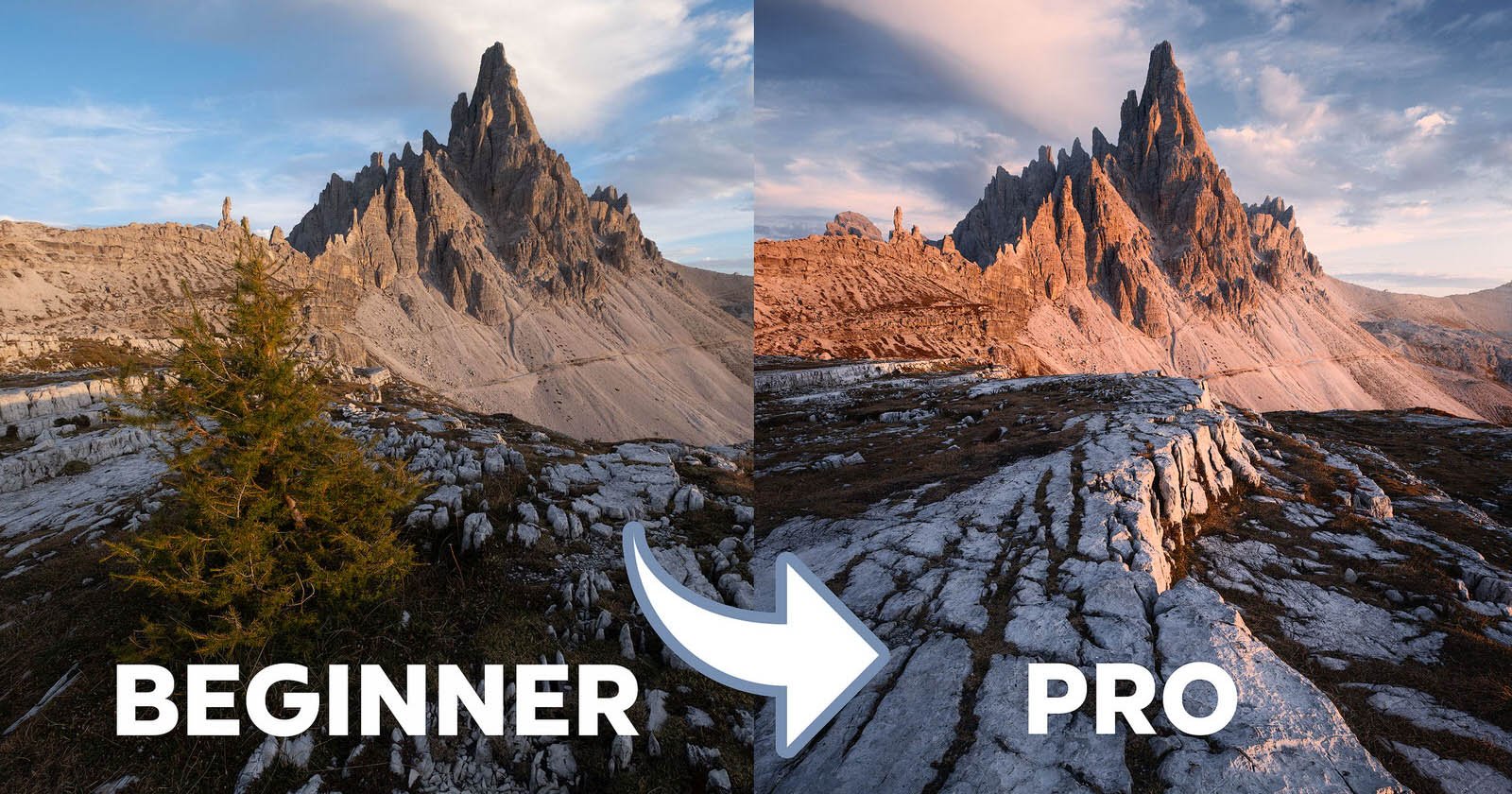
Wide-angle lenses naturally emphasize perspective and convergence, making them excellent for utilizing leading lines. Roads, fences, rivers, or architectural elements can be used to draw the viewer’s eye from the foreground into the scene, creating depth and a sense of journey. Place these lines strategically within your frame to guide the eye towards your main subject or a point of interest.
Foreground Interest is Key
Because wide-angle lenses capture so much of the scene, a strong foreground element is often crucial to anchor the image and prevent it from feeling empty or overwhelming. A prominent rock, a flower, a piece of driftwood, or an interesting texture in the immediate foreground can provide context, scale, and a point of entry for the viewer, leading their eye naturally into the mid-ground and background. Without foreground interest, wide-angle shots can sometimes lack impact.
Managing Distortion
While creative distortion has its place, often you’ll want to minimize unwanted perspective distortion, especially with rectilinear lenses.
- Keep horizons level: Slanted horizons are extremely noticeable with wide-angle lenses and can detract from an otherwise strong image. Use your camera’s electronic level or a physical hot-shoe level.
- Center your subject: Objects placed near the edges of a wide-angle frame tend to stretch and distort more than those in the center. If your primary subject doesn’t need to be distorted, try to keep it closer to the middle of the frame.
- Vertical lines: When photographing architecture, keeping the camera perfectly level (parallel to the ground) is essential to prevent vertical lines from converging or diverging. If tilting the camera up or down, vertical lines will appear to lean inward or outward. This can sometimes be corrected in post-processing with perspective tools.
Watch Your Edges
Due to the expansive field of view, it’s easy to accidentally include unwanted elements—like your own feet, stray gear, or distracting clutter—at the edges of the frame. Pay meticulous attention to what is creeping into your periphery before pressing the shutter. Frame tight and clean your edges.
Horizon Placement
A common pitfall with wide-angle landscape photography is placing the horizon directly in the middle of the frame, which can make the image feel bisected and uninteresting. Apply the rule of thirds: place the horizon on either the upper or lower third line, depending on whether you want to emphasize the sky or the foreground.
Choosing the Right Wide-Angle Lens
Selecting a wide-angle lens involves considering several factors, including your camera system, budget, and primary photographic interests.
Sensor Size Matters (Full-Frame vs. Crop Sensor)
The effective focal length of a lens changes depending on your camera’s sensor size. A 16mm lens on a full-frame camera provides a truly ultra-wide perspective. The same 16mm lens mounted on an APS-C (crop sensor) camera will have its field of view narrowed, typically by a factor of 1.5x or 1.6x. So, a 16mm lens on an APS-C camera behaves more like a 24-25mm lens on a full-frame camera. When shopping, be aware if the lens is designed specifically for full-frame or APS-C sensors, or if it’s a full-frame lens that will work on a crop sensor with a narrower field of view. There are also specific “crop sensor only” wide-angle lenses (e.g., 10-20mm) that offer ultra-wide views tailored for smaller sensors.
Budget and Brand Considerations
The photography market offers a wide range of wide-angle lenses across various price points. Entry-level options from third-party manufacturers like Sigma or Tamron can offer excellent value, while first-party lenses from Canon, Nikon, Sony, and others often represent the pinnacle of optical performance and build quality, albeit at a premium. Determine your budget and research reviews for lenses that fit your camera mount and financial constraints.
Your Primary Use Case
Consider what you will primarily photograph.
- Landscapes and Astrophotography: Prioritize the widest possible focal length (e.g., 14-24mm full-frame equivalent) and a fast maximum aperture (f/2.8 or wider).
- Architecture and Real Estate: Opt for rectilinear lenses with minimal distortion correction, perhaps a moderate wide-angle zoom for versatility (e.g., 16-35mm full-frame equivalent).
- Street and Environmental Portraits: A 28mm or 35mm prime might be ideal for its compact size, fast aperture, and natural perspective.
- Creative and Experimental: A fisheye lens could open up entirely new artistic avenues.
Ultimately, a wide-angle lens is a powerful creative tool that offers a unique perspective on the world. By understanding its characteristics and mastering compositional techniques, photographers can unlock its full potential to capture stunning, immersive, and visually compelling images.
aViewFromTheCave is a participant in the Amazon Services LLC Associates Program, an affiliate advertising program designed to provide a means for sites to earn advertising fees by advertising and linking to Amazon.com. Amazon, the Amazon logo, AmazonSupply, and the AmazonSupply logo are trademarks of Amazon.com, Inc. or its affiliates. As an Amazon Associate we earn affiliate commissions from qualifying purchases.