
The Tomahawk missile stands as a testament to advanced military engineering and precision strike capabilities, representing a critical component of modern naval power. More than just a weapon, it embodies decades of technological evolution, combining sophisticated guidance systems, efficient propulsion, and adaptable payloads to deliver unparalleled accuracy over vast distances. Conceived during the Cold War as a strategic deterrent, the Tomahawk has transcended its initial role, becoming a cornerstone conventional strike weapon indispensable in various global conflicts. Its design and operational principles reflect a continuous pursuit of technological superiority, making it a focal point in discussions about defense innovation and strategic projection.
Origins and Evolution of a Precision Weapon
The journey of the Tomahawk Land Attack Missile (TLAM) began in the early 1970s, a period marked by intense technological competition and strategic re-evaluation within the United States military. The initial imperative was to develop a long-range, survivable cruise missile capable of being launched from a variety of platforms, primarily submarines, to penetrate sophisticated enemy air defenses.
The Genesis of a Strategic Cruise Missile
The concept behind the Tomahawk emerged from the need for a low-altitude, high-subsonic cruise missile that could evade radar detection by flying beneath enemy radar coverage. Early designs focused on modularity, allowing for different warhead types and guidance packages to be integrated onto a common airframe. This flexibility was crucial for meeting diverse mission requirements, from tactical strikes against fortified targets to strategic deterrence. Initial development emphasized submarine launch capabilities, leveraging the inherent stealth of submerged platforms to deliver a surprise attack. The U.S. Navy championed the program, foreseeing a weapon that could significantly extend the reach and lethality of its fleet without exposing manned aircraft to undue risk. The foundational technology involved advanced aerodynamic designs for efficient flight, miniature turbojet engines for sustained propulsion, and nascent digital guidance systems.
From Nuclear to Conventional: Adapting to Modern Warfare
While the Tomahawk was initially envisioned with a nuclear variant (TLAM-N) as a part of the strategic arsenal, its true operational legacy has been forged in its conventional form. The end of the Cold War and the shift towards regional conflicts and counter-terrorism operations brought about a profound re-evaluation of its role. The emphasis moved away from strategic nuclear deterrence towards precision conventional strikes against high-value, fixed targets. This transition necessitated continuous upgrades to its guidance systems, enhancing accuracy to minimize collateral damage, and improving target identification capabilities. The advent of the Block III variant marked a significant leap, integrating GPS for enhanced precision and introducing a longer range. Subsequent Block IV (Tactical Tomahawk or TACTOM) further refined its capabilities with in-flight retargeting, loitering ability, and battle damage assessment via a two-way satellite link. This adaptability has ensured the Tomahawk’s relevance in an ever-changing geopolitical landscape, solidifying its status as a premier conventional stand-off weapon.
Technological Capabilities and Design
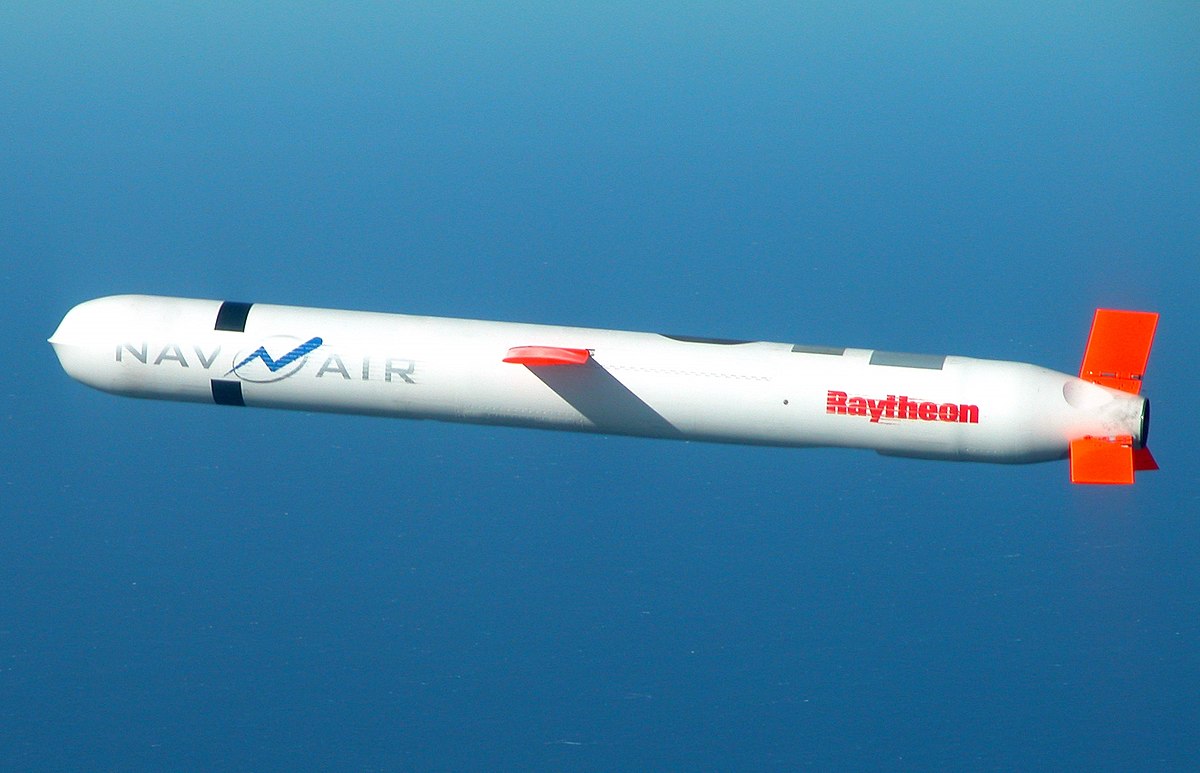
The Tomahawk missile is a marvel of integrated engineering, combining multiple sophisticated systems to achieve its formidable mission profile. Its design is characterized by a sleek, cylindrical body with fold-out wings and tail fins, optimized for compact storage and launch from confined spaces, such as submarine torpedo tubes or vertical launch system (VLS) cells.
Guidance Systems: The Brains Behind the Flight
The precision of the Tomahawk is largely attributable to its multi-layered guidance system, which has evolved significantly over its operational life.
TERCOM (Terrain Contour Matching)
Early Tomahawk variants relied heavily on TERCOM. This system uses a pre-programmed digital map of the terrain elevation along the missile’s intended flight path. As the missile flies, a radar altimeter continuously measures the terrain profile beneath it, comparing these real-time readings with the stored digital map. By matching the actual terrain to the mapped contours, the missile can determine its precise position and make necessary course corrections, enabling highly accurate low-altitude flight to avoid detection.
DSMAC (Digital Scene Matching Area Correlator)
For the terminal phase of flight, DSMAC provides a significant boost in accuracy. This system utilizes a camera or imaging sensor to capture real-time images of specific landmarks near the target. These images are then digitally compared to pre-stored reference images of the same landmarks. By correlating the live imagery with the stored data, the missile can fine-tune its trajectory for a highly precise impact, crucial for striking specific structures within a larger target area.
GPS (Global Positioning System) Integration
Modern Tomahawk variants have fully integrated GPS capabilities, which significantly enhanced accuracy and operational flexibility. GPS provides continuous, highly accurate position data, allowing the missile to navigate globally without reliance on pre-surveyed terrain maps for its entire flight path. This integration simplifies mission planning, reduces dependency on vulnerable ground-based navigation aids, and enables in-flight retargeting, where the missile’s trajectory can be updated in real-time to strike moving or newly identified targets. GPS also acts as a primary navigation system, with TERCOM and DSMAC often serving as supplementary or terminal guidance enhancers in contested environments.
Propulsion: Reaching Distant Targets
The Tomahawk employs a two-stage propulsion system designed for launch and sustained flight over long ranges. Upon launch, a solid-fuel rocket booster provides the initial thrust to propel the missile out of its launch platform and accelerate it to cruise speed. Once airborne, the booster separates, and a turbofan engine (such as the F107-WR-400/402 series) takes over for sustained flight. This highly efficient jet engine allows the Tomahawk to cruise at high-subsonic speeds (around 550 mph or 880 km/h) for extended periods, enabling it to cover distances exceeding 1,000 nautical miles (over 1,850 km), depending on the variant and mission profile. The turbofan engine’s efficiency and relatively quiet operation also contribute to the missile’s low observable characteristics, making it harder to detect and track.
Warhead Options: Tailored for Mission Success
Modularity in warhead design has been a hallmark of the Tomahawk program, allowing it to be adapted for various strike missions. While earlier variants could carry nuclear warheads, the focus has shifted entirely to conventional payloads. The most common conventional warhead is a 1,000-pound class unitary penetrator, designed to destroy hardened targets, bunkers, and command-and-control centers. Some variants also incorporated submunition dispensers, though these have seen reduced use due to evolving international agreements on cluster munitions. The unitary warhead, often optimized for blast and fragmentation, ensures significant destructive power against a wide array of conventional targets, while the precision guidance ensures that this power is delivered exactly where it is needed.
Stealth and Survivability Features
Beyond its low-altitude flight profile, the Tomahawk incorporates several design features to enhance its survivability against sophisticated air defenses. Its small radar cross-section (RCS) makes it difficult for enemy radar systems to detect and track. The missile’s composite materials, non-metallic components, and angular shaping help to absorb or deflect radar energy. Furthermore, its ability to execute pre-programmed maneuvers and fly complex routes, often utilizing terrain masking, minimizes its exposure to hostile radar and anti-air missile systems. The turbofan engine’s relatively low infrared signature also helps to reduce detection by heat-seeking sensors. These combined features make the Tomahawk a challenging target for even advanced air defense networks, allowing it to reach and strike its target with a high probability of success.
Operational Deployment and Impact
The Tomahawk missile has fundamentally reshaped naval warfare and strategic projection since its introduction, becoming a symbol of precision strike capability and a key instrument in military operations around the globe.
Launch Platforms: Versatility Across Services
One of the defining features of the Tomahawk system is its versatility in launch platforms. Primarily, it is launched from surface warships and submarines, leveraging the inherent flexibility and global reach of naval forces.
- Submarines: U.S. Navy attack submarines (SSNs) and guided-missile submarines (SSGNs) are critical launch platforms. Tomahawks can be fired from traditional torpedo tubes, maintaining the submarine’s stealth, or from dedicated Vertical Launch System (VLS) tubes on SSGNs, which carry a significantly larger complement of missiles. The ability to launch from submerged platforms provides an unmatched element of surprise and reduces the risk to personnel.
- Surface Warships: Cruisers and destroyers equipped with the Mk 41 Vertical Launching System (VLS) are also primary Tomahawk platforms. The VLS allows for rapid, multiple missile launches, providing naval task forces with significant stand-off strike capabilities against land targets. This flexibility enables naval assets to contribute decisively to conflicts without entering contested airspace.
While primarily a naval asset, there have been studies and tests for air-launched and even ground-launched versions, further underscoring its adaptable design.
Key Engagements and Historical Significance
The Tomahawk’s operational debut marked a turning point in modern warfare, demonstrating the effectiveness of precision-guided munitions from stand-off ranges.
- Operation Desert Storm (1991): The Tomahawk first saw widespread combat use during the Gulf War. Launched from U.S. Navy warships and submarines, it struck critical infrastructure targets deep within Iraq, including command centers, air defense sites, and communications nodes, with unprecedented accuracy. This campaign showcased the missile’s ability to degrade enemy capabilities and prepare the battlespace for subsequent air and ground operations, significantly reducing risks to manned aircraft.
- Kosovo War (1999): Tomahawks played a crucial role in NATO’s air campaign against Yugoslavia, targeting military facilities and strategic infrastructure. Its precision helped to apply pressure on the adversary while attempting to minimize civilian casualties, though the limitations of even highly accurate weapons in complex urban environments became apparent.
- Iraq War (2003): The “shock and awe” campaign that initiated the Iraq War saw hundreds of Tomahawks launched in the opening salvos, striking key leadership targets and military installations. This demonstrated the weapon’s capacity for overwhelming, synchronized attacks to achieve rapid dominance.
- Libya Intervention (2011) and Syria Strikes (2017, 2018): In more recent conflicts, Tomahawks have been used to enforce no-fly zones and retaliate against chemical weapons use, highlighting their utility as a rapid-response, deterrent, and punitive strike option. These engagements solidified the Tomahawk’s reputation as a go-to weapon for initial strikes in complex geopolitical situations.
Strategic Role in Modern Conflicts
The Tomahawk’s strategic significance extends beyond its kinetic effects. It provides decision-makers with a flexible and relatively low-risk option for applying military pressure. Its ability to strike targets deep within enemy territory from safe distances reduces the need to put pilots or special operations forces in harm’s way, mitigating political and human costs. This stand-off capability allows for escalation control, enabling measured responses to aggression or a precise opening salvo in a larger conflict. Furthermore, its global availability on U.S. and allied naval platforms makes it a ubiquitous symbol of power projection, serving as a powerful deterrent and a means of demonstrating resolve. In an era of contested access and anti-access/area denial (A2/AD) strategies, the Tomahawk continues to offer a vital capability for penetrating defended airspace and striking critical targets.
The Future of Tomahawk Technology
The Tomahawk missile has maintained its relevance for decades through a relentless cycle of upgrades and technological insertion. As threats evolve and military doctrines adapt, the future of the Tomahawk continues to focus on enhancing its capabilities to meet emerging challenges.
Upgrades and Enhancements: Staying Ahead
Raytheon, the primary manufacturer, and the U.S. Navy are continually investing in modernizing the Tomahawk fleet. The latest significant variant is the Block V, which began fielding in 2021. This upgrade incorporates several key enhancements:
- Navigation and Communications: Block V missiles feature enhanced navigation and communication systems, improving resilience against GPS jamming and providing more robust two-way satellite links for in-flight mission updates. This is crucial in environments where satellite connectivity might be contested.
- Targeting and Mission Planning: Software and hardware improvements in Block V further enhance targeting precision and flexibility. It facilitates faster retargeting in complex scenarios and improves the ability to strike moving targets.
- Range and Propulsion: While the core propulsion system remains, ongoing research aims to improve fuel efficiency and potentially extend range, though specific details often remain classified.
- Modularity for Future Payloads: The Block V is designed with increased modularity, allowing for easier integration of future technologies, including potentially new sensor packages or different types of warheads. This adaptability ensures a longer service life and responsiveness to new threats.
- Maritime Strike Capability (Block Va, Maritime Strike Tomahawk – MST): A significant new capability is the MST, which transforms the Tomahawk from a predominantly land-attack weapon into an anti-ship missile. This variant allows the Tomahawk to engage moving maritime targets at long ranges, bolstering naval capabilities in an era focused on peer-state competition and naval dominance.
- Future Upgrades (Block Vb): The Block Vb will introduce a new, more advanced “Joint Multiple Effects Warhead System” (JMEWS), designed to provide greater lethality against a broader range of targets, including hardened and deeply buried structures.
Challenges and Competitors
Despite its long-standing success, the Tomahawk faces evolving challenges:
- Advanced Air Defenses: Nations are continually developing more sophisticated integrated air defense systems (IADS) capable of detecting and engaging low-flying cruise missiles. This drives the need for enhanced stealth, electronic warfare countermeasures, and potentially higher speeds for future Tomahawk variants.
- Hypersonic Weapons: The emergence of hypersonic missiles, which travel at speeds exceeding Mach 5, represents a paradigm shift. While the Tomahawk remains highly effective for specific mission sets, it cannot compete with the rapid strike and penetration capabilities of hypersonic weapons. This has spurred research into new strike platforms, but the Tomahawk retains its cost-effectiveness and proven reliability for many scenarios.
- Cyber Warfare: As systems become more networked, cyber vulnerabilities become a concern. Protecting the Tomahawk’s guidance, navigation, and control systems from cyber intrusion or jamming is an ongoing priority.
- Competitors: Other nations are developing their own advanced cruise missiles, some incorporating similar or even more advanced technologies. This necessitates continuous innovation to maintain a technological edge.
The Broader Implications for Naval Power
The ongoing evolution of the Tomahawk ensures its continued role as a foundational element of U.S. and allied naval power projection. The integration of maritime strike capabilities (MST) is particularly significant, as it addresses a critical gap in naval engagement options and reinforces the fleet’s ability to operate in contested waters. This expanded role complements traditional anti-ship missile arsenals and provides greater flexibility for commanders.
The Tomahawk’s future lies in its continued adaptability. By embracing modular design, leveraging advancements in sensors, propulsion, and artificial intelligence for enhanced targeting and autonomy, and integrating seamlessly into networked battle management systems, the Tomahawk missile will likely remain a formidable and indispensable technological asset for decades to come, ensuring navies can project precision power across the globe.
aViewFromTheCave is a participant in the Amazon Services LLC Associates Program, an affiliate advertising program designed to provide a means for sites to earn advertising fees by advertising and linking to Amazon.com. Amazon, the Amazon logo, AmazonSupply, and the AmazonSupply logo are trademarks of Amazon.com, Inc. or its affiliates. As an Amazon Associate we earn affiliate commissions from qualifying purchases.