
Plane geometry, at its core, is the branch of mathematics concerned with two-dimensional figures, their properties, measurements, and relationships within a flat surface, or “plane.” It explores fundamental concepts such as points, lines, angles, and various shapes like triangles, circles, and quadrilaterals. While seemingly an abstract academic discipline, plane geometry serves as an indispensable foundational pillar for a vast array of modern technologies, from the algorithms powering computer graphics and robotics to the intuitive designs of user interfaces and sophisticated CAD software. Understanding its principles is not merely an intellectual exercise but a prerequisite for innovating in the digital realm.
The Foundational Concepts Underpinning Digital Universes
The digital worlds we interact with daily are meticulously constructed from geometric primitives. Every pixel on a screen, every vector in an animation, and every coordinate in a virtual environment traces its lineage back to the basic tenets of plane geometry.
Points, Lines, and Planes: The Digital Abstraction
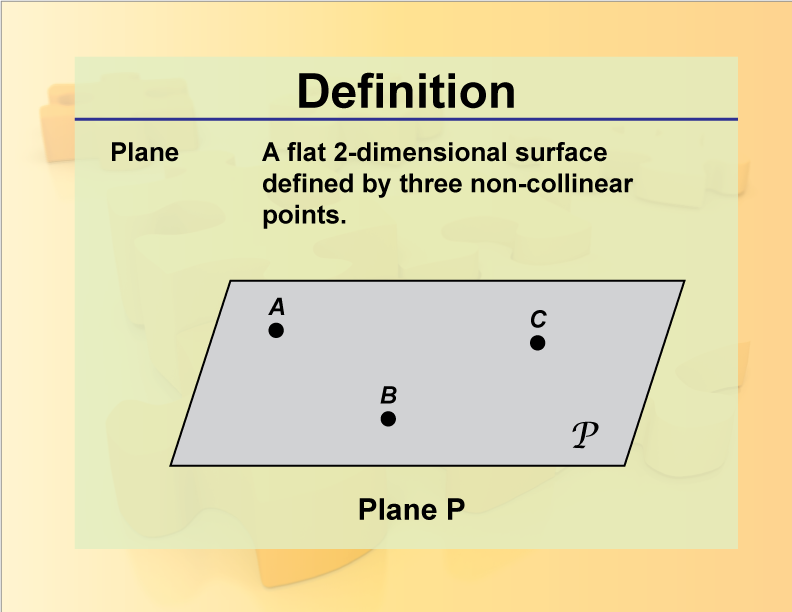
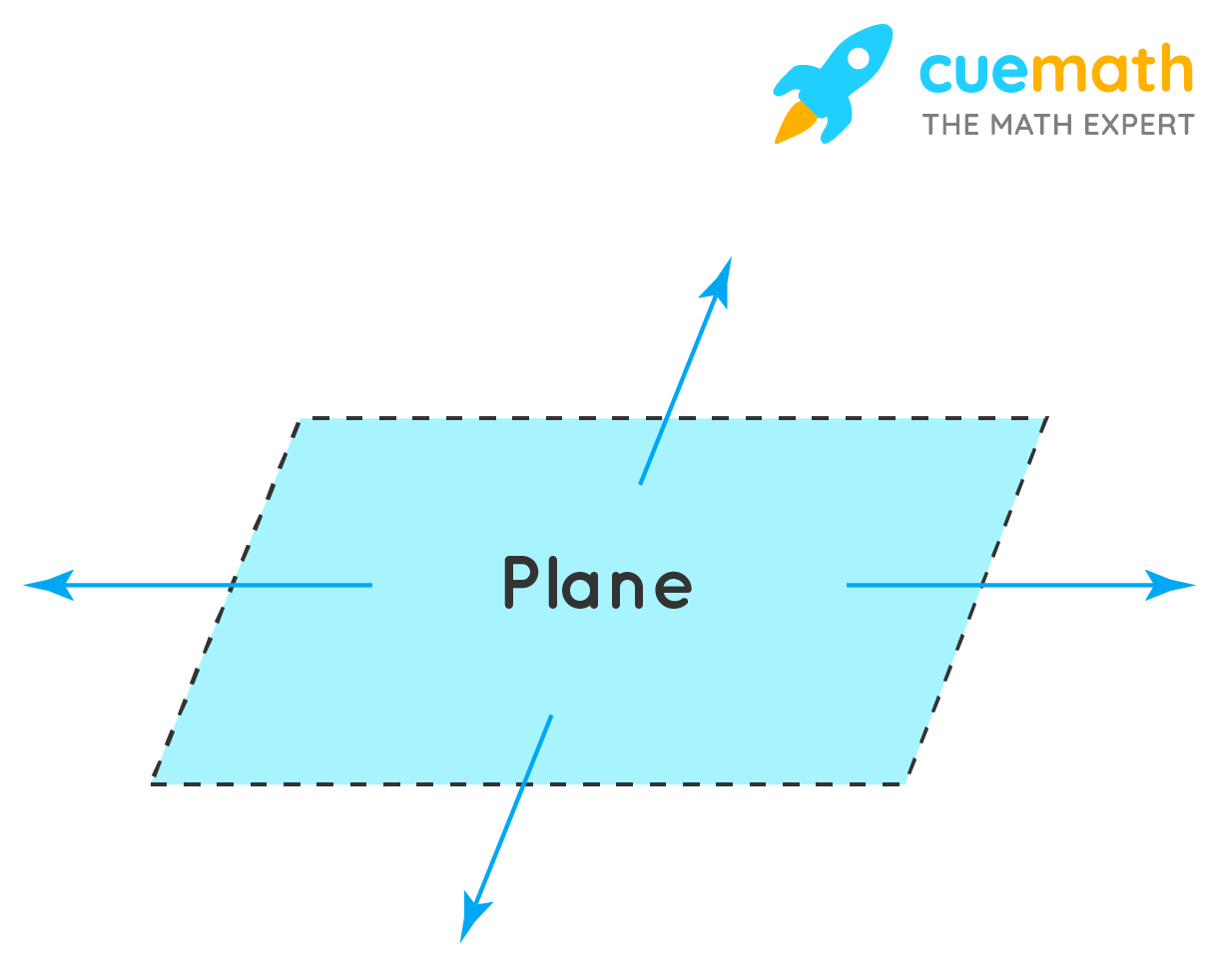
In plane geometry, a point is a location without dimension, a line is a one-dimensional path extending infinitely in two directions, and a plane is a flat, two-dimensional surface extending infinitely. In the context of technology, these abstract concepts find tangible representations:
- Points are often represented by pixel coordinates (e.g., (x, y) on a screen) or vertices in 2D vector graphics. A single click on a touchscreen registers a precise point in the plane.
- Lines are crucial for rendering edges, defining paths, or creating boundaries. Vector graphics software, for instance, manipulates lines and curves (which are composed of many small line segments) to create scalable images. Pathfinding algorithms in games or robotic navigation systems rely on calculating optimal lines or series of connected line segments between two points.
- Planes are most directly conceptualized as the display screen itself, the canvas within a digital art application, or the working area in a CAD program. All 2D operations, from drawing a simple shape to complex UI layouts, occur within this digital plane.
Shapes and Figures: Constructing Digital Realities
Plane geometry details the characteristics of various 2D shapes, each with specific properties that are directly leveraged in technology:
- Triangles are fundamental in computer graphics. Any complex 2D shape can be decomposed into a series of triangles. Graphics processing units (GPUs) are highly optimized for rendering triangles, making them the building blocks for polygons, meshes, and textures in game development and 3D modeling (projected onto a 2D plane).
- Quadrilaterals (squares, rectangles, parallelograms) are ubiquitous in user interface design. Buttons, windows, image frames, and text boxes are almost universally rectangular, leveraging the efficiency and predictability of rectangular coordinates for layout and scaling. The concept of bounding boxes, often rectangular, is critical for object detection in computer vision.
- Circles and ellipses are essential for avatars, loading spinners, pie charts, and many design elements. Algorithms for drawing perfect circles (e.g., Bresenham’s circle algorithm) are core to graphics libraries. The mathematical properties of circles are also vital for collision detection, radial menus, and understanding field-of-view in simulations.
Angles, Congruence, and Similarity: Precision and Scalability
The relationships between these elements are equally vital:
- Angles define orientation, rotation, and direction. In game physics, the angle of impact dictates how objects bounce. In robotics, angles dictate joint movements. Digital image manipulation frequently involves rotating elements by specified angles.
- Congruence (figures having the same size and shape) is critical for consistency in digital design, ensuring that repeated elements, like icons or UI components, maintain their identical appearance across different contexts.
- Similarity (figures having the same shape but different sizes) is fundamental to scalability. Responsive web design relies heavily on similar figures, allowing layouts to adapt gracefully to different screen sizes while maintaining proportional relationships. Vector graphics derive their power from similarity, allowing images to be scaled up or down infinitely without loss of quality.
Plane Geometry’s Indispensable Role in Software Development and Design
The principles of plane geometry are not merely abstract concepts; they are the bedrock upon which much of our digital infrastructure is built, driving efficiency, aesthetics, and functionality.
Computer Graphics and Game Engines
From the simplest 2D platformer to elaborate user interfaces, plane geometry dictates how elements are rendered, interact, and move.
- Rendering: Every visual element on a screen – sprites, textures, fonts – is ultimately displayed as a collection of points and lines, forming geometric shapes. Algorithms like scanline rendering and rasterization convert vector descriptions into pixel maps based on geometric calculations.
- Animation: The movement of objects and characters in games or animated sequences is choreographed using geometric transformations: translations (moving along a line), rotations (turning around a point), and scaling (changing size). Keyframe animation relies on interpolating geometric positions over time.
- Collision Detection: A core component of game physics, collision detection relies on geometric algorithms to determine if two shapes (often simplified as bounding boxes or circles) are overlapping. This involves calculating distances, intersections, and checking for containment within a shared plane.
CAD and 2D Design Software
Computer-Aided Design (CAD) and 2D graphic design applications like AutoCAD, Adobe Illustrator, and Sketch depend entirely on plane geometry for their core functionality.
- Precision Drawing: Engineers and designers use these tools to create precise geometric models, where every line, arc, and curve is defined by mathematical equations derived from plane geometry.
- Geometric Operations: Users perform complex geometric operations: extruding 2D profiles into 3D, creating offsets, trimming lines, finding intersections, and measuring distances and angles—all based on planar calculations.
- Vector Graphics: Unlike raster graphics which are pixel-based, vector graphics are composed of geometric primitives (points, lines, curves) defined by mathematical formulas. This allows them to be scaled to any size without pixelation, making them ideal for logos, illustrations, and print media, directly leveraging plane geometry’s scalability principles.
UI/UX Design Principles
The success of a user interface often hinges on its geometric harmony and intuitive layout, making plane geometry critical for UI/UX designers.
- Layout Systems: Grid systems, flexible boxes (flexbox), and absolute positioning are all methods of arranging UI elements within a 2D plane, relying on geometric concepts of alignment, spacing, and proportion.
- Visual Hierarchy: Designers use size, shape, and proximity—all geometric attributes—to establish visual hierarchy and guide the user’s eye, ensuring critical information stands out.
- Responsive Design: Adapting layouts for different screen sizes (desktops, tablets, phones) involves dynamically resizing and rearranging geometric components while maintaining their intended relationships and proportions, a direct application of similarity.
Practical Applications in Modern Technology
Beyond software development and design tools, plane geometry powers a broad spectrum of cutting-edge technological innovations.
Robotics and Navigation Systems
The ability of robots to perceive their environment, move intelligently, and avoid obstacles is deeply rooted in plane geometry.
- Path Planning: Robots use algorithms based on geometric graphs and shortest path calculations to navigate complex environments, effectively finding optimal routes in a 2D or projected 2D map.
- Localization: Autonomous vehicles and drones employ techniques like triangulation and trilateration (geometric methods for finding a position using distances from known points) to determine their precise location.
- Sensing and Mapping: Lidar and radar systems generate point clouds that are processed geometrically to build 2D or 3D maps of an environment, identifying obstacles and free space.
Image Processing and Computer Vision
Analyzing and manipulating digital images heavily relies on geometric transformations and feature recognition within a 2D plane.
- Image Transformations: Operations like rotation, scaling, shearing, and perspective correction apply geometric matrix transformations to image pixels.
- Feature Detection: Algorithms identify geometric features such as edges, corners, and contours within an image, crucial for tasks like object recognition, facial detection, and optical character recognition (OCR).
- Augmented Reality (AR): AR systems project virtual 2D or 3D objects onto real-world camera feeds. This requires precise geometric mapping of the real-world plane and the virtual object’s position and orientation within it.
Data Visualization and Infographics
Effective data visualization transforms complex data into easily understandable geometric representations, primarily within a 2D plane.
- Charts and Graphs: Bar charts, pie charts, scatter plots, and line graphs are all geometric constructions that map data values to lengths, angles, positions, and areas.
- Interactive Dashboards: Modern dashboards allow users to manipulate data views, zoom, pan, and filter, all of which involve dynamic geometric adjustments of the displayed elements.
- Spatial Data: Geographic Information Systems (GIS) heavily use plane geometry to represent maps, territories, routes, and points of interest, allowing for spatial analysis and planning.
Mastering Plane Geometry: Tools and Digital Resources for Technologists
For anyone looking to deepen their understanding of plane geometry and its applications in tech, a wealth of digital tools and resources are available.
Interactive Geometry Software
Software like GeoGebra, Desmos, and Euclidea provide dynamic environments to explore geometric concepts visually. These tools allow users to construct figures, manipulate them, observe properties, and even define geometric constraints, making abstract ideas tangible. They are invaluable for visualizing transformations, proving theorems, and understanding the interplay of different geometric elements.
Programming Libraries for Geometric Operations
Developers frequently leverage specialized libraries to implement geometric functions within their applications.
- Python’s Shapely: A powerful library for planar geometric objects, operations, and relationships. It’s widely used in GIS, data science, and general-purpose geometric computation.
- JavaScript Libraries (e.g., Paper.js, Two.js): These libraries bring vector graphics and geometric manipulation capabilities directly to web browsers, enabling complex interactive visualizations, animations, and web-based design tools.
- Graphics APIs (e.g., OpenGL, DirectX): While these are often associated with 3D graphics, their foundational rendering pipelines heavily rely on 2D geometric transformations and projections, providing low-level control over how geometric data is translated into pixels.

Online Tutorials and Courses
Numerous platforms offer courses and tutorials specifically tailored to applying geometric principles in a technological context. From computer graphics fundamentals to game development math and CAD software mastery, these resources bridge the gap between theoretical geometry and practical implementation. They often feature coding examples, hands-on projects, and real-world case studies, making the learning process engaging and directly applicable to tech careers.
In conclusion, “what is a plane geometry” is more than just a question about a segment of mathematics. It’s an inquiry into a fundamental language that underpins the digital world. For anyone building, designing, or innovating in technology, a solid grasp of plane geometry is not merely beneficial; it is essential for creating robust, efficient, and aesthetically pleasing digital experiences.
aViewFromTheCave is a participant in the Amazon Services LLC Associates Program, an affiliate advertising program designed to provide a means for sites to earn advertising fees by advertising and linking to Amazon.com. Amazon, the Amazon logo, AmazonSupply, and the AmazonSupply logo are trademarks of Amazon.com, Inc. or its affiliates. As an Amazon Associate we earn affiliate commissions from qualifying purchases.