
In the dynamic world of chemistry, understanding the stability and decay rates of substances is fundamental. Among the most crucial concepts for quantifying these processes is the “half-life.” While often associated with radioactive decay, half-life is a broader chemical principle applicable to a wide array of reactions, offering profound insights into the kinetics of various transformations. Its relevance extends far beyond academic labs, serving as a cornerstone in fields from pharmaceuticals and environmental science to nuclear technology and advanced material development—areas increasingly reliant on sophisticated software, AI tools, and digital simulations for analysis and prediction.

The Core Concept of Chemical Half-Life
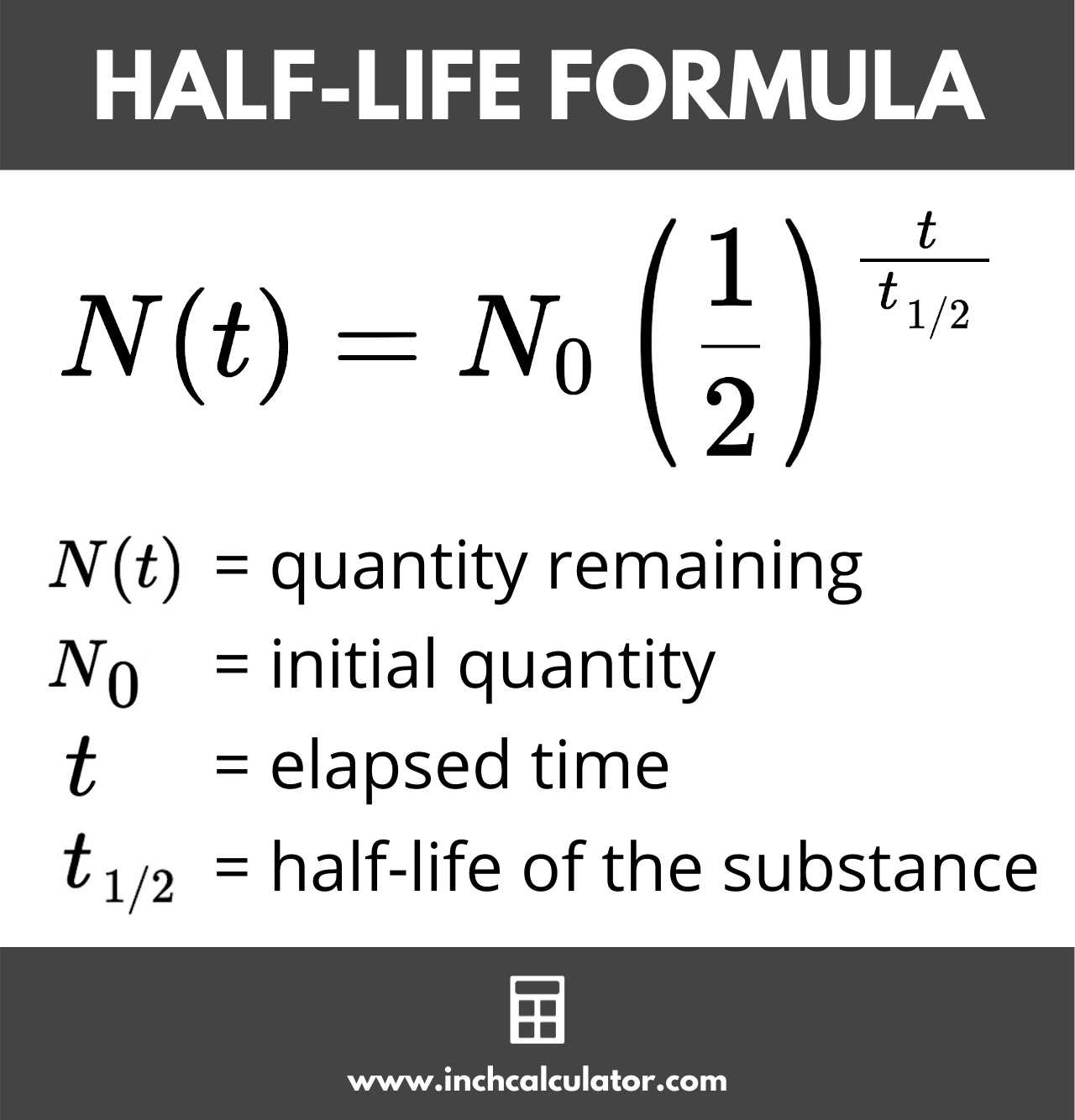
At its heart, the half-life ($t_{1/2}$) of a chemical reaction or a radioactive substance is the time required for half of the initial quantity of the reactant or radioactive isotope to be consumed or to decay. It provides a measure of how quickly a reaction proceeds or how stable a particular isotope is. This concept is not about the complete disappearance of a substance but rather the consistent reduction by half over successive, equal time intervals.
Understanding Decay Kinetics
Chemical reactions proceed at varying rates, influenced by factors such as temperature, concentration, and the presence of catalysts. Reaction kinetics is the branch of chemistry that studies these rates and the mechanisms by which reactions occur. Half-life is a key kinetic parameter, particularly useful for understanding reactions that follow first-order kinetics. In such reactions, the rate depends linearly on the concentration of a single reactant. For instance, if a substance has a half-life of 10 minutes, after 10 minutes, half of the original amount remains. After another 10 minutes (a total of 20 minutes), half of that remaining amount will have reacted, leaving one-quarter of the original. This exponential decay is a hallmark of first-order processes.
First-Order Reactions and Radioactive Decay
Radioactive decay is the quintessential example of a first-order process. Unstable atomic nuclei spontaneously transform into more stable forms by emitting radiation. Each radioactive isotope has a characteristic half-life, which can range from fractions of a second to billions of years. For instance, Carbon-14, used in radiocarbon dating, has a half-life of approximately 5,730 years, making it an invaluable tool for archaeologists. Understanding these half-lives is crucial for predicting the longevity of radioactive materials, managing nuclear waste, and developing nuclear medicine applications.
Beyond radioactivity, many common chemical reactions also exhibit first-order kinetics. Examples include the decomposition of hydrogen peroxide, the hydrolysis of certain organic compounds, and many biochemical processes. In these cases, the half-life indicates how quickly a drug breaks down in the body, how long a chemical contaminant persists in the environment, or the operational lifespan of a catalyst.
Calculating Half-Life: Formulae and Factors
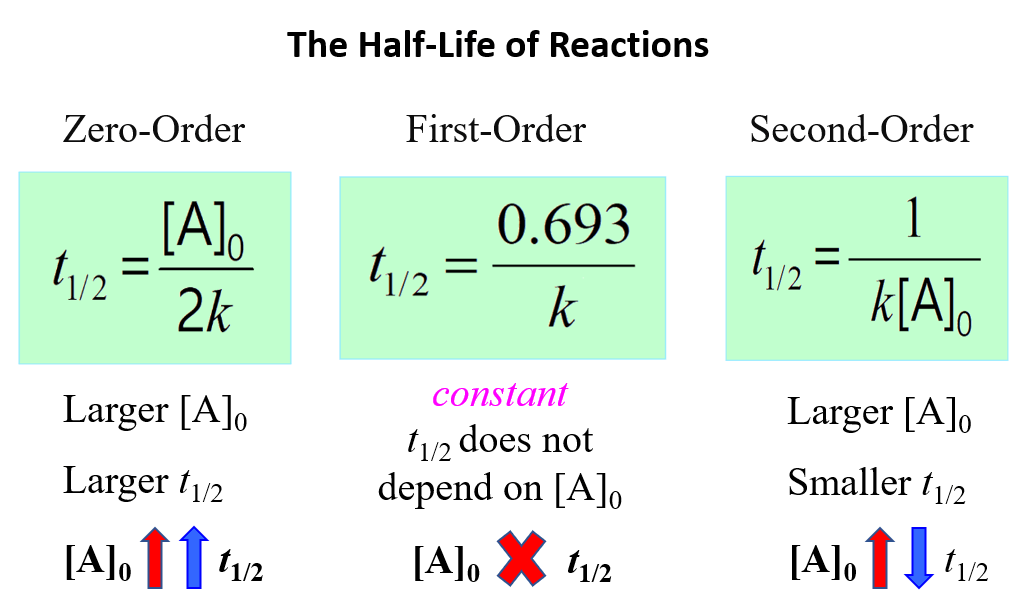
The mathematical relationship for half-life depends on the order of the reaction. For first-order reactions, which are the most common context for discussing half-life, the formula is:
$t_{1/2} = frac{ln(2)}{k}$
Where:
- $t_{1/2}$ is the half-life.
- $ln(2)$ is the natural logarithm of 2, approximately 0.693.
- $k$ is the rate constant of the reaction.
Crucially, for a first-order reaction, the half-life is constant and independent of the initial concentration of the reactant. This is a defining characteristic and simplifies predictions significantly.
The Rate Constant and Its Significance
The rate constant ($k$) is a proportionality constant that links the rate of a reaction to the concentrations of the reactants. It reflects the intrinsic speed of a reaction at a given temperature. A larger rate constant indicates a faster reaction and, consequently, a shorter half-life. Conversely, a smaller rate constant signifies a slower reaction and a longer half-life.
Determining the rate constant typically involves experimental measurements of reactant concentrations over time. Modern analytical techniques, often coupled with sophisticated data acquisition software, can track these changes with high precision, allowing for accurate calculation of $k$ and, subsequently, $t_{1/2}$. This data is then processed using statistical software packages that can fit kinetic models to experimental data, providing robust estimates of reaction parameters.
Practical Applications of Half-Life Calculation
The ability to calculate and predict half-lives is indispensable across numerous scientific and technological domains:
- Pharmacokinetics: In drug development, half-life determines how long a drug remains active in the body, influencing dosage schedules and therapeutic efficacy. AI-driven models are increasingly used to predict drug metabolism and half-lives based on molecular structure.
- Environmental Science: Assessing the persistence of pollutants, pesticides, or toxins in soil, water, or the atmosphere relies heavily on their half-lives. This data informs environmental regulations and remediation strategies, often simulated using complex environmental modeling software.
- Nuclear Engineering: Design and safety protocols for nuclear reactors and waste disposal facilities are predicated on understanding the half-lives of various radioisotopes. Digital twins and advanced simulation software are vital for modeling reactor core behavior and long-term waste storage.
- Materials Science: The degradation or decomposition rates of materials, polymers, and coatings can be characterized by half-lives, informing product lifespan and performance in various conditions.
Half-Life in Modern Technology and Software
The theoretical understanding of half-life has been dramatically amplified by advancements in technology, particularly in software, AI tools, and computational methods. These technologies allow scientists and engineers to measure, predict, and manipulate chemical and physical processes involving half-lives with unprecedented precision and scale.
Pharmaceutical Development and AI Tools
The pharmaceutical industry heavily relies on half-life knowledge, especially in pharmacokinetics and drug metabolism studies. The goal is often to design drugs with optimal half-lives—long enough to be effective with infrequent dosing, but short enough to avoid accumulation and toxicity.
- Predictive AI Models: Machine learning and AI algorithms are revolutionizing drug discovery by predicting the ADME (Absorption, Distribution, Metabolism, Excretion) properties, including half-life, of novel drug candidates based on their chemical structures. These AI tools can analyze vast datasets of existing compounds, identify patterns, and simulate how a new molecule might behave in biological systems, significantly accelerating the early stages of drug development and reducing the need for costly and time-consuming in-vitro and in-vivo experiments.
- Computational Chemistry Software: Specialized software packages (e.g., molecular dynamics simulations, quantum chemistry software) are used to model reaction mechanisms and calculate rate constants from first principles, thereby predicting half-lives for reactions that are difficult to study experimentally. This allows for rational drug design and optimization.
- High-Throughput Screening: Robotic systems and automated laboratory equipment, managed by sophisticated software, can quickly screen thousands of compounds for their kinetic properties, including degradation rates and half-lives.
Nuclear Technology and Digital Simulation
In nuclear science and engineering, half-life is not just a theoretical concept; it’s a critical parameter for safety, resource management, and energy production.
- Reactor Physics Simulations: Advanced digital simulation software models the complex chain reactions within nuclear reactors. These simulations account for the half-lives of various fission products and fuel isotopes (like Uranium-235 or Plutonium-239) to predict reactor behavior, fuel burnup, and power output. Such tools are indispensable for designing new reactor types, optimizing operational parameters, and ensuring safe shutdown procedures.
- Waste Management Software: Managing radioactive waste, some with half-lives spanning millennia, requires sophisticated long-term predictive models. Software tools are used to simulate the decay of radionuclides in geological repositories over vast timescales, assessing potential risks and ensuring regulatory compliance. These models incorporate geological data, container degradation rates, and radionuclide transport mechanisms, all influenced by their respective half-lives.
- Radiation Detection Gadgets: Modern radiation detectors (Geiger counters, scintillators) are high-precision gadgets that measure emitted radiation, allowing scientists to experimentally determine half-lives of newly synthesized isotopes or to monitor radiation levels. The data collected by these devices is often analyzed using specialized software for spectrum analysis and decay curve fitting.
Material Science and Predictive Software
Understanding half-life is also vital in material science, especially for materials that degrade or transform over time.
- Polymer Degradation Models: Polymers, widely used in everything from packaging to medical implants, can degrade due to chemical reactions (e.g., hydrolysis, oxidation). Predictive software uses kinetic models, incorporating half-life concepts, to estimate the lifespan of polymer-based products under various environmental conditions, enabling engineers to select appropriate materials for specific applications.
- Corrosion Studies: The “half-life” of a protective coating or the time it takes for a metal to corrode to a certain depth can be analogously understood using kinetic principles. Software for simulating corrosion processes helps in designing more durable materials and coatings.
- Battery Technology: In battery research, understanding the half-life of charge retention or the decay rate of electrode materials is crucial for developing longer-lasting and more efficient energy storage devices. Advanced computational models and AI help predict these degradation pathways.
The Broader Implications of Half-Life Understanding
The concept of half-life, rooted deeply in chemical kinetics, serves as a powerful framework for quantifying change and stability. Its integration with cutting-edge technology—from AI-driven discovery platforms to advanced simulation software and precision analytical gadgets—has expanded its utility far beyond traditional laboratory settings. It enables safer nuclear energy, more effective pharmaceuticals, sustainable environmental practices, and the development of next-generation materials. As technology continues to advance, the ability to accurately measure, predict, and interpret half-lives will remain a fundamental skill, pivotal for innovation and progress across numerous scientific and engineering disciplines.
aViewFromTheCave is a participant in the Amazon Services LLC Associates Program, an affiliate advertising program designed to provide a means for sites to earn advertising fees by advertising and linking to Amazon.com. Amazon, the Amazon logo, AmazonSupply, and the AmazonSupply logo are trademarks of Amazon.com, Inc. or its affiliates. As an Amazon Associate we earn affiliate commissions from qualifying purchases.