
Navigating the landscape of higher education finance can be a daunting task for students and their families. Among the myriad of options available to fund post-secondary education, federal student loans often stand out as a cornerstone of financial aid. Specifically, the Direct Federal Subsidized Loan represents one of the most advantageous forms of federal assistance, designed to support students with demonstrated financial need. Understanding its mechanics, benefits, and implications is crucial for making informed financial decisions that can significantly impact a borrower’s long-term fiscal health.
Understanding the Foundation of Federal Student Aid
The federal government plays a significant role in making higher education accessible through various financial aid programs. These programs are broadly categorized to address different student needs and financial situations, with Direct Loans being a primary component. The fundamental distinction lies in whether a loan is “subsidized” or “unsubsidized,” a classification that profoundly affects the borrower’s repayment obligations.
Distinguishing Federal vs. Private Loans
Before delving into the specifics of subsidized loans, it’s essential to differentiate between federal student loans and private student loans. Federal loans, including Direct Subsidized Loans, are issued by the U.S. Department of Education. They come with a standardized set of terms and conditions, offering benefits like fixed interest rates, income-driven repayment plans, and opportunities for deferment, forbearance, and even loan forgiveness in certain circumstances. These protections are designed to provide a safety net for borrowers.
Private student loans, conversely, are offered by banks, credit unions, and other private lenders. Their terms, interest rates, and repayment options can vary widely and are often less favorable than federal loans. Private loans typically require a credit check and may necessitate a co-signer, and they rarely offer the same flexible repayment options or borrower protections found in federal programs. For these reasons, financial advisors almost universally recommend exhausting federal loan options before considering private alternatives.
The Role of FAFSA
The gateway to all federal student aid, including Direct Subsidized Loans, is the Free Application for Federal Student Aid (FAFSA). Completing the FAFSA is not merely a formality; it’s a comprehensive application that collects financial information about the student and, if applicable, their parents. This data is then used to calculate the student’s Expected Family Contribution (EFC), which determines their eligibility for various federal student aid programs, including grants, work-study, and both subsidized and unsubsidized loans. Filing the FAFSA accurately and promptly each year is critical, as aid is often awarded on a first-come, first-served basis, and eligibility for subsidized loans is directly tied to demonstrated financial need.
Deconstructing the Direct Subsidized Loan
A Direct Subsidized Loan, often simply called a “Subsidized Stafford Loan,” is a federal student loan available to undergraduate students who demonstrate financial need. Its most defining characteristic is the interest subsidy provided by the U.S. Department of Education. This subsidy is a significant financial advantage that sets it apart from other loan types.
Eligibility Criteria
Eligibility for a Direct Subsidized Loan is not universal. Several key criteria must be met:
- Undergraduate Student Status: These loans are exclusively for undergraduate students. Graduate and professional students are not eligible for Direct Subsidized Loans, though they may qualify for Direct Unsubsidized Loans or Direct PLUS Loans.
- Demonstrated Financial Need: This is the cornerstone of eligibility. As determined by the FAFSA, the student’s cost of attendance (COA) must exceed their Expected Family Contribution (EFC) and any other financial aid received. The loan amount cannot exceed this demonstrated need.
- Enrollment: Students must be enrolled at least half-time at an eligible educational institution.
- Satisfactory Academic Progress: Students must maintain satisfactory academic progress as defined by their institution. Failing to do so can result in the loss of eligibility for federal aid.
- General Federal Student Aid Requirements: This includes being a U.S. citizen or eligible non-citizen, having a valid Social Security number, and not being in default on any federal student loan.
Key Benefits: Interest Subsidization
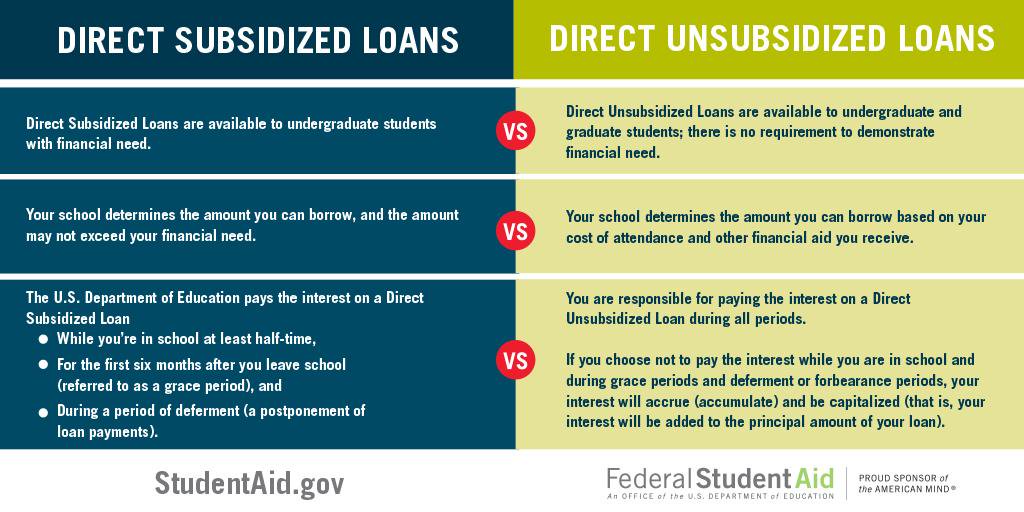
The most compelling benefit of a Direct Subsidized Loan is the interest subsidization. The U.S. Department of Education pays the interest on the loan:
- While the student is enrolled at least half-time.
- During the six-month grace period after the student leaves school or drops below half-time enrollment.
- During periods of authorized deferment.
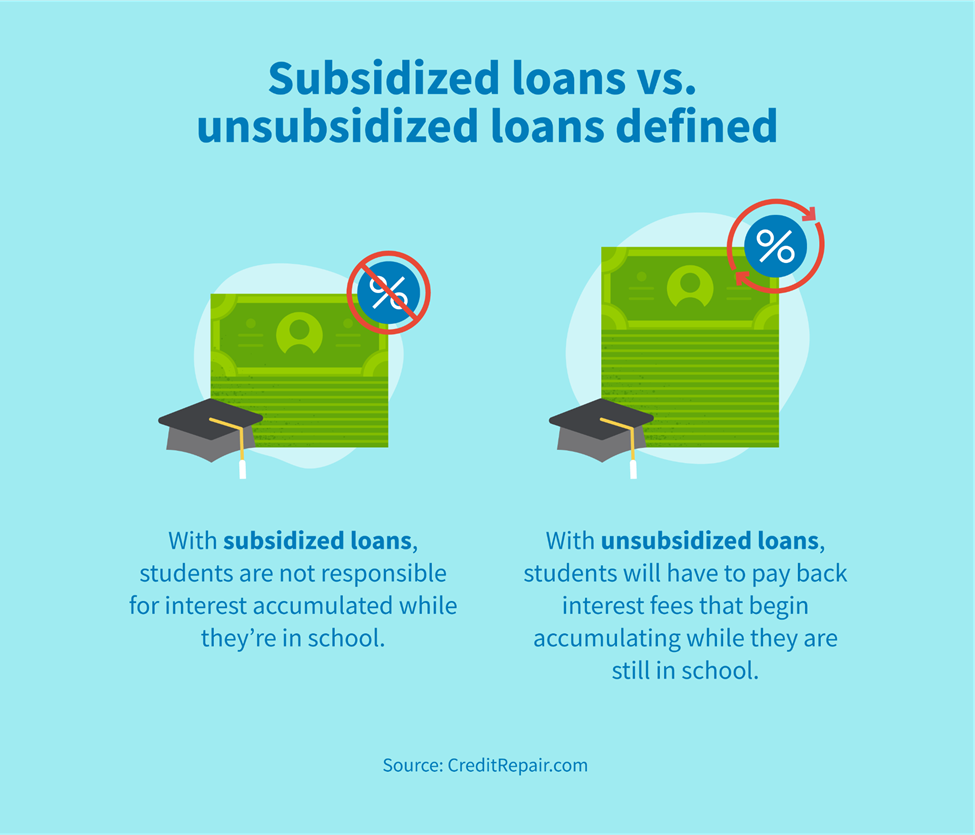
This means that the loan balance does not grow due to accumulating interest during these specified periods. For example, if a student borrows $10,000 in a Direct Subsidized Loan, and spends four years in school followed by a six-month grace period, they will still owe $10,000 at the start of repayment, assuming no other principal payments were made. This stands in stark contrast to unsubsidized loans, where interest accrues from the moment the loan is disbursed, even while the student is in school, and is capitalized (added to the principal balance) if not paid during non-repayment periods. The interest subsidy can save borrowers thousands of dollars over the life of the loan.
Loan Limits and Disbursement
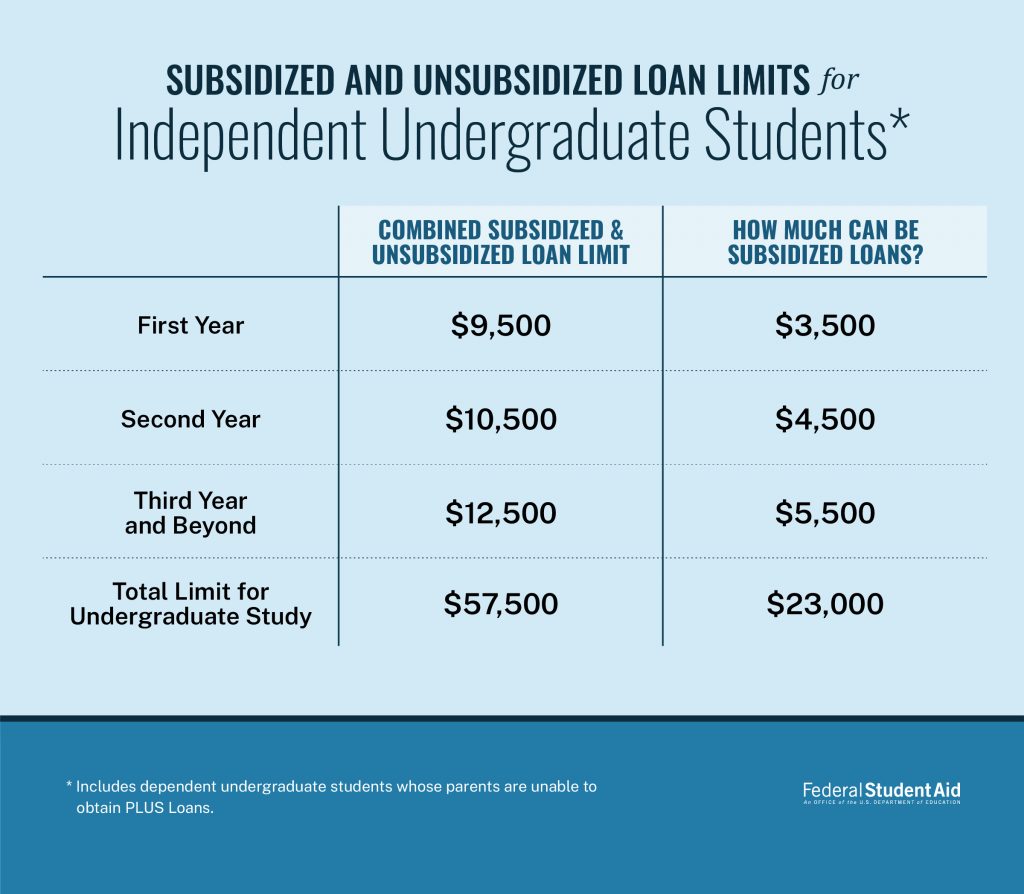
There are specific annual and aggregate (total) limits on the amount of Direct Subsidized Loans a student can receive. These limits are set by the federal government and vary based on the student’s year in school and their dependency status. For example, a dependent freshman might be eligible for up to $3,500 in subsidized loans, while an independent freshman might receive more. There is also a lifetime aggregate limit on how much a student can borrow through Direct Subsidized and Unsubsidized Loans combined.
The loan funds are not disbursed directly to the student. Instead, they are sent to the college or university, typically in at least two disbursements per academic year. The school then applies the funds to the student’s tuition, fees, and room and board charges. Any remaining funds are then disbursed to the student to cover other educational expenses, such as books, supplies, and living costs. This controlled disbursement process helps ensure the funds are used for their intended educational purpose.
How Direct Subsidized Loans Work in Practice
Once a student accepts a Direct Subsidized Loan, understanding the practical aspects of its management, from the grace period to various repayment options, becomes paramount. These mechanisms are designed to provide flexibility and support borrowers through different life circumstances.
The Repayment Process and Grace Period
The standard repayment period for federal student loans is 10 years, though other options can extend this timeline. Repayment typically begins after a grace period. For Direct Subsidized Loans, this grace period is six months after the student graduates, leaves school, or drops below half-time enrollment. During this six-month window, as previously mentioned, the federal government continues to pay the interest on the loan, meaning the principal balance remains unchanged. This grace period provides a crucial buffer, allowing graduates time to secure employment and financial stability before their first loan payment is due.
Deferment and Forbearance Options
Life is unpredictable, and federal student loans offer mechanisms to temporarily pause or reduce payments during periods of financial hardship or specific life events.
- Deferment: Allows a borrower to temporarily stop making loan payments. During deferment for a Direct Subsidized Loan, the government continues to pay the interest. Common reasons for deferment include enrollment in graduate school or another eligible educational program, unemployment, economic hardship, or active duty military service.
- Forbearance: Also allows a borrower to temporarily stop or reduce loan payments. However, unlike deferment for subsidized loans, interest does accrue on Direct Subsidized Loans during forbearance. This accrued interest will be added to the principal balance (capitalized) at the end of the forbearance period, increasing the total amount owed. Forbearance is typically granted for medical expenses, changes in employment, or other financial difficulties not covered by deferment options.
Both options require an application and approval from the loan servicer. While they provide necessary relief, understanding their impact on the overall loan cost is vital.
Income-Driven Repayment Plans
For borrowers who struggle with the standard 10-year repayment plan, federal student loans offer several Income-Driven Repayment (IDR) plans. These plans base monthly payment amounts on the borrower’s income and family size, rather than the original loan balance. Payments can be as low as $0 per month.
Common IDR plans include:
- Revised Pay As You Earn (REPAYE)
- Pay As You Earn (PAYE)
- Income-Based Repayment (IBR)
- Income-Contingent Repayment (ICR)
While using an IDR plan, any interest that accrues beyond the reduced payment amount on Direct Subsidized Loans will often be partially or fully subsidized for a certain period, preventing rapid balance growth. After 20 or 25 years (depending on the plan and loan type) of qualifying payments, any remaining loan balance under an IDR plan may be forgiven. This forgiveness, however, is typically subject to income tax. IDR plans are a powerful tool for managing student loan debt, especially for those entering lower-paying professions or experiencing extended periods of low income.
Strategic Considerations for Borrowers
Leveraging Direct Subsidized Loans effectively requires more than just understanding the terms; it demands strategic planning to minimize debt and maximize financial well-being.
Maximizing Subsidized Loan Benefits
To truly benefit from Direct Subsidized Loans, students should:
- Prioritize them: Always accept the maximum amount of subsidized loans offered before considering unsubsidized loans, private loans, or other more expensive financing options.
- Borrow only what is needed: While tempting to borrow the full amount offered, responsible borrowing means only taking out what is absolutely essential for educational expenses. Every dollar borrowed is a dollar that must be repaid, plus interest (eventually).
- Understand repayment: Familiarize yourself with the repayment process and available options before you even start borrowing. This proactive approach helps in planning post-graduation finances.
Avoiding Common Pitfalls
Several common mistakes can undermine the advantages of Direct Subsidized Loans:
- Not filing FAFSA: Missing the FAFSA deadline or not filing it at all automatically forfeits eligibility for this valuable aid.
- Ignoring loan servicer communications: Loan servicers are the point of contact for repayment. Ignoring their communications can lead to missed payments, default, and severe credit damage.
- Defaulting on loans: Failing to make loan payments for an extended period can lead to default, which has severe consequences, including wage garnishment, tax refund offset, and damaged credit.
- Misunderstanding interest accrual: While subsidized loans don’t accrue interest while in school, they do accrue interest during repayment. Some borrowers mistakenly believe federal loans are always interest-free.
Integration with Other Financial Aid
Direct Subsidized Loans are often part of a larger financial aid package. Students may also receive grants (which do not need to be repaid), scholarships, federal work-study funds, and other types of loans. A holistic approach to financial aid involves understanding how each component fits together:
- Grants and Scholarships First: Always apply for and accept grants and scholarships before any loans, as these are “free money.”
- Federal Loans Next: Prioritize Direct Subsidized Loans, then Direct Unsubsidized Loans, and potentially Direct PLUS Loans for parents or graduate students, if needed.
- Private Loans as a Last Resort: Only consider private loans after exhausting all federal options and if a funding gap still exists.
By strategically managing Direct Federal Subsidized Loans and integrating them thoughtfully into an overall financial plan, students can pursue higher education with a significantly reduced burden of post-graduation debt, positioning themselves for greater financial stability in the future.
aViewFromTheCave is a participant in the Amazon Services LLC Associates Program, an affiliate advertising program designed to provide a means for sites to earn advertising fees by advertising and linking to Amazon.com. Amazon, the Amazon logo, AmazonSupply, and the AmazonSupply logo are trademarks of Amazon.com, Inc. or its affiliates. As an Amazon Associate we earn affiliate commissions from qualifying purchases.