
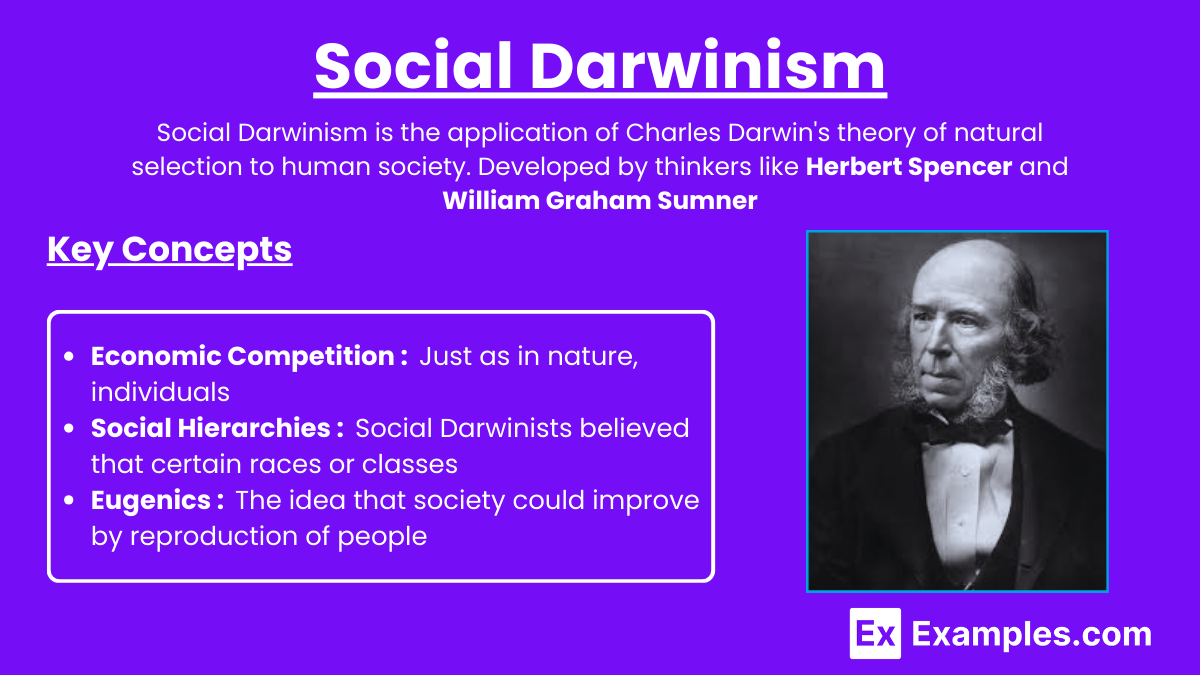
Social Darwinism, a controversial and often misunderstood ideology, profoundly impacted economic thought, business practices, and justifications for wealth and poverty during its most prominent period in the late 19th and early 20th centuries. While often associated with Charles Darwin, its primary proponents, notably Herbert Spencer, applied Darwin’s biological principles of natural selection and “survival of the fittest” not to species in nature, but to human societies, economies, and individuals. Their beliefs offered a stark, uncompromising view of competition, success, and the role of the state in financial matters.
The Philosophical Roots: Applying Biology to Economics
The bedrock of Social Darwinist thought lay in the perceived universality of evolutionary principles. Charles Darwin’s On the Origin of Species (1859) outlined a natural world where organisms compete for resources, and those best adapted to their environment are more likely to survive and reproduce. This concept of natural selection explained biological diversity and progress. Social Darwinists, however, extrapolated these biological observations into a social and economic doctrine, asserting that similar forces drive progress and differentiation within human populations and market systems.

Herbert Spencer and the “Survival of the Fittest”
Herbert Spencer, a British philosopher and sociologist, was the most influential figure in developing Social Darwinism. Long before Darwin’s seminal work, Spencer had already articulated theories of social evolution, describing society as an organism that evolves from simple to complex forms. Upon reading Darwin, Spencer eagerly adopted the concept of natural selection and, crucially, coined the phrase “survival of the fittest,” which he applied broadly to human competition—not just biologically, but socially and economically.
For Spencer and his followers, economic competition was a direct manifestation of this “survival of the fittest.” They believed that in a free market, individuals and businesses would compete for resources, capital, and customers. Those with superior intellect, stronger work ethic, greater ambition, or more innovative ideas would naturally prosper, accumulating wealth and rising to the top. Conversely, those deemed “unfit”—the poor, the less competitive, or the less capable—would naturally fall behind or fail, thereby being “weeded out” by the rigorous forces of the market. This process, they argued, was not only inevitable but also beneficial, leading to the overall improvement and advancement of society as a whole.
Core Tenets on Wealth, Poverty, and Economic Systems
The beliefs of Social Darwinists had profound implications for how they viewed wealth accumulation, poverty, and the structure of economic systems. Their ideology provided a powerful justification for extreme economic inequality and a staunch opposition to government intervention in the economy.
Justifying Economic Disparity
Social Darwinists saw vast disparities in wealth as a natural and necessary outcome of a competitive economic system. Wealthy individuals and successful corporations were considered to be the “fittest”—those who had proven their superiority through their ability to innovate, manage, invest, and compete. Their success was interpreted not merely as a stroke of luck or inherited privilege, but as evidence of their inherent merit and fitness for economic survival.
Conversely, poverty was often attributed to a lack of fitness. The poor, according to this view, were those who lacked the necessary skills, intelligence, drive, or moral character to succeed in the competitive marketplace. Social Darwinists believed that attempting to alleviate poverty through charitable giving or government programs was counterproductive. Such efforts, they argued, interfered with natural selection, allowing the “unfit” to survive and reproduce, thereby weakening the overall societal “gene pool” and hindering human progress. They maintained that individuals were solely responsible for their economic fate, and their position in the financial hierarchy was a reflection of their inherent worth.
The Case for Laissez-Faire Capitalism
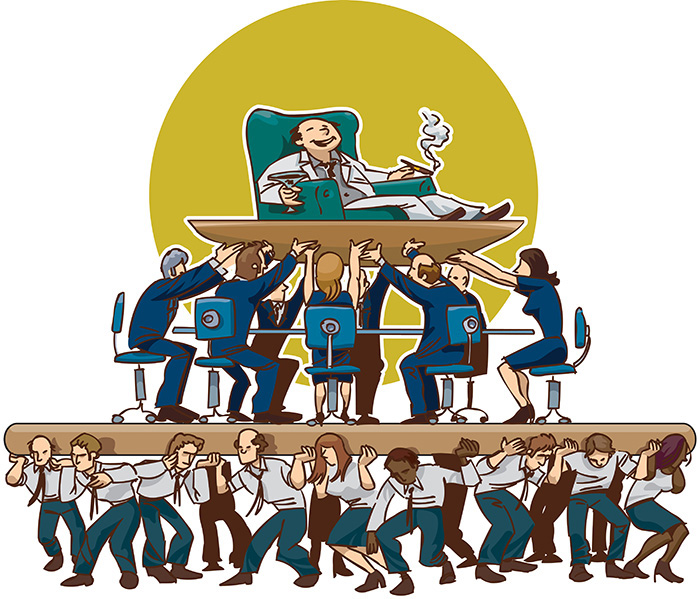
A central tenet of Social Darwinist economic thought was an unwavering advocacy for laissez-faire capitalism—a system characterized by minimal government intervention in the economy. They believed that free markets, unfettered by regulations, taxes, or social safety nets, were the most efficient and natural mechanisms for allocating resources and promoting economic progress.
Any attempt by the state to regulate businesses, redistribute wealth, or provide social welfare was seen as an artificial distortion of the natural order. Tariffs, anti-monopoly laws, labor protections, and public assistance programs were all viewed with suspicion, as they were thought to protect the weak, stifle innovation, and impede the natural process of selection. Social Darwinists argued that the market, left to its own devices, would self-correct and lead to optimal outcomes, with the most capable individuals and businesses rising to prominence. This philosophy provided a powerful intellectual justification for the rise of powerful industrialists and unregulated corporations during the Gilded Age.
Social Darwinism’s Influence on Business and Investment
While a specific, formalized “Social Darwinist business strategy” didn’t exist, the underlying ideology significantly shaped entrepreneurial attitudes, competitive practices, and approaches to investment during its peak.
Entrepreneurial Drive and Ruthless Competition
The Social Darwinist mindset fostered an environment where aggressive entrepreneurialism and ruthless competition were not just tolerated, but often celebrated. Business leaders were seen as gladiators in an economic arena, battling for market share, resources, and innovation. Monopolies and large trusts were sometimes justified as the natural outcome of superior businesses outcompeting lesser ones—a sign of their inherent “fitness.” The relentless pursuit of profit, even at the expense of competitors or workers, could be rationalized as a necessary component of economic evolution.
This framework encouraged a “dog-eat-dog” mentality in business, where mergers, acquisitions, and the collapse of less efficient companies were viewed as part of a healthy, albeit harsh, evolutionary process. Investors operating under this influence might favor companies demonstrating aggressive market dominance, high-risk, high-reward strategies, and a clear ability to outmaneuver competitors, seeing these as indicators of long-term viability and “fitness.”
Financial Tools and Market Dynamics
From a Social Darwinist perspective, the financial markets themselves were the ultimate arbiter of fitness. Stock market fluctuations, bankruptcies, and the rise and fall of industrial empires were not seen as chaotic, but as orderly processes of natural selection. Capital flowed to the most efficient, innovative, and competitive ventures, while inefficient or poorly managed enterprises were naturally starved of resources.
This perspective could influence investment decisions, encouraging a focus on “strong” companies and a skepticism towards government-supported ventures or industries perceived as reliant on subsidies. It implicitly suggested that understanding fundamental market dynamics and identifying the “winners” in an economic struggle was key to successful investing. The inherent risk and volatility of markets were not seen as flaws to be mitigated by regulation, but as essential components of the selection process.
Legacy and Modern Rejections
While Social Darwinism, in its most explicit forms, largely fell out of favor after the early 20th century, particularly following the horrors of World War I and the Great Depression, its underlying ideas continue to resonate in subtle ways within some economic and business discussions. The core belief that economic success is primarily a function of individual merit and that markets should operate with minimal intervention remains a powerful, albeit often debated, tenet in various political and economic philosophies.
However, modern economics and social policy largely reject the extreme conclusions of Social Darwinism. The consensus now widely recognizes the complex interplay of factors contributing to economic outcomes, including education, social opportunity, systemic inequalities, inherited wealth, and access to capital—factors largely ignored or downplayed by Social Darwinists. Ethical considerations of social justice, collective responsibility, and the role of safety nets are paramount in contemporary discussions about poverty, wealth distribution, and the structure of a fair economy. While the idea of competitive markets persists, the notion that such competition should be entirely unregulated and devoid of compassion for the “unfit” has been broadly discredited.
aViewFromTheCave is a participant in the Amazon Services LLC Associates Program, an affiliate advertising program designed to provide a means for sites to earn advertising fees by advertising and linking to Amazon.com. Amazon, the Amazon logo, AmazonSupply, and the AmazonSupply logo are trademarks of Amazon.com, Inc. or its affiliates. As an Amazon Associate we earn affiliate commissions from qualifying purchases.