
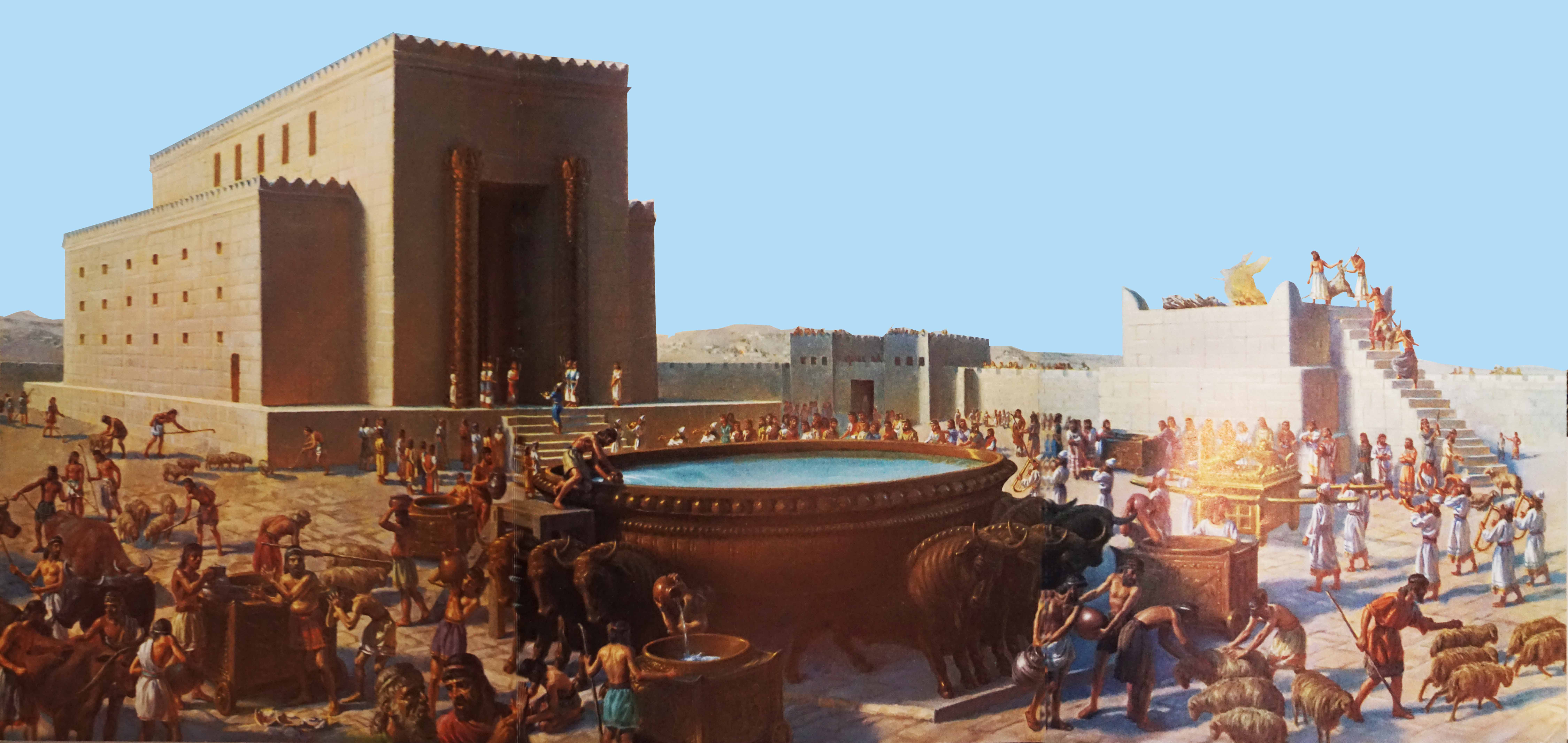
The narrative of Jesus’s actions in the Temple, often colloquially referred to as the Temple of Solomon in the popular imagination, but historically recognized as the Second Temple period structure rebuilt by Herod, stands as one of the most direct and potent challenges to established financial practices recorded in antiquity. Far from a purely spiritual confrontation, this event was a profound disruption of a complex economic ecosystem, offering invaluable insights into the ethics of commerce, the pitfalls of institutional finance, and the enduring tension between sacred purpose and profit motives. Examining this historical episode through the lens of modern finance reveals a striking case study in financial disruption, corporate ethics, and the critical importance of maintaining the integrity of an institution’s core mission against commercial creep.

The Temple as a Pivotal Economic Hub: Beyond Worship
To fully grasp the financial implications of Jesus’s intervention, it is essential to understand the multifaceted economic role the Temple played in first-century Judea. It was not merely a place of worship; it was a central bank, a major employer, a recipient of taxes and donations, and a bustling marketplace—a financial institution of immense power and reach. Its operations intertwined deeply with the daily lives and livelihoods of the populace, from pilgrims to priests.
Money Changers and Merchants: A Necessary Evil or Exploitation?
Within the Temple courts, a vibrant, albeit controversial, economic activity flourished. Pilgrims from across the Roman Empire and beyond converged on Jerusalem, bringing diverse currencies. To offer sacrifices and pay the annual Temple tax (a half-shekel obligation for every adult male), these foreign monies needed to be exchanged into the specific, approved coinage—the Tyrian shekel, known for its high silver content. This necessity gave rise to the “money changers” (κολλυβισταί), who provided this essential service. While their function was practical, their operations quickly evolved into a lucrative enterprise, with exchange rates and commissions often perceived as exorbitant.
Parallel to the money changers were the merchants selling animals for sacrifice. Pilgrims traveling long distances often found it impractical to bring their own sacrificial animals. Consequently, a bustling market emerged within the Temple precincts, offering doves, sheep, and oxen. Again, this service addressed a genuine need. However, the prices of these “approved” animals, often subject to priestly inspection and certification, were reputedly inflated, sometimes dramatically so. This created an effective monopoly for the sellers operating within the Temple, who were likely connected to or protected by the Temple authorities. The combination of mandatory currency exchange and controlled animal sales created a highly profitable internal economy within the Temple walls, where the line between service and exploitation became increasingly blurred.
The Pilgrimage Economy: Supply and Demand Dynamics
The annual pilgrimage festivals—Passover, Pentecost, and Sukkot—transformed Jerusalem into an economic powerhouse. Hundreds of thousands, possibly millions, of pilgrims flooded the city, creating immense demand for accommodation, food, and, crucially, Temple services. This massive influx of people and capital fueled a dynamic pilgrimage economy. The Temple, as the focal point of these pilgrimages, was at the heart of this economic engine. The money changers and merchants were not peripheral figures; they were integral components of a supply-and-demand system designed to facilitate religious observance while simultaneously generating significant revenue for the Temple establishment and its associated stakeholders. The financial transactions within the Temple were not incidental; they were systemically embedded, representing a major revenue stream.
Jesus’s Intervention: A Stance on Financial Ethics and Stewardship
Jesus’s actions, famously involving overturning tables and driving out merchants, were far more than a spontaneous outburst of anger. They constituted a deliberate and symbolic critique of the financial practices that had permeated the sacred space, offering a powerful statement on institutional ethics, the misuse of resources, and the prioritization of profit over purpose. His acts can be interpreted as a direct challenge to the prevailing business model of the Temple’s financial operations.
Challenging Usury and Exploitation
While direct evidence of explicit usury (lending at exorbitant interest) in the Temple itself is debated, the high commissions charged by money changers and the inflated prices for sacrificial animals certainly bordered on, if not crossed into, exploitation. Jesus’s condemnation of making “my Father’s house a den of robbers” (Matthew 21:13) powerfully highlights his perception of these practices. From a financial ethics perspective, this was a clear denunciation of rent-seeking behavior—the practice of gaining wealth without creating new wealth, but rather by manipulating existing economic arrangements, often to the detriment of consumers (the pilgrims).
His actions underscored the principle that fundamental services, particularly those tied to religious observance, should not be subject to excessive profiteering. It challenged the notion that any transaction, regardless of context, can be justified solely by market demand. Instead, it argued for a higher ethical standard, especially for institutions that claim a sacred or public trust. This resonates with modern debates around predatory lending, price gouging during crises, or excessive fees in financial services, where essential needs are exploited for disproportionate gain.
Reclaiming Purpose: Sacred Space vs. Marketplace
At its core, Jesus’s cleansing was a powerful act of reclaiming institutional purpose. The Temple, intended as a “house of prayer for all nations,” had, in his view, been transformed into a “den of robbers” or a “house of merchandise.” This distinction is crucial for understanding the financial implications. It was not commerce itself that was inherently evil, but its placement and priority within a sacred institution. By allowing the noise, haggling, and perceived exploitation of a marketplace to dominate the outer courts—the very space designated for Gentile worship—the Temple authorities had, in Jesus’s estimation, lost sight of their primary mission.
From a modern business perspective, this represents a critical lesson in brand integrity and mission drift. When a primary institution allows ancillary profit-generating activities to overshadow its core purpose, it risks alienating its stakeholders and compromising its foundational values. Jesus’s actions were a radical repositioning strategy, attempting to strip away the accretions of commercialism to reveal the institution’s intended spiritual core. He was advocating for a restoration of stewardship, where the management of resources, including financial ones, serves the institution’s true mission, rather than being an end in itself.
Long-Term Financial Implications and Legacy
The immediate financial impact of Jesus’s actions would have been disruptive, albeit temporary. The halting of transactions, the overturning of tables, and the disruption of the marketplace would have caused direct financial losses for the merchants, money changers, and potentially the Temple treasury itself, which likely received fees or rents from these operations. However, the lasting legacy of this event extends far beyond these immediate economic consequences, offering enduring lessons in financial integrity and corporate governance.
The True Cost of Ethical Misconduct
The Temple incident serves as a stark reminder that ethical misconduct, even when generating significant profits, ultimately undermines an institution’s credibility and long-term viability. While the Temple establishment was financially robust, its reliance on practices perceived as exploitative created deep resentment among segments of the populace. Jesus’s public challenge, rooted in a critique of these financial practices, significantly eroded public trust in the Temple leadership.
In contemporary business, scandals involving financial impropriety, executive compensation controversies, or the exploitation of customers demonstrate this same principle. Short-term gains derived from unethical practices often lead to catastrophic long-term costs in reputation, market share, regulatory penalties, and ultimately, a loss of societal legitimacy. The Temple’s eventual destruction, while a complex historical event, can be seen, in part, as the culmination of generations of eroding public trust and ethical compromise, of which its commercial operations were a significant symptom.
A Call for Transparency and Stewardship
Jesus’s intervention implicitly called for greater transparency and better stewardship of the Temple’s financial resources and operations. If the money changing and animal sales were truly necessary services, they should have been conducted with integrity, fairness, and a clear alignment with the Temple’s sacred mission. The secrecy around commissions, the lack of oversight on pricing, and the apparent self-enrichment of connected parties stood in stark contrast to the ideal of transparent, accountable management.
This translates directly to modern principles of corporate governance, especially for non-profit organizations, public trusts, and institutions with a social mission. Stakeholders demand transparency in financial dealings, accountability from leadership, and assurance that resources are being stewarded effectively to achieve the stated objectives, not to line the pockets of insiders. The Temple cleansing underscores the enduring requirement for financial operations to be congruent with an organization’s core values and public image.
Modern Parallels: Business Ethics in Sacred and Public Spaces
The lessons from Jesus’s actions in the Temple resonate profoundly in today’s world, particularly concerning the ethics of finance within institutions that hold a public or sacred trust.
When Profit Motives Distort Core Missions
Many contemporary organizations, from universities to healthcare systems to non-profits, grapple with the tension between financial sustainability and their foundational missions. Just as the Temple found itself a prisoner of its own lucrative internal economy, modern institutions can succumb to mission creep, where profit-generating activities begin to overshadow or even corrupt the primary purpose they were established to serve. Whether it is a university prioritizing endowment growth over accessible education, a hospital system focusing on elective procedures over community health, or a charity spending excessively on administrative overhead rather than direct aid, the historical parallel is clear. Jesus’s actions serve as a timeless warning against allowing financial expediency to compromise an institution’s ultimate raison d’être.

The Importance of Financial Integrity in Non-Profits and Public Trusts
For non-profit organizations, religious institutions, and public trusts, financial integrity is paramount. These entities rely heavily on public donations, grants, and tax exemptions, predicated on their commitment to a greater good. Any perceived exploitation, lack of transparency, or misuse of funds can be devastating. The Temple incident highlights how even seemingly necessary financial services can, if unchecked, transform into instruments of exploitation that undermine public confidence and moral authority.
In an era where financial scams, corporate malfeasance, and ethical breaches frequently make headlines, the historical narrative of Jesus in the Temple offers a powerful call to vigilance. It reminds us that robust financial oversight, unwavering ethical standards, and a constant re-evaluation of how financial tools serve or subvert an institution’s core mission are not merely good practices—they are indispensable for long-term health, public trust, and true impact. The Temple cleansing, therefore, stands as a foundational case study in the relentless pursuit of financial rectitude within institutions of profound cultural and societal importance.
aViewFromTheCave is a participant in the Amazon Services LLC Associates Program, an affiliate advertising program designed to provide a means for sites to earn advertising fees by advertising and linking to Amazon.com. Amazon, the Amazon logo, AmazonSupply, and the AmazonSupply logo are trademarks of Amazon.com, Inc. or its affiliates. As an Amazon Associate we earn affiliate commissions from qualifying purchases.