
In the annals of American political history, the 1918 indictment and subsequent conviction of Eugene V. Debs stand as a pivotal moment, not only for civil liberties but also as a compelling, albeit tragic, case study in personal and political brand strategy. Debs, a prominent socialist leader and five-time presidential candidate, was accused of violating the Espionage Act of 1917, specifically for sedition. His crime, in essence, was delivering an anti-war speech that challenged the prevailing national narrative during World War I. Examining this episode through the lens of branding reveals how a charismatic leader built a powerful personal brand, how governmental powers attempted to dismantle it, and how, in a twist of fate, the very accusation ultimately solidified Debs’s enduring legacy as a principled icon.

The Branding of a Socialist Icon: Eugene Debs Before 1918
Before 1918, Eugene V. Debs had meticulously crafted and consistently reinforced a powerful personal brand over several decades. His journey from a humble locomotive fireman to a revered labor organizer and socialist presidential candidate was built on a foundation of unwavering conviction and eloquent advocacy for the working class.
Crafting a Public Persona: Debs’ Early Brand Identity
Debs’ personal brand was characterized by authenticity, empathy, and an unyielding commitment to social justice. He was not merely a politician; he was perceived as a champion of the disenfranchised, a man who spoke truth to power. His consistent message revolved around solidarity, economic equality, and anti-militarism. These core values resonated deeply with millions of Americans who felt marginalized by industrial capitalism. His speeches, delivered with passionate conviction, were not just political rhetoric; they were powerful brand messaging that forged a strong emotional connection with his audience. He eschewed personal luxury, living a modest life that reinforced his brand authenticity and separated him from the perceived opulence and corruption of mainstream politicians. His brand image was that of “Honest Gene,” a true friend of the working man, cultivating trust and loyalty among his supporters.
The Socialist Party’s Brand Architecture
Debs was not merely a member of the Socialist Party of America; he was its most recognizable face and, arguably, its primary brand ambassador. His personal brand was inextricably linked to the party’s brand architecture. He embodied the party’s ideals, lending credibility and charisma to its platform. The party’s brand strategy leveraged Debs’s widespread recognition and moral authority to articulate its vision for a more equitable society. He was the central pillar around which the party’s public identity was built, transforming abstract political theories into relatable aspirations for everyday people. His presence on the ballot, even without the expectation of victory, served as a potent statement of the party’s enduring values and its commitment to challenging the status quo. His electoral campaigns, despite their outcomes, were vital exercises in brand building and awareness for the socialist movement, consistently amplifying its message on a national stage.
The Accusation as a Brand Attack: Sedition in Wartime
The entry of the United States into World War I presented a severe challenge to Debs’s anti-war brand and to the broader socialist movement. The government, under President Woodrow Wilson, embarked on a comprehensive strategy to control public opinion and ensure national unity, viewing dissent as a threat to the nation’s wartime “brand integrity.”
The Espionage Act and Government’s Brand Control
The Espionage Act of 1917 was a powerful tool designed to protect the “national brand” during a period of immense global conflict. Its provisions were broad, criminalizing any act that could be perceived as interfering with military operations or promoting insubordination within the armed forces. Crucially, it also targeted speech deemed to undermine public morale or incite disloyalty. This legislation served as a legal framework for the government’s brand control efforts, aiming to suppress any narrative that challenged the official wartime messaging of patriotism, duty, and the righteousness of American involvement. It effectively created a legal barrier against competing “anti-war brands” from gaining traction. The government’s strategic communication during this period focused on demonizing opposition, portraying dissenters as unpatriotic or even treasonous, thereby attempting to devalue and delegitimize their public brands.
Debs’ “Anti-War Brand Message” and Its Repercussions
On June 16, 1918, in Canton, Ohio, Eugene Debs delivered a speech that would become the focal point of the government’s brand attack. In this speech, he articulated his deeply held anti-war sentiments, criticizing the conflict as a capitalist war benefiting the wealthy at the expense of the working class. He spoke of the “masters of war” and celebrated those who had the courage to resist conscription. This was a clear and unambiguous articulation of his “anti-war brand message,” a direct counter-narrative to the government’s pro-war stance. It represented a “rebel brand” challenging the “establishment brand” of national unity and military necessity. For the government, this speech was not merely an expression of opinion; it was a powerful act of brand dilution, threatening to erode public support for the war effort. His words, especially given his prominent public profile, were seen as inciting disloyalty and insubordination, directly undermining the government’s carefully constructed wartime image and objectives.
The Charges: Sedition and Inciting Disloyalty
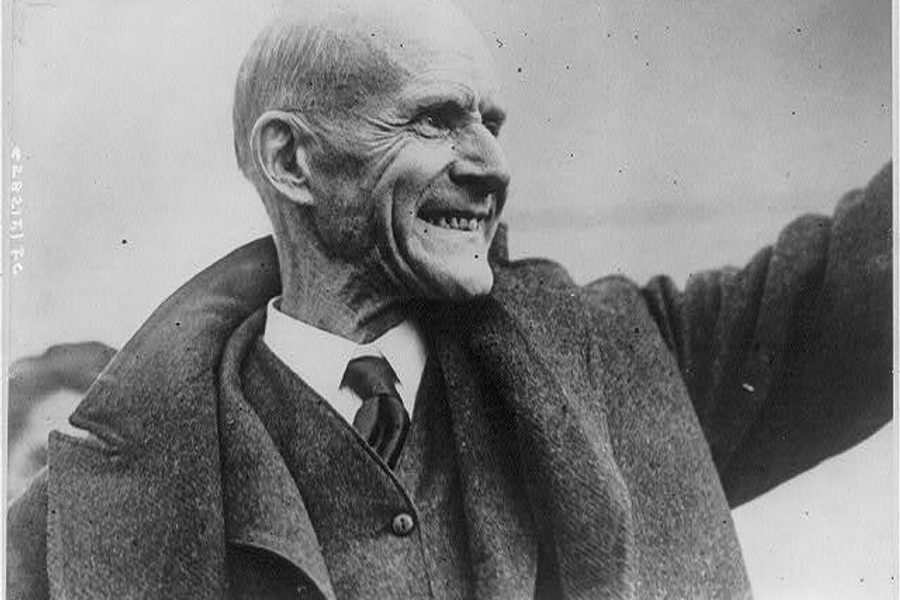
The accusation against Debs was sedition, specifically for violating sections of the Espionage Act. He was charged with obstructing the recruiting and enlistment service of the U.S. armed forces, and with inciting insubordination, disloyalty, mutiny, and refusal of duty in said forces. These charges were a direct attempt to “debrand” Eugene Debs as a legitimate political voice and to recast his public image from a principled dissenter to a dangerous traitor. The government’s strategy was clear: by legally branding him a seditionist, they aimed to diminish his influence, discredit his message, and ultimately dismantle the socialist anti-war movement by removing its most influential leader. The charges were not merely about the content of his speech but about the potential impact of his respected brand on public opinion during a sensitive national moment.
Brand Under Siege: The Trial and Its Aftermath
The trial of Eugene Debs was more than a legal proceeding; it was a high-stakes public relations battleground, where the government sought to enforce its national brand narrative, and Debs, in turn, leveraged the platform to reinforce his own principled brand.
The Trial as a Public Relations Battleground
During his trial in September 1918, Debs chose not to call any witnesses or present any defense. Instead, he delivered a powerful, two-hour statement to the jury. This was not a legal defense in the conventional sense, but a masterstroke of “brand statement” and public relations. He admitted to the content of his Canton speech, openly reaffirming his socialist principles and his unwavering commitment to free speech. He declared, “While there is a lower class, I am in it; while there is a criminal element, I am of it; while there is a soul in prison, I am not free.” This defiant declaration reinforced his core brand values of solidarity and justice, transforming the courtroom into a stage for his ideology. It reframed the narrative: he wasn’t denying the act, but rather affirming the righteousness of his dissent. This approach, while leading to his conviction, simultaneously enhanced his “martyr brand” among his supporters and galvanized further opposition to the Espionage Act. The trial became a vivid illustration of the clash between the government’s efforts to control public discourse and Debs’s determined pursuit of authentic, albeit unpopular, brand expression.
The Carceral Brand: Imprisonment and Its Impact on Debs’ Legacy
Following his conviction, Debs was sentenced to ten years in prison. For many public figures, imprisonment would irrevocably damage their personal brand, associating them with criminality and disgrace. However, for Debs, the “carceral brand” of being an incarcerated political prisoner had a paradoxical effect. Instead of diminishing his standing, it solidified his “martyr brand.” His supporters viewed his imprisonment as proof of the government’s repression and his unwavering commitment to his ideals. His confinement transformed him into a powerful symbol of resistance against governmental overreach and censorship. This enhanced his credibility as a principled dissenter, making his brand even more potent among those who valued civil liberties and social justice. He continued to be a potent force even behind bars, running for president from his prison cell in 1920 and garnering nearly one million votes – a testament to the enduring power of his brand despite, or perhaps because of, his incarceration.
Shifting Perceptions: How the Event Reshaped the Socialist Brand
The legal attack on Debs severely impacted the immediate political viability of the Socialist Party of America. The Espionage Act, coupled with the Red Scare, led to widespread suppression of socialist activities, effectively reducing the party’s “market share” and influence in mainstream politics for decades. However, the events of 1918 also created a lasting, albeit complex, brand legacy for American socialism. Debs’s conviction and imprisonment became an iconic symbol of the struggle for free speech and political dissent in the United States. While the party as an organized force suffered, the brand of principled resistance against injustice, exemplified by Debs, endured. The narrative of Debs’s persecution laid the groundwork for future civil liberties movements, anchoring the concept of free speech as a non-negotiable component of American democracy, even when that speech is critical of government policy.
Enduring Brand Resonance: Debs’ Post-Release Influence
Even after his release from prison, the impact of the 1918 sedition accusation continued to shape Debs’s brand resonance, demonstrating how a powerful personal brand can transcend even severe legal and political setbacks.
Pardons and Rehabilitation: A Partial Brand Restoration
Eugene Debs was eventually pardoned by President Warren G. Harding in 1921, a decision that reflected a gradual shift in public and political perception regarding the extreme measures taken during the war. This act of clemency served as a form of “brand rehabilitation,” acknowledging that the severity of his punishment might have been disproportionate to his “crime” in the context of peacetime. The public discourse surrounding his pardon indicated a growing recognition that Debs, despite his radical views, had acted on principle rather than malice. While not a full endorsement of his socialist ideology, the pardon began the process of restoring his brand to one of a courageous, albeit controversial, figure rather than a mere seditionist, allowing his other brand values—like his dedication to workers’ rights and peace—to re-emerge more prominently.

The Legacy of a Principled Brand
Eugene Debs passed away in 1926, but the events of 1918 and his subsequent imprisonment cemented his brand as an enduring symbol of free speech, civil liberties, and principled dissent in American history. His “brand values” of standing up for the oppressed, advocating for peace, and challenging the powerful continue to resonate with subsequent generations and political movements. Figures from Martin Luther King Jr. to various labor and civil rights activists have invoked Debs’s name and legacy, recognizing his willingness to sacrifice personal freedom for his beliefs. The accusation and conviction for sedition, though intended to silence him, ultimately amplified his message and solidified his brand as a moral compass for social justice. His story serves as a powerful reminder that while institutions can attempt to control narratives, authentic and principled personal brands, even under siege, can leave an indelible mark on history and inspire future movements for change.
aViewFromTheCave is a participant in the Amazon Services LLC Associates Program, an affiliate advertising program designed to provide a means for sites to earn advertising fees by advertising and linking to Amazon.com. Amazon, the Amazon logo, AmazonSupply, and the AmazonSupply logo are trademarks of Amazon.com, Inc. or its affiliates. As an Amazon Associate we earn affiliate commissions from qualifying purchases.