
Banjo fittings represent a specialized and highly effective solution for fluid transfer in a myriad of technological systems, from high-performance automotive applications to intricate industrial hydraulics. Their unique design, characterized by a hollow bolt, a circular union body, and usually two sealing washers, allows for versatile hose routing and efficient fluid flow in confined spaces. Understanding the engineering principles, applications, and selection criteria for banjo fittings is crucial for anyone involved in designing, maintaining, or upgrading systems that rely on precision fluid management.
The Engineering Behind Banjo Fittings
At its core, a banjo fitting is an elegant piece of mechanical engineering designed to address specific challenges in fluid line routing. Unlike traditional threaded connectors that often require a fixed angle or significant space for installation, banjo fittings offer flexibility and compactness.

Unique Design and Principle of Operation
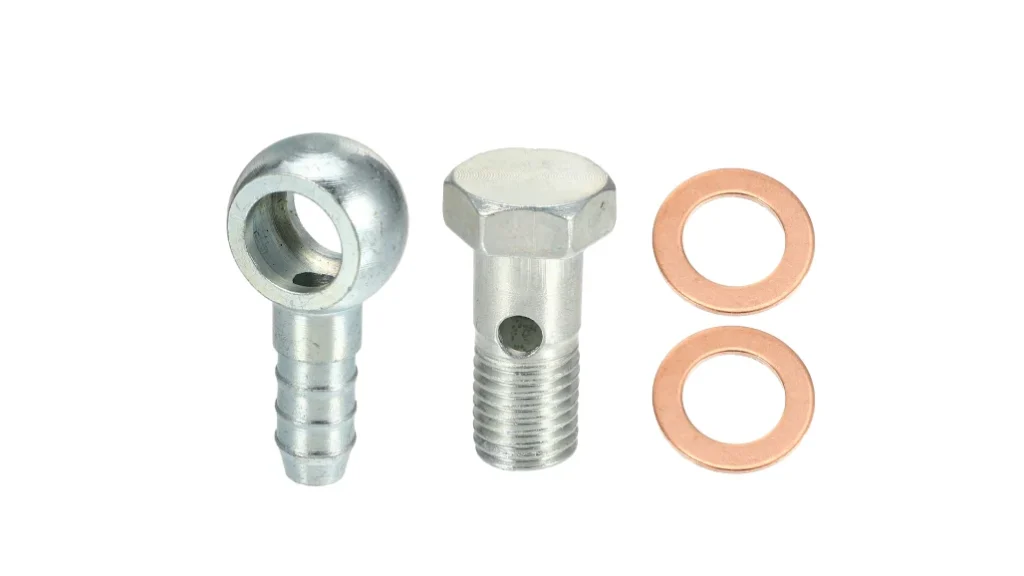
The defining characteristic of a banjo fitting is its multi-component assembly. It consists of:
- The Banjo Bolt (Hollow Bolt): This specialized bolt features a drilled passage that allows fluid to flow through its center. When tightened, it secures the banjo body to the component (e.g., a brake caliper, a turbocharger, a hydraulic pump) and simultaneously provides the fluid path. The bolt’s head typically has a hex shape for tightening.
- The Banjo Body (Union Body): This is the circular or annular component with a central hole that aligns with the banjo bolt. It usually has an outlet port (or ports) to which a hose or tube is connected, often via a barb, compression fitting, or AN/JIC flare. The body allows fluid from the central bolt passage to be directed into the attached line.
- Sealing Washers: Typically, two crush washers (made from copper, aluminum, or synthetic materials like Dowty seals) are used—one between the bolt head and the banjo body, and another between the banjo body and the component surface. These washers compress upon tightening, creating a leak-proof seal around the fluid port.
The operational principle is straightforward: fluid enters the system through the banjo bolt’s hollow passage, fills the cavity within the banjo body, and then exits through the connected hose or tube. This design is particularly advantageous because the banjo body can often rotate around the bolt before final tightening, allowing for precise angular positioning of the hose without unscrewing the entire assembly.
Key Components and Materials
The performance and durability of banjo fittings are heavily influenced by the materials used in their construction. Common materials include:
- Steel: Often zinc-plated or stainless steel, offering high strength, corrosion resistance, and suitability for high-pressure applications.
- Brass: Excellent for corrosion resistance, ease of machining, and often used in lower to medium pressure applications, particularly with water, oil, or air.
- Aluminum: Lightweight and corrosion-resistant, frequently found in automotive and aerospace applications where weight reduction is critical. Anodized finishes enhance durability and appearance.
- Copper (for washers): Traditional material for crush washers, known for its malleability and excellent sealing properties.
- Aluminum (for washers): Lighter alternative to copper, suitable for similar applications.
- Synthetic Seals (e.g., Dowty washers): These are bonded seals comprising a metal washer with an elastomeric sealing lip, offering superior sealing performance, especially at higher pressures and temperatures.
The choice of material is dictated by the fluid being transferred, operating pressure, temperature range, and environmental conditions to ensure optimal system integrity and longevity.
Versatile Applications Across Technological Systems
The inherent advantages of banjo fittings—compactness, multi-directional flow capabilities, and reliable sealing—make them indispensable in a diverse array of technological applications. Their ability to deliver fluid at various angles while occupying minimal space is a critical design feature for many modern systems.
Automotive and Motorsports
Perhaps one of the most recognizable applications for banjo fittings is within the automotive industry, especially in braking and fuel systems.
- Braking Systems: Banjo fittings are commonly found connecting brake lines to calipers and master cylinders. Their ability to direct fluid at precise angles within the confined space of a wheel well or engine bay is crucial for efficient hydraulic brake operation. High-performance racing vehicles often utilize specialized banjo fittings for consistent brake fluid delivery under extreme conditions.
- Fuel and Oil Systems: In fuel injection systems, turbocharger oil feed lines, and power steering systems, banjo fittings facilitate the compact routing of vital fluids. Their robust sealing ensures no leaks, which is paramount for safety and performance.
- Cooling Systems: Some engine and transmission cooling lines also employ banjo fittings for their space-saving design and reliable connections.
Hydraulic and Pneumatic Systems
Beyond automotive, banjo fittings are extensively used in industrial machinery where hydraulic or pneumatic power is critical.
- Industrial Machinery: From construction equipment and agricultural machinery to manufacturing robots, hydraulic systems rely on banjo fittings for high-pressure fluid transfer. Their compact nature allows for complex hydraulic circuits to be built within limited envelopes, contributing to machine efficiency and uptime.
- Automation: In pneumatic control systems and automated assembly lines, banjo fittings help route compressed air to actuators and valves with precision, often contributing to faster cycle times and more reliable operation due to optimized hose routing.
Medical and Scientific Equipment
The precision and reliability offered by banjo fittings extend to highly sensitive environments such as medical devices and scientific instrumentation.
- Fluid Delivery Systems: In laboratory equipment, analytical instruments, and certain medical devices, where precise and contamination-free fluid transfer is essential, specialized small-scale banjo fittings can be employed. Their secure sealing prevents leaks and maintains system integrity, which is vital for accurate results and patient safety.
Advantages and Considerations in System Design
Integrating banjo fittings into a technological system offers several design benefits but also requires careful consideration during selection and installation.
Space Efficiency and Multi-Directional Flow
The primary advantage of a banjo fitting is its unparalleled space efficiency. Because the banjo body can rotate before final tightening, it allows engineers to orient the attached hose or tube in virtually any direction relative to the bolted component. This is invaluable in compact engine bays, tightly packed hydraulic manifolds, or within complex machinery where every millimeter of space is critical. This multi-directional flow capability simplifies hose routing, reduces the need for multiple adapters or complex bent tubing, and can significantly decrease the overall footprint of a fluid circuit.
Sealing Integrity and Reliability
When properly installed with the correct washers and torque, banjo fittings provide an exceptionally reliable, leak-proof seal. The crush washers deform under compression, conforming to any minor irregularities on the mating surfaces, thereby creating a robust barrier against fluid escape. This reliability is crucial in high-pressure hydraulic systems, sensitive fuel lines, or any application where even minor leakage could lead to system failure, environmental hazard, or safety risks. The integrity of these seals directly contributes to the overall reliability and performance of the technological system they are part of.
Installation and Maintenance Considerations
While advantageous, proper installation is paramount for banjo fittings.
- Torque Specifications: Adhering to the manufacturer’s specified torque for the banjo bolt is critical. Undertorquing can lead to leaks, while overtorquing can damage the bolt, washers, or the mating component, compromising the seal.
- Washer Replacement: Crush washers are typically single-use items. They are designed to deform permanently during installation to create a seal. Reusing old washers dramatically increases the risk of leaks and should be avoided during maintenance or repair.
- Cleanliness: Ensuring mating surfaces and components are clean and free of debris is essential for an effective seal. Any particulate matter can compromise the washer’s ability to create a tight seal.
Selecting the Right Banjo Fitting for Your Project
Choosing the appropriate banjo fitting involves assessing several technical parameters to ensure compatibility, safety, and optimal performance for the specific application.
Material Compatibility and Pressure Ratings
The material of the banjo fitting and its washers must be compatible with the fluid being transferred. For instance, some fluids are corrosive to certain metals, and incompatible materials can lead to premature failure. Equally important are the pressure ratings. Banjo fittings are available for various pressure ranges, and selecting one that meets or exceeds the maximum operating pressure of the system is non-negotiable for safety and reliability. High-pressure hydraulic systems, for example, require robust steel fittings, while lower-pressure air lines might suffice with brass or aluminum.
Size, Threading, and Angle Options
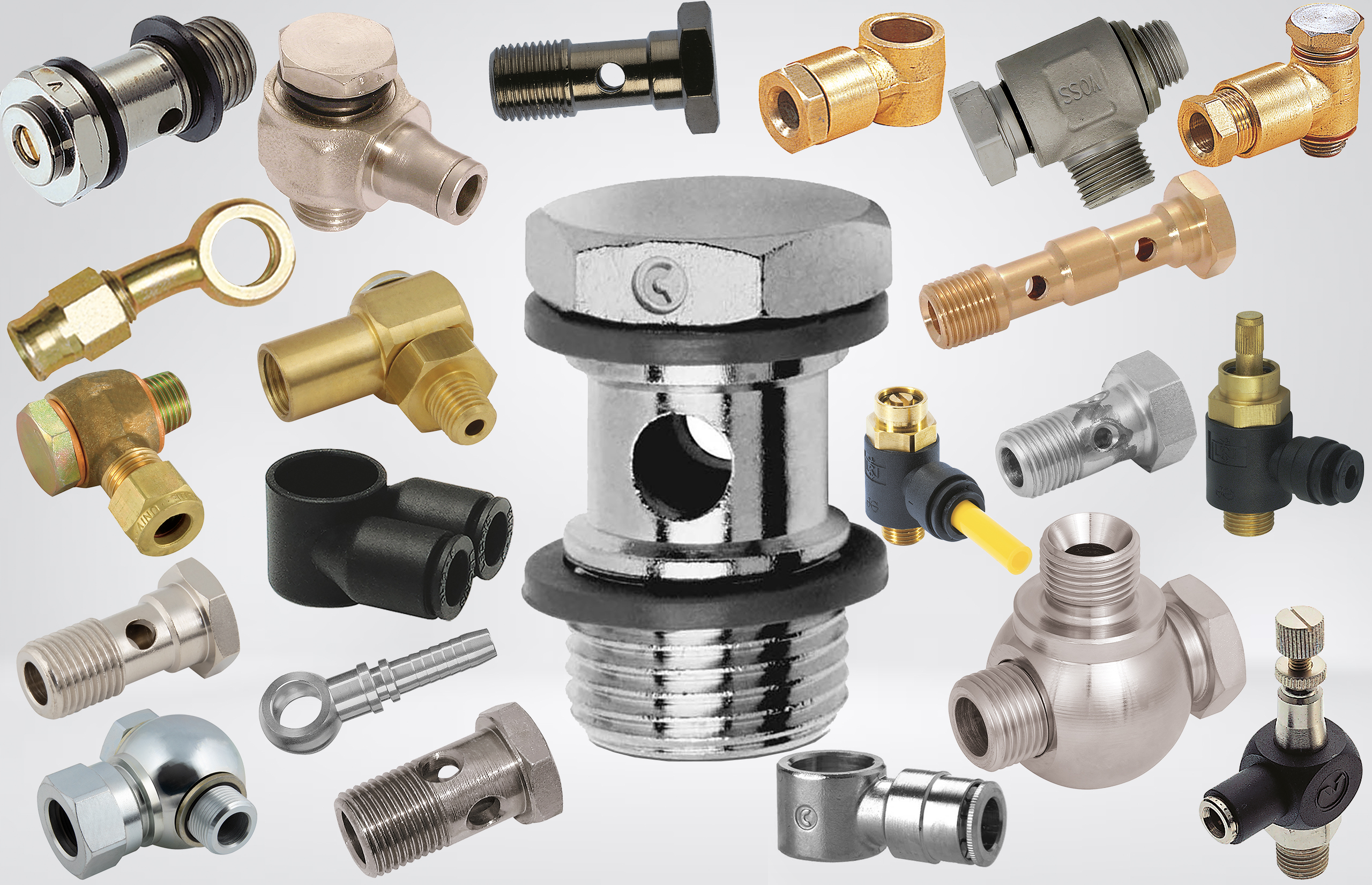
Banjo fittings come in a wide array of sizes, referring to both the banjo bolt’s diameter and thread type (e.g., M10, M12, 3/8″-24 UNF) and the outlet port’s size (e.g., for 6mm hose, -3 AN, -4 AN). The correct threading is vital for secure attachment to the component. Furthermore, while the banjo body offers rotational flexibility, the angle of the outlet port itself can vary (e.g., straight, 45-degree, 90-degree), further assisting in complex hose routing. Careful measurement and specification matching are crucial to ensure a proper fit and optimal fluid flow characteristics.
Future Trends and Innovations in Fluid Connectors
The field of fluid connectors continues to evolve, driven by demands for higher performance, greater efficiency, and enhanced reliability in advanced technological systems. Future trends for banjo fittings and similar connectors might include:
- Advanced Materials: Development of lighter, stronger, and more corrosion-resistant composites or alloys capable of handling extreme temperatures and pressures.
- Integrated Sensors: Connectors with embedded sensors for real-time monitoring of pressure, temperature, or fluid flow, providing critical data for predictive maintenance and system optimization.
- Modular and Quick-Connect Designs: Innovations that allow for faster, tool-free assembly and disassembly, reducing maintenance downtime and simplifying field repairs.
- Smart Sealing Technologies: Research into self-healing seals or seals with extended life spans to further enhance system reliability and reduce environmental impact.
As technological systems become more complex and miniaturized, the evolution of components like banjo fittings will continue to play a pivotal role in enabling these advancements, ensuring efficient and reliable fluid transfer under increasingly demanding conditions.
aViewFromTheCave is a participant in the Amazon Services LLC Associates Program, an affiliate advertising program designed to provide a means for sites to earn advertising fees by advertising and linking to Amazon.com. Amazon, the Amazon logo, AmazonSupply, and the AmazonSupply logo are trademarks of Amazon.com, Inc. or its affiliates. As an Amazon Associate we earn affiliate commissions from qualifying purchases.