
The question of “what’s the most expensive whiskey” transcends mere curiosity about a luxury beverage; it delves deep into the intricate financial ecosystems of collectibles, alternative investments, and the ultra-high-end consumer market. Far from being a simple retail price check, identifying the priciest bottles reveals a fascinating interplay of scarcity, provenance, historical significance, and aggressive market speculation, positioning these spirits as bona fide liquid assets. For investors, collectors, and those tracking wealth trends, understanding the drivers behind these astronomical valuations offers significant insights into a unique segment of the global economy.
The Financial Landscape of Ultra-Premium Whiskey
The valuation of ultra-premium whiskey is a complex tapestry woven from supply-side limitations, demand-side enthusiasm, and a distinct lack of transparency compared to traditional asset classes. Unlike commodities, whose prices are often dictated by industrial usage or broad economic indicators, the top tier of whiskey pricing is almost entirely driven by collectibility and investment potential.
More Than a Drink: A Liquid Asset
For many, whiskey, particularly aged and rare expressions, has transitioned from a consumable good to a tangible asset. Investment-grade whiskey casks and bottles have demonstrated impressive returns over the past decade, outperforming traditional investments like stocks, bonds, and even gold in certain periods. The Knight Frank Luxury Investment Index (KFLII) has frequently highlighted rare whisky as a leading performer among passion investments, attracting a new cohort of investors seeking portfolio diversification and tangible assets in times of economic uncertainty. This shift means a bottle’s “worth” is less about its sensory qualities and more about its potential for appreciation on the secondary market.
Drivers of Extreme Valuation
Several interconnected factors conspire to propel certain whiskies into the financial stratosphere, making them prime targets for investors and collectors.
Rarity and Scarcity
The most fundamental driver of extreme whiskey valuation is scarcity. Many record-breaking bottles originate from “ghost distilleries” – those that have ceased production, rendering their remaining stock finite and irreplaceable. Even active distilleries release limited editions that, by their very nature, are designed to be rare. The age of a whiskey also plays a critical role; spirits aged for 50, 60, or even 80 years represent generations of patient maturation, during which a significant portion of the liquid is lost to the “angel’s share” (evaporation). This dwindling supply, coupled with increasing global demand, creates a classic economic tension that inflates prices exponentially.
Historical Significance and Provenance
A whiskey’s story significantly contributes to its financial appeal. Bottles with unique historical narratives, such as those from a specific vintage year marking a significant event, or those tied to legendary distillers, command higher prices. Furthermore, impeccable provenance – a documented history of ownership and storage – is crucial for investor confidence. A well-verified chain of custody assures buyers of the bottle’s authenticity and condition, mitigating risks that could otherwise deter high-value transactions.
Packaging and Presentation
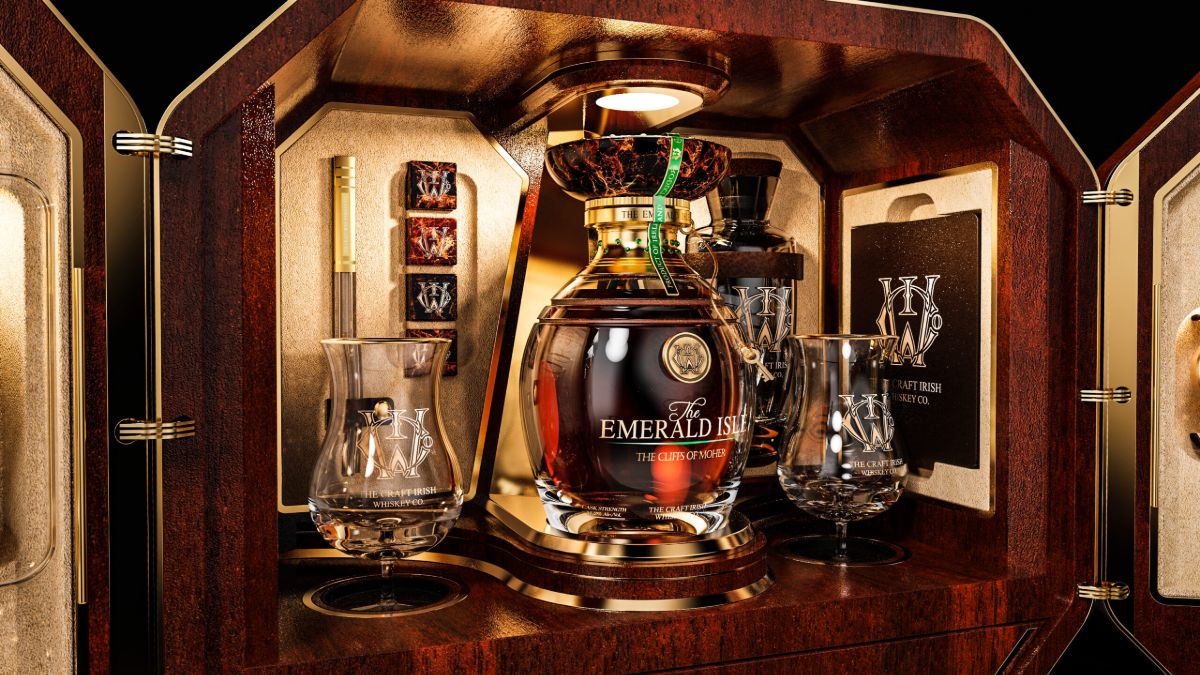
While the liquid inside is paramount, the presentation of ultra-premium whiskies often adds another layer of financial value. Bottles might be handcrafted from crystal, adorned with precious metals or gemstones, and housed in bespoke cases made from rare woods. For instance, some editions are famous less for their liquid and more for their diamond-encrusted or gold-plated decanters. This opulent packaging transforms the bottle into a luxury art object, appealing to buyers who value aesthetic excellence and exclusivity as much as, or even more than, the spirit itself. The material cost of these elements can significantly contribute to the initial retail price and subsequent secondary market value.
Auction Market Dynamics
The tertiary market, primarily dominated by prestigious auction houses, is where the most expensive whiskies truly find their financial footing. The competitive bidding environment, fueled by wealthy collectors and investors, can push prices far beyond initial estimates. Auction results serve as crucial benchmarks, setting new precedents and influencing the perceived value of similar bottles. The global reach of these auctions, attracting bidders from Asia, North America, and Europe, ensures a broad and active demand base, further driving up hammer prices.
The Titans of Tertiary Markets: Record-Breaking Bottles
Several whiskies have made headlines by shattering auction records, establishing new financial benchmarks for luxury spirits. These bottles represent the pinnacle of whiskey investment.
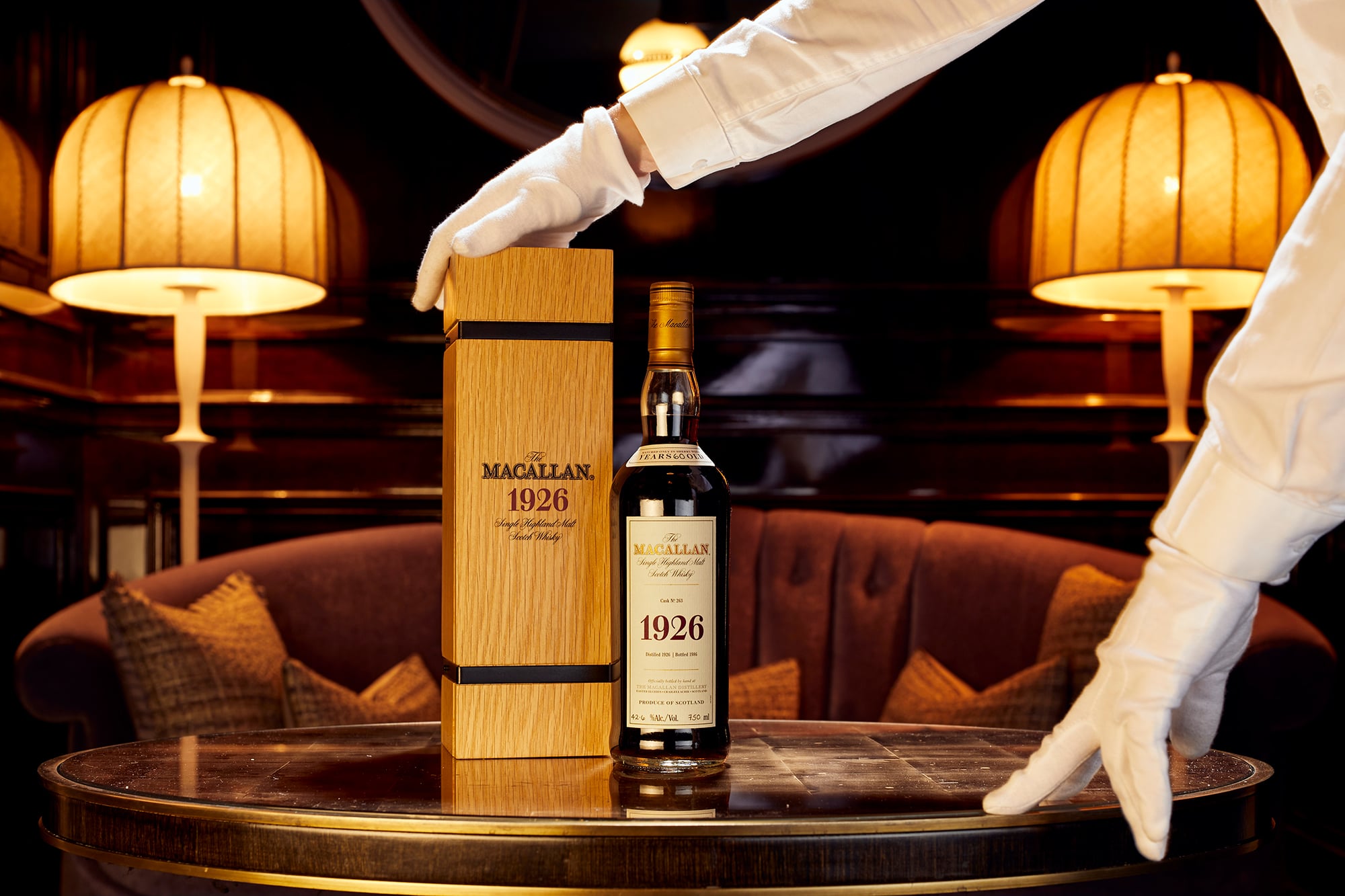
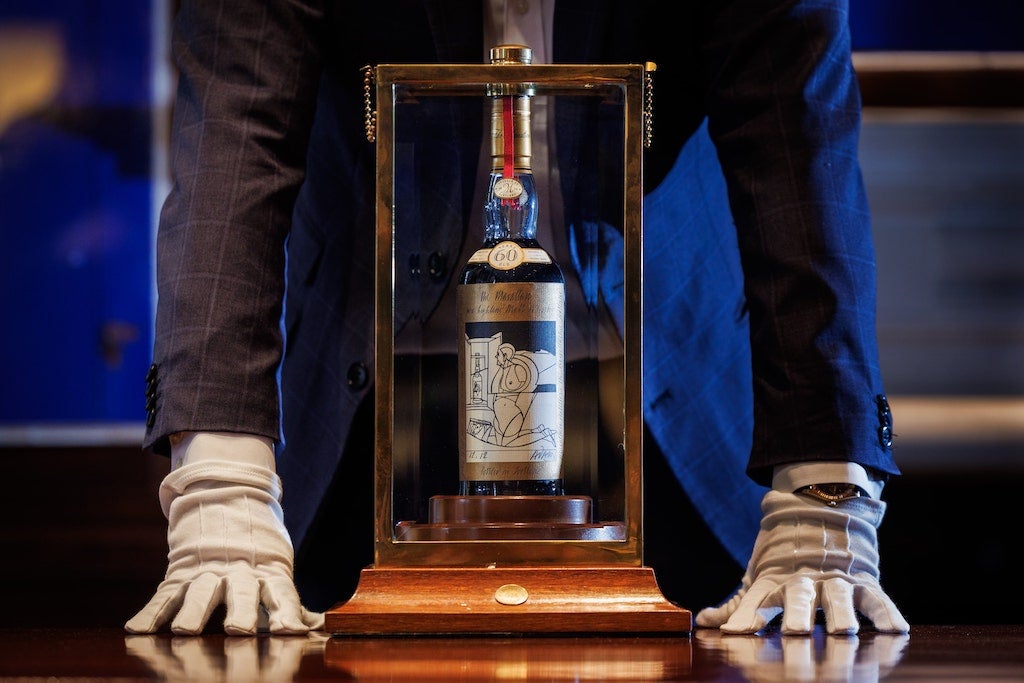
The undisputed champion in terms of price per bottle is frequently The Macallan Fine & Rare 60-Year-Old 1926. In 2019, a single bottle of this exceptional Scotch sold for a staggering £1.5 million (approximately $1.9 million USD at the time) at Sotheby’s in London. Its extreme value is derived from its rarity (only 40 bottles were filled in 1986 from Cask #263), its age, and its impeccable provenance. One specific bottle featured a label designed by artist Valerio Adami, while another by Peter Blake, adding an artistic dimension to its financial allure. Another variant, hand-painted by Irish artist Michael Dillon, became the first bottle of whiskey to break the £1 million mark at auction. These transactions underscore the role of scarcity and branding in creating investment-grade assets.
Beyond The Macallan, other whiskies have commanded extraordinary prices:
- Yamazaki 55-Year-Old: Japan’s oldest and rarest whisky, released in extremely limited quantities (100 bottles), typically fetches six-figure sums at auction. Its rarity, coupled with the burgeoning demand for Japanese whisky, positions it as a highly sought-after investment. The first bottle sold for HKD 6.2 million (approx. $795,000) at Sotheby’s in 2020.
- Hanyu Ichiro’s Full Card Series: A complete set of 54 bottles from the now-defunct Hanyu distillery, each representing a playing card, sold for HKD 11.9 million (approx. $1.5 million USD) at Bonhams in 2020. This collection’s value lies in its completeness, the distillery’s closure, and the exceptional quality of its individual components, making it a unique and robust investment portfolio in itself.
- Isabella’s Islay: While often cited for its extreme price, Isabella’s Islay’s value is derived almost entirely from its opulent decanter, which is crafted from white gold, adorned with 8,500 diamonds, and encrusted with 300 rubies. The liquid inside, though premium, is secondary to the container’s material worth, making it more akin to a jewel-encrusted art piece than a traditional whiskey investment. Its price tag of approximately $6.2 million emphasizes the fusion of ultra-luxury goods with fine spirits, targeting a clientele for whom extreme opulence is the primary driver of purchase.
These examples illustrate that the “most expensive” whiskey is a moving target, continually redefined by auction results and the ever-evolving dynamics of global wealth.
Investing in Whiskey: A Niche Asset Class
The remarkable performance of high-end whiskey on the secondary market has firmly established it as a legitimate, albeit specialized, asset class. For discerning investors, it offers unique advantages and challenges.
Portfolio Diversification and Returns
For many sophisticated investors, whiskey serves as a compelling option for portfolio diversification. Its value often moves independently of traditional financial markets, offering a hedge against volatility in stocks and bonds. Analysis from various luxury indices has shown that rare whisky has delivered strong average annual returns over the last decade, often outperforming several other luxury collectibles. This appeal extends to both seasoned investors looking to broaden their asset base and passionate connoisseurs eager to merge their interests with profitable ventures.
Risks and Considerations for Collectors
Despite its allure, investing in whiskey comes with its own set of risks and practical considerations that any prospective investor must navigate.
Authenticity and Provenance Challenges
The high value of rare whiskies makes them targets for counterfeiting. Verifying authenticity and impeccable provenance is paramount. Investors must rely on reputable auction houses, specialist dealers, and independent experts to ensure the legitimacy of their acquisitions. Poor or incomplete provenance can significantly devalue a bottle or cask.
Storage and Insurance Costs
Whiskey, particularly vintage bottles, requires specific storage conditions to maintain its value. Consistent temperature, humidity, and protection from light are essential. Professional bonded warehouses offer ideal conditions but come with ongoing storage fees. Furthermore, insuring high-value liquid assets against breakage, theft, or natural disasters is a non-negotiable expense, adding to the overall cost of investment.
Market Volatility and Liquidity
While overall trends have been positive, the whiskey investment market is not immune to volatility. Specific brands or distilleries can see their values fluctuate based on market sentiment, changes in collector preferences, or new releases. The market for ultra-rare bottles can also be less liquid than mainstream financial assets, meaning it might take time to find a buyer at the desired price point.
Taxation Implications
Investors must also consider the tax implications of their whiskey holdings. Capital gains tax may apply to profits made from sales, and inheritance taxes could be relevant for estates. Understanding these regulations in the investor’s jurisdiction is critical for calculating net returns.
Entry Points for Aspiring Investors
For those looking to enter the whiskey investment market, several avenues exist, catering to different risk appetites and capital availability.
- Rare Bottle Auctions: The most direct route for high-net-worth individuals is participating in auctions for rare and collectible bottles, often focusing on limited editions from renowned distilleries or “ghost” distilleries.
- Cask Ownership: Investing in whole casks of maturing whiskey allows investors to buy early, benefit from the aging process, and potentially bottle their own expressions years later. This requires significant capital and patience but offers substantial control over the asset.
- Whiskey Funds and Syndicates: For smaller investors or those preferring a managed approach, whiskey investment funds or syndicates pool capital to invest in a diversified portfolio of casks and bottles, offering professional management and reduced individual risk.
- Future Releases and Limited Editions: Keeping an eye on new limited-edition releases from established distilleries can be a viable strategy, as initial retail prices can often be significantly lower than their future secondary market value.
The Economic Ripple Effect of Luxury Spirits
The extreme prices fetched by the most expensive whiskies send ripples throughout the broader spirits industry and illuminate global economic trends.
Impact on Distilleries and Brand Value
A record-breaking auction sale for a specific bottle or series of bottles provides unparalleled publicity and prestige for the distillery. Such events elevate the brand’s standing, reinforcing its image as a producer of ultra-luxury goods. This “halo effect” can lead to increased demand and pricing power across the distillery’s entire portfolio, from entry-level expressions to mid-tier offerings, as consumers associate the brand with exclusivity and exceptional quality. It also justifies higher initial release prices for subsequent limited editions, benefiting the distillery’s bottom line directly.
Global Wealth Trends and Conspicuous Consumption
The market for ultra-expensive whiskey is a direct reflection of global wealth distribution and the rise of ultra-high-net-worth individuals (UHNWIs). The increasing number of millionaires and billionaires, particularly in emerging economies, has fueled demand for luxury collectibles. These purchases are not just about investment; they also represent a form of conspicuous consumption, signaling status, discernment, and success. Owning a piece of liquid history, a bottle that commands a seven-figure sum, becomes a tangible symbol of achievement, further perpetuating the demand for these rarefied assets. This economic phenomenon ensures that the pursuit of “the most expensive whiskey” will continue to be a fascinating indicator of luxury markets and global wealth.
aViewFromTheCave is a participant in the Amazon Services LLC Associates Program, an affiliate advertising program designed to provide a means for sites to earn advertising fees by advertising and linking to Amazon.com. Amazon, the Amazon logo, AmazonSupply, and the AmazonSupply logo are trademarks of Amazon.com, Inc. or its affiliates. As an Amazon Associate we earn affiliate commissions from qualifying purchases.