
One of the most profound, yet often overlooked, indirect financial consequences of building seawalls is the intensification and redistribution of economic risk, rather than its true mitigation. While seemingly a bulwark against immediate coastal erosion and storm surges, these monolithic structures frequently create a complex web of financial challenges, shifting burdens onto different stakeholders and geographical areas, and often inflating long-term costs that ripple through property markets, insurance industries, and public finance.
The Illusion of Security: Financial Risks Intensified
Seawalls offer a tangible, visible solution to the immediate threat of encroaching seas. This perceived security, however, often masks deeper, more complex financial vulnerabilities, creating a dangerous illusion that can lead to misguided investment and increased exposure to future losses. The very act of protecting one area can inadvertently elevate financial risks elsewhere or over a longer horizon.

Inflated Property Values and False Confidence
When a seawall is erected, properties immediately behind it often experience a boost in perceived security. This can lead to a phenomenon where property values in the protected zone stabilize or even rise, not necessarily due to an inherent increase in the land’s value or safety, but because the immediate threat of erosion or flooding seems to have been neutralized. This creates a false sense of confidence among homeowners, investors, and developers. Capital flows into these areas, stimulating further development in what is still, fundamentally, a high-risk coastal zone.
This artificial inflation of property values leads to a market distortion. Buyers and lenders operate under the assumption of reduced risk, potentially overlooking the long-term efficacy of the wall, its maintenance costs, or its indirect environmental impacts. Should the seawall fail – a possibility that becomes increasingly likely with more intense storms and rising sea levels – the financial fallout from the sudden depreciation of these overvalued assets would be catastrophic, impacting not just individual homeowners but also local economies, mortgage markets, and municipal tax bases. The investment made in “protected” real estate becomes highly leveraged against the uncertain future performance of a man-made structure.
The Shifting Sands of Insurance Liability
The construction of seawalls significantly alters the landscape for the insurance industry, often in ways that are financially disadvantageous in the long run. Initially, insurers might view protected areas as lower risk, potentially adjusting premiums downwards or maintaining coverage where it might otherwise be withdrawn. However, this is frequently a short-sighted perspective. The “protection” offered by seawalls is often localized, meaning that the energy of waves and currents is simply redirected. This often exacerbates erosion in adjacent, unprotected stretches of coastline.
For insurers, this means that while one area might appear safer, other nearby areas become inherently riskier. The financial liability doesn’t disappear; it merely shifts. Properties in these newly vulnerable, unprotected zones face increased flood and erosion risks, leading to escalating insurance premiums, withdrawal of coverage, or higher deductibles. This redistribution of risk ultimately places a greater burden on a smaller pool of policyholders or forces government-backed insurance programs (like the National Flood Insurance Program in the US) to absorb a larger share of the aggregated risk, creating unfunded liabilities that taxpayers ultimately bear. Moreover, the existence of seawalls can contribute to moral hazard, where individuals and businesses take on greater risks (e.g., building closer to the shore) because they believe they are protected, further complicating actuarial models and making future claims more unpredictable and costly.
Economic Displacement and Unintended Burdens
Beyond the immediate property and insurance markets, seawalls can trigger broader economic consequences that disproportionately affect specific communities and industries, leading to financial displacement and creating new fiscal burdens.
Marginalization of Unprotected Areas
The financial logic of seawalls often prioritizes areas with high asset values or strategic importance, leaving less affluent or less politically influential coastal communities unprotected. As mentioned, the very act of building a seawall in one location can intensify coastal erosion and flooding in adjacent, unprotected areas. This “terminal scour” effect leads to rapid land loss and increased vulnerability for these marginalized communities.
The financial impact on these areas is severe. Property values plummet, making it difficult for homeowners to sell or secure mortgages. Local businesses suffer from reduced customer traffic and increased operating risks. Public infrastructure (roads, utilities) becomes more susceptible to damage, requiring costly repairs that overburden already strained municipal budgets. This creates a deepening wealth disparity along the coastline, where protected areas attract investment while unprotected ones face economic decline and even forced migration, leading to significant social and financial distress for those who can least afford it. The “solution” for one community becomes the financial ruin for another.
Stifling Coastal Industries and Tourism
Seawalls, by their very nature, often create a hard, unyielding barrier between land and sea. While protecting against erosion, this can come at the significant financial cost of degrading natural coastal habitats like beaches, dunes, and intertidal zones. These natural features are not just ecological assets; they are economic engines, supporting vibrant tourism industries, recreational activities, and coastal fisheries.
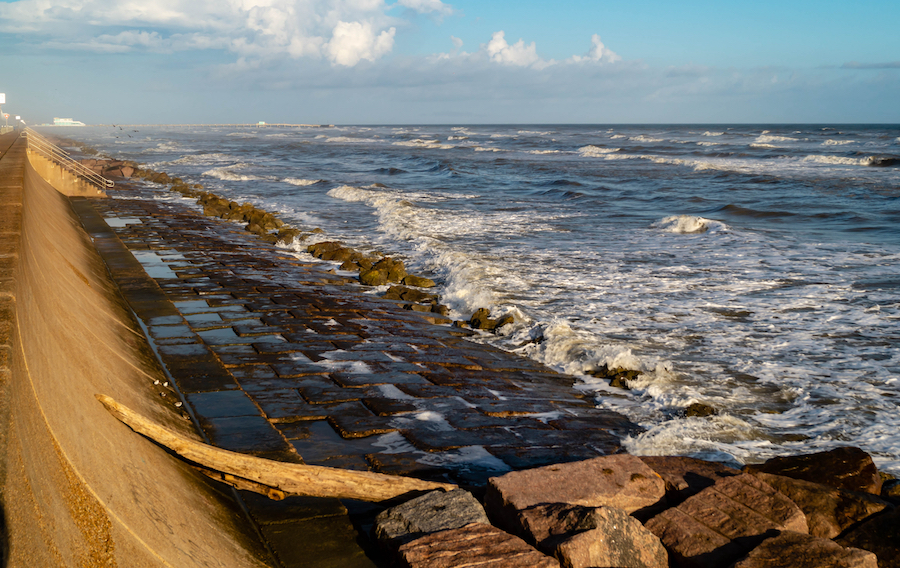
A pristine sandy beach, for example, is a powerful draw for tourists, generating revenue for hotels, restaurants, and local businesses. A seawall can prevent the natural replenishment of sand, leading to narrower, less attractive, or even non-existent beaches. This directly impacts tourism revenue, leading to job losses, business closures, and a reduction in the local tax base. Similarly, healthy estuaries and salt marshes, which are often disrupted by seawall construction, serve as vital nurseries for many fish species. Their degradation can decimate local fishing industries, impacting the livelihoods of fishermen, seafood processors, and related businesses. The long-term financial costs of losing these natural economic assets often far outweigh the perceived short-term benefits of the seawall, representing a hidden financial burden on the broader regional economy.
The Perpetual Maintenance Tax: A Long-Term Financial Drain
The initial construction cost of a seawall is just the beginning of its financial footprint. An often-underestimated indirect consequence is the perpetual and escalating cost of its maintenance, repair, and potential reinforcement, which becomes a long-term drain on public and private finances.
Escalating Repair and Reinforcement Costs
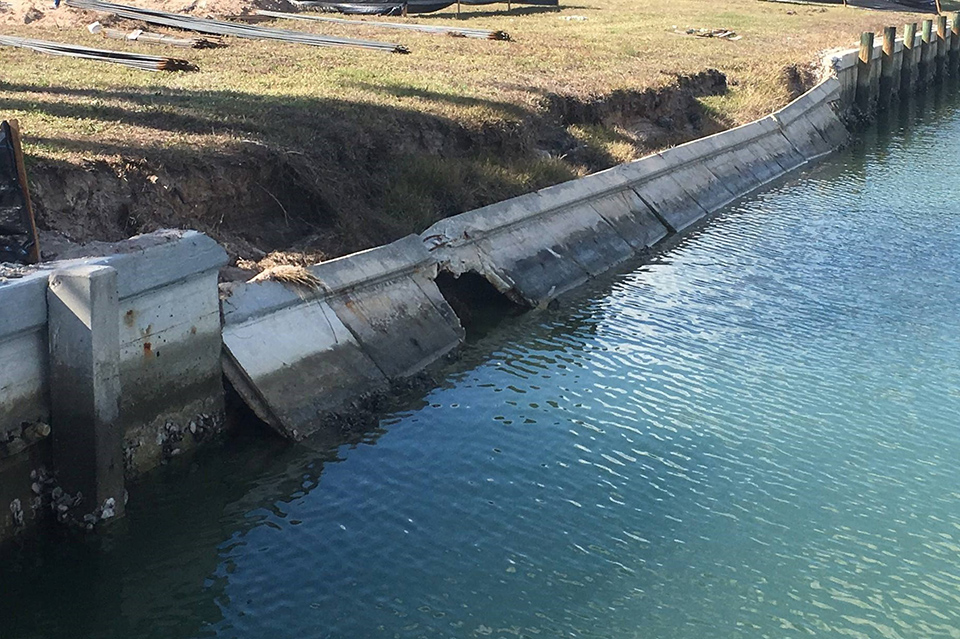
Seawalls are not static, permanent solutions. They are subject to constant battering by waves, erosion at their base, and the relentless forces of nature. Over time, they degrade, requiring significant and regular maintenance. Cracks appear, foundations erode, and materials weaken. As sea levels continue to rise and storms become more frequent and intense, the demands on these structures increase exponentially, leading to higher repair frequencies and greater reinforcement needs.
These costs are astronomical and grow over time. Repairing a major breach or reinforcing an entire section of seawall can cost millions, if not billions, of dollars. Unlike natural coastal systems which can often adapt and self-repair to some extent, seawalls require continuous human intervention and capital investment. This creates an intergenerational financial burden, where current taxpayers commit future generations to ongoing and increasing maintenance expenditures, often without a clear funding mechanism in place. This diverts substantial public funds that could otherwise be allocated to education, healthcare, or other critical infrastructure projects, implicitly taxing the future for a localized, often temporary, solution.
Diverting Funds from Other Public Services
The commitment to maintaining extensive seawall infrastructure creates a significant budgetary constraint for municipalities and regional governments. The cost of inspection, routine maintenance, emergency repairs, and eventual upgrading or replacement of seawalls can consume a substantial portion of public works budgets. This often comes at the expense of other essential public services or investments in truly sustainable coastal resilience strategies.
When a major storm damages a seawall, the immediate need for repair can trigger emergency spending, drawing funds away from parks, roads, schools, or public safety. This results in a financial opportunity cost: money spent to prop up a potentially temporary coastal defense cannot be invested in initiatives that might offer broader, more equitable, and longer-lasting financial returns, such as investments in green infrastructure, managed retreat programs, or economic diversification away from highly vulnerable coastal areas. The indirect consequence is a gradual erosion of overall public financial health and a reduced capacity for other vital public investments.
Beyond the Wall: Rethinking Coastal Finance
Recognizing the indirect financial consequences of seawalls necessitates a fundamental rethinking of how we approach coastal management and financing. The focus must shift from purely defensive, static structures to dynamic, adaptable strategies that acknowledge the fluidity of coastal environments and prioritize long-term financial sustainability.
Investing in Resilient, Adaptable Strategies
Instead of monolithic walls, prudent financial management for coastal regions should prioritize investments in resilient, adaptable strategies. This includes nature-based solutions like restoring mangroves, salt marshes, and oyster reefs, which provide ecological benefits alongside coastal protection, often at a lower long-term cost than hard structures. It also encompasses innovative financial mechanisms to support managed retreat programs, where properties in highly vulnerable areas are acquired and residents relocated to safer ground, thereby reducing future liabilities and allowing natural coastal processes to resume.
Financing these adaptive strategies requires new public-private partnerships, innovative bond structures, and a re-evaluation of how federal and state disaster relief funds are allocated. The financial incentive should be to reduce future risk and build long-term resilience, rather than perpetually fund the repair of structures destined to be overcome by a changing climate. Investing in robust monitoring and predictive modeling technologies also falls into this category, allowing for data-driven financial decisions that can anticipate and mitigate future costs.
Realigning Incentives for Sustainable Development
A critical indirect consequence of seawalls is their role in perpetuating unsustainable coastal development by creating a false sense of security. To counter this, financial incentives must be realigned to promote sustainable practices. This means reforming flood insurance programs to accurately reflect true risk, removing subsidies for development in high-risk areas, and implementing land-use policies that discourage building in vulnerable zones.
Tax policies, zoning regulations, and infrastructure investment decisions should explicitly factor in the long-term financial risks associated with coastal development, without relying on static defenses as a permanent solution. Encouraging businesses and residents to invest in flood-proofing, elevating structures, or relocating proactively through financial incentives like grants or low-interest loans can significantly reduce future disaster recovery costs and insurance payouts. Ultimately, the long-term financial health of coastal communities depends not on building bigger walls, but on fostering a resilient economy that understands, adapts to, and works with the dynamic forces of the natural world.
aViewFromTheCave is a participant in the Amazon Services LLC Associates Program, an affiliate advertising program designed to provide a means for sites to earn advertising fees by advertising and linking to Amazon.com. Amazon, the Amazon logo, AmazonSupply, and the AmazonSupply logo are trademarks of Amazon.com, Inc. or its affiliates. As an Amazon Associate we earn affiliate commissions from qualifying purchases.