
The history of currency is replete with fascinating anomalies, moments when economic necessity or strategic imperative dictated a temporary departure from the norm. Among these, the steel penny stands out as a unique relic of wartime resource allocation, a tangible reminder of a nation grappling with unprecedented global conflict. While its existence was brief, its story offers profound insights into monetary policy, material science in finance, and the enduring principles of supply, demand, and perceived value that continue to shape personal finance and investing today. The steel penny, formally known as the 1943 Lincoln cent, was minted exclusively in 1943.

The Genesis of a Wartime Anomaly
The decision to produce pennies made of steel rather than the traditional copper was not a whimsical one. It was a direct response to the immense pressures of World War II, a period when every available resource was meticulously scrutinized and allocated to support the war effort. The economic landscape of the early 1940s demanded innovation and sacrifice, leading to a pivotal shift in the composition of one of America’s most ubiquitous coins.
Economic Pressures and Strategic Material Allocation
As the United States plunged into World War II following the attack on Pearl Harbor, the nation’s industrial capacity rapidly reoriented towards military production. This shift created an enormous demand for raw materials, particularly metals vital for munitions, machinery, and electrical wiring. Copper, the long-standing primary component of the one-cent coin (typically 95% copper), was identified as a critical strategic metal. It was indispensable for artillery shells, electrical conduits in ships and aircraft, and various other essential wartime applications.
The U.S. Mint faced a dilemma: maintain the traditional copper penny and divert a significant strategic resource, or find an alternative that would free up copper for the war effort without disrupting daily commerce. The annual production of pennies consumed thousands of tons of copper, a quantity deemed too substantial to ignore during such a critical period.
The Shift from Copper to Steel
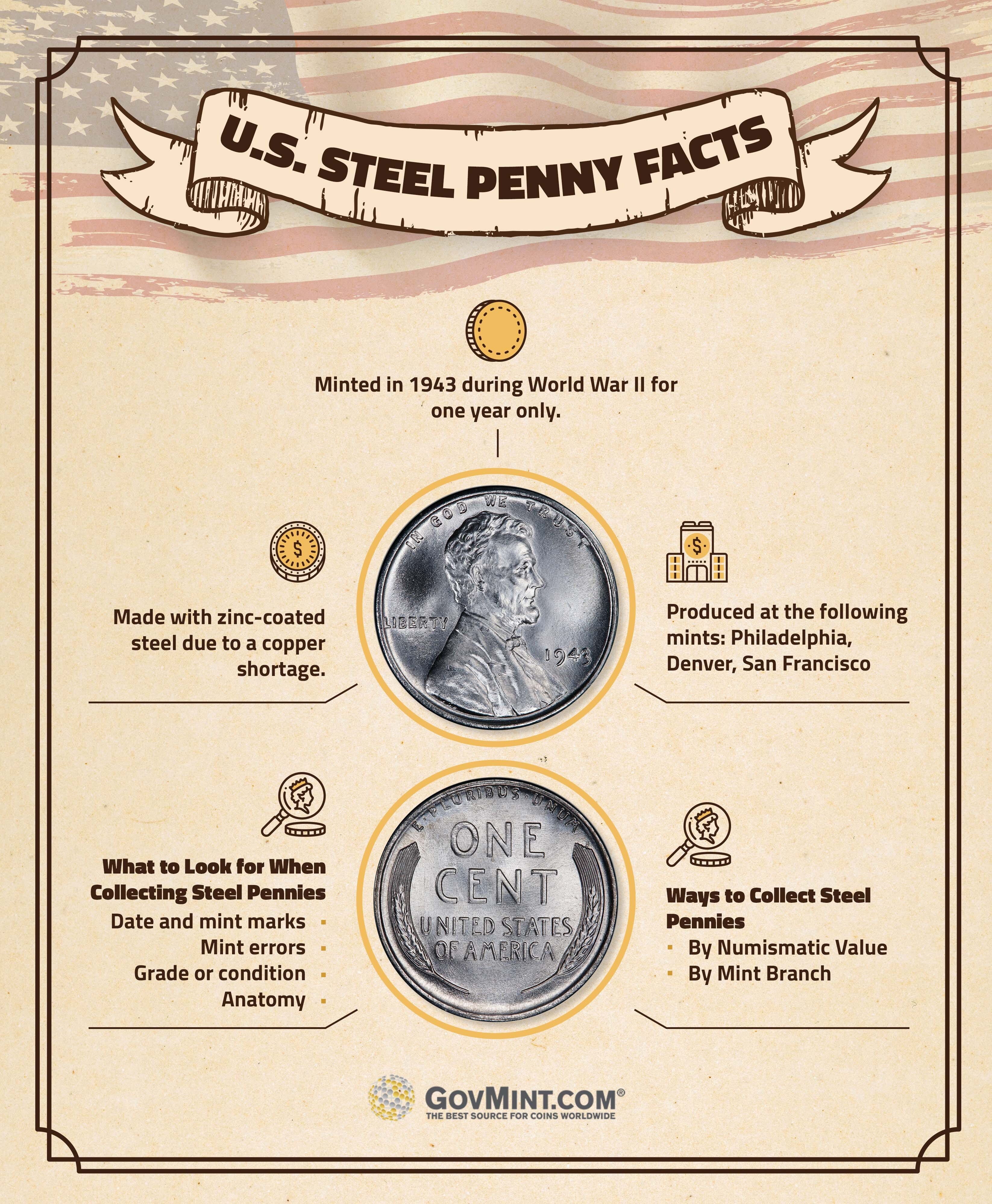
After exploring various alternative metals, including glass and plastic, the Treasury Department and the U.S. Mint settled on zinc-coated steel. Steel was readily available and not deemed a critical war material in the same way copper was. The zinc coating was applied to prevent corrosion, giving the coin its distinctive silvery-gray appearance, a stark contrast to the familiar reddish-brown of its copper predecessors. This strategic pivot allowed the U.S. government to conserve vital copper for the war, an act of national frugality that permeated every aspect of civilian life, from rationing to scrap drives.
The legislation authorizing this change was enacted on December 18, 1942, paving the way for the production of the steel penny to commence in 1943. This temporary measure underscored the government’s ability to adapt monetary policy and currency production to serve broader national objectives, a powerful illustration of how external forces can rapidly reshape even the most ingrained financial norms.
The 1943 Steel Penny: A Unique Chapter in Numismatic History
The year 1943 thus became singular in the annals of American numismatics, the only year in which the entire production run of Lincoln cents was composed of zinc-coated steel. This decision created a coin unlike any other before or since, imbuing it with immediate historical significance and long-term appeal for collectors and investors in rare currency.
Composition and Distinctive Features
The 1943 steel penny weighed 2.7 grams, noticeably lighter than the standard copper penny’s 3.11 grams. Its most striking feature was its color, a bright silver-gray, earning it nicknames like “silver penny” or “white penny.” The composition was 99% steel, with a thin coating of zinc. Despite efforts to make it visually distinct from a dime, its color often led to confusion in transactions, a minor but persistent practical issue during its circulation.
Another distinctive feature for collectors is the magnetic property of the steel cent; it is attracted to a magnet, unlike its copper counterparts. Minted at all three U.S. Mints – Philadelphia (no mint mark), Denver (D), and San Francisco (S) – these coins share the standard Lincoln cent design but bear the year “1943” prominently.
Public Reception and Practical Challenges
While the intent behind the steel penny was patriotic and practical, its introduction was not without its challenges. The most common complaint was its resemblance to the silver dime, leading to frequent confusion and sometimes inconvenience in retail transactions. Vending machine operators also encountered issues, as their mechanisms were calibrated for the weight and electromagnetic properties of copper, not steel.
Furthermore, the zinc coating, while intended to prevent corrosion, often proved insufficient. Over time, especially in humid conditions, the zinc would wear off or react with environmental elements, causing the steel core to rust. This often left the coins appearing dull, pitted, or even black, making them less aesthetically pleasing than their copper predecessors and contributing to their eventual removal from circulation.
Misconceptions and Rarity
The unusual nature of the 1943 steel penny has fueled numerous myths and misconceptions, particularly concerning its rarity and value. While billions of steel pennies were minted (over 1 billion from Philadelphia, 217 million from Denver, and 191 million from San Francisco), making them generally affordable for collectors, their unique story and condition variations contribute to their appeal.
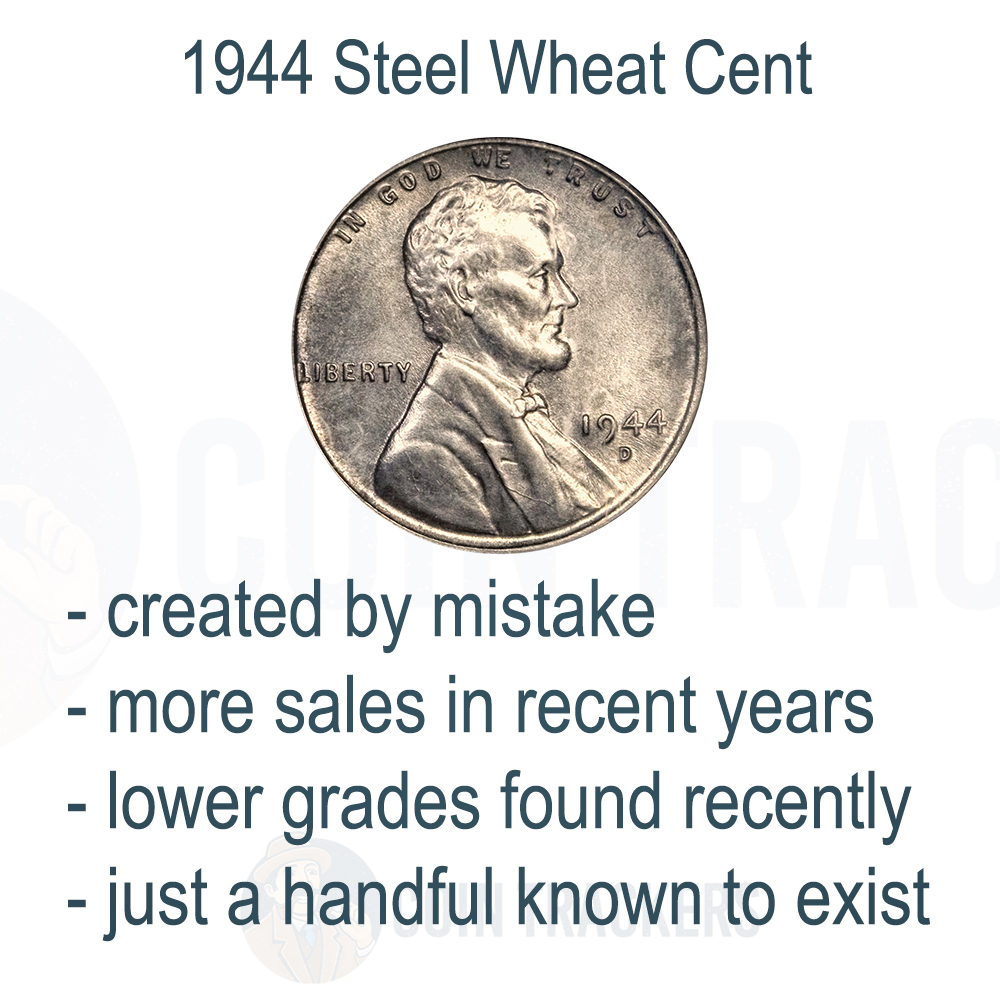
The most persistent myth revolves around the “1943 copper penny.” Due to minting errors, a tiny handful of 1943 cents were accidentally struck on copper planchets (blanks) intended for 1942 production. These genuine 1943 copper pennies are extraordinarily rare and among the most valuable U.S. coins, fetching hundreds of thousands or even millions of dollars at auction. Conversely, 1944 steel pennies, also the result of similar accidental striking errors, are equally rare and valuable. It is crucial for aspiring numismatists to understand this distinction: while 1943 steel cents are common and interesting, genuine 1943 copper or 1944 steel cents are exceptional rarities.
The Monetary and Collector’s Value of Steel Pennies
Understanding the value of the 1943 steel penny involves distinguishing between its intrinsic value, its face value, and its numismatic value. For those interested in alternative investments or simply the fascinating intersection of history and finance, these coins offer a tangible link to a pivotal era.
Intrinsic vs. Numismatic Value
The intrinsic value of a 1943 steel penny, based on the scrap metal value of its steel and zinc content, is negligible – far less than its one-cent face value. Its true value, beyond its transactional utility, lies almost entirely in its numismatic appeal. Numismatic value is determined by factors such as rarity, historical significance, condition, demand from collectors, and the presence of any unique minting errors.
While billions were produced, finding high-grade, well-preserved examples can be more challenging due to the issues with the zinc coating and steel corrosion. Coins graded as “Mint State” (MS) often command higher prices. Collectors frequently seek out sets with one coin from each mint (P, D, S) in the best possible condition.
Factors Influencing Collectibility
Several factors contribute to the collectibility and potential investment value of 1943 steel pennies:
- Condition (Grade): As with all collectible coins, condition is paramount. Coins graded by professional services (e.g., PCGS, NGC) as uncirculated (MS-60 to MS-70) or nearly uncirculated will always fetch higher prices than those showing significant wear or environmental damage.
- Mint Mark: While all three mints produced the steel cent, some slight variations in mintage figures and survival rates might affect relative values, though generally, all three are sought after for a complete set.
- Full Zinc Plating (FZP): For coins with their original zinc plating largely intact and free from significant corrosion or wear, this can be a desirable attribute, contributing to a higher grade and value.
- Errors and Varieties: Beyond the highly valuable 1943 copper and 1944 steel errors, minor die varieties or errors can also exist, though these are typically less dramatic in their impact on value.
Steel Pennies as an Alternative Investment
For the average investor, a few 1943 steel pennies are unlikely to constitute a significant portfolio holding. However, for those interested in numismatics as a hobby that can also offer financial returns, steel pennies can be an accessible entry point. Acquiring high-grade examples or focusing on specific rare varieties can represent a long-term alternative investment. The market for collectible coins tends to be less volatile than traditional stock markets, but also less liquid.
As an investment, collectible coins require specialized knowledge, careful preservation, and an understanding of market trends. The steel penny’s historical context, combined with its unique material composition, makes it a perennially interesting piece for both casual collectors and serious numismatists, offering a tangible connection to a unique moment in economic and national history.
Lessons from the Steel Penny Era for Modern Finance
The story of the 1943 steel penny transcends simple numismatic interest; it offers enduring lessons relevant to modern finance, economic resilience, and the ever-evolving nature of currency.
Adaptability in Economic Crises
The decision to switch from copper to steel pennies demonstrates the critical importance of adaptability in the face of economic crises. When traditional resources are constrained or reallocated, financial systems must be flexible enough to innovate and pivot. This principle resonates today, as global events, technological advancements, or resource scarcity can necessitate rapid shifts in monetary policy, payment systems, and investment strategies. The ability to creatively solve material and economic challenges, as exemplified by the steel penny, is a hallmark of resilient financial governance.
The Role of Scarcity and Perception in Value
The steel penny era vividly illustrates how scarcity, both real and perceived, profoundly influences value. While billions of steel pennies were produced, making them individually common, the rarity of certain misstrikes (like the 1943 copper penny) or of steel pennies in pristine condition drives astronomical values. This mirrors broader financial markets, where the scarcity of a unique asset, a limited-edition investment, or even a rare skill set can command premium valuations. Perception, influenced by historical narrative and market demand, transforms an intrinsically low-value item into a significant collectible asset.
Understanding Currency Evolution
The temporary existence of the steel penny is a reminder that currency, far from being static, is a dynamic reflection of economic conditions, technological capabilities, and societal needs. From commodity-backed money to fiat currency, and now increasingly towards digital currencies and blockchain assets, the form and function of money continually evolve. The steel penny serves as a historical marker in this evolution, demonstrating how even the most mundane aspects of everyday finance can be subject to profound and rapid transformation, driven by forces far beyond the immediate exchange of goods and services. Understanding this fluidity is crucial for navigating the future of personal finance and investment in an increasingly complex global economy.
aViewFromTheCave is a participant in the Amazon Services LLC Associates Program, an affiliate advertising program designed to provide a means for sites to earn advertising fees by advertising and linking to Amazon.com. Amazon, the Amazon logo, AmazonSupply, and the AmazonSupply logo are trademarks of Amazon.com, Inc. or its affiliates. As an Amazon Associate we earn affiliate commissions from qualifying purchases.