
The Imperative of Interoperability in Modern Communications
In the increasingly complex digital landscape, where diverse devices, platforms, and applications constantly interact, the concept of interoperability has transcended from a desirable feature to an absolute necessity. An interoperable communications system is fundamentally one where different systems, organizations, or components can seamlessly exchange and use information. This goes far beyond mere connectivity, delving into the ability to understand, interpret, and act upon shared data regardless of the underlying technology or vendor. The “mode” an interoperable system employs refers to the fundamental approach or methodology it uses to achieve this seamless exchange. Without robust interoperability, communication becomes fragmented, data silos proliferate, and the potential for technological innovation and operational efficiency remains largely untapped.
Defining Interoperability Beyond Simple Connectivity
Connectivity simply means two systems can establish a link, like a telephone call or a network connection. Interoperability, however, implies a deeper level of interaction. It encompasses syntactic interoperability, where data formats and protocols are understood, and semantic interoperability, where the meaning of the data is shared and unambiguous across systems. This distinction is critical. A system might be connected to another, but if it cannot correctly interpret the data sent or understand the context of the information, true interoperability is absent. Modern communication systems, from enterprise resource planning (ERP) platforms to smart city infrastructures, demand this deeper level of understanding to function effectively and provide real-world value.
Why Interoperability Drives Innovation and Efficiency
The benefits of true interoperability are profound and multifaceted. For businesses, it translates into streamlined workflows, reduced manual data entry, and enhanced decision-making capabilities based on a holistic view of operations. For public services, it means better coordinated emergency responses, more efficient resource allocation, and improved citizen services. Technologically, interoperability fosters an environment ripe for innovation by allowing developers to build new applications and services that leverage existing data and functionalities from disparate systems, rather than recreating them from scratch. This open ecosystem approach accelerates development cycles, reduces costs, and ultimately delivers more sophisticated and integrated solutions to end-users. Without clear interoperability modes, these systems would remain isolated islands, severely limiting their potential.
Foundational Modes for Seamless Information Exchange
To achieve the nuanced requirements of interoperability, various modes have evolved, each addressing different aspects of system integration and data exchange. These modes often coexist within complex ecosystems, working in concert to ensure comprehensive communication.
The Standardized Protocol Mode: Unifying Through Consensus
Perhaps the most fundamental mode for interoperability is the reliance on standardized protocols and data formats. This mode dictates that all participating systems adhere to a common set of rules, specifications, and data structures. Organizations like the Institute of Electrical and Electronics Engineers (IEEE), the Internet Engineering Task Force (IETF), and the International Organization for Standardization (ISO) develop and maintain these standards. Examples include TCP/IP for network communication, HTTP/HTTPS for web traffic, XML and JSON for data interchange, and various industry-specific standards like DICOM in healthcare or FIX in finance.
In this mode, interoperability is achieved proactively. Systems are designed from the ground up to speak the same language, eliminating the need for complex translation layers. While robust and highly efficient, the challenge lies in the often slow and complex process of standard development and adoption, as well as the difficulty of evolving standards quickly enough to keep pace with rapid technological advancements. However, for core communication infrastructure, this mode remains indispensable.
The Gateway/Translator Mode: Bridging Disparate Systems
When direct standardization is not feasible or when integrating legacy systems that cannot be easily updated, the gateway or translator mode becomes critical. In this mode, intermediary components, often called gateways, brokers, or translators, are deployed to convert data and protocols between incompatible systems. A gateway acts as a bridge, understanding the communication patterns and data formats of one system and translating them into a format digestible by another.
For instance, a legacy mainframe system might communicate using a proprietary protocol, while a modern cloud application expects RESTful APIs and JSON data. A gateway would receive data from the mainframe, transform it, and expose it via an API that the cloud application can consume. This mode offers a pragmatic solution for brownfield integration scenarios, allowing organizations to leverage existing investments without a complete overhaul. The drawback is the introduction of an additional layer of complexity, potential latency, and a single point of failure if the gateway is not robustly designed. However, it’s often the most practical path to integrating heterogeneous environments.
The API-Driven Mode: Programmatic Integration and Flexibility
The rise of the internet and web services has popularized the Application Programming Interface (API) driven mode. APIs define a set of functions and procedures that allow one application to access the features or data of another application. Rather than directly exchanging raw data, systems interact by making requests to and receiving responses from well-defined API endpoints. This mode is a sophisticated evolution of the standardized protocol mode, often leveraging standard web protocols (like HTTP) and data formats (like JSON/XML).
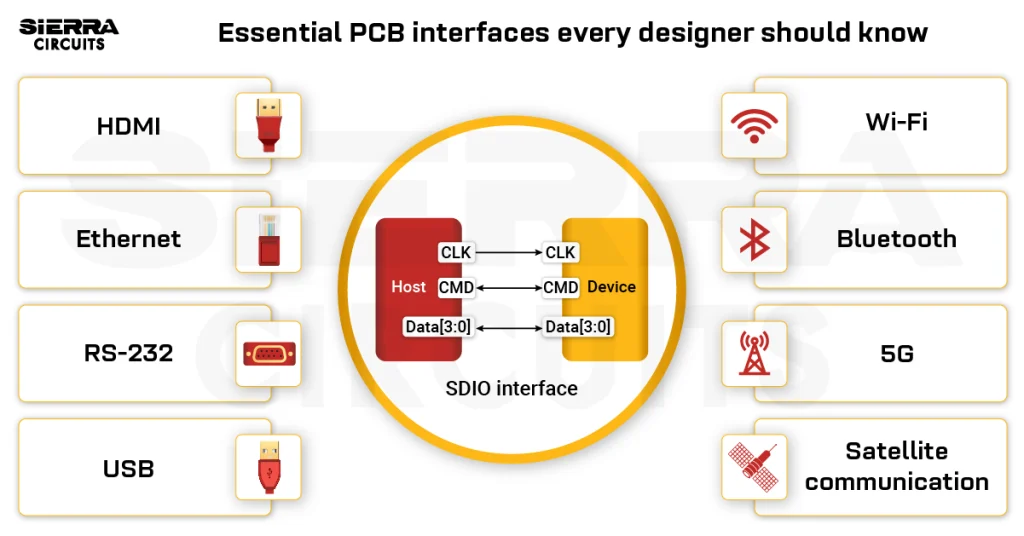
APIs provide a contractual agreement between systems, outlining how they can interact. This promotes loose coupling, where systems can evolve independently as long as their API contracts are maintained. It’s the backbone of modern microservices architectures, cloud-native applications, and the vast ecosystem of third-party integrations we see today (e.g., social media logins, payment gateways). The flexibility and scalability of the API-driven mode make it a dominant approach for achieving modern interoperability, though it requires careful API design, documentation, and versioning to prevent integration headaches.
Advanced Architectures and Emerging Modes
As systems grow in scale and complexity, more advanced and distributed interoperability modes are gaining prominence, pushing the boundaries of what seamless communication can achieve.
Federated and Mesh Network Modes: Decentralized Interoperability
Beyond point-to-point or hub-and-spoke integrations, federated and mesh network modes represent more decentralized approaches to interoperability.
A federated mode involves a collection of independent systems that agree to operate under a common set of policies, sharing data and resources in a controlled manner without a central authority dictating all operations. Each system maintains its autonomy but participates in a larger, interconnected ecosystem. Think of distributed identity management systems or collaborative scientific research networks. This mode balances autonomy with shared capability.
A mesh network mode goes further, with every node (device or system) capable of connecting directly to multiple other nodes. This creates a highly resilient and self-healing network where data can take multiple paths to its destination. While more common in physical network topologies (like wireless sensor networks), the principles extend to software systems where services directly communicate with many peers, often leveraging service mesh technologies for management and observability. Both federated and mesh modes are vital for highly distributed environments where resilience, scalability, and localized decision-making are paramount.
Semantic Interoperability: Understanding Beyond Syntax
The ultimate goal for many advanced interoperable systems is to achieve semantic interoperability. This mode focuses not just on the technical exchange of data, but on ensuring that the meaning of the exchanged data is unambiguously understood by the receiving system. This involves using ontologies, vocabularies, and linked data principles to provide context and relationships for data elements.
For example, two healthcare systems might both exchange patient demographic data. Syntactic interoperability ensures they can read each other’s XML or JSON. Semantic interoperability ensures that when one system sends “DOB: 01/01/1980”, the other system correctly interprets “DOB” as “Date of Birth” and understands the format “MM/DD/YYYY”, even if its internal representation is different. Achieving this mode requires sophisticated data modeling, metadata management, and often relies on artificial intelligence (AI) and machine learning (ML) techniques to map and reconcile disparate data meanings, making it a frontier for truly intelligent interoperable systems.
Challenges and Evolution of Interoperable Communication Systems
While the pursuit of interoperability is driven by clear benefits, the path is fraught with challenges, particularly in dealing with existing infrastructure and the rapid pace of technological change.
Overcoming Legacy Systems and Proprietary Lock-in
One of the most significant hurdles to achieving comprehensive interoperability is the prevalence of legacy systems and proprietary technologies. Many organizations rely on decades-old systems that are difficult or impossible to update to modern standards. These systems often use unique data formats and communication protocols, creating significant barriers to integration. Proprietary solutions, designed to work exclusively within a single vendor’s ecosystem, further exacerbate this issue, leading to vendor lock-in and inhibiting seamless data flow across an organization’s technology stack. Overcoming this often requires substantial investment in gateway technologies, data migration, or phased modernization strategies that gradually replace legacy components with interoperable alternatives.
The Future: AI, Machine Learning, and Context-Aware Interoperability
The future of interoperable communications systems is poised for significant evolution, largely driven by advancements in AI and machine learning. These technologies are beginning to enable a new level of context-aware and intelligent interoperability. AI can automatically identify patterns in disparate data sets, suggest mappings between different semantic models, and even dynamically translate between incompatible protocols without explicit programming for every scenario. Machine learning algorithms can learn how different systems communicate and adapt translation rules on the fly, making gateways and API management more intelligent and less rigid.
Furthermore, emerging trends like edge computing and blockchain are introducing new paradigms. Edge computing will require interoperability between cloud services and localized edge devices, often with limited resources. Blockchain technology, with its distributed ledger and immutable records, offers potential for secure and verifiable data exchange, fundamentally altering how trust and consensus are achieved in interoperable systems. These developments promise to make interoperable communication systems not just more connected, but also more intelligent, autonomous, and resilient, ultimately fostering a truly unified digital ecosystem.
aViewFromTheCave is a participant in the Amazon Services LLC Associates Program, an affiliate advertising program designed to provide a means for sites to earn advertising fees by advertising and linking to Amazon.com. Amazon, the Amazon logo, AmazonSupply, and the AmazonSupply logo are trademarks of Amazon.com, Inc. or its affiliates. As an Amazon Associate we earn affiliate commissions from qualifying purchases.